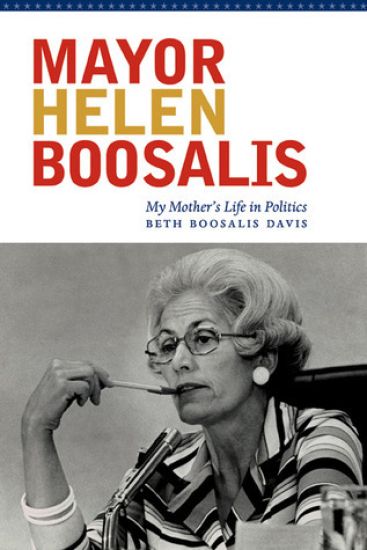
As a 1950s housewife and League of Women Voters volunteer who spearheaded the city of Lincoln’s switch to a “strong mayor” form of government, Helen Boosalis (1919–2009) never anticipated that she herself would one day be that strong mayor and chief executive of Nebraska’s capital city.Helen Boosalis’s story, told by her daughter, Beth Boosalis Davis, is that of a true pioneer of women in politics. The daughter of Greek immigrants, Boosalis achieved national prominence as the first woman president of the U.S. Conference of Mayors and as an outspoken advocate for economically distressed cities facing President Reagan’s “new federalism.” Winning the Democratic nomination for governor of Nebraska in 1986, Helen Boosalis ran against Kay Orr in the first gubernatorial contest between two women in U.S. history. The interwoven tales of conflict and challenge, from the mayor’s office to the campaign trail, combine personal insight into one woman’s trailblazing political history with a compelling memoir of a half century of public service and private devotion shared by two remarkable women, mother and daughter.Listen to an interview with Helen Boosalis and Beth Boosalis Davis on AARP's Radio Prime Time show.
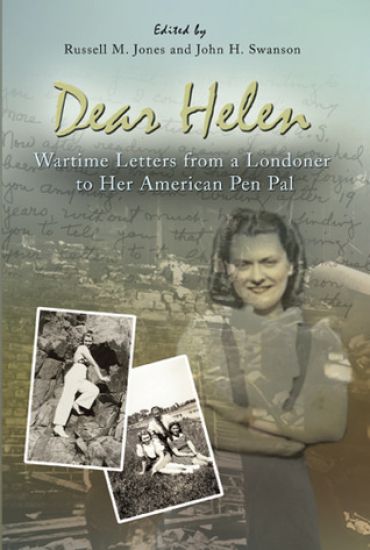
In 1937, Betty Swallow was a young London secretary enjoying the social whirl of the world's most sophisticated metropolis. She came to know fellow movie buff Helen Bradley of Kansas City through a movie magazine, and their initially lighthearted correspondence about film stars came to encompass a world war - and reflect Betty's unique view of it. Today there are countless descriptions of wartime Britain from historians and journalists; ""Dear Helen"" depicts World War II - from its buildup to its aftermath - from the perspective of an average London citizen, with details of daily life that few other documents provide. In letters written from 1937 to 1950 and now housed at the Winston Churchill Memorial and Library at Westminster College in Fulton, Missouri, Betty shares accounts of the Blitz and wartime deprivations, then of the postwar austerity programs, in passages that interweave daily terror with talk about theater, clothes, and family outings.Betty is the epitome of English pluck: patriotic, practical, and romantic despite the bombs falling about her. She laments the lack of ingredients for a proper Christmas pudding, but Helen's holiday package of candy, nylons, and cosmetics helps make up for the shortages. She shares graphic descriptions of the relentless attacks on London but tells also of how silk stockings or a trip to the cinema could take the edge off nights spent in an underground shelter - where 'lying about on wet and cold stone floors, breathing bad air' took a toll on her health. These letters do more than document headlines and daily life: they candidly convey British attitudes toward American isolationism prior to Pearl Harbor and reveal how the English felt about taking on the Nazis alone. They also tell of the social changes that transformed English society - including Betty's transformation from Tory to Socialist - and how the cold war had a different impact on British citizens than on Americans.Throughout the exchange, the haven that Betty and Helen shared in the world of movies becomes a frequent counterpoint to the stress of the war. ""Dear Helen"" is a book of rich personal drama that further attests to the British-American 'special relationship'. Through this sustained correspondence spanning the war years, we meet a real person whose reflections shed light on British opinion during the harshest times and whose experiences give us new insight into the horror of the Blitz.
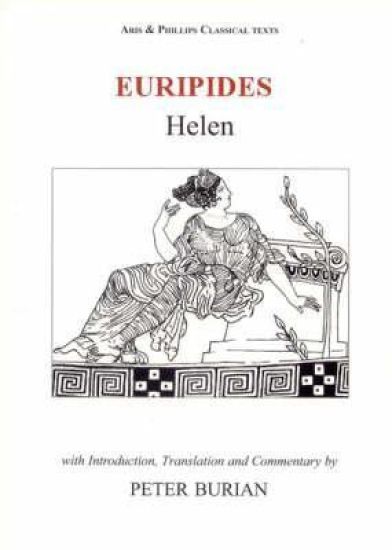
Helen who has always been faithful to her husband Menelaus; who never went to Troy, but was carried off to Egypt, where she remains throughout the Trojan War, waiting faithfully for her husband Menelaus to rescue her. Meanwhile, Helen of Troy - a mere phantom fashioned by the gods - has blighted the real Helen's life with undeserved hatred. Helen plays with this premise in ways that make it by turns amusing and disturbing, playful and full of serious quandaries. The real Helen did not commit the deeds for which she is famous, and yet she cannot escape a reputation based on what the world believes her to be, rather than on what she is. And yet, with the disappearance of the phantom Helen, Menelaus does reclaim his wife at last and the real Helen plots a brilliant deception that will bring them both home again in triumph. Helen is an extraordinary performance that has disturbed critics because it refuses to conform to their expectations. Whether understood as a tragedy or something more like aphilisophical divertissement or romantic comedy, Helen has increasingly been recognized as an intellectually challenging and emotionally satisfying dramatic masterpiece. Greek text with facing translation
Knitting is a booming pastime enjoying a resurgence of interest, spawning books, movies, a brisk online trade in wool and knitted goods — even trade fairs. In Canada, Cottage Craft has long held a strong reputation for its fine wool, dyed to the palette of the local landscape, and the fine craftsmanship of the women who weave and knit its quality materials. Behind Cottage Craft is the story of a woman of vision and remarkable resolve. Grace Helen Mowat looked upon traditional rural crafts — knitting, weaving, and rug hooking — as cash crops for the straitened farm women of Charlotte County, New Brunswick. In 1911, unmarried and with limited means, she commissioned a handful of St. Andrews women to make rugs according to her designs, which were then sent to Montreal. The Arts and Crafts movement was in full swing — the rugs sold quickly. This is the story of how Grace Helen Mowat built Cottage Craft into a burgeoning home-grown business that continues to attract customers the world over.
The story of Ava Helen Pauling—her rich career as an activist first for civil rights and liberties, then against nuclear testing, and finally for peace, feminism, and environmental stewardship—is best told in the context of her enduring partnership with her famous husband, Linus Pauling. In this long-awaited first biography of Ava Helen Pauling, Mina Carson reveals the complex and fascinating history behind one of the great love stories of the twentieth century. Though she began her public career in the shadow of her spouse, Ava Helen soon found herself tugged between her ardour to support Linus in his career and her desire that he embrace the social and political causes she felt passionate about. She believed it was her destiny to accept duties as a mother and homemaker, but neither of those roles was fully satisfying. Her more complete identity emerged over decades, as she evolved as an influential activist. Ava Helen Pauling’s story is significant because so many aspects of it were shared with countless American women of her generation and the generations surrounding her. They had new educational opportunities but were expected to conform to the same limited social roles dictated by the gender ideology of the nineteenth century. When second wave feminism erupted in the 1960s, its force did not come solely from the young women rebelling against their elders’ rules and limitations, but also from the frustrated dreams of those elders themselves. Ava Helen did not experience overt oppression by her husband or community; she even asserted some very non-feminist positions as a young woman. This, combined with a structural lack of opportunity, contributed to the strength and persistence of role expectations in her life. At the same time, she was feisty and wilful. Her personality both created her marital loyalty and eventually took her down an openly feminist path. Ava Helen Pauling: Partner, Activist, Visionary is an important complement to writings about Linus Pauling and a welcome addition to the literature on women’s and family history. It will also appeal to students and scholars of peace and reform movements and the social history of science.
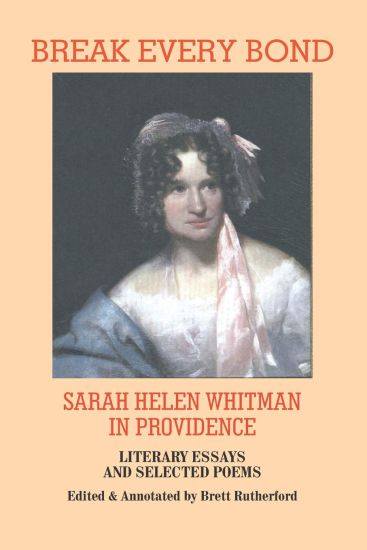
Sarah Helen Whitman (1803-1878), poet and critic, is best known for her brief engagement to Edgar Allan Poe in 1848, and for her role as Poe's posthumous defender in her 1860 book, Edgar Poe and His Critics. She is seldom treated as more than an incidental person in Poe biography, and no books of her own poetry were reprinted after 1916. As critic, she was a ground-breaking American defender of Poe, Shelley, Byron, Goethe, Alcott, and Emerson, yet none of her literary essays other than her defense of Poe have ever appeared in book form. She and her friend Margaret Fuller are credited with being the first American women literary critics.This volume presents Whitman's literary essays with more than 500 annotations and notes, tracing her literary sources and allusions, and revealing the remarkable breadth of her readings in literature, philosophy, history, and science. Brett Rutherford's biographical essay is rich in revelations about Whitman's time and place, her family history, and her muted career as poet, essayist, and den mother to artists and writers. Exploding the standard view of her as the secluded "literary widow," we can now perceive her as a literary radical pushing against a conservative milieu; a suffragist and abolitionist who dabbled in s ances; and a devotee of the New England Transcendentalists and the German Idealists who inspired them.The complete text of Edgar Poe and His Critics presented here, includes the opposing texts by Rufus Griswold, whose libels provoked her landmark defense of Poe's writing and character. This annotated version identifies all the contemporary press reviews and books Whitman read and critiqued, making it indispensible for students of Edgar Allan Poe.The selected poems in this volume include the hyper-Romantic traversal of rival mythologies in "Hours of Life," her most ambitious work; her poems to and about Edgar Allan Poe; sensitive and atmospheric nature portrayals; a defense of the then-reviled art of the drama; a love poem from Proserpine to Pluto; an occasional poem about Rhode Island penned in the after-shadow of the Dorr Rebellion; and translations from French and German poets, most notably the most famous of all European ghost ballads, B rger's "Leonora." Whitman's allusions and unattributed quotations from other poets are all annotated, making this book a must for scholars and students.
When Tom and his parents move to their new house they hear strange noises coming from the shed next door. Tom helps his parents tidy the junk-filled garden in the hope that his dad will build him a pirate ship play-house. But Mum and Dad tire easily. Then Tom finds out that the neighbour is an inventor. He's invented a robot called Helpful Helen. She can do jobs about the house and garden. Tom's dad is very excited by the robot and gives her a long list of instructions. But oh no! He hasn't spoken slowly. And Helen is programmed to be very helpful. It looks like things are about to get a bit higgledy-piggledy. This is a very funny story about a robot gone haywire!