Kirjojen hintavertailu. Mukana 11 699 587 kirjaa ja 12 kauppaa.

Kirjahaku

Etsi kirjoja tekijän nimen, kirjan nimen tai ISBN:n perusteella.

1000 tulosta hakusanalla Herman Bisbee

Pierre

Pierre

Herman Melville

Penguin Classics
1996
pokkari
'Ambiguities indeed! One long brain-muddling, soul-bewildering ambiguity (to borrow Mr. Melville's style), like Melchisedeck, without beginning or end-a labyrinth without a clue - an Irish bog without so much as a Jack o'the'lantern to guide the wanderer's footsteps - the dream of a distempered stomach, disordered by a hasty supper on half-cooked pork chops." So judged the New York Herald when Pierre was first published in 1852, with most contemporary reviewers joining in the general condemnation: 'a dead failure,' 'this crazy rigmarole,' and "a literary mare's nest." Latter-day critics have recognized in the story of Melville's idealistic young hero a corrosive satire of the
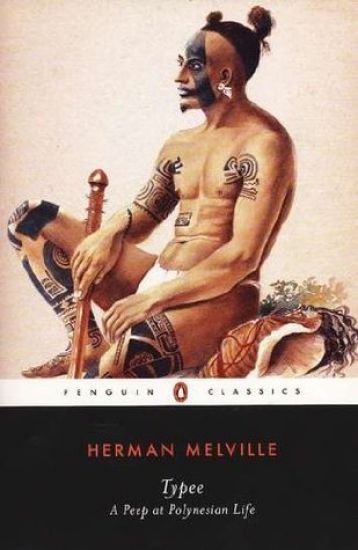
Typee

Typee

Herman Melville

Penguin Putnam Inc
1996
pokkari
Typee is a fast-moving adventure tale, an autobiographical account of the author's Polynesian stay, an examination of the nature of good and evil, and a frank exploration of sensuality and exotic ritual.For more than seventy years, Penguin has been the leading publisher of classic literature in the English-speaking world. With more than 1,700 titles, Penguin Classics represents a global bookshelf of the best works throughout history and across genres and disciplines. Readers trust the series to provide authoritative texts enhanced by introductions and notes by distinguished scholars and contemporary authors, as well as up-to-date translations by award-winning translators.
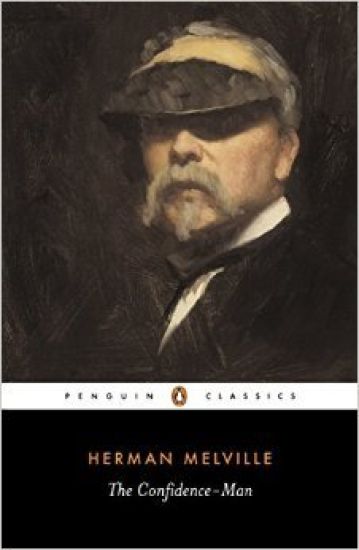
The Confidence-man

The Confidence-man

Herman Melville

Penguin Classics
1991
pokkari
Onboard the Fidèle, a steamboat floating down the Mississippi to New Orleans, a confidence man sets out to defraud his fellow passengers. In quick succession he assumes numerous guises - from a legless beggar and a worldly businessman to a collector for charitable causes and a 'cosmopolitan' gentleman, who simply swindles a barber out of the price of a shave. Making very little from his hoaxes, the pleasure of trickery seems an end in itself for this slippery conman. Is he the Devil? Is his chicanery merely intended to expose the mercenary concerns of those around him? Set on April Fool's Day, The Confidence-Man (1857) is an engaging comedy of masquerades, digressions and shifting identity, and a devastating satire on the American dream.
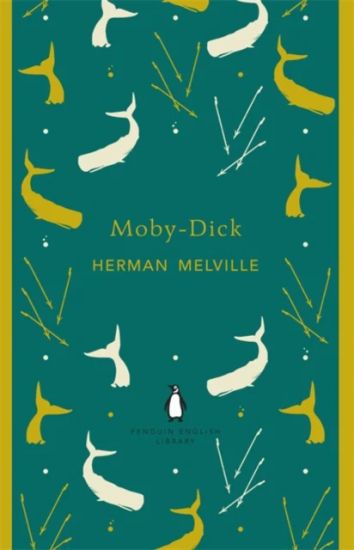
Moby-Dick

Moby-Dick

Herman Melville

Penguin Books Ltd.
2012
pokkari
Tells the mad, raging, Shakespearean tale of Captain Ahab's insane quest to kill a giant white whale that has taken his leg, and upon which he has sworn vengeance, at any cost.
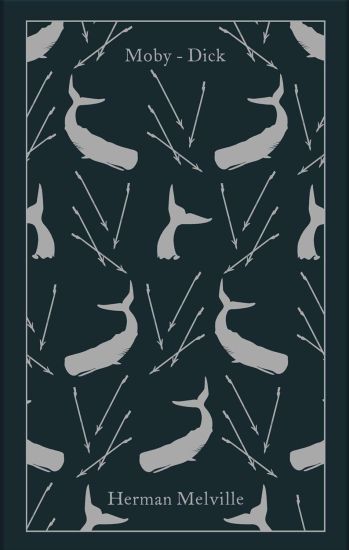
Moby-Dick

Moby-Dick

Herman Melville

Penguin Classics
2013
sidottu
Part of Penguin's beautiful hardback Clothbound Classics series, designed by the award-winning Coralie Bickford-Smith, these delectable and collectible editions are bound in high-quality colourful, tactile cloth with foil stamped into the design.In Herman Melville's Moby-Dick, Captain Ahab is an eerily compelling madman who focuses his distilled hatred and suffering (and that of generations before him) into the pursuit of a creature as vast, dangerous and unknowable as the sea itself. More than just a novel of adventure, this is a haunting social commentary populated with some of the most enduring characters in literature. Written with wonderfully redemptive humour, Moby Dick is a profound and timeless inquiry into character, faith and the nature of perception.
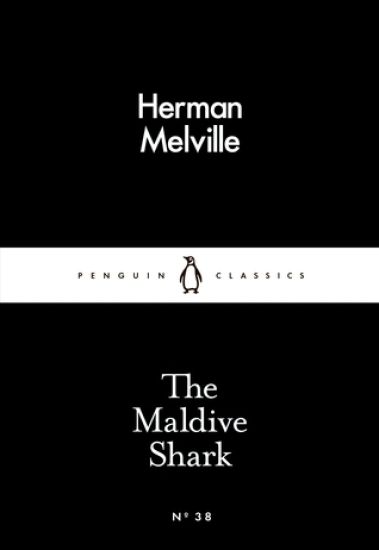
The Maldive Shark

The Maldive Shark

Herman Melville

Penguin Classics
2015
nidottu
'No voice, no low, no howl is heard; the chief sound of life here is a hiss.' Stories and poems by Herman Melville drawn from his years at sea Introducing Little Black Classics: 80 books for Penguin's 80th birthday. Little Black Classics celebrate the huge range and diversity of Penguin Classics, with books from around the world and across many centuries. They take us from a balloon ride over Victorian London to a garden of blossom in Japan, from Tierra del Fuego to 16th century California and the Russian steppe. Here are stories lyrical and savage; poems epic and intimate; essays satirical and inspirational; and ideas that have shaped the lives of millions. Herman Melville (1819-1891). Melville's works available in Penguin Classics are Moby-Dick, Pierre, The Confidence-Man, Omoo, Redburn, Israel Potter and Billy Budd, Sailor and Other Stories.
Moby-Dick

Moby-Dick

Herman Melville

Penguin Classics
2003
pokkari
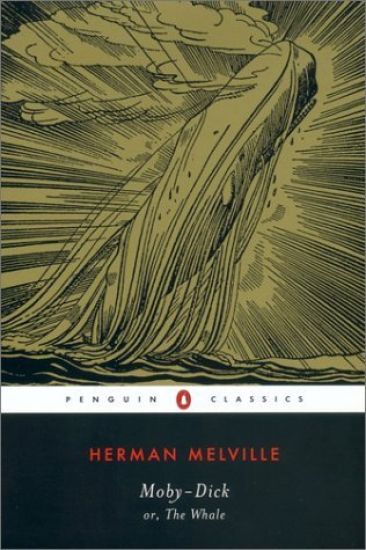
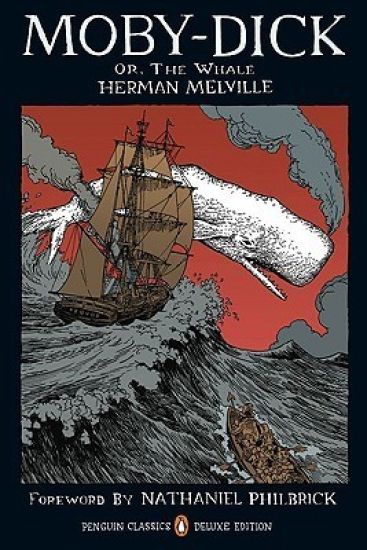
The original 'Great American Novel', Herman Melville's Moby-Dick is a masterful study of obsession. This Penguin Classics edition contains an introduction by Andrew Delblanco, with explanatory commentary by Tom Quirk.'Call me Ishmael.'So begins Herman Melville's masterpiece, one of the greatest works of imagination in literary history. As Ishmael is drawn into Captain Ahab's obsessive quest to slay the white whale Moby-Dick, he finds himself engaged in a metaphysical struggle between good and evil. More than just a novel of adventure, more than an paean to whaling lore and legend, Moby-Dick is a haunting social commentary, populated by some of the most enduring characters in literature; the crew of the Pequod, from stern, Quaker First Mate Starbuck, to the tattooed Polynesian harpooner Queequeg, are a vision of the world in microcosm, the pinnacle of Melville's lifelong meditation on America. Written with wonderfully redemptive humour, Moby-Dick is a profound, poetic inquiry into character, faith, and the nature of perception.Based on the Northwestern University Press edition, this Penguin Classics edition includes a critical introduction by Andrew Delbanco, as well as valuable explanatory notes, maps, illustrations and a glossary of nautical terms.Herman Melville is now regarded as one of America's greatest novelists. Much of the material for his novels was drawn from his own experience as a seaman aboard whaling ships. He wrote his masterpiece Moby-Dick in 1851, and died in 1891.If you enjoyed Moby-Dick, you may like Miguel de Cervantes' Don Quixote, also available in Penguin Classics.'After reading Moby-Dick, you will have enhanced your sense of wonder, you will have increased the size of your universe'E. M. Forster'One of the strangest and most wonderful books in the world ... It moves awe in the soul'D. H. Lawrence
Omoo

Omoo

Herman Melville

Penguin Classics
2007
pokkari
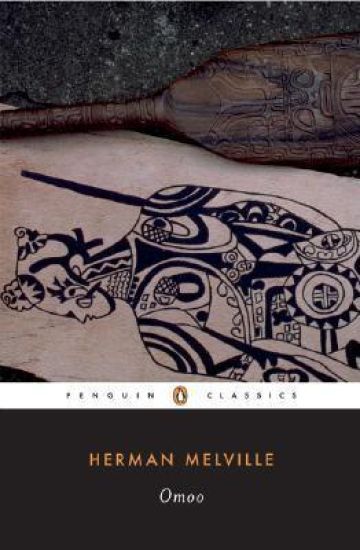
Following the commercial and critical success of "Typee", Herman Melville continued his series of South Sea adventure-romances with Omoo. Named after the Polynesian term for a rover, or someone who roams from island to island, "Omoo" chronicles the tumultuous events aboard a South Sea whaling vessel and is based on Melville's personal experiences as a crew member on a ship sailing the Pacific. From recruiting among the natives for sailors to handling deserters and even mutiny, Melville gives a first-person account of life as a sailor during the nineteenth century filled with colourful characters and vivid descriptions of the far-flung locales of Polynesia.
Israel Potter

Israel Potter

Herman Melville

Penguin Classics
2008
pokkari
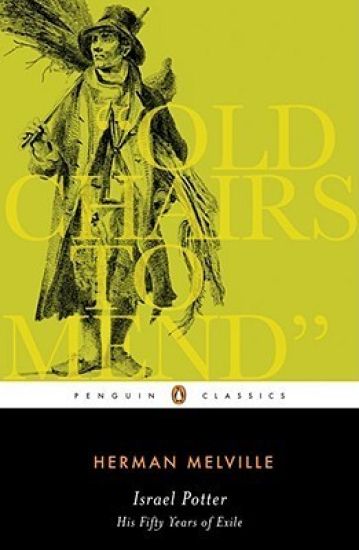
Melville's eighth book was begun as a simple rewrite of an obscure little narrative entitled "Life and Remarkable Adventures of Israel R. Potter", in which Israel tells the story of his sad fall from Revolutionary hero to London peddler. Following its opening chapter Melville's novel retells that tale, with close adherence to the language and events of the Life, and then, shaking free of the original narrative, alternately moves between invented episodes and historical sources unrelated to the Life. "Israel Potter" is unique among Melville's books. It is the only one to be offered in the guise of literal biography, the tale presuming to offer an accurate life history of the man Israel Potter who did in fact fight at Bunker Hill. It is also Melville's only historical novel: it presents famous men of the American Revolution - Benjamin Franklin, John Paul Jones, Ethan Allen, and others - in situations that are a matter of historical record.
Moby-Dick

Moby-Dick

Herman Melville

Penguin Classics
2010
pokkari
In part, Moby-Dick is the story of an eerily compelling madman pursuing an unholy war against a creature as vast and dangerous and unknowable as the sea itself. But more than just a novel of adventure, more than an encyclopaedia of whaling lore and legend, the book can be seen as part of its author's lifelong meditation on America. Written with wonderfully redemptive humour, Moby-Dick is also a profound enquiry into character, faith and the nature of perception.
Billy Budd, Bartleby, and Other Stories

Billy Budd, Bartleby, and Other Stories

Herman Melville

Penguin Classics
2016
pokkari
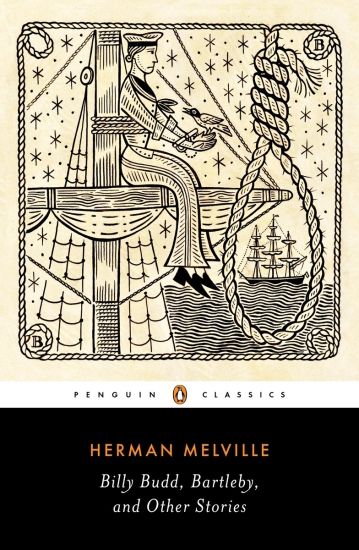
One of the BBC's '100 Novels That Shaped Our World'Though best-known for his epic masterpiece Moby-Dick, Herman Melville also left a body of short stories arguably unmatched in American fiction. In the sorrowful tragedy of Billy Budd,Sailor; the controlled rage of Benito Cereno; and the tantalizing enigma of Bartleby, the Scrivener; Melville reveals himself as a singular storyteller of tremendous range and compelling power. In these stories, Melville cuts to the heart of race, class, capitalism, and globalism in America, deftly navigating political and social issues that resonate as clearly in our time as they did in Melville's. Also including The Piazza Tales in full, this collection demonstrates why Melville stands not only among the greatest writers of the nineteenth century, but also as one of our greatest contemporaries.This Penguin Classics edition features the Reading Text of Billy Budd, Sailor, as edited from a genetic study of the manuscript by Harrison Hayford and Merton M. Sealts, Jr., and the authoritative Northwestern-Newberry text of The Piazza Tales.
Siddhartha

Siddhartha

Herman Hesse

Penguin Books India
2013
sidottu
From A to Z, the Penguin Drop Caps series collects 26 unique hardcovers--featuring cover art by Jessica Hische It all begins with a letter. Fall in love with Penguin Drop Caps, a new series of twenty-six collectible and hardcover editions, each with a type cover showcasing a gorgeously illustrated letter of the alphabet. In a design collaboration between Jessica Hische and Penguin Art Director Paul Buckley, the series features unique cover art by Hische, a superstar in the world of type design and illustration, whose work has appeared everywhere from Tiffany & Co. to Wes Anderson's recent film Moonrise Kingdom to Penguin's own bestsellers Committed and Rules of Civility. With exclusive designs that have never before appeared on Hische's hugely popular Daily Drop Cap blog, the Penguin Drop Caps series launches with six perennial favorites to give as elegant gifts, or to showcase on your own shelves. H is for Hesse. A young Brahmin named Siddhartha searches for ultimate reality after meeting with the Buddha. His quest takes him from a life of decadence to asceticism, from the illusory joys of sensual love with a beautiful courtesan, and of wealth and fame, to the painful struggles with his son and the ultimate wisdom of renunciation. Integrating Eastern and Western spiritual traditions with psychoanalysis and philosophy, written with a deep and moving empathy for humanity, Herman Hesse's strangely simple Siddhartha is perhaps the most important and compelling moral allegory the troubled twentieth century ever produced.
Moby-dick

Moby-dick

Herman Melville

Penguin USA
2013
sidottu
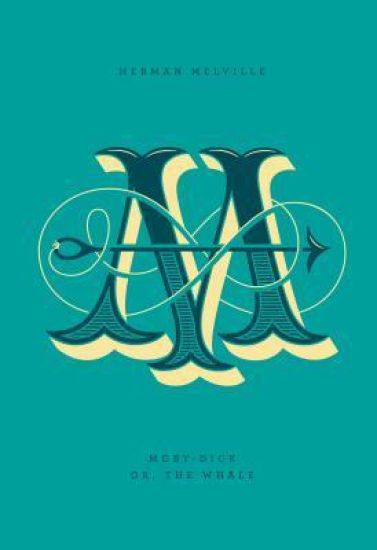
From A to Z, the Penguin Drop Caps series collects 26 unique hardcovers--featuring cover art by Jessica Hische It all begins with a letter. Fall in love with Penguin Drop Caps, a new series of twenty-six collectible and hardcover editions, each with a type cover showcasing a gorgeously illustrated letter of the alphabet. In a design collaboration between Jessica Hische and Penguin Art Director Paul Buckley, the series features unique cover art by Hische, a superstar in the world of type design and illustration, whose work has appeared everywhere from Tiffany & Co. to Wes Anderson's recent film Moonrise Kingdom to Penguin's own bestsellers Committed and Rules of Civility. With exclusive designs that have never before appeared on Hische's hugely popular Daily Drop Cap blog, the Penguin Drop Caps series debuted with an 'A' for Jane Austen's Pride and Prejudice, a 'B' for Charlotte Br nte's Jane Eyre, and a 'C' for Willa Cather's My ntonia. It continues with more perennial classics, perfect to give as elegant gifts or to showcase on your own shelves. M is for Melville, who wrote of his masterpiece, "It is the horrible texture of a fabric that should be woven of ships' cables and hawsers. A Polar wind blows through it, and birds of prey hover over it." In part, Moby-Dick is the story of an eerily compelling madman pursuing an unholy war against a creature as vast and dangerous and unknowable as the sea itself. But more than just a novel of adventure, more than an encyclopedia of whaling lore and legend, Moby-Dick is a haunting, mesmerizing, and important social commentary populated with several of the most unforgettable and enduring characters in literature. Written with wonderfully redemptive humor, Moby-Dick is a profound and timeless inquiry into character, faith, and the nature of perception.
The Ethics of Engagement

The Ethics of Engagement

Herman Wasserman

Oxford University Press Inc
2021
sidottu
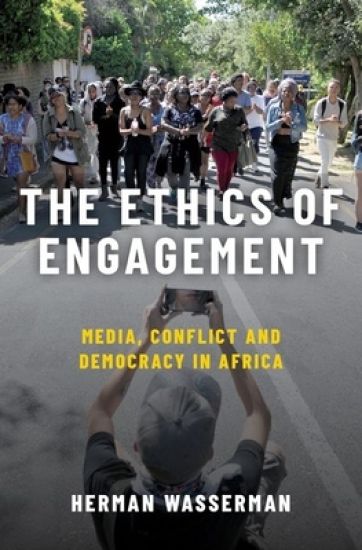
How can an "ethics of listening" guide the media to contribute to the deepening of democracy in Africa? In Africa, the media plays a significant role in conflict management and resolution. Which conflicts the media report, which are ignored, and how conflicts are represented can have a profound impact on the outcomes. While the media can in some cases ensure the stability of African democracy, critics have pointed out that in other cases, the media actually increases tensions in areas of conflict. The media tends to privilege only elite voices, offering superficial coverage of marginalized groups in a way that increases polarization. In The Ethics of Engagement, Herman Wasserman explores the ethics of the media in conflicts that arise during transitions to democracy in Africa. He examines the roles, responsibilities, and obligations of media in contexts of high socioeconomic inequality. In doing so, he looks at ethnic and racial polarization in the histories of colonialism, post-colonial authoritarianism, and hybrid regimes. Taking a critical view of the normative guidelines and professional identities of journalism inherited from contexts outside of Africa, he argues that a more reciprocal and collaborative approach is needed. He develops a new ethics of engagement that would require the media to facilitate the resolution of conflicts across differences of ethnicity, citizenship, and class. A central point of this theory is the development of an "ethics of listening" which would enable the media to conceive of their role as facilitators in democratic deliberation and community-building. Wasserman applies his ethics of listening to case studies across the African continent. He finds that by following this new model of conduct, the media may actually deepen democracy and help de-escalate conflict. This original study provides a useful framework for reimaging the media's role in transitional democracies in Africa--and across the globe.
Making AI Intelligible

Making AI Intelligible

Herman Cappelen; Josh Dever

Oxford University Press
2021
sidottu
Can humans and artificial intelligences share concepts and communicate? Making AI Intelligible shows that philosophical work on the metaphysics of meaning can help answer these questions. Herman Cappelen and Josh Dever use the externalist tradition in philosophy to create models of how AIs and humans can understand each other. In doing so, they illustrate ways in which that philosophical tradition can be improved. The questions addressed in the book are not only theoretically interesting, but the answers have pressing practical implications. Many important decisions about human life are now influenced by AI. In giving that power to AI, we presuppose that AIs can track features of the world that we care about (for example, creditworthiness, recidivism, cancer, and combatants). If AIs can share our concepts, that will go some way towards justifying this reliance on AI. This ground-breaking study offers insight into how to take some first steps towards achieving Interpretable AI.
Radioisotopic Methods for Biological and Medical Research

Radioisotopic Methods for Biological and Medical Research

Herman W. Knoche

Oxford University Press Inc
1991
sidottu
This is an up-to-date textbook for biologists and biomedical scientists covering the basics of radioisotope methodology and safety. Radioisotopes are widely used in biological and medical research, particularly in biochemistry. Graduate students and technicians usually learn how to use radioisotopes through short training courses or as part of laboratory courses in biology and biochemistry. This text was written for use in courses on the theoretical aspects of radioisotopic methods or for self-study and reference; it assumes little knowledge of radioactive materials and develops mathematical discussions slowly and clearly.
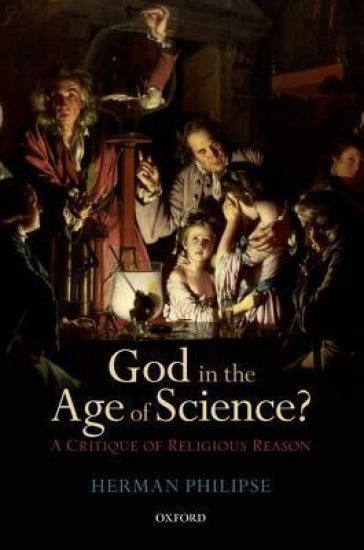
God in the Age of Science?

God in the Age of Science?

Herman Philipse

Oxford University Press
2014
nidottu
God in the Age of Science? is a critical examination of strategies for the philosophical defence of religious belief. The main options may be presented as the end nodes of a decision tree for religious believers. The faithful can interpret a creedal statement (e.g. 'God exists') either as a truth claim, or otherwise. If it is a truth claim, they can either be warranted to endorse it without evidence, or not. Finally, if evidence is needed, should its evidential support be assessed by the same logical criteria that we use in evaluating evidence in science, or not? Each of these options has been defended by prominent analytic philosophers of religion. In part I Herman Philipse assesses these options and argues that the most promising for believers who want to be justified in accepting their creed in our scientific age is the Bayesian cumulative case strategy developed by Richard Swinburne. Parts II and III are devoted to an in-depth analysis of this case for theism. Using a 'strategy of subsidiary arguments', Philipse concludes (1) that theism cannot be stated meaningfully; (2) that if theism were meaningful, it would have no predictive power concerning existing evidence, so that Bayesian arguments cannot get started; and (3) that if the Bayesian cumulative case strategy did work, one should conclude that atheism is more probable than theism. Philipse provides a careful, rigorous, and original critique of theism in the world today.
Philosophy without Intuitions

Philosophy without Intuitions

Herman Cappelen

Oxford University Press
2014
nidottu
The claim that contemporary analytic philosophers rely extensively on intuitions as evidence is almost universally accepted in current meta-philosophical debates and it figures prominently in our self-understanding as analytic philosophers. No matter what area you happen to work in and what views you happen to hold in those areas, you are likely to think that philosophizing requires constructing cases and making intuitive judgments about those cases. This assumption also underlines the entire experimental philosophy movement: only if philosophers rely on intuitions as evidence are data about non-philosophers' intuitions of any interest to us. Our alleged reliance on the intuitive makes many philosophers who don't work on meta-philosophy concerned about their own discipline: they are unsure what intuitions are and whether they can carry the evidential weight we allegedly assign to them. The goal of this book is to argue that this concern is unwarranted since the claim is false: it is not true that philosophers rely extensively (or even a little bit) on intuitions as evidence. At worst, analytic philosophers are guilty of engaging in somewhat irresponsible use of 'intuition'-vocabulary. While this irresponsibility has had little effect on first order philosophy, it has fundamentally misled meta-philosophers: it has encouraged meta-philosophical pseudo-problems and misleading pictures of what philosophy is.