Kirjojen hintavertailu. Mukana 12 016 292 kirjaa ja 12 kauppaa.

Kirjahaku

Etsi kirjoja tekijän nimen, kirjan nimen tai ISBN:n perusteella.

1000 tulosta hakusanalla Ian Merkel

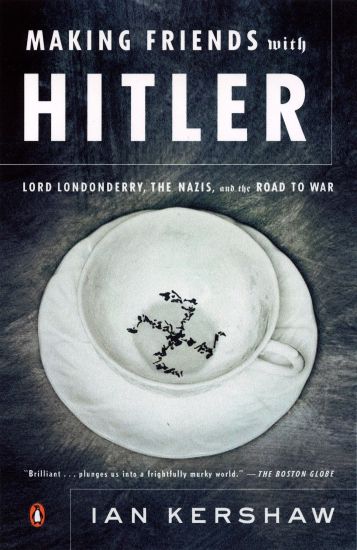
Making Friends with Hitler: Lord Londonderry, the Nazis, and the Road to War
Ian Kershaw's biography of Adolf Hitler is widely regarded as the definitive work on the subject, as well as one of the most brilliant biographies of our time. In Making Friends with Hitler, the great scholar shines remarkable new light on decisions that led to war by tracing the extraordinary story of Lord Londonderry--one of Britain's wealthiest aristocrats, cousin of Winston Churchill, confidant of the king, and the only British cabinet member to outwardly support the Nazi party. Through Londonderry's tragic tale, Kershaw shows us that behind the accepted dogma of English appeasement and German bullying is a much more complicated and interesting reality--full of miscalculations on both sides that proved to be among the most fateful in history.
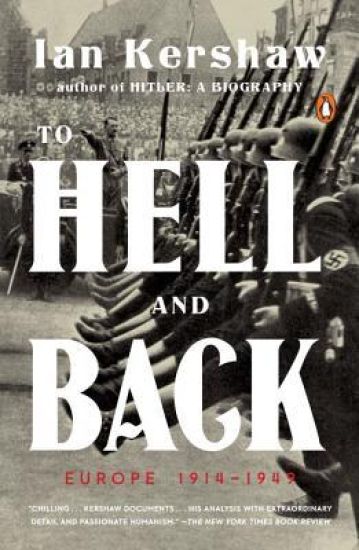
To Hell and Back: Europe 1914-1949

To Hell and Back: Europe 1914-1949

Ian Kershaw

PENGUIN BOOKS
2016
nidottu
"Chilling... To Hell and Back should be required reading in every chancellery, every editorial cockpit and every place where peevish Euroskeptics do their thinking.... Kershaw documents each and every 'ism' of his analysis with extraordinary detail and passionate humanism."--The New York Times Book Review The Penguin History of Europe series reaches the twentieth century with acclaimed scholar Ian Kershaw's long-anticipated analysis of the pivotal years of World War I and World War II. The European catastrophe, the long continuous period from 1914 to 1949, was unprecedented in human history--an extraordinarily dramatic, often traumatic, and endlessly fascinating period of upheaval and transformation. This new volume in the Penguin History of Europe series offers comprehensive coverage of this tumultuous era. Beginning with the outbreak of World War I through the rise of Hitler and the aftermath of the Second World War, award-winning British historian Ian Kershaw combines his characteristic original scholarship and gripping prose as he profiles the key decision makers and the violent shocks of war as they affected the entire European continent and radically altered the course of European history. Kershaw identifies four major causes for this catastrophe: an explosion of ethnic-racist nationalism, bitter and irreconcilable demands for territorial revisionism, acute class conflict given concrete focus through the Bolshevik Revolution, and a protracted crisis of capitalism. Incisive, brilliantly written, and filled with penetrating insights, To Hell and Back offers an indispensable study of a period in European history whose effects are still being felt today.
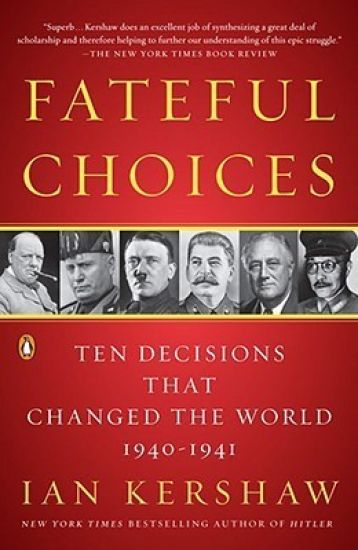
Fateful Choices: Ten Decisions That Changed the World, 1940-1941
The newest immensely original undertaking from the historian who gave us the defining two-volume portrait of Hitler, Fateful Choices puts Ian Kershaw's analytical and storytelling gifts on dazzling display. From May 1940 to December 1941, the leaders of the world's six major powers made a series of related decisions that determined the final outcome of World War II and shaped the course of human destiny. As the author examines the connected stories of these profound choices, he restores a sense of drama and contingency to this pivotal moment, producing one of the freshest, most important books on World War II in years' one with powerful contemporary relevance.
City of Strangers

City of Strangers

Ian MacKenzie

PENGUIN BOOKS
2009
nidottu
Faith, family, and the weight of history intersect in this remarkable debut from a rising literary talent A cold, gray Sunday dawns on New York City to find Paul Metzger trudging through the winter streets to visit his past. He goes first to see his estranged, decades-older half-brother; then his dying father, whose notorious early life still haunts his children; and finally the ex-wife he cannot help but continue to love. But a fourth encounter-violent, unexpected-sets in motion a chain of events that will forever change Paul's life, as well as the family he's struggled so long to understand. Ian MacKenzie's stirring and lyrical debut is a story of a family inalterably fractured by its past, of a man who refuses to believe that what is done cannot be undone, and of a world that insists-catastrophically, in the end-otherwise.
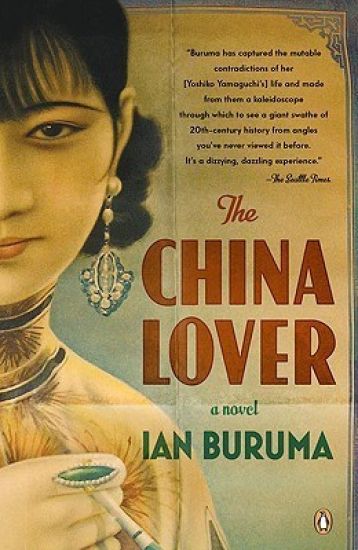
The China Lover

The China Lover

Ian Buruma

PENGUIN BOOKS
2009
nidottu
From Shanghai before and during the Second World War to U.S. occupied Tokyo, and, finally, to the Middle East in the early 1970s, Ian Buruma's masterful novel about the intoxicating power of collective fantasy follows three star-struck men driven to extraordinary acts by their devotion to the same legendary woman. A beautiful Japanese girl born in Manchuria, Yamaguchi Yoshiko is known as Ri Koran in Japan, Li Xianglan in China, and Shirley Yamaguchi in the U.S., and her past is a closely guarded secret. In Buruma's reimagining of the life of Yamaguchi Yoshiko, a Japanese girl torn between patriotism for her parents? homeland, worldly ambition, and sympathy for the Chinese, she will reflect almost exactly the twists and turns in the history of modern Japan. The China Lover is both luminously written and imbued with the insights and erudition that have made Ian Buruma one of the most respected writers on modern Asia.
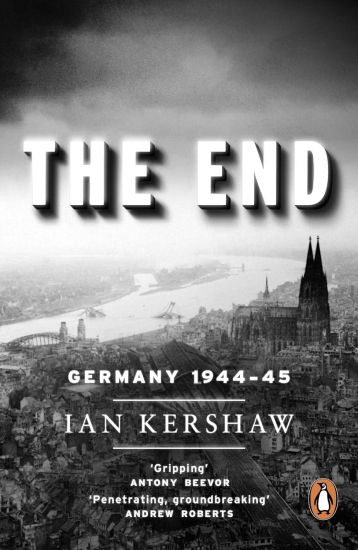
The End: The Defiance and Destruction of Hitler's Germany, 1944-1945
From the author of To Hell and Back, a fascinating and original exploration of how the Third Reich was willing and able to fight to the bitter end of World War II Countless books have been written about why Nazi Germany lost the Second World War, yet remarkably little attention has been paid to the equally vital questions of how and why the Third Reich did not surrender until Germany had been left in ruins and almost completely occupied. Drawing on prodigious new research, Ian Kershaw, an award-winning historian and the author of Fateful Choices, explores these fascinating questions in a gripping and focused narrative that begins with the failed bomb plot in July 1944 and ends with the death of Adolf Hitler and the German capitulation in 1945. The End paints a harrowing yet enthralling portrait of the Third Reich in its last desperate gasps.
The Time Traveler's Guide to Elizabethan England
An entertaining, accessible guide to Elizabethan England--the latest in the Time Traveler's Guide series Acclaimed historian Ian Mortimer shows readers that the past is not just something to be studied; it is also something to be lived. Using diaries, letters, books, and other writings of the day, Mortimer offers a masterful portrait of daily life in Elizabethan England, re-creating the sights, sounds, and customs of the sixteenth century from the perspective of both peasants and royals. Through this lens, we can begin to understand Queen Elizabeth's subjects not only as a people profoundly shaped by the time in which they lived, but also as the people who shaped the world we know and the people we are today.
Becoming Human: Evolution and Human Uniqueness
In Becoming Human, noted anthropologist and renaissance man Ian Tattersall explores what makes us uniquely human, the qualities that set us apart from our ancestors, and the significance of our knowledge. A worldwide tour of discovery, Tattersall takes the reader from 30,000-year-old cave paintings in France and anthropological digs in Africa, to examining human behavior in a New York restaurant. And by offering wisdom gleaned from fossil remains, primate behavior, prehistoric art, and archaeology, Tattersall presents a stunning picture of where humankind evolved, how Darwin's theories have changed, and what we reliably know about modern-day human's capacity for love, language, and thought. Widely praised in the media, and an Amazon.com Top-10 bestseller, Becoming Human is an amazing trip into the past and into the future.
Doing Practical Ethics

Doing Practical Ethics

Ian Stoner; Jason Swartwood

Oxford University Press
2021
nidottu
Stoner and Swartwood's Doing Practical Ethics is the first book to offer a framework for acquiring the component skills required to philosophize about applied ethics. The book accomplishes this by providing clear Explanations and models of basic argument and critical thinking skills, Demonstration Exercises with solutions that provide clear and immediate feedback, and further Practice Exercises for honing skills. This skill-focused textbook can be used in any intro to ethics or intro to contemporary moral problems course. It is equally useful for any applied ethics course, such as Bioethics, Business Ethics, and Environmental Ethics. It teaches students, through practice, how to analyze, evaluate, and construct moral arguments. Most instructors would also assign a reader or a set of custom readings.
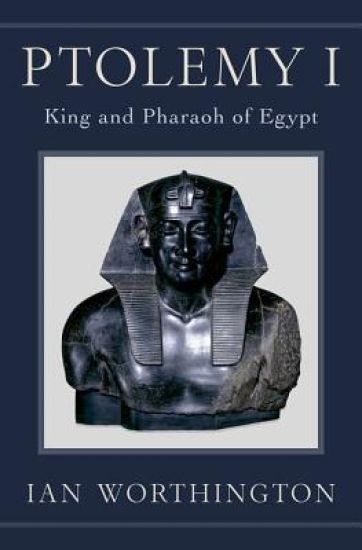
Ptolemy I

Ptolemy I

Ian Worthington

Oxford University Press Inc
2016
sidottu
Cleopatra of Egypt is one of history's most famous rulers, but who was responsible for founding the Ptolemaic dynasty from which she came, how, and when? For the answers we go back 300 years before Cleopatra's time, to Ptolemy of Macedonia. He was a friend of Alexander the Great, fighting with him in the epic battles and sieges, which toppled the Persian Empire, and after Alexander's death taking over Egypt after the dead king's commanders carved up his vast empire among themselves. They were soon at war with each other, the co-called Wars of the Successors, as each man fought to increase his share of the spoils. They made and broke alliances with each other cynically and effortlessly, with Ptolemy showing himself no different from the others. But unlike them he had patience and cunning that arguably made him the greatest of the Successors. He built up his power base in Egypt, introduced administrative and economic reforms that made him fabulously wealthy, and as a conscious imperialist he boldly attempted to seize Greece and Macedonia and be a second Alexander. As well as his undoubted military prowess, Ptolemy was an intellectual. He founded the great Library and Museum at Alexandria, making that city the intellectual center of the entire Hellenistic age, and even patronized the mathematician Euclid. Ptolemy ruled Egypt first as satrap and then as its king and Pharaoh for forty years, until he died of natural causes in his early eighties. On his death, his son, Ptolemy II, succeeded him, and the Ptolemaic dynasty was thus established. It was the longest-lived of all the Hellenistic dynasties, falling with Cleopatra three centuries later. As a king, soldier, statesman, and intellectual, Ptolemy was one of a kind, but, unlike Alexander, he never forgot his Macedonian roots. Against all odds, Ptolemy fought off invasions, invaded opponents' territories, and established an Egyptian empire, making his adopted country a power with which to be reckoned. His achievements shaped both Egypt's history and that of the early Hellenistic world.
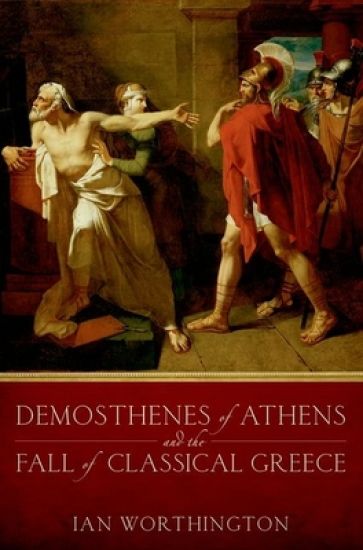
Demosthenes of Athens and the Fall of Classical Greece

Demosthenes of Athens and the Fall of Classical Greece

Ian Worthington

Oxford University Press Inc
2015
nidottu
Regarded as ancient Greece's greatest orator, Demosthenes lived through and helped shape one of the most eventful epochs in antiquity. His political career spanned three decades, during which time Greece fell victim to Macedonian control, first under Philip II and then Alexander the Great. Demosthenes' resolute and courageous defiance of Philip earned for him a reputation as one of history's outstanding patriots. He also enjoyed a brilliant and lucrative career as a speechwriter, and his rhetorical skills are still emulated today by students and politicians alike. Yet he was a sickly child with an embarrassing speech impediment, who was swindled out of much of his family's estate by unscrupulous guardians after the death of his father. His story is one of triumph over adversity. Modern studies of his life and career take one of two different approaches: he is either lauded as Greece's greatest patriot or condemned as an opportunist who misjudged situations and contributed directly to the end of Greek freedom. This biography, the first ever written in English for a popular audience, aims to determine which of these two people he was: self-serving cynic or patriot - or even a combination of both. Its chronological arrangement brings Demosthenes vividly to life, discussing his troubled childhood and youth, the obstacles he faced in his public career, his fierce rivalries with other Athenian politicians, his successes and failures, and even his posthumous influence as a politician and orator. It offers new insights into Demosthenes' motives and how he shaped his policy to achieve political power, all set against the rich backdrop of late Classical Greece and Macedonia.
Kingship and Memory in Ancient Judah

Kingship and Memory in Ancient Judah

Ian Wilson

Oxford University Press Inc
2017
sidottu
The book addresses the question of how postmonarchic society in ancient Judah remembered and imagined its monarchy, and kingship in general, as part of its past, present, and future. How did Judeans of the early Second Temple period conceive of the monarchy? By way of a thorough analysis of Judean discourse in this era, Kingship and Memory in Ancient Judah argues that ancient Judeans had no single way of remembering and imagining kingship. In fact, their memory and imaginary was thoroughly multivocal, and necessarily so. Judean historiographical literature evinces a mindset that was unsure of the monarchic past and how to understand it-multiple viewpoints were embraced and brought into conversation with one another. Similarly, prophetic literature, which drew on the discursive themes of the remembered past, envisions a variety of outcomes for kingship's future. Historiographical and prophetic literature thus existed in a kind of feedback loop, enabling, informing, and balancing each other's various understandings of kingship as part of Judean society and life. Through its investigation of kingship in Judean discourse, this monograph contributes to our knowledge of literature and literary culture in ancient Judah and also makes a significant contribution to questions of history and historiographical method in biblical studies.
By the Spear

By the Spear

Ian Worthington

Oxford University Press Inc
2017
nidottu
Alexander the Great, arguably the most exciting figure from antiquity, waged war as a Homeric hero and lived as one, conquering native peoples and territories on a superhuman scale. From the time he invaded Asia in 334 to his death in 323, he expanded the Macedonian empire from Greece in the west to Asia Minor, the Levant, Egypt, Central Asia and "India" (Pakistan and Kashmir) in the east. Although many other kings and generals forged empires, Alexander produced one that was without parallel, even if it was short-lived. And yet, Alexander could not have achieved what he did without the accomplishments of his father, Philip II (r. 359-336). It was Philip who truly changed the course of Macedonian history, transforming a weak, disunited, and economically backward kingdom into a military powerhouse. A warrior king par excellence, Philip left Alexander with the greatest army in the Greek world, a centralized monarchy, economic prosperity, and a plan to invade Asia. For the first time, By the Spear offers an exhilarating military narrative of the reigns of these two larger-than-life figures in one volume. Ian Worthington gives full breadth to the careers of father and son, showing how Philip was the architect of the Macedonian empire, which reached its zenith under Alexander, only to disintegrate upon his death. By the Spear also explores the impact of Greek culture in the East, as Macedonian armies became avatars of social and cultural change in lands far removed from the traditional sphere of Greek influence. In addition, the book discusses the problems Alexander faced in dealing with a diverse subject population and the strategies he took to what might be called nation building, all of which shed light on contemporary events in culturally dissimilar regions of the world. The result is a gripping and unparalleled account of the role these kings played in creating a vast empire and the enduring legacy they left behind.
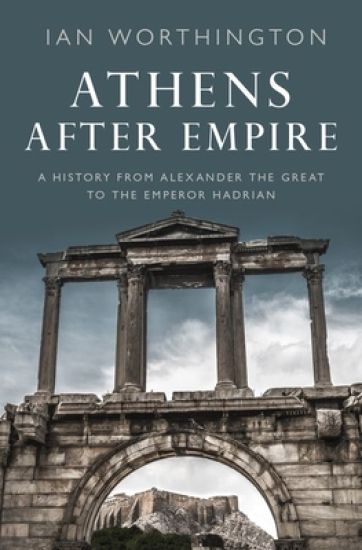
Athens After Empire

Athens After Empire

Ian Worthington

Oxford University Press Inc
2021
sidottu
A major new history of Athens' remarkably long and influential life after the collapse of its empire To many the history of post-Classical Athens is one of decline. True, Athens hardly commanded the number of allies it had when hegemon of its fifth-century Delian League or even its fourth-century Naval Confederacy, and its navy was but a shadow of its former self. But Athens recovered from its perilous position in the closing quarter of the fourth century and became once again a player in Greek affairs, even during the Roman occupation. Athenian democracy survived and evolved, even through its dealings with Hellenistic Kings, its military clashes with Macedonia, and its alliance with Rome. Famous Romans, including Julius Caesar and Mark Antony, saw Athens as much more than an isolated center for philosophy. Athens After Empire offers a new narrative history of post-Classical Athens, extending the period down to the aftermath of Hadrian's reign.
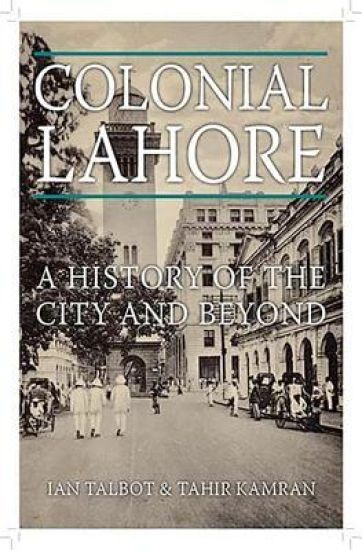
Colonial Lahore: A History of the City and Beyond

Colonial Lahore: A History of the City and Beyond

Ian Talbot; Tahir Kamran

Oxford University Press, USA
2017
sidottu
A number of studies of colonial Lahore in recent years have explored such themes as the city's modernity, its cosmopolitanism and the rise of communalism which culminated in the bloodletting of 1947. This first synoptic history moves away from the prism of the Great Divide of 1947 to examine the cultural and social connections which linked colonial Lahore with North India and beyond. In contrast to portrayals of Lahore as inward looking and a world unto itself, the authors argue that imperial globalisation intensified long established exchanges of goods, people and ideas. Ian Talbot and Tahir Kamran's book is reflective of concerns arising from the global history of Empire and the new urban history of South Asia. These are addressed thematically rather than through a conventional chronological narrative, as the book uncovers previously neglected areas of Lahore's history, including the links between Lahore's and Bombay's early film industries and the impact on the 'tourist gaze' of the consumption of both text and visual representation of India in newsreels and photographs.
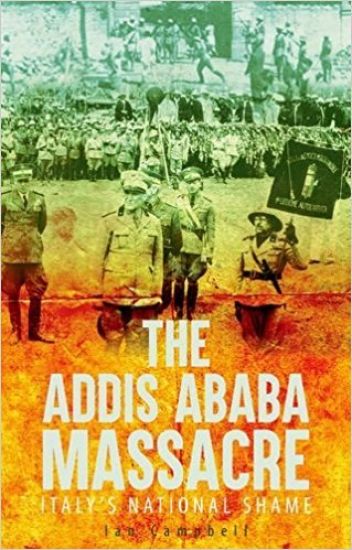
The Addis Ababa Massacre: Italy's National Shame

The Addis Ababa Massacre: Italy's National Shame

Ian Campbell

Oxford University Press, USA
2017
sidottu
In February 1937, following an abortive attack by a handful of insurgents on Mussolini's High Command in Italian-occupied Ethiopia, 'repression squads' of armed Blackshirts and Fascist civilians were unleashed on the defenseless residents of Addis Ababa. In three terror-filled days and nights of arson, murder and looting, thousands of innocent and unsuspecting men, women and children were roasted alive, shot, bludgeoned, stabbed to death, or blown to pieces with hand-grenades. Meanwhile the notorious Viceroy Rodolfo Graziani, infamous for his atrocities in Libya, took the opportunity to add to the carnage by eliminating the intelligentsia and nobility of the ancient Ethiopian empire in a pogrom that swept across the land. In a richly illustrated and ground-breaking work backed up by meticulous and scholarly research, Ian Campbell reconstructs and analyses one of Fascist Italy's least known atrocities, which he estimates eliminated 19-20 per cent of the capital's population. He exposes the hitherto little known cover-up conducted at the highest levels of the British government, which enabled the facts of one of the most hideous civilian massacres of all time to be concealed, and the perpetrators to walk free.
Faustian Bargain

Faustian Bargain

Ian Ona Johnson

Oxford University Press Inc
2021
sidottu
When Nazi Germany invaded Poland on September 1, 1939, launching World War Two, its army seemed an unstoppable force. The Luftwaffe bombed towns and cities across the country, and fifty divisions of the Wehrmacht crossed the border. Yet only two decades earlier, at the end of World War One, Germany had been an utterly and abjectly defeated military power. Foreign troops occupied its industrial heartland and the Treaty of Versailles reduced the vaunted German army of World War One to a fraction of its size, banning it from developing new military technologies. When Hitler came to power in 1933, these strictures were still in effect. By 1939, however, he had at his disposal a fighting force of 4.2 million men, armed with the most advanced weapons in the world. How could this nearly miraculous turnaround have happened? The answer lies in Russia. Beginning in the years immediately after World War One and continuing for more than a decade, the German military and the Soviet Union--despite having been mortal enemies--entered into a partnership designed to overturn the order in Europe. Centering on economic and military cooperation, the arrangement led to the establishment of a network of military bases and industrial facilities on Soviet soil. Through their alliance, which continued for over a decade, Germany gained the space to rebuild its army. In return, the Soviet Union received vital military, technological and economic assistance. Both became, once again, military powers capable of a mass destruction that was eventually directed against one another. Drawing from archives in five countries, including new collections of declassified Russian documents, The Faustian Bargain offers the definitive exploration of a shadowy but fateful alliance.