

Kirjahaku
Etsi kirjoja tekijän nimen, kirjan nimen tai ISBN:n perusteella.
1000 tulosta hakusanalla James R Cook

Bishopric Of The United Church Of England And Ireland At Jerusalem
James R. Hope
KESSINGER PUBLISHING CO
2009
pokkari

History And Description Of The Roosevelt Hospital, New York City (1893)
James R. Lathrop
KESSINGER PUBLISHING, LLC
2009
nidottu
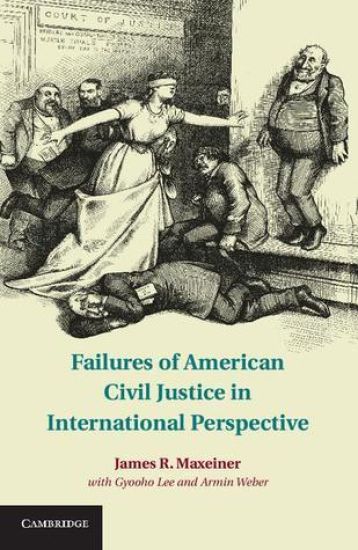
Failures of American Civil Justice in International Perspective
James R. Maxeiner; Philip K. Howard
Cambridge University Press
2011
sidottu
Civil justice in the United States is neither civil nor just. Instead it embodies a maxim that the American legal system is a paragon of legal process which assures its citizens a fair and equal treatment under the law. Long have critics recognized the system's failings while offering abundant criticism but few solutions. This book provides a comparative-critical introduction to civil justice systems in the United States, Germany and Korea. It shows the shortcomings of the American system and compares them with German and Korean successes in implementing the rule of law. The author argues that these shortcomings could easily be fixed if the American legal systems were open to seeing how other legal systems' civil justice processes handle cases more efficiently and fairly. Far from being a treatise for specialists, this book is an introductory text for civil justice in the three aforementioned legal systems.
The 'Flynn effect' is a surprising finding, identified by James R. Flynn, that IQ test scores have significantly increased from one generation to the next over the past century. Flynn now brings us an exciting new book which aims to make sense of this rise in IQ scores and considers what this tells us about our intelligence, our minds and society. Are We Getting Smarter? features fascinating new material on a variety of topics including the effects of intelligence in the developing world; the impact of rising IQ scores on the death penalty, cognitive ability in old age and the language abilities of youth culture; as well as controversial topics of race and gender. He ends with the message that assessing IQ goes astray if society is ignored. As IQ scores continue to rise into the twenty-first century, particularly in the developing world, the 'Flynn effect' marches on.
Does your family make you smarter? James R. Flynn presents an exciting new method for estimating the effects of family on a range of cognitive abilities. Rather than using twin and adoption studies, he analyses IQ tables that have been hidden in manuals over the last 65 years, and shows that family environment can confer a significant advantage or disadvantage to your level of intelligence. Wading into the nature vs. nurture debate, Flynn banishes the pessimistic notion that by the age of seventeen, people's cognitive abilities are solely determined by their genes. He argues that intelligence is also influenced by human autonomy - genetics and family notwithstanding, we all have the capacity to choose to enhance our cognitive performance. He concludes by reconciling this new understanding of individual differences with his earlier research on intergenerational trends (the 'Flynn effect') culminating in a general theory of intelligence.

Failures of American Methods of Lawmaking in Historical and Comparative Perspectives
James R. Maxeiner
Cambridge University Press
2018
sidottu
In this book, James R. Maxeiner takes on the challenge of demonstrating that historically American law makers did consider a statutory methodology as part of formulating laws. In the nineteenth century, when the people wanted laws they could understand, lawyers inflicted judge-made, statute-destroying, common law on them. Maxeiner offers the cure for common law, in the form of sensible statute law. Building on this historical evidence, Maxeiner shows how rule-making in civil law jurisdictions in other countries makes for a far more equitable legal system. Sensible statute laws fit together: one statute governs, as opposed to several laws that even lawyers have trouble disentangling. In a statute law system, lawmakers make laws for the common good in sensible procedures, and judges apply sensible laws and do not make them. This book shows how such a system works in Germany and how it would be a solution for the American legal system as well.
The 'Flynn effect' is a surprising finding, identified by James R. Flynn, that IQ test scores have significantly increased from one generation to the next over the past century. Flynn now brings us an exciting new book which aims to make sense of this rise in IQ scores and considers what this tells us about our intelligence, our minds and society. Are We Getting Smarter? features fascinating new material on a variety of topics including the effects of intelligence in the developing world; the impact of rising IQ scores on the death penalty, cognitive ability in old age and the language abilities of youth culture; as well as controversial topics of race and gender. He ends with the message that assessing IQ goes astray if society is ignored. As IQ scores continue to rise into the twenty-first century, particularly in the developing world, the 'Flynn effect' marches on.

Christianity Contrasted with Hindu Philosophy
James R. Ballantyne
Cambridge University Press
2013
pokkari
While living in India for sixteen years, James Robert Ballantyne (1813–64) taught oriental languages to Indian pupils and became fascinated by Hindu philosophy, seeking to harmonise it with the Western tradition. He produced grammars of Hindi, Sanskrit and Persian, translations of Indian linguistics, and a science primer in English and Sanskrit (also reissued in the Cambridge Library Collection). Intended for the Tyro missionary and published in 1859, this work offers a summary of Hinduism (covering the Nyaya, Sankhya and Vedanta schools) and argues for the truth of Christianity, while acknowledging certain shared ideas. It contains a facing Sanskrit translation (with redactions of parts considered to be of no importance to 'those whom the missionary has to teach'). A valuable primary source for scholars of orientalism, this work helps to illuminate the religious dimensions of British imperialism.
Information, Democracy, and Autocracy
James R. Hollyer; B. Peter Rosendorff; James Raymond Vreeland
Cambridge University Press
2018
sidottu
Advocates for economic development often call for greater transparency. But what does transparency really mean? What are its consequences? This breakthrough book demonstrates how information impacts major political phenomena, including mass protest, the survival of dictatorships, democratic stability, as well as economic performance. The book introduces a new measure of a specific facet of transparency: the dissemination of economic data. Analysis shows that democracies make economic data more available than do similarly developed autocracies. Transparency attracts investment and makes democracies more resilient to breakdown. But transparency has a dubious consequence under autocracy: political instability. Mass-unrest becomes more likely, and transparency can facilitate democratic transition - but most often a new despotic regime displaces the old. Autocratic leaders may also turn these threats to their advantage, using the risk of mass-unrest that transparency portends to unify the ruling elite. Policy-makers must recognize the trade-offs transparency entails.
Information, Democracy, and Autocracy
James R. Hollyer; B. Peter Rosendorff; James Raymond Vreeland
Cambridge University Press
2018
pokkari
Advocates for economic development often call for greater transparency. But what does transparency really mean? What are its consequences? This breakthrough book demonstrates how information impacts major political phenomena, including mass protest, the survival of dictatorships, democratic stability, as well as economic performance. The book introduces a new measure of a specific facet of transparency: the dissemination of economic data. Analysis shows that democracies make economic data more available than do similarly developed autocracies. Transparency attracts investment and makes democracies more resilient to breakdown. But transparency has a dubious consequence under autocracy: political instability. Mass-unrest becomes more likely, and transparency can facilitate democratic transition - but most often a new despotic regime displaces the old. Autocratic leaders may also turn these threats to their advantage, using the risk of mass-unrest that transparency portends to unify the ruling elite. Policy-makers must recognize the trade-offs transparency entails.

Falun Gong, founded by Li Hongzhi in 1992, attracted international attention in 1999 after staging a demonstration outside government offices in Beijing. It was subsequently banned. Followers then created a number of media outlets outside China focused on protesting the PRC's attack on the 'human rights' of practitioners. This volume focuses on Falun Gong and violence. Though the author notes accusations of how Chinese authorities have abused and tortured practitioners, the volume will focus on Li Hongzhi's teachings about 'spiritual warfare', and how these teachings have motivated practitioners to deliberately seek brutalization and martyrdom.

Failures of American Methods of Lawmaking in Historical and Comparative Perspectives
James R. Maxeiner
Cambridge University Press
2019
pokkari
In this book, James R. Maxeiner takes on the challenge of demonstrating that historically American law makers did consider a statutory methodology as part of formulating laws. In the nineteenth century, when the people wanted laws they could understand, lawyers inflicted judge-made, statute-destroying, common law on them. Maxeiner offers the cure for common law, in the form of sensible statute law. Building on this historical evidence, Maxeiner shows how rule-making in civil law jurisdictions in other countries makes for a far more equitable legal system. Sensible statute laws fit together: one statute governs, as opposed to several laws that even lawyers have trouble disentangling. In a statute law system, lawmakers make laws for the common good in sensible procedures, and judges apply sensible laws and do not make them. This book shows how such a system works in Germany and how it would be a solution for the American legal system as well.
You have heard of the Seven Deadly Sins: pride, greed, lust, envy, gluttony, wrath, and sloth. Each is a natural human weakness that impedes happiness. In addition to these vices, however, there are economic sins as well. And they, too, wreak havoc on our lives and in society. They can seem intuitively compelling, yet they lead to waste, loss, and forgone prosperity. In this thoughtful and compelling book, James Otteson tells the story of seven central economic fallacies, explaining why they are fallacies, why believing in them leads to mistakes and loss, and how exorcizing them from our thinking can help us avoid costly errors and enable us to live in peace and prosperity.
You have heard of the Seven Deadly Sins: pride, greed, lust, envy, gluttony, wrath, and sloth. Each is a natural human weakness that impedes happiness. In addition to these vices, however, there are economic sins as well. And they, too, wreak havoc on our lives and in society. They can seem intuitively compelling, yet they lead to waste, loss, and forgone prosperity. In this thoughtful and compelling book, James Otteson tells the story of seven central economic fallacies, explaining why they are fallacies, why believing in them leads to mistakes and loss, and how exorcizing them from our thinking can help us avoid costly errors and enable us to live in peace and prosperity.

Fractography of Glasses and Ceramics VI
James R. Varner; Marlene Wightman
John Wiley Sons Inc
2012
sidottu
Provides an excellent one-stop resource for understanding the most important current issues in the research and applications of fractography of glasses and ceramics.

A controversial look at the impending Chinese economic collapse—the history behind it, its contemporary causes, and its dire implications for the global economy All the experts agree: the 21st century belongs to China. Given America's looming insolvency and the possibility of the collapse of the U.S. dollar, who can doubt that China is poised to take over the role of economic superpower? Written by political economist and leading financial journalist James Gorrie, this book offers a highly controversial, contrarian view of contemporary China. Drawing upon a wealth of historical and up-to-the-minute data, Gorrie makes a strong case that China, itself, is on the verge of an economic crisis of epic proportions. He explains how, caught in a recurrent boom/bust cycle that has played itself out several times over the past sixty years, China is again approaching total economic and social collapse. But with one important difference this time: they may very well take the entire global economy down with them. Explores the Chinese communist party's unfortunate history of making costly and very bloody mistakes on an enormous scaleOne-by-one Gorrie analyzes those critical mistakes and explains how they may lead to economic collapse in China and global depressionDescribes Chinese "cannibal capitalism," and where its massive abuse of the country's environment, people, and arable lands is leading that country and the world economyChronicles China's history of recurring economic crisis and explains why all the evidence suggests that history is about to repeat itself
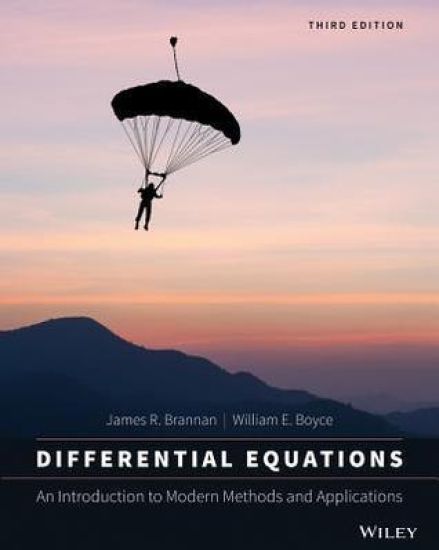
Brannan/Boyce’s Differential Equations: An Introduction to Modern Methods and Applications, 3rd Edition is consistent with the way engineers and scientists use mathematics in their daily work. The text emphasizes a systems approach to the subject and integrates the use of modern computing technology in the context of contemporary applications from engineering and science. The focus on fundamental skills, careful application of technology, and practice in modeling complex systems prepares students for the realities of the new millennium, providing the building blocks to be successful problem-solvers in today’s workplace. Section exercises throughout the text provide hands-on experience in modeling, analysis, and computer experimentation. Projects at the end of each chapter provide additional opportunities for students to explore the role played by differential equations in the sciences and engineering.

