Kirjojen hintavertailu. Mukana 11 699 587 kirjaa ja 12 kauppaa.

Kirjahaku

Etsi kirjoja tekijän nimen, kirjan nimen tai ISBN:n perusteella.

1000 tulosta hakusanalla Janet Taylor-Perry

Working with Bereavement

Working with Bereavement

Janet Wilson

Red Globe Press
2014
nidottu
A practical guide for those who work with the bereaved in a variety of settings, from nurses and social workers to volunteers. Covering ethics, cultural issues and support networks, an essential text for those seeking to build understanding and skills in order to offer better support to the dying and the bereaved.
Modern Couples Sharing Money, Sharing Life

Modern Couples Sharing Money, Sharing Life

Janet Stocks; Björn Halleröd

Palgrave Macmillan
2007
sidottu
This collection is the result of a five-year-long collaboration of sociologists in Sweden, Spain and the United States. In-depth, extended interviews with couples explore their daily lives and provide insights into the impact of modernity, gender roles, and expectations of the meaning of money and the complex financial reality of households.
Separatism and Sovereignty in the New Europe

Separatism and Sovereignty in the New Europe

Janet Laible

Palgrave Macmillan
2008
sidottu
This book investigates why, despite European integration, separatist nationalism continues to thrive in EU member states. Laible demonstrates that the EU sustains the importance of statehood, and therefore separatism, and creates new forms of political capital that nationalists employ in their struggles for self-government.
The Sign of Angellica

The Sign of Angellica

Janet Todd

Columbia University Press
1992
pokkari
Examining the writing of Aphra Behn, Frances Sheridan, Ann Radcliffe and Fanny Burney among others, this study describes the entry of women into literature as a profession in the 17th century. It describes how the fictional genre became the main vehicle for female self-expression.
The Iranian Constitutional Revolution

The Iranian Constitutional Revolution

Janet Afary

Columbia University Press
1996
sidottu
During the Iranian Constitutional Revolution of 1906 to 1911 a variety of forces played key roles in overthrowing a repressive regime. Afary sheds new light on the role of ordinary citizens and peasantry, the status of Iranian women, and the multifaceted structure of Iranian society.
The Iranian Constitutional Revolution

The Iranian Constitutional Revolution

Janet Afary

Columbia University Press
1996
pokkari
During the Iranian Constitutional Revolution of 1906 to 1911 a variety of forces played key roles in overthrowing a repressive regime. Afary sheds new light on the role of ordinary citizens and peasantry, the status of Iranian women, and the multifaceted structure of Iranian society.
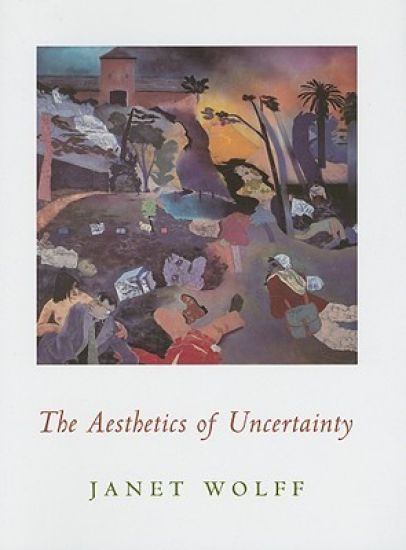
The Aesthetics of Uncertainty

The Aesthetics of Uncertainty

Janet Wolff

Columbia University Press
2008
sidottu
Feminism, poststructuralism, postcolonialism, and Marxism, among other critical approaches, have undermined traditional notions of aesthetics in recent decades. But questions of aesthetic judgment and pleasure persist, and many critics now seek a "return to aesthetics" or a "return to beauty." Janet Wolff advances a "postcritical" aesthetics grounded in shared values that are negotiated in the context of community. She relates this approach to contemporary debates about a committed politics similarly founded on the abandonment of certainty. Neither universalist nor relativist, the "aesthetics of uncertainty" provides a discourse on beauty that contemporary critics can engage with and offers a basis for judgment that is committed to assigning value to works of art. Wolff explores her position through a range of topics: the question of beauty in relation to feminist critique; the problematic status of twentieth-century English art, visual representations of the Holocaust, Jewish identity as portrayed by the artist R. B. Kitaj, refugee artists and modernism in 1940s Britain, and the nature and appeal of imagistic thinking in sociology. She addresses the desire for certainty and the timeliness of doubt and concludes with a meditation on the intersection of aesthetics and ethics, arguing that ethical issues are very much implicated in aesthetic discourse.
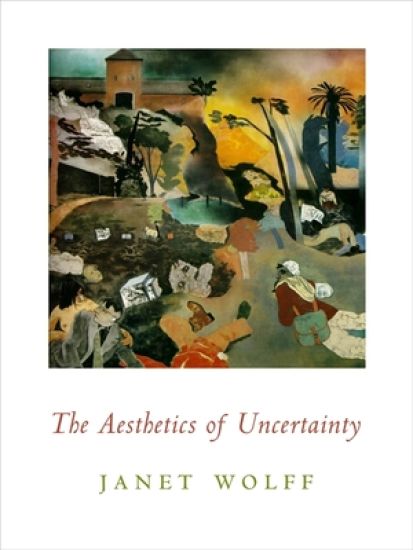
The Aesthetics of Uncertainty

The Aesthetics of Uncertainty

Janet Wolff

Columbia University Press
2015
pokkari
Feminism, poststructuralism, postcolonialism, and Marxism, among other critical approaches, have undermined traditional notions of aesthetics in recent decades. But questions of aesthetic judgment and pleasure persist, and many critics now seek a "return to aesthetics" or a "return to beauty." Janet Wolff advances a "postcritical" aesthetics grounded in shared values that are negotiated in the context of community. She relates this approach to contemporary debates about a committed politics similarly founded on the abandonment of certainty. Neither universalist nor relativist, the "aesthetics of uncertainty" provides a discourse on beauty that contemporary critics can engage with and offers a basis for judgment that is committed to assigning value to works of art. Wolff explores her position through a range of topics: the question of beauty in relation to feminist critique; the problematic status of twentieth-century English art, visual representations of the Holocaust, Jewish identity as portrayed by the artist R. B. Kitaj, refugee artists and modernism in 1940s Britain, and the nature and appeal of imagistic thinking in sociology. She addresses the desire for certainty and the timeliness of doubt and concludes with a meditation on the intersection of aesthetics and ethics, arguing that ethical issues are very much implicated in aesthetic discourse.
Being Human in a Buddhist World

Being Human in a Buddhist World

Janet Gyatso

Columbia University Press
2015
sidottu
Critically exploring medical thought in a cultural milieu with no discernible influence from the European Enlightenment, Being Human in a Buddhist World reveals an otherwise unnoticed intersection of early modern sensibilities and religious values in traditional Tibetan medicine. It further studies the adaptation of Buddhist concepts and values to medical concerns and suggests important dimensions of Buddhism's role in the development of Asian and global civilization. Through its unique focus and sophisticated reading of source materials, Being Human adds a crucial chapter in the larger historiography of science and religion. The book opens with the bold achievements in Tibetan medical illustration, commentary, and institution building during the period of the Fifth Dalai Lama and his regent, Desi Sangye Gyatso, then looks back to the work of earlier thinkers, tracing a strategically astute dialectic between scriptural and empirical authority on questions of history and the nature of human anatomy. It follows key differences between medicine and Buddhism in attitudes toward gender and sex and the moral character of the physician, who had to serve both the patient's and the practitioner's well-being. Being Human in a Buddhist World ultimately finds that Tibetan medical scholars absorbed ethical and epistemological categories from Buddhism yet shied away from ideal systems and absolutes, instead embracing the imperfectability of the human condition.
Being Human in a Buddhist World

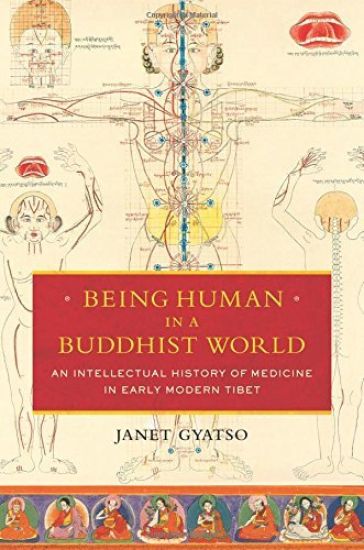
Being Human in a Buddhist World

Janet Gyatso

Columbia University Press
2016
pokkari
Critically exploring medical thought in a cultural milieu with no discernible influence from the European Enlightenment, Being Human in a Buddhist World reveals an otherwise unnoticed intersection of early modern sensibilities and religious values in traditional Tibetan medicine. It further studies the adaptation of Buddhist concepts and values to medical concerns and suggests important dimensions of Buddhism's role in the development of Asian and global civilization. Through its unique focus and sophisticated reading of source materials, Being Human adds a crucial chapter in the larger historiography of science and religion. The book opens with the bold achievements in Tibetan medical illustration, commentary, and institution building during the period of the Fifth Dalai Lama and his regent, Desi Sangye Gyatso, then looks back to the work of earlier thinkers, tracing a strategically astute dialectic between scriptural and empirical authority on questions of history and the nature of human anatomy. It follows key differences between medicine and Buddhism in attitudes toward gender and sex and the moral character of the physician, who had to serve both the patient's and the practitioner's well-being. Being Human in a Buddhist World ultimately finds that Tibetan medical scholars absorbed ethical and epistemological categories from Buddhism yet shied away from ideal systems and absolutes, instead embracing the imperfectability of the human condition.
When the Future Disappears

When the Future Disappears

Janet Poole

Columbia University Press
2014
sidottu
Taking a panoramic view of Korea's dynamic literary production in the final decade of Japanese rule, When the Future Disappears locates the imprint of a new temporal sense in Korean modernism: the impression of time interrupted, with no promise of a future. As colonial subjects of an empire headed toward total war, Korean writers in this global fascist moment produced some of the most sophisticated writings of twentieth-century modernism. Yi T'aejun, Ch'oe Myongik, Im Hwa, So Insik, Ch'oe Chaeso, Pak T'aewon, Kim Namch'on, and O Changhwan, among other Korean writers, lived through a rare colonial history in which their vernacular language was first inducted into the modern, only to be shut out again through the violence of state power. The colonial suppression of Korean-language publications was an effort to mobilize toward war, and it forced Korean writers to face the loss of their letters and devise new, creative forms of expression. Their remarkable struggle reflects the stark foreclosure at the heart of the modern colonial experience. Straddling cultural, intellectual, and literary history, this book maps the different strategies, including abstraction, irony, paradox, and even silence, that Korean writers used to narrate life within the Japanese empire.
Anxious Eaters

Anxious Eaters

Janet Chrzan; Kima Cargill

Columbia University Press
2022
sidottu
What makes fad diets so appealing to so many people? How did there get to be so many different ones, often with eerily similar prescriptions? Why do people cycle on and off diets, perpetually searching for that one simple trick that will solve everything? And how did these fads become so central to conversations about food and nutrition?Anxious Eaters shows that fad diets are popular because they fulfill crucial social and psychological needs—which is also why they tend to fail. Janet Chrzan and Kima Cargill bring together anthropology, psychology, and nutrition to explore what these programs promise yet rarely fulfill for dieters. They demonstrate how fad diets help people cope with widespread anxieties and offer tantalizing glimpses of attainable self-transformation. Chrzan and Cargill emphasize the social contexts of diets, arguing that beliefs about nutrition are deeply rooted in pervasive cultural narratives. Although people choose to adopt new eating habits for individual reasons, broader forces shape why fad diets seem to make sense.Considering dietary beliefs and practices in terms of culture, nutrition, and individual psychological needs, Anxious Eaters refrains from moralizing or promoting a “right” way to eat. Instead, it offers new ways of understanding the popularity of a wide range of eating trends, including the Atkins Diet and other low- or no-carb diets; beliefs that ingredients like wheat products and sugars are toxic, allergenic, or addictive; food avoidance and “Clean Eating” practices; and paleo or primal diets. Anxious Eaters sheds new light on why people adopt such diets and why these diets remain so attractive even though they often fail.
The Sounds of Mandarin

The Sounds of Mandarin

Janet Y. Chen

Columbia University Press
2023
sidottu
Mandarin Chinese is the most widely spoken language in the world today. In China, a country with a vast array of regional and local vernaculars, how was this “common language” forged? How did people learn to speak Mandarin? And what does a focus on speech instead of script reveal about Chinese language and history?This book traces the surprising social history of China’s spoken standard, from its creation as the national language of the early Republic in 1913 to its journey into postwar Taiwan to its reconfiguration as the common language of the People’s Republic after 1949. Janet Y. Chen examines the process of linguistic change from multiple perspectives, emphasizing the experiences of ordinary people. After the fall of the Qing dynasty, a chorus of influential elites promoted the goal of a strong China speaking in one unified voice. Chen explores how this vision fared in practice, showing the complexities of transforming an ideological aspiration into spoken reality. She tracks linguistic change in schools, rural areas, and urban life against the backdrop of war and revolution.The Sounds of Mandarin draws on a novel aural archive of early twentieth-century sound technology, including phonograph recordings, films, and radio broadcasts. Following the uneven trajectory of standard speech, this book sheds new light on the histories of language, nationalism, and identity in China and Taiwan.
The Sounds of Mandarin

The Sounds of Mandarin

Janet Y. Chen

Columbia University Press
2023
pokkari
Mandarin Chinese is the most widely spoken language in the world today. In China, a country with a vast array of regional and local vernaculars, how was this “common language” forged? How did people learn to speak Mandarin? And what does a focus on speech instead of script reveal about Chinese language and history?This book traces the surprising social history of China’s spoken standard, from its creation as the national language of the early Republic in 1913 to its journey into postwar Taiwan to its reconfiguration as the common language of the People’s Republic after 1949. Janet Y. Chen examines the process of linguistic change from multiple perspectives, emphasizing the experiences of ordinary people. After the fall of the Qing dynasty, a chorus of influential elites promoted the goal of a strong China speaking in one unified voice. Chen explores how this vision fared in practice, showing the complexities of transforming an ideological aspiration into spoken reality. She tracks linguistic change in schools, rural areas, and urban life against the backdrop of war and revolution.The Sounds of Mandarin draws on a novel aural archive of early twentieth-century sound technology, including phonograph recordings, films, and radio broadcasts. Following the uneven trajectory of standard speech, this book sheds new light on the histories of language, nationalism, and identity in China and Taiwan.