Kirjojen hintavertailu. Mukana 11 699 587 kirjaa ja 12 kauppaa.

Kirjahaku

Etsi kirjoja tekijän nimen, kirjan nimen tai ISBN:n perusteella.

1000 tulosta hakusanalla Jeff Codori

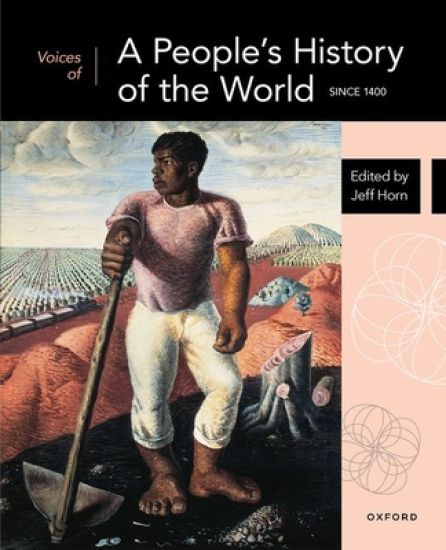
Voices of A People's History of the World

Voices of A People's History of the World

Jeff Horn

OXFORD UNIVERSITY PRESS INC
2022
nidottu
History is only as good as its sources. Primary sources are a necessary and essential part of global history in part because of students' lack of familiarity with distant places and themes. But primary sources are even more fundamental to history from below. Whenever possible this book uses the words of individuals who experienced or witnessed the event or issue under discussion.
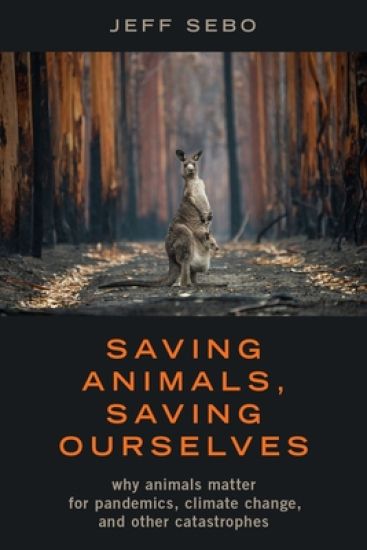
Saving Animals, Saving Ourselves

Saving Animals, Saving Ourselves

Jeff Sebo

OXFORD UNIVERSITY PRESS INC
2022
sidottu
In 2020, COVID-19, the Australia bushfires, and other global threats served as vivid reminders that human and nonhuman fates are increasingly linked. Human use of nonhuman animals contributes to pandemics, climate change, and other global threats which, in turn, contribute to biodiversity loss, ecosystem collapse, and nonhuman suffering. Jeff Sebo argues that humans have a moral responsibility to include animals in global health and environmental policy. In particular, we should reduce our use of animals as part of our pandemic and climate change mitigation efforts and increase our support for animals as part of our adaptation efforts. Applying and extending frameworks such as One Health and the Green New Deal, Sebo calls for reducing support for factory farming, deforestation, and the wildlife trade; increasing support for humane, healthful, and sustainable alternatives; and considering human and nonhuman needs holistically. Sebo also considers connections with practical issues such as education, employment, social services, and infrastructure, as well as with theoretical issues such as well-being, moral status, political status, and population ethics. In all cases, he shows that these issues are both important and complex, and that we should neither underestimate our responsibilities because of our limitations, nor underestimate our limitations because of our responsibilities. Both an urgent call to action and a survey of what ethical and effective action requires, Saving Animals, Saving Ourselves is an invaluable resource for scholars, advocates, policy-makers, and anyone interested in what kind of world we should attempt to build and how. This is an open access title available under the terms of a CC BY-NC-ND 4.0 International license. It is free to read at Oxford Scholarship Online and offered as a free PDF download from OUP and selected open access locations.
Religion and Medicine

Religion and Medicine

Jeff Levin; Stephen G. Post

Oxford University Press Inc
2020
sidottu
Though the current political climate might lead one to suspect that religion and medicine make for uncomfortable bedfellows, the two institutions have a long history of alliance. From religious healers and religious hospitals to religiously informed bioethics and research studies on the impact of religious and spiritual beliefs on physical and mental well-being, religion and medicine have encountered one another from antiquity through the present day. In Religion and Medicine, Dr. Jeff Levin outlines this longstanding history and the multifaceted interconnections between these two institutions. The first book to cover the full breadth of this subject, it documents religion-medicine alliances across religious traditions, throughout the world, and over the course of history. Levin summarizes a wide range of material in the most comprehensive introduction to this emerging field of scholarship to date.
Saving People from the Harm of Death

Saving People from the Harm of Death

Jeff McMahan

Oxford University Press Inc
2019
sidottu
Death is something we mourn or fear as the worst thing that could happen--whether the deaths of close ones, the deaths of strangers in reported accidents or tragedies, or our own. And yet, being dead is something that no one can experience and live to describe. This simple truth raises a host of difficult philosophical questions about the negativity surrounding our sense of death, and how and for whom exactly it is harmful. The question of whether death is bad has occupied philosophers for centuries, and the debate emerging in philosophical literature is referred to as the "badness of death." Are deaths primarily negative for the survivors, or does death also affect the deceased? What are the differences between death in fetal life, just after birth, or in adolescence? In order to properly evaluate deaths in global health, we must find answers to these questions. In this volume, leading philosophers, medical doctors, and economists discuss different views on how to evaluate death and its relevance for health policy. This includes theories about the harm of death and its connections to population-level bioethics. For example, one of the standard views in global health is that newborn deaths are among the worst types of death, yet stillbirths are neglected. This raises difficult questions about why birth is so significant, and several of the book's authors challenge this standard view. This is the first volume to connect philosophical discussions on the harm of death with discussions on population health, adjusting the ways in which death is evaluated. Changing these evaluations has consequences for how we prioritize different health programs that affect individuals at different ages, as well as how we understand inequality in health.
Rant on the Court Martial and Service Law

Rant on the Court Martial and Service Law

Jeff Blackett; Darren Reed

Oxford University Press
2023
sidottu
Now in its fourth edition, Rant on the Court Martial and Service Law has been fully updated to reflect the introduction of the Armed Forces Act 2021. This includes amendments to the constitution of the Court Martial and qualified majority verdicts, the ability to appoint a Circuit Judge as Judge Advocate, the power to rectify mistakes in Summary Appeal Court and Service Civilian Court, and amendments to the process for service complaints appeals. The book also considers the introduction of deprivation orders and driving disqualification orders, as well as the power of British overseas territories to apply the Armed Forces Act 2006. The new edition includes a new chapter offering extensive coverage of the Armed Forces Act 2021. This is in addition to updates to existing chapters regarding the historical context of the service justice system through to the current day, the service environment and powers of service police, the Court Martial, sentencing, and the appeals process. This is an essential handbook for those practicing in the service justice system and for academics researching service law.
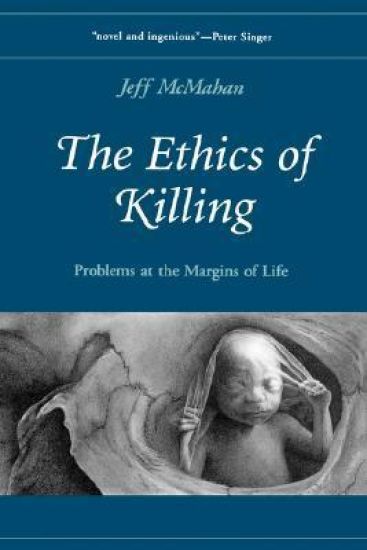
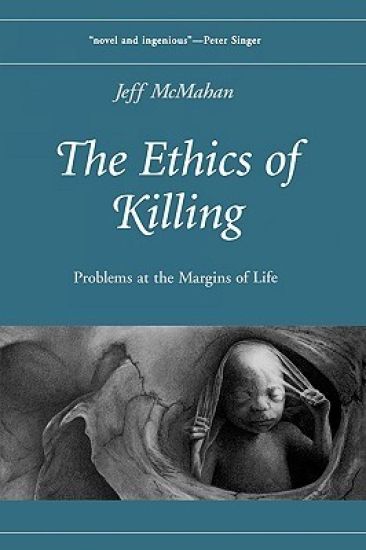
The Ethics of Killing

The Ethics of Killing

Jeff McMahan

Oxford University Press Inc
2002
sidottu
This magisterial work is the first comprehensive study of the ethics of killing, where the moral status of the individual is uncertain or controversial. Drawing on philosophical notions of personal identity and the immorality of killing, McMahan looks carefully at a host of practical issues, including abortion, infanticide, the killing of animals, assisted suicide, and euthanasia.
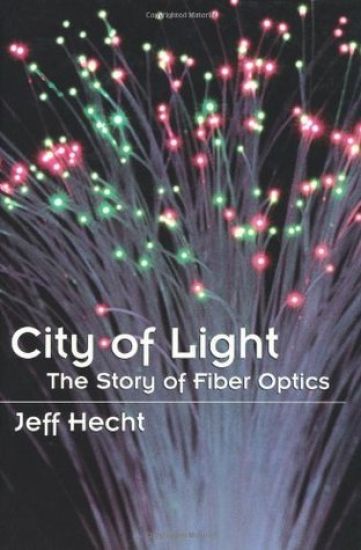
City of Light

City of Light

Jeff Hecht

Oxford University Press Inc
1999
sidottu
Fiber optic technology is revolutionizing telecommunications and thus our lives. Networks of opitcal fibers have spread around the world, opening the door to the possibility of a new information age, and spurring telephone and cable television companies into a billion-dollar race for control over the next generation of services and equipment. The story of this technology is fascinating complex, and largely untold. Hecht tells this story, from its beginning in 19th-century attempts to guide light, for purposes of illuminating the insides of the human body, to today's mysterious, ubiquitous communications technologies. We hear the crucial conversation in 1951 that led to the realization that optical fibers might conduct light if coated with a layer of transparent material. Hecht also describes the medical technologies developed in the 1960's, which allowed doctors to see inside patients' stomachs and better understand gastric disorders. And we learn of the race to develop fiber-optic technology that could control the laser, the brilliant concentrated beam that captured the imagination of the physics community. This history is meticulously detailed from beginning to end, allowing for explorations of experiments that now seem strange and even humorous, but nonetheless illuminate the origins of the technology. We get the whole story, including the huge range of contributing characters, accidents, and revolutionary ideas. The book is infused with the spirit of fascination and fun, and the reader will enjoy the story for its own sake, as well for the historical picture it provides of a technology on which we all depend.
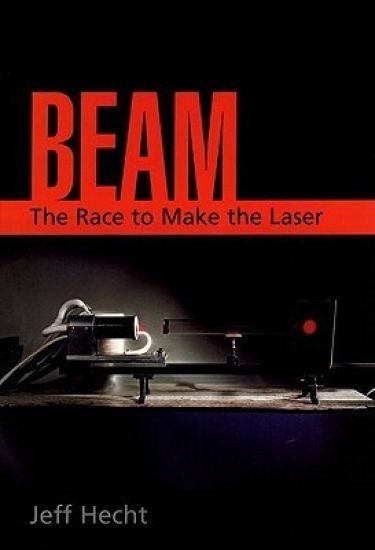
Beam

Beam

Jeff Hecht

Oxford University Press Inc
2005
sidottu
In 1954, Charles Townes invented the laser's microwave cousin, the maser. The next logical step was to extend the same physical principles to the shorter wavelengths of light, but the idea did not catch fire until October 1957, when Townes asked Gordon Gould about Gould's research on using light to excite thallium atoms. Each took the idea and ran with it. The independent-minded Gould sought the fortune of an independent inventor; the professorial Townes sought the fame of scientific recognition. Townes enlisted the help of his brother-in-law, Arthur Schawlow, and got Bell Labs into the race. Gould turned his ideas into a patent application and a million-dollar defense contract. They soon had company. Ali Javan, one of Townes's former students, began pulling 90-hour weeks at Bell Labs with colleague Bill Bennett. And far away in California a bright young physicist named Ted Maiman became a very dark horse in the race. While Schawlow proclaimed that ruby could never make a laser, Maiman slowly convinced himself it would. As others struggled with recalcitrant equipment and military secrecy, Maiman built a tiny and elegant device that fit in the palm of his hand. His ruby laser worked the first time he tried it, on May 16, 1960, but afterwards he had to battle for acceptance as the man who made the first laser. Beam is a fascinating tale of a remarkable and powerful invention that has become a symbol of modern technology.
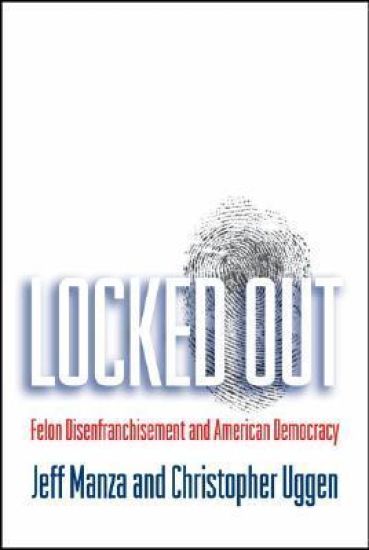
Locked Out

Locked Out

Jeff Manza; Christopher Uggen

Oxford University Press Inc
2006
sidottu
5.4 million Americans--1 in every 40 voting age adults-- are denied the right to participate in democratic elections because of a past or current felony conviction. In several American states, 1 in 4 black men cannot vote due to a felony conviction. In a country that prides itself on universal suffrage, how did the United States come to deny a voice to such a large percentage of its citizenry? What are the consequences of large-scale disenfranchisement--both for election outcomes, and for public policy more generally? Locked Out exposes one of the most important, yet little known, threats to the health of American democracy today. It reveals the centrality of racial factors in the origins of these laws, and their impact on politics today. Marshalling the first real empirical evidence on the issue to make a case for reform, the authors' path-breaking analysis will inform all future policy and political debates on the laws governing the political rights of criminals.
City of Light

City of Light

Jeff Hecht

Oxford University Press Inc
2004
nidottu
City of Light tells the story of fiber optics, tracing its transformation from 19th-century parlor trick into the foundation of our global communications network. Written for a broad audience by a journalist who has covered the field for twenty years, the book is a lively account of both the people and the ideas behind this revolutionary technology. The basic concept underlying fiber optics was first explored in the 1840s when researchers used jets of water to guide light in laboratory demonstrations. The idea caught the public eye decades later when it was used to create stunning illuminated fountains at many of the great Victorian exhibitions. The modern version of fiber optics--using flexible glass fibers to transmit light--was discovered independently five times through the first half of the century, and one of its first key applications was the endoscope, which for the first time allowed physicians to look inside the body without surgery. Endoscopes became practical in 1956 when a college undergraduate discovered how to make solid glass fibers with a glass cladding. With the invention of the laser, researchers grew interested in optical communications. While Bell Labs and others tried to send laser beams through the atmosphere or hollow light pipes, a small group at Standard Telecommunication Laboratories looked at guiding light by transparent fibers. Led by Charles K. Kao, they proposed the idea of fiber-optic communications and demonstrated that contrary to what many researchers thought glass could be made clear enough to transmit light over great distances. Following these ideas, Corning Glass Works developed the first low-loss glass fibers in 1970. From this point fiber-optic communications developed rapidly. The first experimental phone links were tested on live telephone traffic in 1977 and within half a dozen years long-distance companies were laying fiber cables for their national backbone systems. In 1988, the first transatlantic fiber-optic cable connected Europe with North America, and now fiber optics are the key element in global communications. The story continues today as fiber optics spread through the communication grid that connects homes and offices, creating huge information pipelines and replacing copper wires. The book concludes with a look at some of the exciting potential developments of this technology.
The Ethics of Killing

The Ethics of Killing

Jeff McMahan

Oxford University Press Inc
2003
nidottu
This magisterial work is the first comprehensive study of the ethics of killing, where the moral status of the individual killed is uncertain. Drawing on philosophical notions of personal identity and the immorality of killing, McMahan looks carefully at a host of practical issues, including abortion, infanticide, the killing of animals, assisted suicide, and euthanasia.
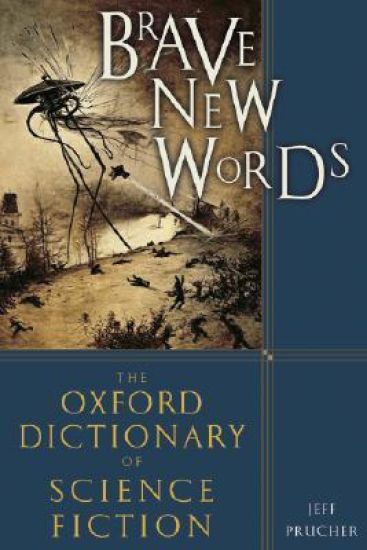
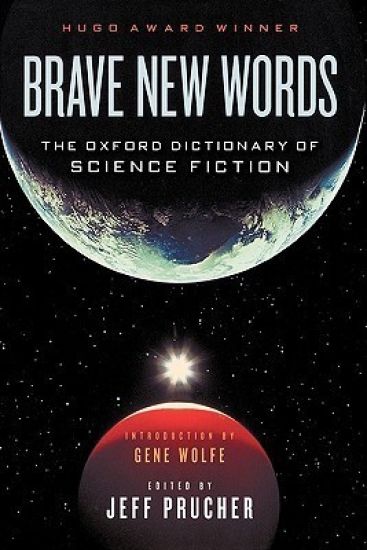
Brave New Words

Brave New Words

Jeff Prucher

Oxford University Press Inc
2007
sidottu
The shared language of science fiction is covered in this historical dictionary that shows how science-fiction words and their associated concepts have developed over time and includes more than three thousand terms and an analysis of the influence of science fiction on the English language.
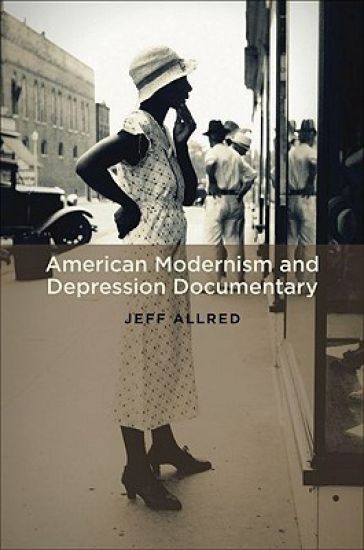
American Modernism and Depression Documentary

American Modernism and Depression Documentary

Jeff Allred

Oxford University Press Inc
2009
sidottu
American Modernism and Depression Documentary surveys the uneven terrain of American modernity through the lens of the documentary book. Jeff Allred argues that photo-texts of the 1930s stage a set of mediations between rural hinterlands and metropolitan areas, between elite producers of culture and the "forgotten man" of Depression-era culture, between a myth of consensual national unity and various competing ethnic and regional collectivities. In light of the complexity this entails, this study takes issue with a critical tradition that has painted the "documentary expression" of the 1930s as a simplistic and propagandistic divergence from literary modernism. Allred situates these texts, and the "documentary modernism" they represent, as a central part of American modernism and response to American modernity, as he looks at the impoverished sharecroppers depcited in the groundbreaking Let Us Now Praise Famous Men, the disenfranchised African Americans in Richard Wright's polemical 12 Million Black Voices, and the experiments in Depression-era photography found in Life magazine.
Locked Out

Locked Out

Jeff Manza; Christopher Uggen

Oxford University Press Inc
2008
nidottu
"Mr. Manza and Mr. Uggen... wade into one of the most contested empirical debates in political science: How many (if any) recent American elections would have gone differently if all former felons had been allowed to vote?"--The Chronicle of Higher Education. Jeff Manza and Christopher Uggen, who understand the vastness of the jailers' reach, follow the story out of the cell and into the voting booth. Locked Out examines how the disenfranchisement of felons shapes American democracyhardly a hypothetical matter in an age of split electorates and hanging chads.... Exacting and fair, their work should persuade even those who come to the subject skeptically that an injustice is at hand.The New York Review of Books. 5.4 million Americans--1 in every 40 voting age adultsare denied the right to participate in democratic elections because of a past or current felony conviction. In several American states, 1 in 4 black men cannot vote due to a felony conviction. In a country that prides itself on universal suffrage, how did the United States come to deny a voice to such a large percentage of its citizenry? What are the consequences of large-scale disenfranchisement--for election outcomes, for the reintegration of former offenders back into their communities, and for public policy more generally? Locked Out exposes one of the most important, yet little known, threats to the health of American democracy today. It reveals the centrality of racial factors in the origins of these laws, and their impact on politics today. Marshalling the first real empirical evidence on the issue to make a case for reform, the authors' path-breaking analysis will inform all future policy and political debates on the laws governing the political rights of criminals.
Mourning the Unborn Dead

Mourning the Unborn Dead

Jeff Wilson

Oxford University Press Inc
2009
sidottu
Many Western visitors to Japan have been struck by the numerous cemeteries for aborted fetuses, which are characterized by throngs of images of the Bodhisattva Jizo, usually dressed in red baby aprons or other baby garments, and each dedicated to an individual fetus. Abortion is common in Japan and as a consequence one of the frequently performed rituals in Japanese Buddhism is mizuko-kuyo, a ceremony for aborted and miscarried fetuses. Over the past forty years, mizuko-kuyo has gradually come to America, where it has been appropriated by non-Buddhists as well as Buddhist practitioners. In this book, Jeff Wilson examines how and why Americans of different backgrounds have brought knowledge and performance of this Japanese ceremony to the United States. Drawing on his own extensive fieldwork in Japan and the U.S., as well as the literature in both Japanese and English, Wilson shows that the meaning and purpose of the ritual have changed greatly in the American context. In Japan, mizuko-kuyo is performed to placate the potentially dangerous spirit of the angry fetus. In America, however, it has come to be seen as a way for the mother to mourn and receive solace for her loss. Many American women who learn about mizuko-kuyo are struck by the lack of such a ceremony and see it as filling a very important need. Ceremonies are now performed even for losses that took place many years ago. Wilson's well-written study not only contributes to the growing literature on American Buddhism, but sheds light on a range of significant issues in Buddhist studies, interreligious contact, women's studies, and even bioethics.
Brave New Words

Brave New Words

Jeff Prucher

Oxford University Press Inc
2009
nidottu
From Ray Bradbury to Neil Gaiman, from Blade Runner to "Battle Star Galactica", science fiction has emerged from the margins of popular culture to claim a significant presence across media in print, film, and television. It has shaped our vision of the future and the way we talk about it. Brave New Words, the first historical dictionary devoted to science fiction, has been described by the Library Journal as "an admirable and unique source that demonstrates on nearly every page the surprising extent to which the language of science fiction has entered everyday English terms." It shows exactly how science-fictional words and their associated concepts have developed over time, with full citations and bibliographic information. In addition, the book demonstrates how many words we consider everyday vocabulary-words like "spacesuit," "blast off," and "robot"-had their roots in imaginative literature, and not in hard science. Brave New Words was first published in hardcover in May 2007. On August 9th 2008, the first edition was named recipient of the prestigious Hugo Award (for Best Related Book), given to the best science fiction titles of the previous year.
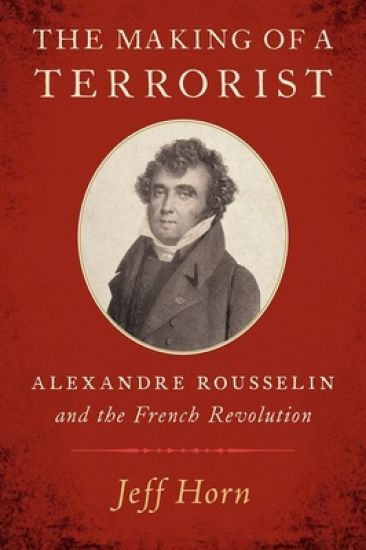
The Making of a Terrorist

The Making of a Terrorist

Jeff Horn

Oxford University Press Inc
2021
sidottu
Much has been written about the French Revolution and especially its bloody phase known as the Reign of Terror. The actions of the leaders who unleashed the massacres and public executions, especially Maximilien Robespierre and Georges Danton, are well known. They inspired many soldiers in the Revolutionary cause, who did not survive, let alone thrive, in the post-Revolutionary world. In this work of historical reconstruction, Jeff Horn recounts the life of Alexandre Rousselin and narrates the history of the age of the French Revolution from the perspective of an eyewitness. From a young age, Rousselin worked for and with some of the era's most important men and women, giving him access to the corridors of power. Dedication to the ideals of the Revolution led him to accept the need for a system of Terror to save the Republic in 1793-94. Rousselin personally utilized violent methods to accomplish the state's goals in Provins and Troyes. This terrorism marked his life. It led to his denunciation by its victims. He spent the next five decades trying to escape the consequences of his actions. His emotional responses as well as the practical measures he took to rehabilitate his reputation illuminate the hopes and fears of the revolutionaries. Across the first four decades of the nineteenth century, Rousselin acquired a noble title, the comte de Saint-Albin, and emerged as a wealthy press baron of the liberal newspaper Le Constitutionnel. But he could not escape his past. He retired to write his own version of his legacy and to protect his family from the consequences of his actions as a terrorist during the French Revolution. Rousselin's life traces the complex twists and turns of the Revolution and demonstrates how one man was able to remake himself, from a revolutionary to a liberal, to accommodate regime change.
Partial Hegemony

Partial Hegemony

Jeff D. Colgan

Oxford University Press Inc
2021
sidottu
The global history of oil politics, from World War I to the present, can teach us much about world politics, climate change, and international order in the twenty-first century. When and why does international order change? The largest peaceful transfer of wealth across borders in all of human history began with the oil crisis of 1973. OPEC countries turned the tables on the most powerful businesses on the planet, quadrupling the price of oil and shifting the global distribution of profits. It represented a huge shift in international order. Yet, the textbook explanation for how world politics works-that the most powerful country sets up and sustains the rules of international order after winning a major war-doesn't fit these events, or plenty of others. Instead of thinking of "the" international order as a single thing, Jeff Colgan explains how it operates in parts, and often changes in peacetime. Partial Hegemony offers lessons for leaders and analysts seeking to design new international governing arrangements to manage an array of pressing concerns ranging from US-China rivalry to climate change, and from nuclear proliferation to peacekeeping. A major contribution to international relations theory, this book promises to reshape our understanding of the forces driving change in world politics.
Partial Hegemony

Partial Hegemony

Jeff D. Colgan

Oxford University Press Inc
2021
nidottu
The global history of oil politics, from World War I to the present, can teach us much about world politics, climate change, and international order in the twenty-first century. When and why does international order change? The largest peaceful transfer of wealth across borders in all of human history began with the oil crisis of 1973. OPEC countries turned the tables on the most powerful businesses on the planet, quadrupling the price of oil and shifting the global distribution of profits. It represented a huge shift in international order. Yet, the textbook explanation for how world politics works-that the most powerful country sets up and sustains the rules of international order after winning a major war-doesn't fit these events, or plenty of others. Instead of thinking of "the" international order as a single thing, Jeff Colgan explains how it operates in parts, and often changes in peacetime. Partial Hegemony offers lessons for leaders and analysts seeking to design new international governing arrangements to manage an array of pressing concerns ranging from US-China rivalry to climate change, and from nuclear proliferation to peacekeeping. A major contribution to international relations theory, this book promises to reshape our understanding of the forces driving change in world politics.