Kirjojen hintavertailu. Mukana 11 717 486 kirjaa ja 12 kauppaa.

Kirjahaku

Etsi kirjoja tekijän nimen, kirjan nimen tai ISBN:n perusteella.

1000 tulosta hakusanalla Jeffrey Toobin

Publishing Plates

Publishing Plates

Jeffrey M. Makala

Pennsylvania State University Press
2022
sidottu
First realized commercially in the late eighteenth century, stereotyping—the creation of solid printing plates cast from moveable type—fundamentally changed the way in which books were printed. Publishing Plates chronicles the technological and cultural shifts that resulted from the introduction of this technology in the United States.The commissioning of plates altered shop practices, distribution methods, and even the author-publisher relationship. Drawing on archival records, Jeffrey M. Makala traces the first uses of stereotyping in Philadelphia in 1812, its adoption by printers in New York and Philadelphia, and its effects on the trade. He looks closely at the printers, typefounders, authors, and publishers who watched small, regional, artisan-based printing traditions rapidly evolve, clearing the way for the industrialized publishing industry that would emerge in the United States at midcentury. Through case studies of the publisher Mathew Carey and the American Bible Society, one of the first publishers of cheap Bibles, Makala explores the origins of the American publishing industry and American mass media. In addition, Makala examines changes in the notion of authorship, copyright, and language and their effects on writers and literary circles, giving examples from the works and lives of Herman Melville, Sojourner Truth, Edgar Allan Poe, Henry David Thoreau, and Walt Whitman, among others. Incorporating perspectives from the fields of book history, the history of technology, material culture studies, and American studies, this book presents a rich, detailed history of an innovation that transformed American culture.

Publishing Plates

Publishing Plates

Jeffrey M. Makala

Pennsylvania State University Press
2024
pokkari
First realized commercially in the late eighteenth century, stereotyping—the creation of solid printing plates cast from moveable type—fundamentally changed the way in which books were printed. Publishing Plates chronicles the technological and cultural shifts that resulted from the introduction of this technology in the United States.The commissioning of plates altered shop practices, distribution methods, and even the author-publisher relationship. Drawing on archival records, Jeffrey M. Makala traces the first uses of stereotyping in Philadelphia in 1812, its adoption by printers in New York and Philadelphia, and its effects on the trade. He looks closely at the printers, typefounders, authors, and publishers who watched small, regional, artisan-based printing traditions rapidly evolve, clearing the way for the industrialized publishing industry that would emerge in the United States at midcentury. Through case studies of the publisher Mathew Carey and the American Bible Society, one of the first publishers of cheap Bibles, Makala explores the origins of the American publishing industry and American mass media. In addition, Makala examines changes in the notion of authorship, copyright, and language and their effects on writers and literary circles, giving examples from the works and lives of Herman Melville, Sojourner Truth, Edgar Allan Poe, Henry David Thoreau, and Walt Whitman, among others. Incorporating perspectives from the fields of book history, the history of technology, material culture studies, and American studies, this book presents a rich, detailed history of an innovation that transformed American culture.

Hollywood Auteur

Hollywood Auteur

Jeffrey Chown

Praeger Publishers Inc
1988
sidottu
In this extensive, critical survey of Francis Coppola's films, Chown attempts an auteur theory analysis tempered with an interesting overview of the turbulent economic and corporate controversies that have surrounded Coppola. The book follows Coppola's career in chronological order, from You're a Big Boy Now (1967) to Gardens of Stone (1987). Chown is less concerned with Coppola's themes than with his financially ruinous quest for a cinema that is both commercial and personal, and publicly accessible as well as visually experimental and narratively nonlinear. Chown concedes that these seemingly contradictory goals are not always achieved by Coppola, but he presents a timely defense of one of the most important new Hollywood filmmakers of the 1970s. The book also offers a much needed introduction to Coppola's work as a screenwriter in the 1960s, contrasting his early narrative skills with his evolving desire to break away from narrative structure. Highly recommended for public and academic libraries, community college level up. ChoiceHollywood Auteur details the struggle between art and commerce in Hollywood filmmaking as exemplified by the career of Francis Coppola. Amid the dealmaking, creative compromise, and collaboration of modern American filmmaking, Coppola's career demonstrates how problematic the term auteur is in this milieu. Chown assesses the romanticism surrounding the cult of film directors in general and Coppola in particular. He argues that, ultimately, the idea that the actual personal vision of one director can be expressed in big-budget Hollywood films is highly suspect. Yet, the weight of this insightful volume suggests that Coppola may have an individualistic genius in the management of his career. Chown concludes that Coppola's status as a role model for a generation of young filmmakers and directors is well earned.
The Public Debt of the United States

The Public Debt of the United States

Jeffrey A. Cantor; Donald R. Stabile

Praeger Publishers Inc
1991
sidottu
Based on extensive primary source analysis and in-depth interviews with key figures in the field of public debt administration and policy development, this volume presents a comprehensive history of the U.S. public debt from 1775--when the first debt was incurred to finance the Revolutionary War--to the present. The authors document how the public debt has accumulated and review the methods the government has employed to manage and administer it. They describe the impact of wars, depressions, and macroeconomic policy on the growth of the debt and detail how the handling of the debt was linked to the evolution of the banking system. Their goal throughout is to put the current debt situation into historical perspective, providing an objective evaluation of both the current levels of debt growth and the effectiveness of debt management policies and administration.Following an introductory chapter, the study is arranged chronologically and begins with three chapters which describe the management of the public debt through 1900--a period during which the public debt was relatively small and its management simple. The debt was small, the authors show, because prevailing attitudes toward public finance fostered a fiscal system that relied on balanced budgets, except in wartime. The remaining chapters focus on twentieth century debt growth, administration, and management. A shift in policy away from balanced budgets and a public attitude of less concern about payment of the public debt have made federal budget deficits the norm, the authors demonstrate, and such running deficits require complex debt administration measures. The evolution of the system of debt management and administration that is coordinated by the Treasury Department, the Federal Reserve, and the Bureau of Public Debt is a major focus of these chapters. Challenging the views of many analysts and observers, the authors conclude that the recent growth of the public debt is no greater than that which has occurred in other periods, and that government policies of debt management and administration have been effective and timely and have made good use of modern technology. An important contribution to the literature of economic history, this book will also be of significant interest to scholars in economic policy, economic theory, and public policy.
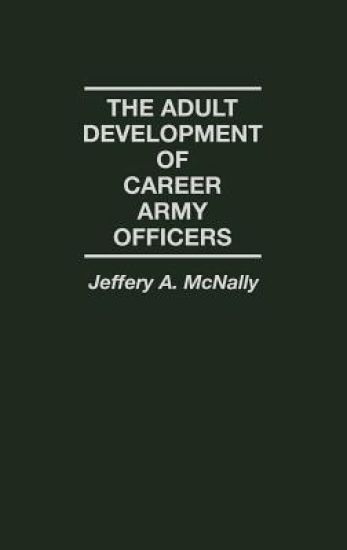
The Adult Development of Career Army Officers

The Adult Development of Career Army Officers

Jeffrey Mcnally

Praeger Publishers Inc
1991
sidottu
Although adult development recently has begun to receive increased attention from researchers, current studies have been limited mainly to specific aspects of adult development and have not provided a clear view of the meaning of the whole of adult life. Broadening this focus, and at the same time concentrating on a specific occupational group, Jeffrey A. McNally presents the results of his three-year study of successful career Army officers. His inquiry, which draws on Daniel Levinson's theory of adult development, provides an analysis of the sequential patterns that characterize the development of the adult lives of successful career Army officers. After reviewing Levinson's theory of how lives develop during adulthood, McNally looks at the developmental and transitional periods experienced by the Army officers he studied from pre-adulthood to their early forties. The study examines the impact of living and working within a highly ordered, systematic organizational structure such as the military upon the way in which these adult lives unfold. The author finds that, despite the unique aspects of a career in the military, his subjects experienced similar patterns and sequences to those predicted by Levinson's theory of adult development. Based on frequent, wide-ranging interviews over a three-year period of time--interviews which covered aspects of each subject's life from career to marriage, children, friends, religion, etc.--this work is the first to provide an in-depth picture of the military officer's life. A unique resource for the study of adult development and the profession of the military, this book will be of special interest to military officers and those interested in adult development and developmental psychology.
A Guide to Academic Writing

A Guide to Academic Writing

Jeffrey A. Cantor

Praeger Publishers Inc
1993
nidottu
This book is a comprehensive guide to academic writing and publishing. It approaches the subject from a descriptive foundation for understanding academic tenure and promotion decisionmaking. The book then treats the considerations for selecting the avenues open to an academic for publishing: conference papers, grants, journals, scholarly books, texts, and popular or trade books. Each avenue is given a chapter-length discussion. Electronic media is also described in detail. Finally, Cantor offers a view of the marketing of a book product.
Cutting the Edge

Cutting the Edge

Jeffrey Ian Ross

Praeger Publishers Inc
1998
sidottu
This book introduces the reader to the critical issues, important trends, theories, and various subdisciplines in the current manifestation of radical and critical criminology and criminal justice, including postmodernism, left realism, feminism, and peacemaking. Since its articulation in the 1960s, radical and critical criminology has matured into a diverse body of work encompassing a variety of interesting perspectives. Contributors to this volume examine emerging issues in the theory (the importance of classics in radical theory, the market economy, the introduction of anarchist theory) and traditional concerns of criminology and criminal justice (white collar crime, police, prisons, community corrections, courts/sentencing), but from a critical perspective.This book showcases current scholarship in this often neglected area of theory and praxis with contributions by respected academics in the field of radical and critical criminology. These individuals represent a diversity of nationalities, races, ethnicities, religions, and genders. The reader will find their conclusions not only thought-provoking and stimulating, but highly accessible as well.
Inventing the Flat Earth

Inventing the Flat Earth

Jeffrey B. Russell

Praeger Publishers Inc
1997
nidottu
Neither Christopher Columbus nor his contemporaries thought the earth was flat. Yet this curious illusion persists today, firmly established with the help of the media, textbooks, teachers—even noted historians. Inventing the Flat Earth is Russell's attempt to set the record straight. He begins with a discussion of geographical knowledge in the Middle Ages, examining what Columbus and his contemporaries actually did believe, and then moves to a look at how the error was first propagated in the 1820s and 1830s and then snowballed to outrageous proportions by the late 19th century. But perhaps the most intriguing focus of the book is the reason why we allow this error to persist. Do we prefer to languish in a comfortable and familiar error rather than exert the effort necessary to discover the truth? This uncomfortable question is engagingly answered. Inventing the Flat Earth is Jeffrey Burton Russell's attempt to set the record straight. He begins with a discussion of geographical knowledge in the Middle Ages, examining what Columbus and his contemporaries actually did believe, and then moves to a look at how the error was first propagated in the 1820s and 1830s—including how noted writers Washington Irving and Antoinne-Jean Letronne were among those responsible. He shows how later day historians followed these original mistakes, and how this snowball effect grew to outrageous proportions in the late nineteenth century, when Christians opposed to Darwinism were labelled as similar to Medieval Christians who (allegedly) thought the earth was flat. But perhaps the most intriguing focus of the book is the reason why we allow this error to persist. Do we prefer to languish in a comfortable and familiar error rather than exert the effort necessary to discover the truth? This uncomfortable question is engagingly answered, and includes a discussion about the implications of this for historical knowledge and scholarly honesty.
Domestic Constraints and the Breakdown of International Agreements
This book explores how elite commitments to cooperate with international organizations can be supplanted by domestic political constraints. It contends that the most popular explanation for defections from international commitments in the foreign policy analysis literature, the two-level game model presented by Robert Putnam, does not fully account for surprising defections from agreements. A new framework is presented which interprets international defections as the product of domestic constraints on foreign policy-making that often materialize in the post-commitment ratification process, the period when domestic conditions and actors align relative to an international agreement.To explore the dynamics of post-commitment politics, eight cases studies of the foreign policy decision-making process in the Federal Republic of Germany relative to commitments to the European Community and NATO in the 1970s and 1980s are presented. A comparative analysis of the cases demonstrates the importance of modifying the two-level game model to account for the sequential and complex nature of the ratification process in the post-commitment phase. The study concludes that factionalism in the major party government and inter-party coalition differences are primary, but often hidden, constraints on a leader's ability to uphold international agreements, and it shows how international commitments can awaken dormant domestic constituencies along the road to ratification. This is a work of great significance to scholars and researchers in the areas of foreign policy analysis, international organizations, and German politics.
Johnson's War/Johnson's Great Society

Johnson's War/Johnson's Great Society

Jeffrey W. Helsing

Praeger Publishers Inc
2000
sidottu
Helsing provides a unique perspective on the escalation of the Vietnam War. He examines what many analysts and former policymakers in the Johnson administration have acknowledged as a crucial factor in the way the United States escalated in Vietnam: Johnson's desire for both guns and butter—his belief that he must stem the advance of communism in Southeast Asia while pursuing a Great Society at home.He argues that the United States government, the president, and his key advisers in particular engaged in a major pattern of deception in how the United States committed its military force in Vietnam. He then argues that a significant sector of the government was deceived as well. The first half of the book traces and analyzes the pattern of deception from 1964 through July 1965. The second half shows how the military and political decisions to escalate influenced—and were influenced by—the economic advice and policies being given the President. This in-depth analysis will be of particular concern to scholars, students, and researchers involved with U.S. foreign and military policy, the Vietnam War, and Presidential war powers.
Integrating Work and Family

Integrating Work and Family

Jeffrey H. Greenhaus; Saroj Parasuraman

Praeger Publishers Inc
1999
nidottu
Despite calls for a renewal of family values and the proliferation of corporate work-family programs, the goal of achieving a healthy balance between the demands of work and a satisfying family life remains elusive. Dr. Parasuraman, Dr. Greenhaus, and the contributors to this well-balanced and thoughtful volume examine this increasingly prevalent social dilemma from a stakeholder perspective. They see work-family tensions as a multifaceted social issue, and they examine the nature and consequences of these tensions from the viewpoints of individuals, employers, consultants, counseling professionals, and other service providers. Their inclusion of legal, cultural, international, and research perspectives and recognition of the unique concerns of vulnerable groups, such as nonexempt employees and ethnic minorities, add to the breadth of coverage. Academics in the social and behavioral sciences, executive decision-makers in government and business, human resource professionals, and employed men and women interested in achieving work-life balance will find this volume insightful, stimulating, and useful.The editors have arranged their book into five parts and 21 chapters. Part I provides a broad overview of the environmental factors impacting work and family. It then identifies the critical issues and challenges facing individuals, families, and employees in managing the complex interdependencies between work and family roles. In Part II they provide a view of the issues from the vantage point of specific stakeholders. Part III concentrates on the role of culture in shaping ideology, policies, and practices concerning work and family and the relationships among them. Part IV examines the impact of career development programs on employees and their families. It also discusses the effectiveness of alternative career tracks, various usages of work-family benefits by women and men, and the roles employers and employees can play in legitimizing alternative career paths. Part V concludes the book by examining the cultural barriers to achieving more effective integration of work and family, and by analyzing the appropriate role of key stakeholders in addressing work-family problems.
Making News of Police Violence

Making News of Police Violence

Jeffrey Ian Ross

Praeger Publishers Inc
2000
sidottu
Although many people consider excessive police violence disconcerting, if, when, and how they voice their opinion or respond by taking some sort of action has generally remained empirically unknown. In the hope of understanding this process, Ross has developed a four-stage model, based on a review of the literature and on interviews with the relevant actors. He then uses this tool to analyze police violence that occurred in Toronto, Canada and New York City, over a fifteen-year period. To better focus the study, he uses in-depth case studies of three well-publicized cases of police violence from each city, matched on important criteria.This study addresses a difficult, timely, and important topic for victims, for police personnel, and for society. Ross concludes that, in general, most individuals do not respond to police use of excessive force; further, if and when they do usually depends on the context of the violence. Using both quantitative and qualitative methods, Ross's model integrates a variety of approaches to improve our understanding of how communities come to define and control the use of force by police, including literature on the role of media efforts and their impact upon police violence. The work concludes with an analysis of the reasons why people react so infrequently to incidents of excessive force.
Negotiated Sovereignty

Negotiated Sovereignty

Jeffrey S. Ashley; Secody J. Hubbard

Praeger Publishers Inc
2003
sidottu
Ashley and Hubbard examine ways that tribal/state relations can be improved in the United States. While the long history of tribal-state relations point to the need for better cooperation, they contend that the first and most vital step is a greater understanding of the role that tribal governments play in the federal system. All too often, they assert, tribes are overlooked as viable political entities with unique legal and political status.They begin by providing background information needed for an understanding of the position that tribal governments hold in the broader United States system. Often overlooked is that tribal governments are, by legal standards, equal to or greater than states. The federal/tribal/state order of primacy must be established in order to understand state/tribal intergovernmental relations. Ashley and Hubbard then provide case studies necessary to provide evidence of both positive and negative tribal/state relations. Following a brief background of the tribe in question—where they are located, any pertinent treaty information—they examine instances over time where this particular government has been in conflict or concert with the state in which they currently reside. This lays a foundation for understanding current relations. They then look at the level of cooperation—or lack thereof—between the tribe and the state across key areas of policy making and implementation—air pollution control, water management, and law enforcement. Through this they pinpoint common themes that facilitate or work against cooperative efforts. They conclude by proposing an alternative model for understanding tribal/state relations and offer an alternative approach for both sides when dealing with one another; one designed to improve cooperative handling of issues.
The Ramparts of Nations

The Ramparts of Nations

Jeffrey M. Togman

Praeger Publishers Inc
2001
sidottu
Togman provides a comparative analysis of French and U.S. immigration policies from 1945 to 2000. He explores why nations implement the immigration policies they do, why some governments allow or even encourage large-scale immigration while others restrict it, why some states shift from liberal to restrictive entry policies and vice versa. Focusing on critical historical junctures, Togman illustrates how different institutional structures in France and the United States led these countries to implement divergent entry policies. Political institutions are shown to act as an intervening variable, helping determine what, if any, influence other factors such as economic conditions and cultural traditions have over a nation's immigration laws. Scholars and students of French politics, U.S. politics, comparative politics, and immigration policies will find this work helpful.
Strategic Dilemmas and the Evolution of German Foreign Policy since Unification
Lantis examines continuity and change in German foreign policy in the decade since unification. Between 1949 and 1990, the Federal Republic of Germany pursued one of the most consistent foreign policy patterns of any Western power. Restrictions on an assertive German military posture became deeply rooted in the public psyche, in foreign policy tradition, and in the Basic Law. However, the end of the Cold War, the collapse of the Soviet Union, and the unification of Germany have fundamentally changed the international and domestic parameters of German foreign policy. A review of contemporary developments shows that a dramatic evolution of German foreign policy is currently underway—from checkbook diplomacy in the Gulf War to the humanitarian relief mission in the Horn of Africa, and from Contact Group diplomacy to airstrikes in Kosovo.To explore this evolution of German foreign policy since unification, Lantis presents an innovative model of external-internal linkages derived from two important areas of scholarship on the role of international crises as catalysts for foreign policy change and the importance of domestic political conditions that ultimately determine the scope and pace of such change. Five original case studies place German political debates about how best to respond to challenges of the post-Cold War era in social and historical context by drawing on discursive analyses of government documents, parliamentary debates, and elite interviews. These cases illustrate the rise of a new consensus on the political left for engagement in global affairs, reinterpretations of historical lessons for contemporary German policy, and the constitutional challenges of global activism since unification. Of particular interest to scholars, students, and researchers involved with German politics, international security policy, and comparative foreign policy.
The Art of Nonfiction Movie Making

The Art of Nonfiction Movie Making

Jeffrey Friedman; Michael Fox; Rob Epstein; Sharon Wood

Praeger Publishers Inc
2012
sidottu
The past few years have featured such blockbusters as Super-Size Me, Fahrenheit 9/11, Sicko, March of the Penguins, and An Inconvenient Truth. And as news articles proclaim a new era in the history of documentary films, more and more new directors are making their first film a nonfiction one. But in addition to posing all of the usual challenges inherent to more standard filmmaking, documentaries also present unique problems that need to be understood from the outset. Where does the idea come from? How do you raise the money? How much money do you need? What visual style is best suited to the story? What are the legal issues involved? And how can a film reach that all-important milestone and find a willing distributor? Epstein, Friedman, and Wood tackle all of these important questions with examples and anecdotes from their own careers. The result is an informative and entertaining guide for those just starting out, and an enlightening read for anyone interested in a behind-the-scenes look at this newly reinvigorated field of film.
The Culture of Migration in Southern Mexico

The Culture of Migration in Southern Mexico

Jeffrey H. Cohen

University of Texas Press
2004
pokkari
Migration is a way of life for many individuals and even families in the Mexican state of Oaxaca. Some who leave their rural communities go only as far as the state capital, while others migrate to other parts of Mexico and to the United States. Most send money back to their communities, and many return to their homes after a few years. Migration offers Oaxacans economic opportunities that are not always available locally-but it also creates burdens for those who stay behind. This book explores the complex constellation of factors that cause rural Oaxacans to migrate, the historical and contemporary patterns of their migration, the effects of migration on families and communities, and the economic, cultural, and social reasons why many Oaxacans choose not to migrate. Jeffrey Cohen draws on fieldwork and survey data from twelve communities in the central valleys of Oaxaca to give an encompassing view of the factors that drive migration and determine its outcomes. He demonstrates conclusively that, while migration is an effective way to make a living, no single model can explain the patterns of migration in southern Mexico.
Cooperation and Community

Cooperation and Community

Jeffrey H. Cohen

University of Texas Press
2000
pokkari
In the villages and small towns of Oaxaca, Mexico, as in much of rural Latin America, cooperation among neighbors is essential for personal and community survival. It can take many forms, from godparenting to sponsoring fiestas, holding civic offices, or exchanging agricultural or other kinds of labor. This book examines the ways in which the people of Santa Ana del Valle practice these traditional cooperative and reciprocal relationships and also invent new relationships to respond to global forces of social and economic change at work within their community. Based on fieldwork he conducted in this Zapotec-speaking community between 1992 and 1996, Jeffrey Cohen describes continuities in the Santañeros' practices of cooperation, as well as changes resulting from transnational migration, tourism, increasing educational opportunities, and improved communications. His nuanced portrayal of the benefits and burdens of cooperation is buttressed by the words of many villagers who explain why and how they participate-or not-in reciprocal family and community networks. This rich ethnographic material offers a working definition of community created in and through cooperative relationships.
Postcard America

Postcard America

Jeffrey L. Meikle

University of Texas Press
2016
sidottu
Extensively illustrated with representative images, this unique book illuminates the cultural significance of the highly colorized “linen” postcards that depicted a glowing America in the 1930s and 1940s and that fascinate collectors today.From the Great Depression through the early postwar years, any postcard sent in America was more than likely a “linen” card. Colorized in vivid, often exaggerated hues and printed on card stock embossed with a linen-like texture, linen postcards celebrated the American scene with views of majestic landscapes, modern cityscapes, roadside attractions, and other notable features. These colorful images portrayed the United States as shimmering with promise, quite unlike the black-and-white worlds of documentary photography or Life magazine. Linen postcards were enormously popular, with close to a billion printed and sold.Postcard America offers the first comprehensive study of these cards and their cultural significance. Drawing on the production files of Curt Teich & Co. of Chicago, the originator of linen postcards, Jeffrey L. Meikle reveals how photographic views were transformed into colorized postcard images, often by means of manipulation-adding and deleting details or collaging bits and pieces from several photos. He presents two extensive portfolios of postcards-landscapes and cityscapes-that comprise a representative iconography of linen postcard views. For each image, Meikle explains the postcard’s subject, describes aspects of its production, and places it in social and cultural contexts. In the concluding chapter, he shifts from historical interpretation to a contemporary viewpoint, considering nostalgia as a motive for collectors and others who are fascinated today by these striking images.
Cultures of Migration

Cultures of Migration

Jeffrey H. Cohen; Ibrahim Sirkeci

University of Texas Press
2011
nidottu
Around the globe, people leave their homes to better themselves, to satisfy needs, and to care for their families. They also migrate to escape undesirable conditions, ranging from a lack of economic opportunities to violent conflicts at home or in the community. Most studies of migration have analyzed the topic at either the macro level of national and global economic and political forces, or the micro level of the psychology of individual migrants. Few studies have examined the "culture of migration"-that is, the cultural beliefs and social patterns that influence people to move.Cultures of Migration combines anthropological and geographical sensibilities, as well as sociological and economic models, to explore the household-level decision-making process that prompts migration. The authors draw their examples not only from their previous studies of Mexican Oaxacans and Turkish Kurds but also from migrants from Europe, sub-Saharan Africa, the Pacific, and many parts of Asia. They examine social, economic, and political factors that can induce a household to decide to send members abroad, along with the cultural beliefs and traditions that can limit migration. The authors look at both transnational and internal migrations, and at shorter- and longer-term stays in the receiving location. They also consider the effect that migration has on those who remain behind. The authors' "culture of migration" model adds an important new dimension to our understanding of the cultural beliefs and social patterns associated with migration and will help specialists better respond to increasing human mobility.