Kirjojen hintavertailu. Mukana 12 016 292 kirjaa ja 12 kauppaa.

Kirjahaku

Etsi kirjoja tekijän nimen, kirjan nimen tai ISBN:n perusteella.

1000 tulosta hakusanalla Jeffrey V Perry

What Is Relativity?

What Is Relativity?

Jeffrey Bennett

Columbia University Press
2014
sidottu
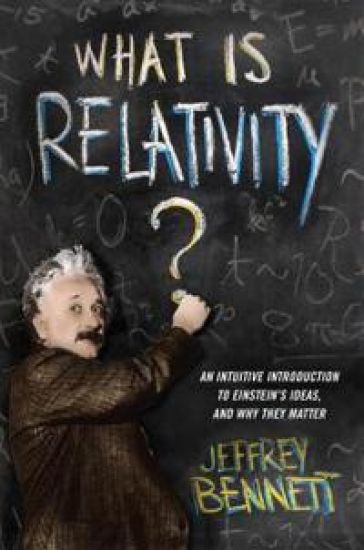
It is commonly assumed that if the Sun suddenly turned into a black hole, it would suck Earth and the rest of the planets into oblivion. Yet, as prominent author and astrophysicist Jeffrey Bennett points out, black holes don't suck. With that simple idea in mind, Bennett begins an entertaining introduction to Einstein's theories of relativity, describing the amazing phenomena readers would actually experience if they took a trip to a black hole. The theory of relativity reveals the speed of light as the cosmic speed limit, the mind-bending ideas of time dilation and curvature of spacetime, and what may be the most famous equation in history: E = mc2. Indeed, the theory of relativity shapes much of our modern understanding of the universe. It is not "just a theory"-every major prediction of relativity has been tested to exquisite precision, and its practical applications include the Global Positioning System (GPS). Amply illustrated and written in clear, accessible prose, Bennett's book proves anyone can grasp the basics of Einstein's ideas. His intuitive, nonmathematical approach gives a wide audience its first real taste of how relativity works and why it is so important to science and the way we view ourselves as human beings.
What Is Relativity?

What Is Relativity?

Jeffrey Bennett

Columbia University Press
2016
pokkari
It is commonly assumed that if the Sun suddenly turned into a black hole, it would suck Earth and the rest of the planets into oblivion. Yet, as prominent author and astrophysicist Jeffrey Bennett points out, black holes don't suck. With that simple idea in mind, Bennett begins an entertaining introduction to Einstein's theories of relativity, describing the amazing phenomena readers would actually experience if they took a trip to a black hole. The theory of relativity reveals the speed of light as the cosmic speed limit, the mind-bending ideas of time dilation and curvature of spacetime, and what may be the most famous equation in history: E = mc2. Indeed, the theory of relativity shapes much of our modern understanding of the universe. It is not "just a theory"-every major prediction of relativity has been tested to exquisite precision, and its practical applications include the Global Positioning System (GPS). Amply illustrated and written in clear, accessible prose, Bennett's book proves anyone can grasp the basics of Einstein's ideas. His intuitive, nonmathematical approach gives a wide audience its first real taste of how relativity works and why it is so important to science and the way we view ourselves as human beings.
Visions of Dystopia in China’s New Historical Novels

Visions of Dystopia in China’s New Historical Novels

Jeffrey C. Kinkley

Columbia University Press
2014
sidottu
The depiction of personal and collective suffering in modern Chinese novels differs significantly from standard Communist accounts and many Eastern and Western historical narratives. Writers such as Yu Hua, Su Tong, Wang Anyi, Mo Yan, Han Shaogong, Ge Fei, Li Rui, and Zhang Wei skew and scramble common conceptions of China's modern development, deploying avant-garde narrative techniques from Latin American and Euro-American modernism to project a surprisingly "un-Chinese" dystopian vision and critical view of human culture and ethics. The epic narratives of modern Chinese fiction make rich use of magical realism, surrealism, and unusual treatments of historical time. Also featuring graphic depictions of sex and violence, as well as dark, raunchy comedy, these novels reflect China's recent history re-presenting the overthrow of the monarchy in the early twentieth century and the resulting chaos of revolution and war; the recurring miseries perpetrated by class warfare during the dictatorship of Mao Zedong; and the social dislocations caused by China's industrialization and rise as a global power. This book casts China's highbrow historical novels from the late 1980s to the first decade of the twenty-first century as a distinctively Chinese contribution to the form of the global dystopian novel and, consequently, to global thinking about the interrelations of utopia and dystopia.
The Age of Sustainable Development

The Age of Sustainable Development

Jeffrey D. Sachs; Ban Ki-moon

Columbia University Press
2015
sidottu
Jeffrey D. Sachs is one of the world's most perceptive and original analysts of global development. In this major new work he presents a compelling and practical framework for how global citizens can use a holistic way forward to address the seemingly intractable worldwide problems of persistent extreme poverty, environmental degradation, and political-economic injustice: sustainable development. Sachs offers readers, students, activists, environmentalists, and policy makers the tools, metrics, and practical pathways they need to achieve Sustainable Development Goals. Far more than a rhetorical exercise, this book is designed to inform, inspire, and spur action. Based on Sachs's twelve years as director of the Earth Institute at Columbia University, his thirteen years advising the United Nations secretary-general on the Millennium Development Goals, and his recent presentation of these ideas in a popular online course, The Age of Sustainable Development is a landmark publication and clarion call for all who care about our planet and global justice. Visit http://cup.columbia.edu/extras/supplement/sachs-9780231173148 for additional teaching materials for students and instructors, including chapter summaries, key concepts, problem sets, and slides.
The Age of Sustainable Development

The Age of Sustainable Development

Jeffrey D. Sachs; Ban Ki-moon

Columbia University Press
2015
pokkari
Jeffrey D. Sachs is one of the world's most perceptive and original analysts of global development. In this major new work he presents a compelling and practical framework for how global citizens can use a holistic way forward to address the seemingly intractable worldwide problems of persistent extreme poverty, environmental degradation, and political-economic injustice: sustainable development. Sachs offers readers, students, activists, environmentalists, and policy makers the tools, metrics, and practical pathways they need to achieve Sustainable Development Goals. Far more than a rhetorical exercise, this book is designed to inform, inspire, and spur action. Based on Sachs's twelve years as director of the Earth Institute at Columbia University, his thirteen years advising the United Nations secretary-general on the Millennium Development Goals, and his recent presentation of these ideas in a popular online course, The Age of Sustainable Development is a landmark publication and clarion call for all who care about our planet and global justice. Visit http://cup.columbia.edu/extras/supplement/sachs-9780231173148 for additional teaching materials for students and instructors, including chapter summaries, key concepts, problem sets, and slides.
The Cinema of the Coen Brothers

The Cinema of the Coen Brothers

Jeffrey Adams

Wallflower Press
2015
sidottu
The films of the Coen brothers have become a contemporary cultural phenomenon. Highly acclaimed and commercially successful, over the years their movies have attracted increasingly larger audiences and spawned a subculture of dedicated fans. Shunning fame and celebrity, Ethan and Joel Coen remain maverick filmmakers, producing and directing independent films outside the Hollywood mainstream in a unique style combining classic genres like film noir with black comedy to tell off-beat stories about America and the American Dream. This study surveys Oscar-winning films, such as Fargo (1996) and No Country for Old Men (2007), as well as cult favorites, including O Brother, Where Art Thou? (2000) and The Big Lebowski (1998). Beginning with Blood Simple (1984), it examines major themes and generic constructs and offers diverse approaches to the Coens' enigmatic films. Pointing to the pulp fiction of Dashiell Hammett, James M. Cain, and Raymond Chandler, the study appreciates the postmodern aesthetics of the Coens' intertextual creativity.
The Cinema of the Coen Brothers

The Cinema of the Coen Brothers

Jeffrey Adams

Wallflower Press
2015
pokkari
The films of the Coen brothers have become a contemporary cultural phenomenon. Highly acclaimed and commercially successful, over the years their movies have attracted increasingly larger audiences and spawned a subculture of dedicated fans. Shunning fame and celebrity, Ethan and Joel Coen remain maverick filmmakers, producing and directing independent films outside the Hollywood mainstream in a unique style combining classic genres like film noir with black comedy to tell off-beat stories about America and the American Dream. This study surveys Oscar-winning films, such as Fargo (1996) and No Country for Old Men (2007), as well as cult favorites, including O Brother, Where Art Thou? (2000) and The Big Lebowski (1998). Beginning with Blood Simple (1984), it examines major themes and generic constructs and offers diverse approaches to the Coens' enigmatic films. Pointing to the pulp fiction of Dashiell Hammett, James M. Cain, and Raymond Chandler, the study appreciates the postmodern aesthetics of the Coens' intertextual creativity.
Facing Climate Change

Facing Climate Change

Jeffrey T. Kiehl

Columbia University Press
2016
sidottu
Facing Climate Change explains why people refuse to accept evidence of a warming planet and shows how to move past partisanship to reach a consensus for action. A climate scientist and licensed Jungian analyst, Jeffrey T. Kiehl examines the psychological phenomena that twist our relationship to the natural world and their role in shaping the cultural beliefs that distance us further from nature. He also accounts for the emotions triggered by the lived experience of climate change and the feelings of fear and loss they inspire, which lead us to deny the reality of our warming planet. But it is not too late. By evaluating our way of being, Kiehl unleashes a potential human emotional understanding that can reform our behavior and help protect the Earth. Kiehl dives deep into the human brain's psychological structures and human spirituality's imaginative power, mining promising resources for creating a healthier connection to the environment-and one another. Facing Climate Change is as concerned with repairing our social and political fractures as it is with reestablishing our ties to the world, teaching us to push past partisanship and unite around the shared attributes that are key to our survival. Kiehl encourages policy makers and activists to appeal to our interdependence as a global society, extracting politics from the process and making decisions about our climate future that are substantial and sustaining.
David Foster Wallace's Balancing Books

David Foster Wallace's Balancing Books

Jeffrey Severs

Columbia University Press
2017
sidottu
What do we value? Why do we value it? And in a neoliberal age, can morality ever displace money as the primary means of defining value? These are the questions that drove David Foster Wallace, a writer widely credited with changing the face of contemporary fiction and moving it beyond an emotionless postmodern irony. Jeffrey Severs argues in David Foster Wallace's Balancing Books that Wallace was also deeply engaged with the social, political, and economic issues of the twentieth and twenty-first centuries. A rebellious economic thinker, Wallace satirized the deforming effects of money, questioned the logic of the monetary system, and saw the world through the lens of value's many hidden and untapped meanings. In original readings of all of Wallace's fiction, from The Broom of the System and Infinite Jest to his story collections and The Pale King, Severs reveals Wallace to be a thoroughly political writer whose works provide an often surreal history of financial crises and economic policies. As Severs demonstrates, the concept of value occupied the intersection of Wallace's major interests: economics, work, metaphysics, mathematics, and morality. Severs ranges from the Great Depression and the New Deal to the realms of finance, insurance, and taxation to detail Wallace's quest for balance and grace in a world of excess and entropy. Wallace showed characters struggling to place two feet on the ground and restlessly sought to "balance the books" of a chaotic culture. Explaining why Wallace's work has galvanized a new phase in contemporary global literature, Severs draws connections to key Wallace forerunners Don DeLillo, Thomas Pynchon, and William Gaddis, as well as his successors-including Dave Eggers, Teddy Wayne, Jonathan Lethem, and Zadie Smith-interpreting Wallace's legacy in terms of finance, the gift, and office life.
Hubert Harrison

Hubert Harrison

Jeffrey B. Perry

Columbia University Press
2020
sidottu
The St. Croix–born, Harlem-based Hubert Harrison (1883–1927) was a brilliant writer, orator, educator, critic, and activist who combined class consciousness and anti-white-supremacist race consciousness into a potent political radicalism. Harrison’s ideas profoundly influenced “New Negro” militants, including A. Philip Randolph and Marcus Garvey, and his work is a key link in the two great strands of the Civil Rights/Black Liberation struggle: the labor- and civil-rights movement associated with Randolph and Martin Luther King Jr. and the race and nationalist movement associated with Garvey and Malcolm X.In this second volume of his acclaimed biography, Jeffrey B. Perry traces the final decade of Harrison’s life, from 1918 to 1927. Perry details Harrison’s literary and political activities, foregrounding his efforts against white supremacy and for racial consciousness and unity in struggles for equality and radical social change. The book explores Harrison’s role in the militant New Negro Movement and the International Colored Unity League, as well as his prolific work as a writer, educator, and editor of the New Negro and the Negro World. Perry examines Harrison’s interactions with major figures such as Garvey, Randolph, J. A. Rogers, Arthur Schomburg, and other prominent individuals and organizations as he agitated, educated, and organized for democracy and equality from a race-conscious, radical internationalist perspective. This magisterial biography demonstrates how Harrison’s life and work continue to offer profound insights on race, class, religion, immigration, war, democracy, and social change in America.
Hubert Harrison

Hubert Harrison

Jeffrey B. Perry

Columbia University Press
2020
pokkari
The St. Croix–born, Harlem-based Hubert Harrison (1883–1927) was a brilliant writer, orator, educator, critic, and activist who combined class consciousness and anti-white-supremacist race consciousness into a potent political radicalism. Harrison’s ideas profoundly influenced “New Negro” militants, including A. Philip Randolph and Marcus Garvey, and his work is a key link in the two great strands of the Civil Rights/Black Liberation struggle: the labor- and civil-rights movement associated with Randolph and Martin Luther King Jr. and the race and nationalist movement associated with Garvey and Malcolm X.In this second volume of his acclaimed biography, Jeffrey B. Perry traces the final decade of Harrison’s life, from 1918 to 1927. Perry details Harrison’s literary and political activities, foregrounding his efforts against white supremacy and for racial consciousness and unity in struggles for equality and radical social change. The book explores Harrison’s role in the militant New Negro Movement and the International Colored Unity League, as well as his prolific work as a writer, educator, and editor of the New Negro and the Negro World. Perry examines Harrison’s interactions with major figures such as Garvey, Randolph, J. A. Rogers, Arthur Schomburg, and other prominent individuals and organizations as he agitated, educated, and organized for democracy and equality from a race-conscious, radical internationalist perspective. This magisterial biography demonstrates how Harrison’s life and work continue to offer profound insights on race, class, religion, immigration, war, democracy, and social change in America.
Building the New American Economy

Building the New American Economy

Jeffrey D. Sachs; Bernie Sanders

Columbia University Press
2017
sidottu
In this passionate and powerful book-part manifesto, part plan of action-the renowned economist Jeffrey D. Sachs offers a practical strategy to move America, seemingly more divided than ever, toward a new consensus: sustainable development. Sustainable development is a holistic approach that emphasizes economic, social, and environmental objectives in shaping policy. In focusing too much on economic growth, the United States has neglected rising economic inequality and dire environmental threats. Now, even growth is imperiled. Sachs explores issues that have captivated the nation and political debate, including infrastructure, trade deals, energy policy, the proper size and role of government, the national debt, and income inequality. Not only does he provide illuminating and accessible explanations of the forces at work in each case, but he also presents specific policy solutions. His argument rises above the pessimism born of political paralysis, economic stagnation, and partisanship to devise a brighter way forward, achievable both individually and collectively. In Building the New American Economy, Sachs shows how the United States can find a path to renewed economic progress that is fair and environmentally sustainable.
Building the New American Economy

Building the New American Economy

Jeffrey D. Sachs; Bernie Sanders

Columbia University Press
2018
pokkari
In this passionate and powerful book-part manifesto, part plan of action-the renowned economist Jeffrey D. Sachs offers a practical strategy to move America, seemingly more divided than ever, toward a new consensus: sustainable development. Sustainable development is a holistic approach that emphasizes economic, social, and environmental objectives in shaping policy. In focusing too much on economic growth, the United States has neglected rising economic inequality and dire environmental threats. Now, even growth is imperiled. Sachs explores issues that have captivated the nation and political debate, including infrastructure, trade deals, energy policy, the proper size and role of government, the national debt, and income inequality. Not only does he provide illuminating and accessible explanations of the forces at work in each case, but he also presents specific policy solutions. His argument rises above the pessimism born of political paralysis, economic stagnation, and partisanship to devise a brighter way forward, achievable both individually and collectively. In Building the New American Economy, Sachs shows how the United States can find a path to renewed economic progress that is fair and environmentally sustainable.
A New Foreign Policy

A New Foreign Policy

Jeffrey D. Sachs

Columbia University Press
2018
sidottu
The American Century began in 1941 and ended on January 20, 2017. While the United States remains a military giant and is still an economic powerhouse, it no longer dominates the world economy or geopolitics as it once did. The current turn toward nationalism and “America first” unilateralism in foreign policy will not make America great. Instead, it represents the abdication of our responsibilities in the face of severe environmental threats, political upheaval, mass migration, and other global challenges.In this incisive and forceful book, Jeffrey D. Sachs provides the blueprint for a new foreign policy that embraces global cooperation, international law, and aspirations for worldwide prosperity—not nationalism and gauzy dreams of past glory. He argues that America’s approach to the world must shift from military might and wars of choice to a commitment to shared objectives of sustainable development. Our pursuit of primacy has embroiled us in unwise and unwinnable wars, and it is time to shift from making war to making peace and time to embrace the opportunities that international cooperation offers. A New Foreign Policy explores both the danger of the “America first” mindset and the possibilities for a new way forward, proposing timely and achievable plans to foster global economic growth, reconfigure the United Nations for the twenty-first century, and build a multipolar world that is prosperous, peaceful, fair, and resilient.
A New Foreign Policy

A New Foreign Policy

Jeffrey D. Sachs

Columbia University Press
2020
pokkari
The American Century began in 1941 and ended on January 20, 2017. While the United States remains a military giant and is still an economic powerhouse, it no longer dominates the world economy or geopolitics as it once did. The current turn toward nationalism and “America first” unilateralism in foreign policy will not make America great. Instead, it represents the abdication of our responsibilities in the face of severe environmental threats, political upheaval, mass migration, and other global challenges.In this incisive and forceful book, Jeffrey D. Sachs provides the blueprint for a new foreign policy that embraces global cooperation, international law, and aspirations for worldwide prosperity—not nationalism and gauzy dreams of past glory. He argues that America’s approach to the world must shift from military might and wars of choice to a commitment to shared objectives of sustainable development. Our pursuit of primacy has embroiled us in unwise and unwinnable wars, and it is time to shift from making war to making peace and time to embrace the opportunities that international cooperation offers. A New Foreign Policy explores both the danger of the “America first” mindset and the possibilities for a new way forward, proposing timely and achievable plans to foster global economic growth, reconfigure the United Nations for the twenty-first century, and build a multipolar world that is prosperous, peaceful, fair, and resilient.
The President on Capitol Hill

The President on Capitol Hill

Jeffrey E. Cohen

Columbia University Press
2019
sidottu
Can presidents influence whether Congress enacts their agenda? Most research on presidential-congressional relations suggests that presidents have little if any influence on Congress. Instead, structural factors like party control largely determine the fate of the president’s legislative agenda. In The President on Capitol Hill, Jeffrey E. Cohen challenges this conventional view, arguing that existing research has underestimated the president’s power to sway Congress and developing a new theory of presidential influence.Cohen demonstrates that by taking a position, the president converts an issue from a nonpresidential into a presidential one, which leads members of Congress to consider the president’s views when deciding how to vote. Presidential position taking also converts the factors that normally affect roll call voting—such as party, public opinion, and policy type—into resources that presidents can leverage to influence the vote. By testing all House roll calls from 1877 to 2012, Cohen finds that not only do presidents have more influence than previously thought, but through their influence, they can affect the substance of public policy. The President on Capitol Hill offers a new perspective on presidential-congressional relations, showing that presidents are not simply captives of larger political forces but rather major players in the legislative process.
The President on Capitol Hill

The President on Capitol Hill

Jeffrey E. Cohen

Columbia University Press
2019
pokkari
Can presidents influence whether Congress enacts their agenda? Most research on presidential-congressional relations suggests that presidents have little if any influence on Congress. Instead, structural factors like party control largely determine the fate of the president’s legislative agenda. In The President on Capitol Hill, Jeffrey E. Cohen challenges this conventional view, arguing that existing research has underestimated the president’s power to sway Congress and developing a new theory of presidential influence.Cohen demonstrates that by taking a position, the president converts an issue from a nonpresidential into a presidential one, which leads members of Congress to consider the president’s views when deciding how to vote. Presidential position taking also converts the factors that normally affect roll call voting—such as party, public opinion, and policy type—into resources that presidents can leverage to influence the vote. By testing all House roll calls from 1877 to 2012, Cohen finds that not only do presidents have more influence than previously thought, but through their influence, they can affect the substance of public policy. The President on Capitol Hill offers a new perspective on presidential-congressional relations, showing that presidents are not simply captives of larger political forces but rather major players in the legislative process.
Living with Hate in American Politics and Religion

Living with Hate in American Politics and Religion

Jeffrey Israel; Martha C. Nussbaum

Columbia University Press
2019
sidottu
In the United States, people are deeply divided along lines of race, class, political party, gender, sexuality, and religion. Many believe that historical grievances must eventually be left behind in the interest of progress toward a more just and unified society. But too much in American history is unforgivable and cannot be forgotten. How then can we imagine a way to live together that does not expect people to let go of their entrenched resentments?Living with Hate in American Politics and Religion offers an innovative argument for the power of playfulness in popular culture to make our capacity for coexistence imaginable. Jeffrey Israel explores how people from different backgrounds can pursue justice together, even as they play with their divisive grudges, prejudices, and desires in their cultural lives. Israel calls on us to distinguish between what belongs in a raucous “domain of play” and what belongs in the domain of the political. He builds on the thought of John Rawls and Martha Nussbaum to defend the liberal tradition against challenges posed by Frantz Fanon from the left and Leo Strauss from the right. In provocative readings of Lenny Bruce’s stand-up comedy, Philip Roth’s Portnoy’s Complaint, and Norman Lear’s All in the Family, Israel argues that postwar Jewish American popular culture offers potent and fruitful examples of playing with fraught emotions. Living with Hate in American Politics and Religion is a powerful vision of what it means to live with others without forgiving or forgetting.
Living with Hate in American Politics and Religion

Living with Hate in American Politics and Religion

Jeffrey Israel; Martha C. Nussbaum

Columbia University Press
2020
pokkari
In the United States, people are deeply divided along lines of race, class, political party, gender, sexuality, and religion. Many believe that historical grievances must eventually be left behind in the interest of progress toward a more just and unified society. But too much in American history is unforgivable and cannot be forgotten. How then can we imagine a way to live together that does not expect people to let go of their entrenched resentments?Living with Hate in American Politics and Religion offers an innovative argument for the power of playfulness in popular culture to make our capacity for coexistence imaginable. Jeffrey Israel explores how people from different backgrounds can pursue justice together, even as they play with their divisive grudges, prejudices, and desires in their cultural lives. Israel calls on us to distinguish between what belongs in a raucous “domain of play” and what belongs in the domain of the political. He builds on the thought of John Rawls and Martha Nussbaum to defend the liberal tradition against challenges posed by Frantz Fanon from the left and Leo Strauss from the right. In provocative readings of Lenny Bruce’s stand-up comedy, Philip Roth’s Portnoy’s Complaint, and Norman Lear’s All in the Family, Israel argues that postwar Jewish American popular culture offers potent and fruitful examples of playing with fraught emotions. Living with Hate in American Politics and Religion is a powerful vision of what it means to live with others without forgiving or forgetting.
The Ages of Globalization

The Ages of Globalization

Jeffrey D. Sachs

Columbia University Press
2020
sidottu
Today’s most urgent problems are fundamentally global. They require nothing less than concerted, planetwide action if we are to secure a long-term future. But humanity’s story has always been on a global scale. In this book, Jeffrey D. Sachs, renowned economist and expert on sustainable development, turns to world history to shed light on how we can meet the challenges and opportunities of the twenty-first century.Sachs takes readers through a series of seven distinct waves of technological and institutional change, starting with the original settling of the planet by early modern humans through long-distance migration and ending with reflections on today’s globalization. Along the way, he considers how the interplay of geography, technology, and institutions influenced the Neolithic revolution; the role of the horse in the emergence of empires; the spread of large land-based empires in the classical age; the rise of global empires after the opening of sea routes from Europe to Asia and the Americas; and the industrial age. The dynamics of these past waves, Sachs demonstrates, offer fresh perspective on the ongoing processes taking place in our own time—a globalization based on digital technologies. Sachs emphasizes the need for new methods of international governance and cooperation to prevent conflicts and to achieve economic, social, and environmental objectives aligned with sustainable development. The Ages of Globalization is a vital book for all readers aiming to make sense of our rapidly changing world.