Kirjojen hintavertailu. Mukana 12 016 292 kirjaa ja 12 kauppaa.

Kirjahaku

Etsi kirjoja tekijän nimen, kirjan nimen tai ISBN:n perusteella.

1000 tulosta hakusanalla Joel Colón-Ríos

Women's Work?

Women's Work?

Joel Perlmann; Robert A. Margo

University of Chicago Press
2001
sidottu
American schoolteaching is one of few occupations to have undergone a thorough gender shift yet previous explanations have neglected a key feature of the transition: its regional character. By the early 1800s, far higher proportions of women were teaching in the Northeast than in the South, and this regional difference was reproduced as settlers moved West before the Civil War. What explains the creation of these divergent regional arrangements in the East, their recreation in the West, and their eventual disappearance by the next century?In Women's Work the authors blend newly available quantitative evidence with historical narrative to show that distinctive regional school structures and related cultural patterns account for the initial regional difference, while a growing recognition that women could handle the work after they temporarily replaced men during the Civil War helps explain this widespread shift to female teachers later in the century. Yet despite this shift, a significant gender gap in pay and positions remained. This book offers an original and thought-provoking account of a remarkable historical transition.
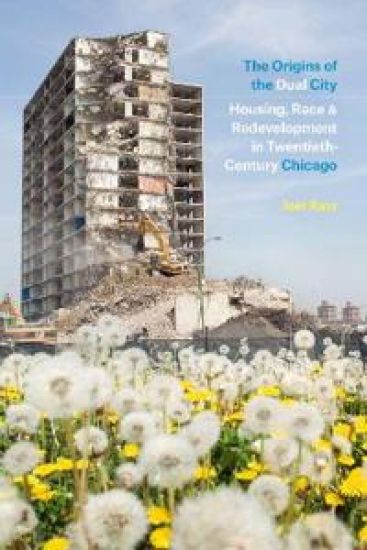
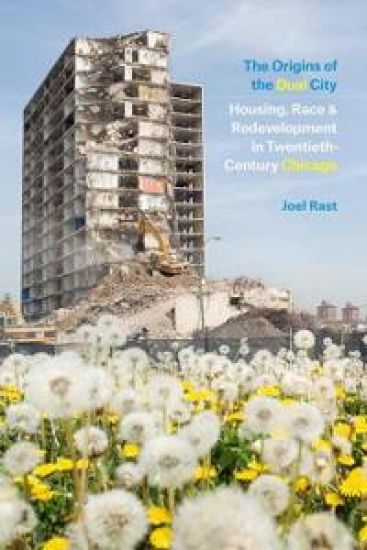
The Origins of the Dual City

The Origins of the Dual City

Joel Rast

University of Chicago Press
2019
sidottu
Chicago is celebrated for its rich diversity, but, even more than most US cities, it is also plagued by segregation and extreme inequality. The stark divide between the gentrifying and primarily white neighborhoods on the north side and near downtown, and impoverished, largely black and Latino communities on the south and west sides is plainly visible. More than ever, Chicago is a "dual city," a condition taken for granted by many residents. Joel Rast reveals today's tacit acceptance of rising urban inequality as a marked departure from the past. For much of the twentieth century, a key goal for civic leaders was the total elimination of slums and blight. Yet over time, as anti-slum efforts faltered, leaders changed the focus of their initiatives away from low-income areas and toward the upgrading of neighborhoods with greater promise. As misguided as postwar public housing and urban renewal programs were, they were projects born of a long-standing reformist impulse aimed at improving living conditions for people of all classes and colors across the city--something that can't be said to be a true political or social priority for many policymakers today. Rast laments the acceptance of today's dual city and is intent on showing precisely how that paradigm took over from ones that shaped previous generations' policymaking. The Origins of the Dual City reveals nothing less than how we normalized and became resigned to a city with stark racial and economic divides.
The Origins of the Dual City

The Origins of the Dual City

Joel Rast

University of Chicago Press
2019
pokkari
Chicago is celebrated for its rich diversity, but, even more than most US cities, it is also plagued by segregation and extreme inequality. The stark divide between the gentrifying and primarily white neighborhoods on the north side and near downtown, and impoverished, largely black and Latino communities on the south and west sides is plainly visible. More than ever, Chicago is a "dual city," a condition taken for granted by many residents. Joel Rast reveals today's tacit acceptance of rising urban inequality as a marked departure from the past. For much of the twentieth century, a key goal for civic leaders was the total elimination of slums and blight. Yet over time, as anti-slum efforts faltered, leaders changed the focus of their initiatives away from low-income areas and toward the upgrading of neighborhoods with greater promise. As misguided as postwar public housing and urban renewal programs were, they were projects born of a long-standing reformist impulse aimed at improving living conditions for people of all classes and colors across the city--something that can't be said to be a true political or social priority for many policymakers today. Rast laments the acceptance of today's dual city and is intent on showing precisely how that paradigm took over from ones that shaped previous generations' policymaking. The Origins of the Dual City reveals nothing less than how we normalized and became resigned to a city with stark racial and economic divides.
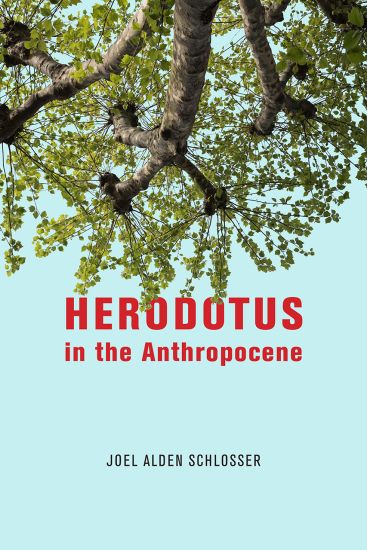
Herodotus in the Anthropocene

Herodotus in the Anthropocene

Joel Alden Schlosser

University of Chicago Press
2020
sidottu
We are living in the age of the Anthropocene, in which human activities are recognized for effecting potentially catastrophic environmental change. In this book, Joel Alden Schlosser argues that our current state of affairs calls for a creative political response, and he finds inspiration in an unexpected source: the ancient writings of the Greek historian Herodotus. Focusing on the Histories, written in the fifth century BCE, Schlosser identifies a cluster of concepts that allow us to better grasp the dynamic complexity of a world in flux. Schlosser shows that the Histories, which chronicle the interactions among the Greek city-states and their neighbors that culminated in the Persian Wars, illuminate a telling paradox: at those times when humans appear capable of exerting more influence than ever before, they must also assert collective agency to avoid their own downfall. Here, success depends on nomoi, or the culture, customs, and laws that organize human communities and make them adaptable through cooperation. Nomoi arise through sustained contact between humans and their surroundings and function best when practiced willingly and with the support of strong commitments to the equality of all participants. Thus, nomoi are the very substance of political agency and, ultimately, the key to freedom and ecological survival because they guide communities to work together to respond to challenges. An ingenious contribution to political theory, political philosophy, and ecology, Herodotus in the Anthropocene reminds us that the best perspective on the present can often be gained through the lens of the past.
Herodotus in the Anthropocene

Herodotus in the Anthropocene

Joel Alden Schlosser

University of Chicago Press
2020
pokkari
We are living in the age of the Anthropocene, in which human activities are recognized for effecting potentially catastrophic environmental change. In this book, Joel Alden Schlosser argues that our current state of affairs calls for a creative political response, and he finds inspiration in an unexpected source: the ancient writings of the Greek historian Herodotus. Focusing on the Histories, written in the fifth century BCE, Schlosser identifies a cluster of concepts that allow us to better grasp the dynamic complexity of a world in flux. Schlosser shows that the Histories, which chronicle the interactions among the Greek city-states and their neighbors that culminated in the Persian Wars, illuminate a telling paradox: at those times when humans appear capable of exerting more influence than ever before, they must also assert collective agency to avoid their own downfall. Here, success depends on nomoi, or the culture, customs, and laws that organize human communities and make them adaptable through cooperation. Nomoi arise through sustained contact between humans and their surroundings and function best when practiced willingly and with the support of strong commitments to the equality of all participants. Thus, nomoi are the very substance of political agency and, ultimately, the key to freedom and ecological survival because they guide communities to work together to respond to challenges. An ingenious contribution to political theory, political philosophy, and ecology, Herodotus in the Anthropocene reminds us that the best perspective on the present can often be gained through the lens of the past.
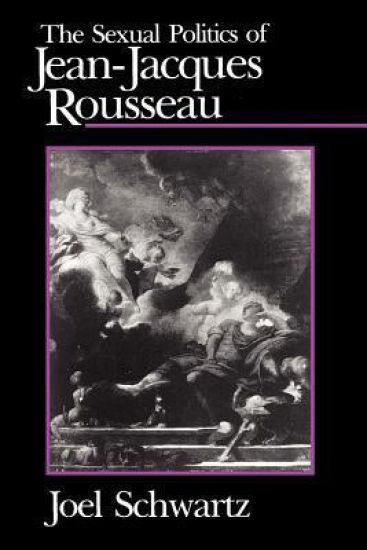
The Sexual Politics of Jean-Jacques Rousseau

The Sexual Politics of Jean-Jacques Rousseau

Joel Schwartz

University of Chicago Press
1985
nidottu
Joel Schwartz presents the first systematic treatment of Rousseau's understanding of the political importance of women, sexuality, and the family. Using both Rousseau's lesser-known literary works and such major writings as Emile, Julie, and The Second Discourse, he offers an original and provocative presentation of Rousseau's argument. To read Rousseau, Schwartz believes, is to enter into a profound discourse about the meaning of sexual equality and the opportunities, pitfalls, costs, and benefits that sexual relationships bestow and impose on us all. His own thoughtful reading of Rousseau opens up fresh perspectives on political philosophy and the history of sexual, masculine, and feminine psychology.
Corporate Law and Sustainability from the Next Generation of Lawyers
Millennials have come of age in an era when environmental and social crises have defined much of their adult lives, as has the recurrent message that time is of the essence. Future generations will bear the greatest burden created by climate change, pandemics, and inequality, but often they are not in positions of power to make impactful decisions about it.This book gives voice to young lawyers offering new critical perspectives in the burgeoning field of corporate law and sustainability. Climate change is an intergenerational crisis, and the solutions and path forward must include intergenerational voices. Millennials are rising in power at a critical juncture in our climate and corporate history, and their perspectives stand apart from those who have been trained into myopic views of what constitutes change. These essays challenge the status quo across a number of pressing topics, including executive compensation, board diversity, decolonialization, crowdfunding, social media risk, corporate lobbying, shareholder activism, tax avoidance, global supply chain management, and human rights, written with a level of thoughtfulness and urgency that demands attention from policymakers and scholars alike.Edited by Carol Liao, a leading expert in the field, and with a foreword by author and filmmaker of The Corporation and The New Corporation Joel Bakan, this book offers timeless research from a diverse group of young lawyers calling for bona fide corporate accountability within legal and regulatory frameworks, including innovative ideas for reform.
Corporate Law and Sustainability from the Next Generation of Lawyers
Millennials have come of age in an era when environmental and social crises have defined much of their adult lives, as has the recurrent message that time is of the essence. Future generations will bear the greatest burden created by climate change, pandemics, and inequality, but often they are not in positions of power to make impactful decisions about it.This book gives voice to young lawyers offering new critical perspectives in the burgeoning field of corporate law and sustainability. Climate change is an intergenerational crisis, and the solutions and path forward must include intergenerational voices. Millennials are rising in power at a critical juncture in our climate and corporate history, and their perspectives stand apart from those who have been trained into myopic views of what constitutes change. These essays challenge the status quo across a number of pressing topics, including executive compensation, board diversity, decolonialization, crowdfunding, social media risk, corporate lobbying, shareholder activism, tax avoidance, global supply chain management, and human rights, written with a level of thoughtfulness and urgency that demands attention from policymakers and scholars alike.Edited by Carol Liao, a leading expert in the field, and with a foreword by author and filmmaker of The Corporation and The New Corporation Joel Bakan, this book offers timeless research from a diverse group of young lawyers calling for bona fide corporate accountability within legal and regulatory frameworks, including innovative ideas for reform.
The Chip Stand: 130 of Canada's Iconic Food Landmarks

The Chip Stand: 130 of Canada's Iconic Food Landmarks

Joel Kimmell; Chantal Bennett

Firefly Books
2026
nidottu
The humble chip stand is an iconic symbol of Canada and a welcome sight to hungry tourists and locals alike. Eating at a chip stand is an unpretentious experience. No white tablecloths or extensive menus here. The chip stand is where down-to-earth, real Canadians go to indulge. It's the quintessential Canadian road trip food. From coast to coast, these colorful shacks, sheds, buses, vans and trucks dish out delicious French fries, poutine, hamburgers and steaming hot Pogos. For 10 years, illustrators Chantal Bennett and Joel Kimmel have taken road trips around Canada searching for the best chip stands, interviewing the owners and celebrating the colorful stands in drawings and paintings. Their beautiful illustrations capture the eclectic aesthetic of chip stands from British Columbia to Newfoundland. Sadly, many chip stands are disappearing or being replaced with shiny food trucks. This book serves as an archive of Canada's disappearing chip stands that so many people cherish. It offers up a fresh-cut serving of over 130 illustrations of the best-looking chip stands in the country. With amusing histories of the chip wagon, poutine and the casse-cro tes of Quebec, this book even gives away the secrets to making the perfect fry. The Chip Stand includes: History of the Pogo Anatomy of a perfect poutine A note about casse-cro tes History of poutine History of the chip stand. Once you've read this book you'll never look at a chip stand the same way again.
Divine Vintage

Divine Vintage

Joel Butler; Randall Heskett

Palgrave Macmillan
2012
sidottu
From Shiraz to Chardonnay, wine has been an essential part of the Jewish and Christian religious experience for millennia. These early traditions continue to influence today's robust wine connoisseurs offering a fascinating history and an assortment of varieties to discover. Here, wine expert Joel Butler teams up with biblical historian Randall Heskett for a remarkable adventure that explores the drinking habits of biblical figures 3,500 to 2,000 years ago. Along the way, they discover the truth behind how wine infiltrated the biblical world and astounding facts that any wine lover can take to their next tasting, including: * why the Fertile Crescent was the birthplace of wine * how the expansion of the Roman Empire resulted in the first wine connoisseurs * the myths of the Phoenician, Greek, Roman, and Jewish wine gods * how wine came to be used in sacrifices and other rites * why Jesus's first miracle was turning water into wine Divine Vintage also takes a close look at wines made with ancient techniques, and guides readers on how they too can experience these ancient wines today.
Theatre and Photography

Theatre and Photography

Joel Anderson

Red Globe Press
2015
nidottu
Examining the relationship between theatre and photography, this book shows how the two intertwine and provide vantage points for understanding each other. Joel Anderson explores the theory and practice of photographing theatre and performance, as well as theatre and photography's mutual preoccupation with posing, staging, framing, and stillness.
Anglo-American Media Interactions, 1850-2000

Anglo-American Media Interactions, 1850-2000

Joel H. Wiener; Mark Hampton

Palgrave Macmillan
2007
sidottu
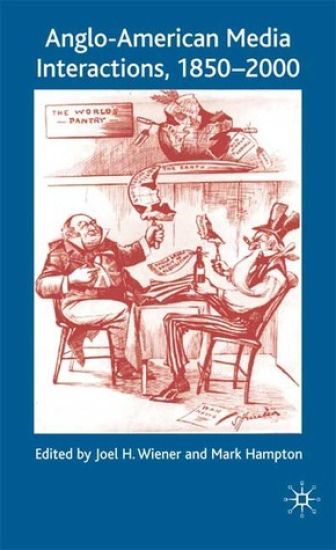
This volume reveals the complicated ways in which British and American media have influenced each other over the past two centuries. In doing so, it adds an important transatlantic dimension to media scholarship, while demonstrating the crucial and varied ways in which media have helped build an Anglo-American 'special relationship'.
The New Censorship

The New Censorship

Joel Simon

Columbia University Press
2014
sidottu
Journalists are being imprisoned and killed in record numbers. Online surveillance is annihilating privacy, and the Internet can be brought under government control at any time. Joel Simon, the executive director of the Committee to Protect Journalists, warns that we can no longer assume that our global information ecosystem is stable, protected, and robust. Journalists are increasingly vulnerable to attack by authoritarian governments, militants, criminals, and terrorists, who all seek to use technology, political pressure, and violence to set the global information agenda. Reporting from Pakistan, Russia, Turkey, Egypt, and Mexico, among other hotspots, Simon finds journalists under threat from all sides. The result is a growing crisis in information-a shortage of the news we need to make sense of our globalized world and fight human rights abuses, manage conflict, and promote accountability. Drawing on his experience defending journalists on the front lines, he calls on "global citizens," U.S. policy makers, international law advocates, and human rights groups to create a global freedom-of-expression agenda tied to trade, climate, and other major negotiations. He proposes ten key priorities, including combating the murder of journalists, ending censorship, and developing a global free-expression charter to challenge the criminal and corrupt forces that seek to manipulate the world's news.
The New Censorship

The New Censorship

Joel Simon

Columbia University Press
2019
pokkari
Journalists are being imprisoned and killed in record numbers. Online surveillance is annihilating privacy, and the Internet can be brought under government control at any time. Joel Simon, the executive director of the Committee to Protect Journalists, warns that we can no longer assume that our global information ecosystem is stable, protected, and robust. Journalists are increasingly vulnerable to attack by authoritarian governments, militants, criminals, and terrorists, who all seek to use technology, political pressure, and violence to set the global information agenda. Reporting from Pakistan, Russia, Turkey, Egypt, and Mexico, among other hotspots, Simon finds journalists under threat from all sides. The result is a growing crisis in information-a shortage of the news we need to make sense of our globalized world and fight human rights abuses, manage conflict, and promote accountability. Drawing on his experience defending journalists on the front lines, he calls on "global citizens," U.S. policy makers, international law advocates, and human rights groups to create a global freedom-of-expression agenda tied to trade, climate, and other major negotiations. He proposes ten key priorities, including combating the murder of journalists, ending censorship, and developing a global free-expression charter to challenge the criminal and corrupt forces that seek to manipulate the world's news.
Shifting Sands

Shifting Sands

Joel S. Migdal

Columbia University Press
2014
sidottu
Joel S. Migdal revisits the approach U.S. officials have adopted toward the Middle East since World War II, which paid scant attention to tectonic shifts in the region. After the war, the United States did not restrict its strategic model to the Middle East. Beginning with Harry S. Truman, American presidents applied a uniform strategy rooted in the country's Cold War experience in Europe to regions across the globe, designed to project America into nearly every corner of the world while limiting costs and overreach. The approach was simple: find a local power that could play Great Britain's role in Europe after the war, sharing the burden of exercising power, and establish a security alliance along the lines of NATO. Yet regional changes following the creation of Israel, the Free Officers Coup in Egypt, the rise of Arab nationalism from 1948 to 1952, and, later, the Iranian Revolution and the Egypt-Israel peace treaty in 1979 complicated this project. Migdal shows how insufficient attention to these key transformations led to a series of missteps and misconceptions in the twentieth century. With the Arab uprisings of 2009 through 2011 prompting another major shift, Migdal sees an opportunity for the United States to deploy a new, more workable strategy, and he concludes with a plan for gaining a stable foothold in the region.
Big Money Thinks Small

Big Money Thinks Small

Joel Tillinghast

Columbia University Press
2017
sidottu
Investors are tempted daily with misinformation. They make lucky bets that breed false confidence, and their high-stakes gambles can take an emotional toll. How can anyone stay focused in such a volatile profession? In Big Money Thinks Small, veteran fund manager Joel Tillinghast urges investors to act cautiously and follow five primary steps to successful investing: (1) know yourself; (2) make decisions based on your own knowledge; (3) select trustworthy and capable colleagues and collaborators; (4) avoid businesses that seem destined to fail; and (5) always search for bargains. Patience and methodical planning will pay far greater dividends than rash, bold investments. Through sensible instruction, Tillinghast teaches readers how to ask the right questions in any investing situation and think objectively and generatively about portfolio management.
Big Money Thinks Small

Big Money Thinks Small

Joel Tillinghast

Columbia University Press
2020
pokkari
Investors are tempted daily by misleading or incomplete information. They may make a lucky bet, realize a sizable profit, and find themselves full of confidence. Their next high-stakes gamble might backfire, not only hitting them in the balance sheet but also taking a mental and emotional toll. Even veteran investors can be caught off guard: a news item may suddenly cause havoc for an industry they’ve invested in; crowd mentality among fellow investors may skew the market; a CEO may turn out to be unprepared to effectively guide a company. How can one stay focused in such a volatile profession? If you can’t trust your past successes to plan and predict, how can you avoid risky situations in the future?In Big Money Thinks Small, veteran fund manager Joel Tillinghast shows investors how to avoid making these mistakes. He offers a set of simple but crucial steps to successful investing, including:· Know yourself, how you arrive at decisions, and how you might be susceptible to self-deception.· Make decisions based on your own expertise, and do not invest in what you don’t understand.· Select only trustworthy and capable colleagues and collaborators.· Learn how to identify and avoid investments with inherent flaws.· Always search for bargains, and never forget that the first responsibility of an investor is to identify mispriced stocks. Patience and methodical planning will pay far greater dividends than flashy investments. Tillinghast teaches readers how to learn from their mistakes—and his own, giving investors the tools to ask the right questions in any situation and to think objectively and generatively about portfolio management.
Common Sense

Common Sense

Joel Greenblatt

Columbia University Press
2020
sidottu
The United States is supposed to offer economic opportunity to everyone. It shouldn’t take a worldwide pandemic and nationwide protests to bring economic and racial inequality to the forefront of problems we desperately need to solve. But now that the opportunity is here, what should we do? How can we create more equality, opportunity, and growth for everyone? Not someday, but what can government and the private sector do right now to disrupt a status quo that almost everyone wants to change?In Common Sense, the New York Times best-selling author Joel Greenblatt offers an investor’s perspective on building an economy that truly works for everyone. With dry wit and engaging storytelling, he makes a lively and provocative case for disruptive new approaches—some drawn from personal experience, some from the outside looking in. How can leading corporations immediately disrupt our education establishment while creating high-paying job opportunities for those currently left behind? If we want a living wage for everyone, how can we afford it while using an existing program to get it done now? If we subsidize banks, what simple changes can we make to the way we capitalize and regulate them to help grow the economy, increase access, and create more jobs (while keeping the risks and benefits where they belong)? Greenblatt also explains how dramatically increasing immigration would be like giving every American a giant bonus and the reason Australia might be the best place to learn about saving for retirement.Not everyone will agree with what Greenblatt has to say—but all of us can benefit from the conversations he aims to start.