Kirjojen hintavertailu. Mukana 12 016 292 kirjaa ja 12 kauppaa.

Kirjahaku

Etsi kirjoja tekijän nimen, kirjan nimen tai ISBN:n perusteella.

1000 tulosta hakusanalla John Kitchen

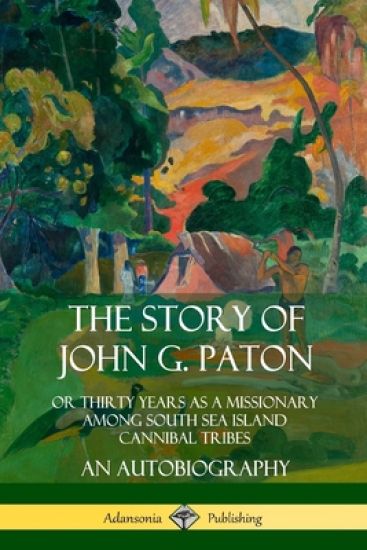
The Story of John G. Paton: Or Thirty Years as a Missionary Among South Sea Island Cannibal Tribes, An Autobiography
John G. Paton's thrilling autobiography relates a life spent as a missionary among the cannibal peoples of the South Sea Islands, and the education and development he helped bring to those remote isles.Born in Scotland to a religious family of rural Dumfriesshire, Paton was seemingly destined to live a life amid his traditional culture. However, as a studious young man Paton felt a calling from God and visited the city of Glasgow. He became versed in both theology and medicine and, in 1858 mere weeks after being ordained as a Presbyterian priest, Paton and his first wife Mary Ann Robson set sail for the South Sea Islands. Christened the New Hebribes, the isles which the missionary Paton settled upon are today part of the nation of Vanuatu. On arrival in early 1859, the primitive conditions of the natives - the fact they were generally naked, lived in simple huts, and would occasionally practice cannibalism - was a shock to Paton and his young wife.
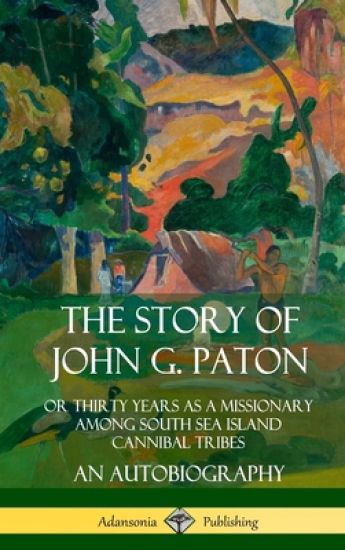
The Story of John G. Paton: Or Thirty Years as a Missionary Among South Sea Island Cannibal Tribes, An Autobiography (Hardcover)
John G. Paton's thrilling autobiography relates a life spent as a missionary among the cannibal peoples of the South Sea Islands, and the education and development he helped bring to those remote isles.Born in Scotland to a religious family of rural Dumfriesshire, Paton was seemingly destined to live a life amid his traditional culture. However, as a studious young man Paton felt a calling from God and visited the city of Glasgow. He became versed in both theology and medicine and, in 1858 mere weeks after being ordained as a Presbyterian priest, Paton and his first wife Mary Ann Robson set sail for the South Sea Islands. Christened the New Hebribes, the isles which the missionary Paton settled upon are today part of the nation of Vanuatu. On arrival in early 1859, the primitive conditions of the natives - the fact they were generally naked, lived in simple huts, and would occasionally practice cannibalism - was a shock to Paton and his young wife.
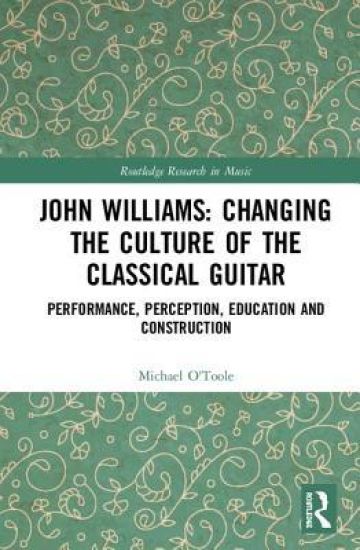
John Williams: Changing the Culture of the Classical Guitar
This book assesses the influence and reception of many different forms of guitar playing upon the classical guitar and more specifically through the prism of John Williams. Beginning with an examination of Andrés Segovia and his influence upon Williams’ life’s work, a further three incisive chapters cover key areas such as performance, perception, education and construction, considering social and cultural contexts of the guitar over the past century. A final chapter on new directions in classical guitar examines the change in reception of the instrument from the mid-1970s to the present day, and Williams’ impact upon what might be termed ‘standard classical guitar repertoire’.With in-depth discussion of the cultural and perceptual impact of Williams’ more daring crossover projects and numerous musical examples, this is an informative reference for all classical guitar practitioners, as well as scholars and researchers of guitar studies, reception studies, cultural musicology and performance studies. An online lecture by the author and a transcript of the author’s interview with John Williams are also available as e-resources.
John Frederic Oberlin

John Frederic Oberlin

John W. Kurtz

Routledge
2019
sidottu
This book covers the life of John Frederic Oberlin from his adolescence to his death. It provides adequate details of the relationships between Oberlin's life and work and the social and intellectual currents of his time, with impartiality and rational perspective.
A Concordance to the Poetical Works of John Milton
First published in 1894. This Concordance to the Poetical Works of John Milton includes all of Milton’s poems, excluding the Psalms and the Translations in the prose works; and all of the words are given with the exception of some of the pronouns, conjunctions, adverbs and prepositions; but any of these used peculiarly are given. It is hoped that the work will be found useful not only by the student of Milton but by the grammarian and the philologist.
A Concordance to the Poetical Works of John Milton
First published in 1894. This Concordance to the Poetical Works of John Milton includes all of Milton’s poems, excluding the Psalms and the Translations in the prose works; and all of the words are given with the exception of some of the pronouns, conjunctions, adverbs and prepositions; but any of these used peculiarly are given. It is hoped that the work will be found useful not only by the student of Milton but by the grammarian and the philologist.
The Mathematical and Philosophical Works of the Right Rev. John Wilkins
Originally published in 1708, this volume is an exact facsimile reproduction the 1802 edition of The Mathematical and Philosophical Works of the Right Rev. John Wilkins, and includes an index, added for the 1970 new impression. The book includes the works of Bishop John Wilkins, as well as a note on the life of the author; Bishop John Wilkins, as Warden of Wadham Colelge, Oxford and Master of Trinity College Cambridge, played a major role in the revitalization of British university education in the middle of the seventeenth century. Moreover, he was a prime mover in the establishment of the Royal Society of London and was its first secretary.
The Mathematical and Philosophical Works of the Right Rev. John Wilkins
Originally published in 1708, this volume is an exact facsimile reproduction the 1802 edition of The Mathematical and Philosophical Works of the Right Rev. John Wilkins, and includes an index, added for the 1970 new impression. The book includes the works of Bishop John Wilkins, as well as a note on the life of the author; Bishop John Wilkins, as Warden of Wadham Colelge, Oxford and Master of Trinity College Cambridge, played a major role in the revitalization of British university education in the middle of the seventeenth century. Moreover, he was a prime mover in the establishment of the Royal Society of London and was its first secretary.
John Frederic Oberlin

John Frederic Oberlin

John W. Kurtz

Routledge
2021
nidottu
This book covers the life of John Frederic Oberlin from his adolescence to his death. It provides adequate details of the relationships between Oberlin's life and work and the social and intellectual currents of his time, with impartiality and rational perspective.
John Lydgate

John Lydgate

Derek Pearsall

Routledge
2019
sidottu
Originally published in 1970, John Lydgate sets out to restore a sense of perspective to the work of Lydgate, not by attributing a spurious modernity as a precursor of the Renaissance, but by accepting the fact that he is fundamentally medieval. The book analyses Lydgate’s background in literary tradition and compares this with Chaucer’s work. The book looks at Lydgate as a professional craftsman and examines how his work adapted to the demands and occasions of his age. Without over-valuing the poetry, this approach makes it possible to discriminate with increased objectivity between the more and less worthwhile and to distinguish the unexpectedly large number of poems in which craftsman-like competence rises to rhetorical artistry of a high order. In accepting Lydgate as the epitome of his age, the book also provides a diagram of the medieval poetic mind in its basic form and suggests the usefulness of Lydgate as a source book for the understanding of medieval literature.
John Lydgate

John Lydgate

Derek Pearsall

Routledge
2020
nidottu
Originally published in 1970, John Lydgate sets out to restore a sense of perspective to the work of Lydgate, not by attributing a spurious modernity as a precursor of the Renaissance, but by accepting the fact that he is fundamentally medieval. The book analyses Lydgate’s background in literary tradition and compares this with Chaucer’s work. The book looks at Lydgate as a professional craftsman and examines how his work adapted to the demands and occasions of his age. Without over-valuing the poetry, this approach makes it possible to discriminate with increased objectivity between the more and less worthwhile and to distinguish the unexpectedly large number of poems in which craftsman-like competence rises to rhetorical artistry of a high order. In accepting Lydgate as the epitome of his age, the book also provides a diagram of the medieval poetic mind in its basic form and suggests the usefulness of Lydgate as a source book for the understanding of medieval literature.
The Nature and Sources of the Law by John Chipman Gray
First published in 1909 and then again in 1997. John Chipman Gray (1839-1915) spent the greater part of his professional life as a professor at Harvard Law School where he taught property, trusts and future interests. The Nature and Sources of the Law was first published in 1909. The book is divided into two parts which respectively look at 'Nature' and 'Sources'. In Part I, Gray warns that the study of jurisprudence, in isolation, could lead to dogmatism. Rather he advocates the structure offered by common law with its reliance on flexible interpretations of statutes, the use of all relevant cultural inputs and a highly adaptable approach to the resolution of disputes. Gray, in Part II, turns his attention to sources of the law and begins with statutes. Here he asserts that judges are the ones who actually turn into law, going against the conventional scholarship that judges merely interprets statutes. He also extensively examines the influence of tradition and the common law.
The Nature and Sources of the Law by John Chipman Gray
First published in 1909 and then again in 1997. John Chipman Gray (1839-1915) spent the greater part of his professional life as a professor at Harvard Law School where he taught property, trusts and future interests. The Nature and Sources of the Law was first published in 1909. The book is divided into two parts which respectively look at 'Nature' and 'Sources'. In Part I, Gray warns that the study of jurisprudence, in isolation, could lead to dogmatism. Rather he advocates the structure offered by common law with its reliance on flexible interpretations of statutes, the use of all relevant cultural inputs and a highly adaptable approach to the resolution of disputes. Gray, in Part II, turns his attention to sources of the law and begins with statutes. Here he asserts that judges are the ones who actually turn into law, going against the conventional scholarship that judges merely interprets statutes. He also extensively examines the influence of tradition and the common law.