Kirjojen hintavertailu. Mukana 12 016 292 kirjaa ja 12 kauppaa.

Kirjahaku

Etsi kirjoja tekijän nimen, kirjan nimen tai ISBN:n perusteella.

1000 tulosta hakusanalla Kerry Larson

Photography for Everyone

Photography for Everyone

Kerry Ross

Stanford University Press
2015
pokkari
The Japanese passion for photography is almost a cliché, but how did it begin? Although Japanese art photography has been widely studied this book is the first to demonstrate how photography became an everyday activity. Japan's enthusiasm for photography emerged alongside a retail and consumer revolution that marketed products and activities that fit into a modern, tasteful, middle-class lifestyle. Kerry Ross examines the magazines and merchandise promoted to ordinary Japanese people in the early twentieth century that allowed Japanese consumers to participate in that lifestyle, and gave them a powerful tool to define its contours. Each chapter discusses a different facet of this phenomenon, from the revolution in retail camera shops, to the blizzard of socially constructive how-to manuals, and to the vocabulary of popular aesthetics that developed from enthusiasts sharing photos. Ross looks at the quotidian activities that went into the entire picture-making process, activities not typically understood as photographic in nature, such as shopping for a camera, reading photography magazines, and even preserving one's pictures in albums. These very activities, promoted and sponsored by the industry, embedded the camera in everyday life as both a consumer object and a technology for understanding modernity, making it the irresistible enterprise that Eastman encountered in his first visit to Japan in 1920 when he remarked that the Japanese people were "almost as addicted to the Kodak habit as ourselves."

The Behavioral Genetics of Psychopathology

The Behavioral Genetics of Psychopathology

Kerry L. Jang

Routledge Member of the Taylor and Francis Group
2005
sidottu
New discoveries about the genetic underpinnings of many kinds of human experience are now continually being made. This book explores the impact of these discoveries on the ways in which the common mental disorders are best conceptualized and treated.Most people think of research in genetics as the search for genes. This is only one focus of effort, and even with the reliable identification of susceptibility genes, the clinical applications of their discovery, such as gene therapies and new drug development, are a long way off. For the present, the impact of genetic research on our understanding of mental illness is tied to our ability to estimate the effect of all genes by means of family, twin, and adoption studies. The results of these studies challenge some deeply cherished ideas and theories, and support others.Of course, the effect of genes is only half the equation. The role of experience, environment, and living conditions accounts for as much, often considerably more, of the variability in psychopathology. In this book, Kerry Jang attempts not to answer questions about what is "genetic" and what is not, but about what a knowledge of the relative influence of genes versus environment means at a psychological level of analysis--to show how it changes common assumptions about classification, etiology, diagnosis, and intervention.He first offers an overview of contemporary behavioral genetics, dispels common misconceptions, responds to the criticisms that have been leveled at this new field, and describes in basic terms how genetic and environmental effects are estimated and how susceptibility genes are pinpointed. He then points to new directions in which standard nosological systems are likely to evolve as new information about vulnerabilities and covariances emerges. Finally, he synthesizes and evaluates the consistency of the last decade's findings for the most common categories of psychopathology that have been studied by behavior geneticists: mood, personality, and anxiety disorders, substance abuse; and schizophrenia and the psychotic disorders.Clinicians and researchers alike need to understand the genetic influences on the feelings and behaviors they are seeking to change or study if they are to be effective in their work. The Behavioral Genetics of Psychopathology: A Clinical Guide empowers them with this understanding.
The Behavioral Genetics of Psychopathology

The Behavioral Genetics of Psychopathology

Kerry L. Jang

Routledge Member of the Taylor and Francis Group
2005
nidottu
New discoveries about the genetic underpinnings of many kinds of human experience are now continually being made. This book explores the impact of these discoveries on the ways in which the common mental disorders are best conceptualized and treated.Most people think of research in genetics as the search for genes. This is only one focus of effort, and even with the reliable identification of susceptibility genes, the clinical applications of their discovery, such as gene therapies and new drug development, are a long way off. For the present, the impact of genetic research on our understanding of mental illness is tied to our ability to estimate the effect of all genes by means of family, twin, and adoption studies. The results of these studies challenge some deeply cherished ideas and theories, and support others.Of course, the effect of genes is only half the equation. The role of experience, environment, and living conditions accounts for as much, often considerably more, of the variability in psychopathology. In this book, Kerry Jang attempts not to answer questions about what is "genetic" and what is not, but about what a knowledge of the relative influence of genes versus environment means at a psychological level of analysis--to show how it changes common assumptions about classification, etiology, diagnosis, and intervention.He first offers an overview of contemporary behavioral genetics, dispels common misconceptions, responds to the criticisms that have been leveled at this new field, and describes in basic terms how genetic and environmental effects are estimated and how susceptibility genes are pinpointed. He then points to new directions in which standard nosological systems are likely to evolve as new information about vulnerabilities and covariances emerges. Finally, he synthesizes and evaluates the consistency of the last decade's findings for the most common categories of psychopathology that have been studied by behavior geneticists: mood, personality, and anxiety disorders, substance abuse; and schizophrenia and the psychotic disorders.Clinicians and researchers alike need to understand the genetic influences on the feelings and behaviors they are seeking to change or study if they are to be effective in their work. The Behavioral Genetics of Psychopathology: A Clinical Guide empowers them with this understanding.
Teaching Visual Culture

Teaching Visual Culture

Kerry Freedman

Teachers' College Press
2003
nidottu
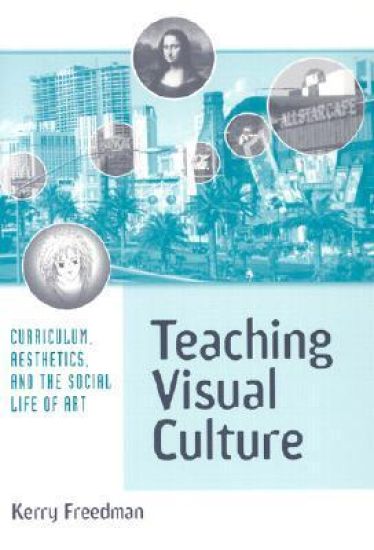
Global culture is rapidly shifting from text-based communication to image saturation. Visual culture is everywhere: on television, in museums, in magazines, in movie theaters, on billboards, on the internet, and in shopping malls. As a result, learning about the complexities of visual culture is becoming ever more critical to human development. This is the first book to focus on teaching visual culture. The author provides the theoretical basis on which to develop a curriculum that lays the groundwork for postmodern art education (K–12 and higher education). Drawing on social, cognitive, and curricular theory foundations, Freedman offers a conceptual framework for teaching the visual arts from a cultural standpoint. Chapters discuss: visual culture in a democracy; aesthetics in curriculum; philosophical and historical considerations; recent changes in the field of art history; connections between art, student development, and cognition; interpretation of art inside and outside of school; the role of fine arts in curriculum; technology and teaching; television as the national curriculum; student artistic production and assessment; and much more.
Teaching Visual Culture

Teaching Visual Culture

Kerry Freedman

TEACHERS' COLLEGE PRESS
2025
nidottu
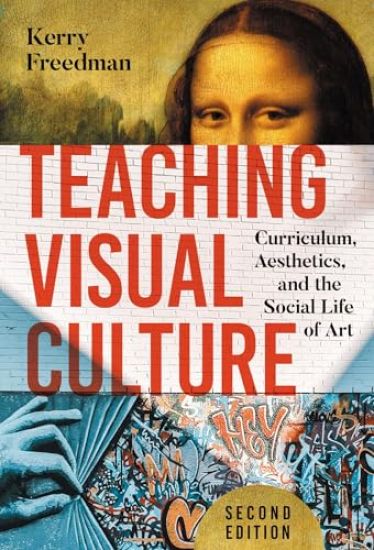
An updated edition of the first book to focus on teaching the visual arts from a cultural standpoint. Teaching Visual Culture provides the theoretical and practical basis for developing a curriculum that lays the groundwork for art education at all levels (K– 2 and higher education) and across school subjects. Drawing on material, social, cognitive, aesthetic, and curricular theories, Freedman offers a framework for teaching the visual arts from a cultural standpoint. Chapters discuss visual culture in a democracy aesthetics in curriculum philosophical and historical considerations recent changes in the field of art history connections between art, student development, and cognition art inside and outside of school the role of fine arts in curriculum visual technologies television as the national curriculum student artistic production and assessment and much more. Additional content for the Second Edition includes applications of new materialism, ways to document and assess tacit knowledge in students, and uses of AI image generation. Book Features: 7 full-color images new to the second edition.Both documents and challenges past and current practices of art education for teacher educators, K– 2 teachers, undergraduate and graduate students, school administrators, and community educators.Provides a foundation for art education with ways to update curriculum, an exploration of why newer technologies are making visual literacy essential for all learners, and new ideas about the impact of aesthetics on learning.Covers contemporary issues essential to addressing the increased impact of visual culture across school subjects, including new brain research, visual culture and the environment, the relationship between the diversity of visual culture and identities, and the visual culture of politics.
Teaching Visual Culture

Teaching Visual Culture

Kerry Freedman

TEACHERS' COLLEGE PRESS
2025
sidottu
An updated edition of the first book to focus on teaching the visual arts from a cultural standpoint. Teaching Visual Culture provides the theoretical and practical basis for developing a curriculum that lays the groundwork for art education at all levels (K– 2 and higher education) and across school subjects. Drawing on material, social, cognitive, aesthetic, and curricular theories, Freedman offers a framework for teaching the visual arts from a cultural standpoint. Chapters discuss visual culture in a democracy aesthetics in curriculum philosophical and historical considerations recent changes in the field of art history connections between art, student development, and cognition art inside and outside of school the role of fine arts in curriculum visual technologies television as the national curriculum student artistic production and assessment and much more. Additional content for the Second Edition includes applications of new materialism, ways to document and assess tacit knowledge in students, and uses of AI image generation. Book Features: 7 full-color images new to the second edition.Both documents and challenges past and current practices of art education for teacher educators, K– 2 teachers, undergraduate and graduate students, school administrators, and community educators.Provides a foundation for art education with ways to update curriculum, an exploration of why newer technologies are making visual literacy essential for all learners, and new ideas about the impact of aesthetics on learning.Covers contemporary issues essential to addressing the increased impact of visual culture across school subjects, including new brain research, visual culture and the environment, the relationship between the diversity of visual culture and identities, and the visual culture of politics.
Bagpipe Brothers

Bagpipe Brothers

Kerry Sheridan

Rutgers University Press
2004
sidottu
After the 9/11 World Trade Center terrorist attacks, New York City's Emerald Society Bagpipe Band of firefighter-musicians took out their instruments and prepared to bury their dead--343 brothers in duty and in blood. Many firefighters alternated between playing their instruments at funerals and digging for the missing in the rubble of Ground Zero. The Irish American tradition of funeral bagpiping became the sound of mourning for an entire nation.Bagpipe Brothers tells the unforgettable story of four firefighters in the band, who struggled to bring peace to their families and themselves while searching for the dead, coping with the endless round of funerals, and rethinking the meaning of faith. Their experiences illustrate the grief and recovery of the nation in the aftermath of the terrorist attacks. Kerry Sheridan has written the first book to cover the ordeal of the massive number of funerals, the importance of recovering bodies in Irish American culture, and the bagpiping ritual, both traditional and modern.
Bagpipe Brothers

Bagpipe Brothers

Kerry Sheridan

Rutgers University Press
2004
nidottu
After the 9/11 World Trade Center terrorist attacks, New York City's Emerald Society Bagpipe Band of firefighter-musicians took out their instruments and prepared to bury their dead--343 brothers in duty and in blood. Many firefighters alternated between playing their instruments at funerals and digging for the missing in the rubble of Ground Zero. The Irish American tradition of funeral bagpiping became the sound of mourning for an entire nation.Bagpipe Brothers tells the unforgettable story of four firefighters in the band, who struggled to bring peace to their families and themselves while searching for the dead, coping with the endless round of funerals, and rethinking the meaning of faith. Their experiences illustrate the grief and recovery of the nation in the aftermath of the terrorist attacks. Kerry Sheridan has written the first book to cover the ordeal of the massive number of funerals, the importance of recovering bodies in Irish American culture, and the bagpiping ritual, both traditional and modern.
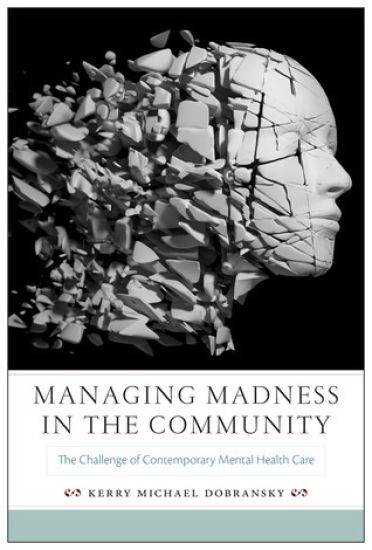
Managing Madness in the Community

Managing Madness in the Community

Kerry Michael Dobransky

Rutgers University Press
2014
nidottu
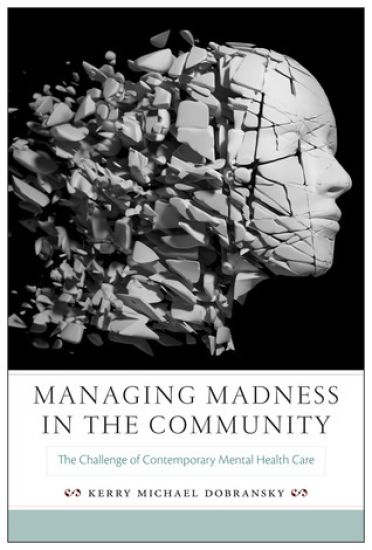
While mental illness and mental health care are increasingly recognized and accepted in today’s society, awareness of the most severely mentally ill—as well as those who care for them—is still dominated by stereotypes. Managing Madness in the Community dispels the myth. Readers will see how treatment options often depend on the social status, race, and gender of both clients and carers; how ideas in the field of mental health care—conflicting priorities and approaches—actually affect what happens on the ground; and how, amid the competing demands of clients and families, government agencies, bureaucrats and advocates, the fragmented American mental health system really works—or doesn’t.In the wake of movies like One Flew Over the Cuckoo’s Nest and Shutter Island, most people picture the severely or chronically mentally ill being treated in cold, remote, and forbidding facilities. But the reality is very different. Today the majority of deeply troubled mental patients get treatment in nonprofit community organizations. And it is to two such organizations in the Midwest that this study looks for answers. Drawing upon a wealth of unique evidence—fifteen months of ethnographic observations, 91 interviews with clients and workers, and a range of documents—Managing Madness in the Community lays bare the sometimes disturbing nature and effects of our overly complex and disconnected mental health system.Kerry Michael Dobransky examines the practical strategies organizations and their clients use to manage the often-conflicting demands of a host of constituencies, laws, and regulations. Bringing to light the challenges confronting patients and staff of the community-based institutions that bear the brunt of caring for the mentally ill, his book provides a useful broad framework that will help researchers and policymakers understand the key forces influencing the mental health services system today.
Managing Madness in the Community

Managing Madness in the Community

Kerry Michael Dobransky

Rutgers University Press
2014
sidottu
While mental illness and mental health care are increasingly recognized and accepted in today’s society, awareness of the most severely mentally ill—as well as those who care for them—is still dominated by stereotypes. Managing Madness in the Community dispels the myth. Readers will see how treatment options often depend on the social status, race, and gender of both clients and carers; how ideas in the field of mental health care—conflicting priorities and approaches—actually affect what happens on the ground; and how, amid the competing demands of clients and families, government agencies, bureaucrats and advocates, the fragmented American mental health system really works—or doesn’t.In the wake of movies like One Flew Over the Cuckoo’s Nest and Shutter Island, most people picture the severely or chronically mentally ill being treated in cold, remote, and forbidding facilities. But the reality is very different. Today the majority of deeply troubled mental patients get treatment in nonprofit community organizations. And it is to two such organizations in the Midwest that this study looks for answers. Drawing upon a wealth of unique evidence—fifteen months of ethnographic observations, 91 interviews with clients and workers, and a range of documents—Managing Madness in the Community lays bare the sometimes disturbing nature and effects of our overly complex and disconnected mental health system.Kerry Michael Dobransky examines the practical strategies organizations and their clients use to manage the often-conflicting demands of a host of constituencies, laws, and regulations. Bringing to light the challenges confronting patients and staff of the community-based institutions that bear the brunt of caring for the mentally ill, his book provides a useful broad framework that will help researchers and policymakers understand the key forces influencing the mental health services system today.
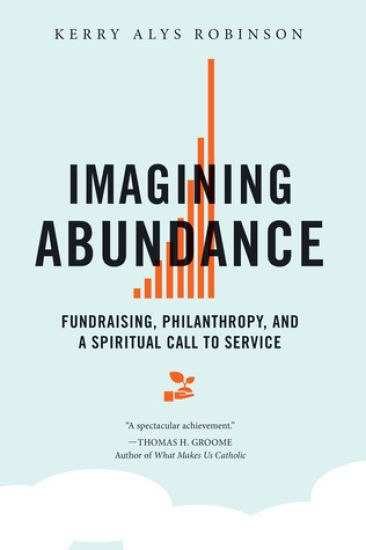
Imagining Abundance

Imagining Abundance

Kerry Alys Robinson

Liturgical Press
2014
pokkari
Fundraising is ministry—a transformative ministry that challenges all people to realize their own gifts and how they can be used for the benefit of the church. In Imagining Abundance, Kerry Robinson focuses on reasons why each of us are called to be stewards. We act because we’re excited about what it is that we do for the church and where we’re called by God to be, we want others to be just as excited about what that is, and we want people to be partners with us in that ministry.In Imagining Abundance, Kerry Robinson offers an inspirational and practical guide to effective fundraising that is ideal for anyone invested in a faith community. Bishops, provincials, pastors, ministers, executive and development directors and trustees of faith-based organizations will benefit from this healthy approach to the activity of fundraising that situates successful development in the context of ministry and mission.
Positional Release Therapy

Positional Release Therapy

Kerry J. D'Ambrogio; George B. Roth

Mosby
1997
sidottu
The most up-to-date professional reference text on positional release therapy, this high-quality clinical text is applicable to the entire musculoskeletal system and easily integrated into physical therapy, chiropractic and osteopathic curriculums. With more than 600 illustrations and photos, this reader-friendly book clearly demonstrates tender point locations, treatment positions and other key topics. Written by clinicians who studied under the techniques inventor, this is a must-have for students and health care professionals who practice manual medicine.
Human Rights, Religion and International Law

Human Rights, Religion and International Law

Kerry O'Halloran

CRC Press Inc
2018
sidottu
In this book Kerry O’Halloran analyses a subject of international interest – religion – and examines related contemporary issues from a human rights perspective. The book takes the view that while the impact of Islamic State violence has dramatically demonstrated the destructive power of religious extremism for contemporary western societies, there are also good grounds for the latter to examine the extent to which their laws and policies – nationally and internationally – are contributing to religion’s currently destabilizing social role. It makes the case for a fuller understanding of the role of religion or belief and argues for a rebalancing of the functional relationship between Church and State both nationally and internationally.Beginning with an overview of religion, including an examination of key concepts and constructs, the chapters go on to outline the international framework of related human rights provisions and note the extent of their ratification. It proceeds by identifying a set of themes – such as the Constitutional positioning of religion; law and policy in relation to secularism; faith schools; equality legislation and the religious exemption; and the tension between free speech and religion – and undertakes a comparative evaluation of how these and other themes indicate significant differences in six leading common law jurisdictions as illustrated by their associated legislation and case law. It then considers why this should be and assesses any implications arising.This book will be of great interest to students and scholars in the fields of law, religious studies, political science, human rights and social policy.
Tabernacle of Hate

Tabernacle of Hate

Kerry Noble

Syracuse University Press
2011
sidottu
In the summer of 1984, Noble was within seconds of committing what would have been the largest domestic terrorist act in United States history at that time. As one of the founders of the Covenant, Sword, and Arm of the Lord (CSA), a cult paramilitary group, Noble carried a bomb into a gay church, intending to murder over seventy individuals. In Tabernacle of Hate, Noble provides an unprecedented first-person account of how this small spiritual community progressed from mainstream religious beliefs into increasing extreme positions, eventually transforming into a domestic terrorist group. Written after his release from prison, the author’s cogent narrative reveals the deceptive allure of extremist movements and the unmatched power of charismatic leadership. Noble chronicles the intense stand-off with federal agents at the group’s compound in Northern Arkansas in April of 1985. As the group’s spiritual leader he helped mediate the peaceful surrender of the military leader Jim Ellison and many of the group members, considered by federal agencies to be one of the most success­ful negotiations of a domestic terrorism situation. Originally published in 1998, this second edition includes an au­thoritative introduction, placing Noble’s narrative and the CSA into the broader picture of American religio-political extremism. Combined with two pamphlets, ""Witchcraft and the Illuminati"" and ""Prepare War,"" written by Noble for the CSA, Tabernacle of Hate gives readers extraordinary access to the sources of right-wing extremism and valuable insight into how to address this growing concern.
Tabernacle of Hate

Tabernacle of Hate

Kerry Noble

Syracuse University Press
2011
nidottu
In the summer of 1984, Noble came within seconds of committing what would have been the largest domestic terrorist act in U.S. history at that time. As one of the founders of the Covenant, Sword, and Arm of the Lord (CSA), a cult paramilitary group, he carried a bomb into a gay-affirming church, intending to murder over seventy congregants. In Tabernacle of Hate, Noble provides an unprecedented first-person account of how a small spiritual community moved from mainstream religious beliefs to increasingly extreme positions, eventually transforming into a domestic terrorist organization.Written after his release from prison, the author’s cogent narrative reveals the deceptive allure of extremist movements and the unmatched power of charismatic leadership. Noble also chronicles the intense standoff with federal agents at the group’s compound in northern Arkansas in April 1985. Originally published in 1998, this second edition includes an authoritative introduction placing Noble’s narrative and the CSA into the broader picture of American religio-political extremism.
The Betterphoto Guide To Light

The Betterphoto Guide To Light

Kerry;Miotke Drager

Amphoto Books
2012
pokkari
Amateur photographers will love this practical guide to understanding and maximising natural light, as well as modifying it with flash, for a wide variety of subjects including nature, landscapes, people, flowers, animals and travel destinations. The book's conversational tone means readers will connect easily with it and the learn-by-doing assignments make concepts easy to grasp. Also includes more than 200 images from the authors and "BetterPhoto" contest winners that will provide instruction and inspiration throughout.
Eros as the Educational Principle of Democracy

Eros as the Educational Principle of Democracy

Kerry T. Burch

Peter Lang Publishing Inc
2000
nidottu
In Eros as the Educational Principle of Democracy, Kerry T. Burch argues that eros as a form of love should be treated as the defining educational principle of critical pedagogy and democratic citizenship. In tracing representations of eros from ancient to contemporary times, including recent feminist accounts, Burch's genealogical analysis highlights the remarkable yet unrecognized conceptual affinities that link eros to democracy. The author illuminates how qualities and values central to democracy, such as questioning, the intense desire to know, to revise, to envision a perceived good, and to participate in a community of inquirers, are social dispositions enabled by the emotional faculties of eros. In rewriting eros as an organizing principle, Burch provides an interpretive framework that dares to step outside the liberal paradigm in its search to deepen and extend democratic political education.