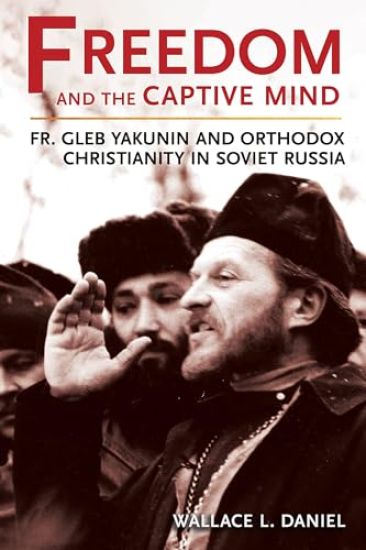
Freedom and the Captive Mind is a biography of Fr. Gleb Yakunin, the first Orthodox priest to adopt an ecumenical approach to Russian Orthodoxy, earning him the enmity of conservative groups within the Church and gratitude from other religious denominations. Father Yakunin believed the survival of the Church depended on its willingness to reform. When he was suspended, Yakunin continued to fight the system, working to expose the persecution of religious believers in the Soviet Union. After years of exile, Yakunin entered politics. He was criticized by religious authorities, denounced by nationalist politicians, and excommunicated by the Russian Orthodox Church. As Wallace L. Daniel demonstrates, the letters Yakunin wrote and his revelations about the relationship between the Church hierarchy and the KGB stand as monuments of courage and the determination to reveal the truth about abuses of power and the authoritarian mindset that predominated in both institutions.
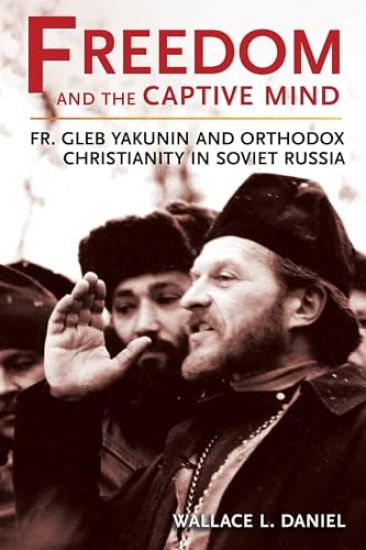
Freedom and the Captive Mind is a biography of Fr. Gleb Yakunin, the first Orthodox priest to adopt an ecumenical approach to Russian Orthodoxy, earning him the enmity of conservative groups within the Church and gratitude from other religious denominations. Father Yakunin believed the survival of the Church depended on its willingness to reform. When he was suspended, Yakunin continued to fight the system, working to expose the persecution of religious believers in the Soviet Union. After years of exile, Yakunin entered politics. He was criticized by religious authorities, denounced by nationalist politicians, and excommunicated by the Russian Orthodox Church. As Wallace L. Daniel demonstrates, the letters Yakunin wrote and his revelations about the relationship between the Church hierarchy and the KGB stand as monuments of courage and the determination to reveal the truth about abuses of power and the authoritarian mindset that predominated in both institutions.
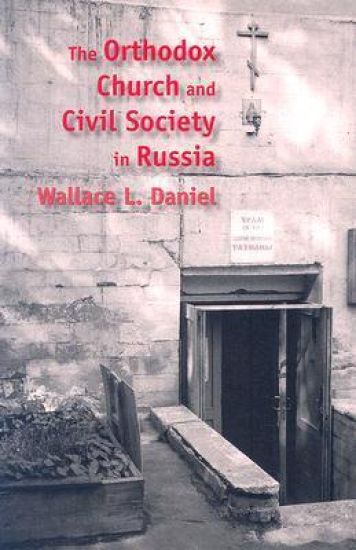
In the void left by the fall of Communism in Russia during the late twentieth century, can that country establish a true civil society? Many scholars have analyzed the political landscape to answer this question, but in ""The Orthodox Church and Civil Society in Russia"", Wallace L. Daniel offers a unique perspective: within the church are individuals who hold the values and institutional models that can be vital in determining the direction of Russia in the twenty-first century. Daniel tells the stories of a teacher and controversial parish priest, the leader of Russia's most famous women's monastery, a newspaper editor, and a parish priest at Moscow University to explore thoroughly and with a human voice the transformation from Communist country to a new social order. Daniel explores specific religious communities and the way they operate, their efforts to rebuild parish life, and the individuals who have devoted themselves to such goals. This is the level, Daniel shows, at which the reconstruction of Russia and the revitalization of Russian society is taking place. This book is written for general readers interested in the intersection between politics, religion, and society, as well as for scholars.
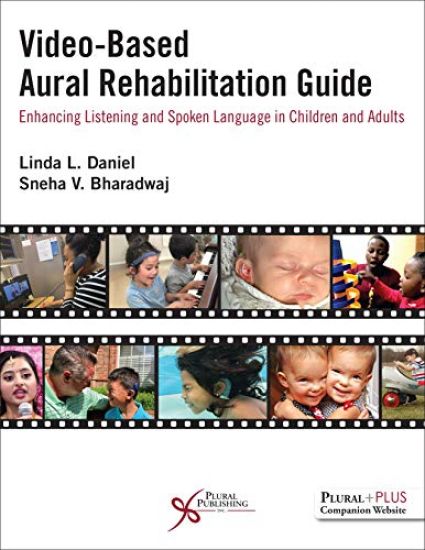
The Video-Based Aural Rehabilitation Guide is the first book of its kind to intertwine chapter text with over 200 closed captioned videos. This unique resource is intended to educate undergraduate and graduate students in speech-language pathology, audiology, and education of the deaf and hard of hearing, as well as enhance the knowledge and skills of practicing professionals. The extensive videos are an invaluable resource for students enrolled in a clinical or student teaching practicum. Videos feature speech-language pathologists, audiologists, Listening and Spoken Language Specialists, teachers of the deaf and hard of hearing, early interventionists, otologists, and occupational therapists practicing in settings such as clinics, private practices, schools, hospitals, and the community. Topics addressed in the text and videos include hearing technologies, aural rehabilitation procedures, factors that affect intervention outcomes, fundamentals of assessment, supports for education, counseling for children and adults with hearing loss, and the psychosocial well-being of persons with hearing loss and their families. The Video-Based Aural Rehabilitation Guide can be used as a stand-alone text or as a companion alongside the most commonly used aural rehabilitation textbooks. Key Features: Over 200 videos with closed captions accessible on a companion site Contributions from 14 leading experts Chapters with concise summaries, recommended resources for further learning, and study questions with answer keys Background information on the individuals featured in the videos This exciting new guide with instructional videos is a much-needed bridge that integrates the disciplines of speech-language pathology, audiology, and education of the deaf and hard of hearing to educate professionals serving children and adults with hearing loss and their families.
Video-Based Aural Rehabilitation Guide: Enhancing Communication in Children and Adults Who Are Deaf or Hard of Hearing, Second Edition integrates chapter text with 243 captioned videos and continues to be an important educational resource for aural rehabilitation (AR) courses. This resource is geared toward undergraduate and graduate students as well as practicing professionals in speech-language pathology, audiology, and education of the deaf and hard of hearing (DHH). It is intended to enrich knowledge and skills by providing an overview of principles and practices in AR. The extensive videos are also an invaluable resource for students enrolled in a clinical or student teaching practicum. Videos feature speech-language pathologists, audiologists, Listening and Spoken Language Specialists, teachers of the deaf and hard of hearing, early interventionists, otologists, and occupational therapists practicing in settings such as clinics, private practices, schools, hospitals, and the community. Topics addressed in the text and videos include an overview of AR, hearing technologies, factors that affect intervention outcomes, diverse populations, fundamentals of audiometric and communication assessment, AR procedures across the lifespan, educational supports, quality of life, counseling, and advocacy for children and adults who are DHH and their families. New to the Second Edition40 additional captioned videos on new topicsNew chapter on serving persons from diverse backgroundsExpanded content in each chapter, including basic audiometric assessment and new models for assessment and treatmentDiscussion of the continuum of communication modes in all chaptersDescriptions of goals, strategies, and client responses for all therapy videosKey Features243 captioned videos and video summaries at the end of every chapter Contributions from 21 leading experts in audiology, speech-language pathology, Listening and Spoken Language, medicine, education, research, and psychologyChapters include case presentations, recommended resources for further learning, and study questions with answer keys
It is not difficult to identify acts of overt racism in America today. They are blaring and clear violations of civil and human rights. Unfortunately, as a nation, our attention is so focused on mitigating overt racism that we ignore micro-aggressions against people of color -- acts of racism that are equally as damaging but harder to identify because they operate within the law. NEGOTIATING A HISTORICALLY WHITE UNIVERSITY WHILE BLACK unpacks many of the difficulties awaiting a person of color in academic spaces, allowing the reader to experience the types of micro-aggressions that subtly maintain a "Whites only" culture within academia. Jack L. Daniel gives a face and a voice, sometimes via humor, other times via heartbreak, to the African American experience in historically White institutions of higher education. It is an honest, self-reflective autoethnographic narrative that is thought-provoking and timely, challenging African American students to take responsibility for their own pursuit of excellence while at the same time challenging faculty and administration to play their roles in ensuring equal education access and success. by Stacy Johnson
A Fresh and Modern Exploration of Environmental Geology Designed for the undergraduate, introductory environmental geology course for majors and non-majors alike, Environmental Geology Today presents the core geological principles and explores the effects of humanity on the physical environment. Contemporary case studies throughout encourage students to use their critical thinking skills to dissect the subject matter as part of their overall analysis. The numerous case studies are drawn from topical current events that relate to the chapter material and contain numerical data. Using simple math, graphing, and critical thinking, the authors challenge students to analyze aspects of the data, honing their basic math and analytical skills. With a focus on teaching students to think critically about our environment, Environmental Geology Today is a fresh and modern exploration of this ever-evolving field. Key Features: -Fosters students’ development of analytical and critical thinking skills through the use of numerous contemporary case studies designed to engage students in the material and maintain their interest. -Math is introduced in a non-threatening, step-by-step manner, allowing students to identify their own errors early in the process, thereby gradually building confidence in their own mathematical abilities. -Covers the core undergraduate introductory environmental geology topics, including earthquakes, population growth, floods and other coastal hazards, land use, natural resources, and more. -Features global, national, and regional issues, but also shows students how to retrieve and use information to address critical local issues like population growth and development, air and water pollution, land use and waste disposal.
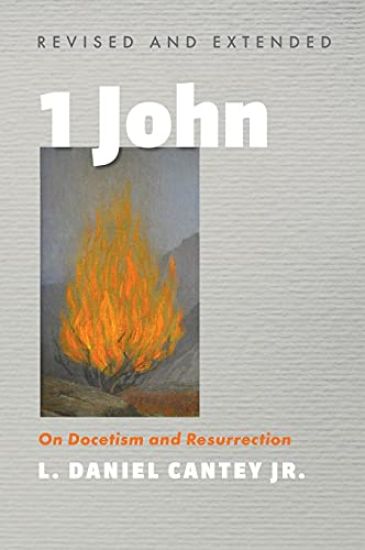
In 1 John: On Docetism and Resurrection (2016), the author elucidated the fundamental principles driving the modern order. The latter works according to a novel form of salvation, an ontology unto dissolution that the author recognizes as a new manifestation of the ancient heresy of docetism. The modern heresy turns on faith in the Christ-Idol, an idolatry hidden for centuries beneath the cover of Western Christianity. Its theological solution requires renewed engagement with the Trinitarian love, understanding that love as a function of mutual life-giving between the divine persons. The revised and extended version of 1 John assumes the undoing of Western society under the docetic ethos, seeking theological foundations for the society that might follow. It details the meaning of various aspects of docetic (modern) society through a Johannine lens, explaining these aspects as forms of oppression. The author counters these through the Eastern Orthodox focus on the inner life over the external one, the spiritual world over the physical, and the proper appreciation of hierarchy as opposed to docetic equality.
In 1 John: On Docetism and Resurrection (2016), the author elucidated the fundamental principles driving the modern order. The latter works according to a novel form of salvation, an ontology unto dissolution that the author recognizes as a new manifestation of the ancient heresy of docetism. The modern heresy turns on faith in the Christ-Idol, an idolatry hidden for centuries beneath the cover of Western Christianity. Its theological solution requires renewed engagement with the Trinitarian love, understanding that love as a function of mutual life-giving between the divine persons. The revised and extended version of 1 John assumes the undoing of Western society under the docetic ethos, seeking theological foundations for the society that might follow. It details the meaning of various aspects of docetic (modern) society through a Johannine lens, explaining these aspects as forms of oppression. The author counters these through the Eastern Orthodox focus on the inner life over the external one, the spiritual world over the physical, and the proper appreciation of hierarchy as opposed to docetic equality.
In late 1995 amidst heated debate over the blame placed on Rear Adm. Husband E. Kimmel and Maj. Gen. Walter C. Short for the devastation of the attack on Pearl Harbor and their subsequent demotions, the department of defense ordered its own investigation into the matter. This investigation was the only official inquiry made into the appropriateness of posthumously promoting Kimmel and Short to the ranks they held prior to the attack. As the first investigation to be conducted outside the Army and Navy establishments, it took a fresh look at the controversy.This book reproduces the complete report issued by the investigators with added commentary and an explanation of what it all means by coauthors Fred Borch and Daniel Martinez. Borch was the Army's representative on the team conducting the investigation, and his firsthand knowledge contributes significantly to the analysis presented. Martinez, an acknowledged expert on the attack, gives an important historical perspective to the study. A foreword by Donald Goldstein, part of Gordon Prange's research-writing team for many years, gives further insights in what happened and why on that fateful December day.