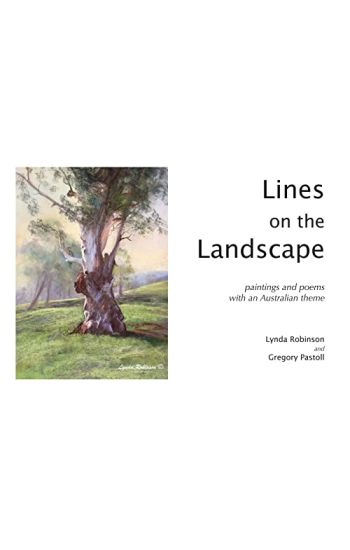
This books consists of colour reproductions of 24 pastel paintings by Lynda Robinson, each of which is accompanied by a purpose-written poem written by Gregory Pastoll. Most of the paintings are specific landscapes from the artist's travels around Australia. All of them deal with Australian themes.The collaboration between artist and writer has taken place over a decade. The poems were inspired by the writer's reverence for the subjects of the paintings, a reverence that harmonises particularly well with that of the artist. 'No tree is just a tree': in each poem there are associations with time and place and the meaning of each subject that expand the reader's appreciation of the painting, leading to looking deeper and finding more than was evident at first sight.
Based on the debates of bishops, church councils, and scholars who reflected on policy alternatives and invoked theological and ethical perspectives on the Gulf crisis, Lines in the Sand focuses on moral issues surrounding the Persian Gulf War. Alan Geyer and Barbara Green present a penetrating case study of foreign policy, military policy, moral argument, and religious discourse, while arguing that the "just war" tradition offers only partial aid for Christian reflection in matters of war and peace.
Linux Kernel Development details the design and implementation of the Linux kernel, presenting the content in a manner that is beneficial to those writing and developing kernel code, as well as to programmers seeking to better understand the operating system and become more efficient and productive in their coding. The book details the major subsystems and features of the Linux kernel, including its design, implementation, and interfaces. It covers the Linux kernel with both a practical and theoretical eye, which should appeal to readers with a variety of interests and needs. The author, a core kernel developer, shares valuable knowledge and experience on the 2.6 Linux kernel. Specific topics covered include process management, scheduling, time management and timers, the system call interface, memory addressing, memory management, the page cache, the VFS, kernel synchronization, portability concerns, and debugging techniques. This book covers the most interesting features of the Linux 2.6 kernel, including the CFS scheduler, preemptive kernel, block I/O layer, and I/O schedulers. The third edition of Linux Kernel Development includes new and updated material throughout the book: An all-new chapter on kernel data structuresDetails on interrupt handlers and bottom halvesExtended coverage of virtual memory and memory allocationTips on debugging the Linux kernelIn-depth coverage of kernel synchronization and lockingUseful insight into submitting kernel patches and working with the Linux kernel community
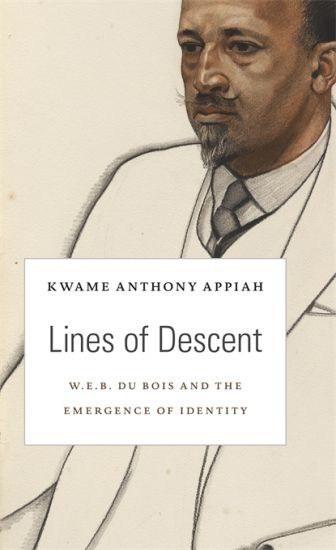
W. E. B. Du Bois never felt so at home as when he was a student at the University of Berlin. But Du Bois was also American to his core, scarred but not crippled by the racial humiliations of his homeland. In Lines of Descent, Kwame Anthony Appiah traces the twin lineages of Du Bois’ American experience and German apprenticeship, showing how they shaped the great African-American scholar’s ideas of race and social identity.At Harvard, Du Bois studied with such luminaries as William James and George Santayana, scholars whose contributions were largely intellectual. But arriving in Berlin in 1892, Du Bois came under the tutelage of academics who were also public men. The economist Adolf Wagner had been an advisor to Otto von Bismarck. Heinrich von Treitschke, the historian, served in the Reichstag, and the economist Gustav von Schmoller was a member of the Prussian state council. These scholars united the rigorous study of history with political activism and represented a model of real-world engagement that would strongly influence Du Bois in the years to come.With its romantic notions of human brotherhood and self-realization, German culture held a potent allure for Du Bois. Germany, he said, was the first place white people had treated him as an equal. But the prevalence of anti-Semitism allowed Du Bois no illusions that the Kaiserreich was free of racism. His challenge, says Appiah, was to take the best of German intellectual life without its parochialism—to steal the fire without getting burned.
As America suffered, Borders were defined and Lines in the Sand were drawn. Cross them ... you suffer the consequences. The critically acclaimed Lone Star Series continues with LINES IN THE SAND. Author Bobby Akart masterfully intertwines historical fact with plausible fiction in this post apocalyptic EMP survival fiction series that continues to follow the saga of the Armstrong family, Texas ranchers who have prepared for the worst, but now must deal with those who have not. Major and Lucy Armstrong's four children are spread around the globe and are in a race against time to return to Texas before societal collapse takes America to the depths of human depravity. They use their ingenuity, grit, and faith to persevere but find themselves facing a most unexpected enemy. The Lone Star Series is a thought-provoking, gut-wrenching look into a post apocalyptic country devastated by nuclear destruction. Would you be willing to cross the lines in the sand to survive? AUTHOR'S NOTE REGARDING PG-13 RATING The Lone Star Series does not contain strong language. It is intended to entertain and inform audiences of all ages, including teen and young adults. Although some scenes depict the realistic threat our nation faces from an EMP attack and nuclear destruction, and the societal collapse which will result in the aftermath, it does not contain graphic scenes typical of other books in the post-apocalyptic genre. I believe more of our young people need to lead a preparedness lifestyle. Studies show that our millennials do not have any of the basic survival skills. By writing this series free of vulgarities and gratuitous sexual innuendo, I've intended it to be suitable for everyone. Thanks. BOOKS IN THE LONE STAR SERIES Book One: AXIS OF EVIL - Available Now Book Two: BEYOND BORDERS - March 29, 2018 Book Three: LINES IN THE SAND - April 30, 2018 Book Four: TEXAS STRONG - May 31, 2018 Book Five: FIFTH COLUMN - June 28, 2018 Book Six: SUICIDE SIX - July 31, 2018
A nostalgic journey through the last years of steam and the early diesels around London. In 1948 British Rail came into being and with it a new era in railway history. The glory days of steam were numbered and when railway photographers like author Wrenford Thatcher were eagerly snapping their favourite locomotives in the 1950s and ’60s, British Rail were busily introducing many diverse diesel locomotive designs as part of the programme to eliminate steam traction. Wrenford Thatcher’s collection of evocative photographs is divided into eastern, southern, western and midland regions, revealing the changes occurring on the London railways in the post-war years. From Euston and Paddington right out to the suburbs all around London and the wider UK, these stunning, previously unpublished images beautifully record the mood of the late '40s, '50s and '60s and the last great days of steam.
The 2014 discovery of HMS Erebus - a ship lost during Sir John Franklin s 1845 expedition to find the Northwest Passage - reignited popular, economic, and political interest in the Arctic s exploration, history, anthropology, and historical geography. Lines in the Ice investigates the allure of the North through topographical views, maps, explorers diaries, and historic photographs. Following the course of major journeys to the Arctic, including those of Martin Frobisher, Henry Hudson, and John Franklin, Philip Hatfield assesses the impact of these incursions on the North s numerous indigenous communities and reveals the role of exploration in making the modern world. Besides detailing the area s vivid history, Lines in the Ice also focuses on beautiful works created over the last 500 years by people who live and travel in the Arctic. Lavishly illustrated with reproductions of items rarely seen outside of the British Library, this volume meditates on humans relationships with the Arctic at a time when climate change poses a catastrophic threat to the peoples and ecosystems of this enigmatic region. A timely work that traces the past s influence on the present day, Lines in the Ice showcases the rich visual history of Arctic exploration, indigenous cultural works, and the longstanding ways in which the North has captivated the public."
Grace and Ethan are going to the fair with their Aunt Sarah. Lines and angles are everywhere they look. Young readers will love to follow along with them and learn what lines and angles are.
Resistance is a key concept for understanding the twentieth and early twenty-first centuries, and for approaching the poetry of the period. This collection of 15 critical essays explores how poetry and resistance interact, set against a philosophical, historical and cultural background. In the light of the upheavals of the age, and the changing perception of the nature of language, resistance is seen to lie at the core of poetic preoccupations, moving poetic language forward. From this perspective, the resistance of poetry is connected with the human call to solidarity, resilience, and, ultimately, meaning. The volume covers poetry from Hardy, Yeats and Auden, among others, to contemporary writers like Hugo Williams and Linton Kwesi Johnson.
Welcome to CompTIA Linux+ Powered by LPI Exams LX0-103 and LX0-104 uCertify Course and Labs CompTIA Linux+ Powered by LPI Exams LX0-103 and LX0-104 uCertify Course and Labs is an easy-to-use online course that allows you to assess your readiness and teaches you what you need to know to pass the CompTIA Linux+ LX0-103 and LX0-104 exams. Master all of the CompTIA Linux+ LX0-103 and LX0-104 exam objectives in the framework of Linux+ Exam 1 and Exam 2 interactive eBook. The interactive eBook includes informative text, tables, step-by-step lists, images, interactive exercises, glossary flash cards, and review activities. The course comes complete with extensive pre- and post-assessment tests. The award-winning uCertify Labs help bridge the gap between conceptual knowledge and real-world application by providing competency-based, interactive, online, 24x7 training. uCertify Labs simulate real-world hardware, software applications and operating systems, and command-line interfaces. The labs are supplemented with videos demonstrating lab solutions. Students can feel safe working in this virtual environment resolving real-world operating system and hardware problems. All of the content–the complete eBook, the practice questions, the exercises, and the labs–is focused around the official Linux+ exam objectives.
ALL YOU NEED TO KNOW TO SECURE LINUX SYSTEMS, NETWORKS, APPLICATIONS, AND DATA–IN ONE BOOK From the basics to advanced techniques: no Linux security experience necessaryRealistic examples & step-by-step activities: practice hands-on without costly equipmentThe perfect introduction to Linux-based security for all students and IT professionals Linux distributions are widely used to support mission-critical applications and manage crucial data. But safeguarding modern Linux systems is complex, and many Linux books have inadequate or outdated security coverage. Linux Essentials for Cybersecurity is your complete solution. Leading Linux certification and security experts William “Bo” Rothwell and Dr. Denise Kinsey introduce Linux with the primary goal of enforcing and troubleshooting security. Their practical approach will help you protect systems, even if one or more layers are penetrated. First, you’ll learn how to install Linux to achieve optimal security upfront, even if you have no Linux experience. Next, you’ll master best practices for securely administering accounts, devices, services, processes, data, and networks. Then, you’ll master powerful tools and automated scripting techniques for footprinting, penetration testing, threat detection, logging, auditing, software management, and more. To help you earn certification and demonstrate skills, this guide covers many key topics on CompTIA Linux+ and LPIC-1 exams. Everything is organized clearly and logically for easy understanding, effective classroom use, and rapid on-the-job training. LEARN HOW TO: Review Linux operating system components from the standpoint of security Master key commands, tools, and skills for securing Linux systems Troubleshoot common Linux security problems, one step at a time Protect user and group accounts with Pluggable Authentication Modules (PAM), SELinux, passwords, and policies Safeguard files and directories with permissions and attributes Create, manage, and protect storage devices: both local and networked Automate system security 24/7 by writing and scheduling scripts Maintain network services, encrypt network connections, and secure network-accessible processes Examine which processes are running–and which may represent a threat Use system logs to pinpoint potential vulnerabilities Keep Linux up-to-date with Red Hat or Debian software management tools Modify boot processes to harden security Master advanced techniques for gathering system information
Focusing on the turbulent years between the execution of Charles I and the triumph of William III, Steven N. Zwicker reads English literature as a series of brilliant and deeply engaged polemical contests. Zwicker juxtaposes overtly polemical writings—pamphlets, broadsides, and ballads—with canonical works, including epic, historical verse, tragedy, and satire, in order to demonstrate how literature not only reflected on political action but also formed an important site of political exchange. Zwicker maintains that the sources of Restoration culture lay within the civil war years of the 1640s and that the memory of those years shaped writing and politics for the remainder of the century. In sensitive readings of such classic texts as Walton's Compleat Angler, Marvell's First Anniversary and Last Instructions, Milton's Paradise Lost, Dryden's Annus Mirabilis and Absalom and Achitophel, and Locke's Two Treatises of Government, he shows how these texts both engaged with pamphlet, squib, and broadside and challenged one another over the possession of cultural authority. Zwicker's analysis provides a new understanding of the connections between politics and aesthetics in the later seventeenth century and an appreciation for the texture of this culture. Successfully integrating literary history and political analysis, Lines of Authority will be valuable reading for a broad audience in the fields of Restoration and Protectorate literature, literary history, cultural and intellectual history, and the history of political thought.
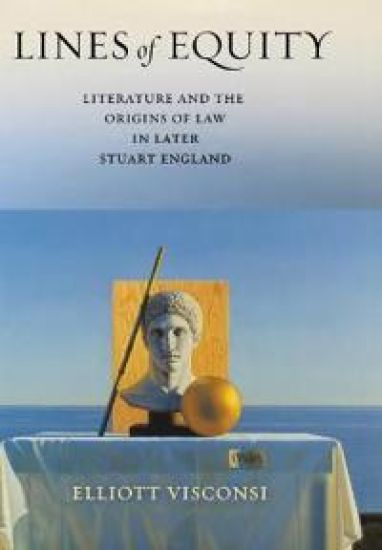
The late seventeenth century was a period of major crises in science, politics, and economics in England. Confronted by a public that seemed to be sunk in barbarism and violence, English writers including John Milton, John Dryden, and Aphra Behn imagined serious literature as an instrument for change. In Lines of Equity, Elliott Visconsi reveals how these writers fictionalized the original utterance of laws, the foundation of states, and the many vivid contemporary transitions from archaic savagery to civil modernity. In their writings, they considered the nature of government, the extent of the rule of law, and the duties of sovereign and subject. They asked their audience to think like kings and judges: through the literary education of the individual conscience, the barbarous tendencies of the English people might be effectively banished. Visconsi calls this fictionalizing program "imaginative originalism," and demonstrates the often unintended consequences of this literary enterprise. By inviting the English people to practice equity as a habit of thought, a work such as Milton's Paradise Lost helped bring into being a mode of individual conduct—the rights-bearing deliberative subject—at the heart of political liberalism. Visconsi offers an original view of this transitional moment that will appeal to anyone interested in the cultural history of law and citizenship, the idea of legal origins in the early modern period, and the literary history of later Stuart England.
Confronted by a public that seemed to be sunk in barbarism and violence, English writers including John Milton, John Dryden, and Aphra Behn imagined serious literature as an instrument for change.