Kirjojen hintavertailu. Mukana 12 016 292 kirjaa ja 12 kauppaa.

Kirjahaku

Etsi kirjoja tekijän nimen, kirjan nimen tai ISBN:n perusteella.

1000 tulosta hakusanalla M.K. Murphy

Terapia Laser de Baixa Intensidade

Terapia Laser de Baixa Intensidade

L R Renuka; Reejamol M K; Bhagyalekshmi M

Edicoes Nosso Conhecimento
2024
pokkari
A terapia laser de baixa intensidade (LLLT) uma t cnica que utiliza v rias frequ ncias de luz para estimular a energia celular, que penetra nos nervos, c lulas e tecidos para melhorar a cicatriza o, reduzir a dor e a inflama o ap s procedimentos dent rios. A LLLT tem sido utilizada em medicina dent ria para promover a cicatriza o de feridas cir rgicas, locais de extra o, ulcera es aftosas recorrentes, etc. A LLLT uma estrat gia de tratamento eficaz para a terapia e cirurgia periodontais. A fotobiomodula o, um processo mediado por lasers de baixa intensidade, promove benef cios adicionais a curto prazo, acelera a cicatriza o do tecido sseo e gengival e diminui os efeitos secund rios da cirurgia periodontal.
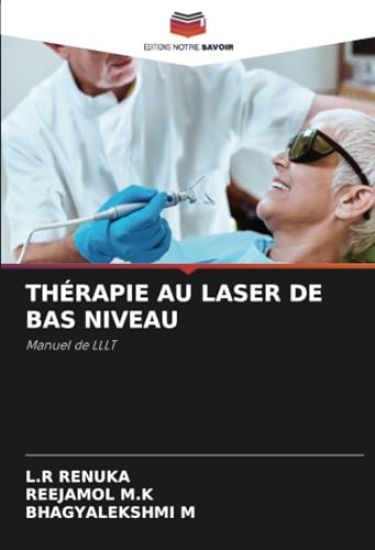
Thérapie Au Laser de Bas Niveau

Thérapie Au Laser de Bas Niveau

L R Renuka; Reejamol M K; Bhagyalekshmi M

Editions Notre Savoir
2024
pokkari
La th rapie laser de bas niveau (LLLT) est une technique qui utilise diff rentes fr quences de lumi re pour stimuler l' nergie cellulaire, qui p n tre dans les nerfs, les cellules et les tissus afin d'am liorer la cicatrisation, de r duire la douleur et l'inflammation apr s les interventions dentaires. La LLLT a t utilis e en dentisterie pour favoriser la cicatrisation des plaies chirurgicales, des sites d'extraction, des ulc rations aphteuses r currentes, etc. La LLLT est une strat gie de traitement efficace pour la th rapie et la chirurgie parodontales. La photobiomodulation, un processus m di par des lasers de faible intensit , apporte des avantages suppl mentaires court terme, acc l re la cicatrisation des tissus osseux et gingivaux et att nue les effets secondaires de la chirurgie parodontale.
Terapia Laser a Basso Livello

Terapia Laser a Basso Livello

L R Renuka; Reejamol M K; Bhagyalekshmi M

Edizioni Sapienza
2024
pokkari
La laserterapia a basso livello (LLLT) una tecnica che utilizza varie frequenze di luce per stimolare l'energia cellulare, che penetra nei nervi, nelle cellule e nei tessuti per migliorare la guarigione, ridurre il dolore e l'infiammazione dopo gli interventi odontoiatrici. La LLLT stata utilizzata in odontoiatria per promuovere la guarigione di ferite chirurgiche, siti di estrazione, ulcerazioni aftose ricorrenti, ecc. La LLLT una strategia di trattamento efficace per la terapia e la chirurgia parodontale. La fotobiomodulazione, un processo mediato da laser a basso livello, promuove ulteriori benefici a breve termine, accelera la guarigione del tessuto osseo e gengivale e riduce gli effetti collaterali della chirurgia parodontale.
Imunologia

Imunologia

Tabiha Khan; M K Sunil; Rohit Sharma

Edicoes Nosso Conhecimento
2024
pokkari
O sistema imunit rio evoluiu para distinguir o "eu" do "n o-eu". Os dois ramos da imunidade trabalham em estreita colabora o, sendo o sistema imunit rio inato mais ativo no in cio da resposta imunit ria e a imunidade adaptativa tornando-se progressivamente dominante ao longo do tempo. Os principais efectores da imunidade inata s o o complemento, os granul citos, os mon citos/macr fagos, as c lulas assassinas naturais, os mast citos e os bas filos. Os principais efectores da imunidade adaptativa s o os linf citos B e T. Os linf citos B produzem anticorpos; os linf citos T funcionam como c lulas auxiliares, citol ticas e reguladoras (supressoras). Estas c lulas s o importantes na resposta imunit ria normal a infec es e tumores, mas tamb m medeiam a rejei o de transplantes e a autoimunidade. As imunoglobulinas (anticorpos) na superf cie dos linf citos B s o receptores para uma grande variedade de conforma es estruturais espec ficas.
Immunologie

Immunologie

Tabiha Khan; M K Sunil; Rohit Sharma

Verlag Unser Wissen
2024
pokkari
Das Immunsystem hat sich so entwickelt, dass es zwischen selbst und fremd unterscheiden kann. Die beiden Arme der Immunit t arbeiten eng zusammen, wobei das angeborene Immunsystem zu Beginn einer Immunreaktion am aktivsten ist und die adaptive Immunit t mit der Zeit immer dominanter wird. Die wichtigsten Effektoren der angeborenen Immunit t sind Komplement, Granulozyten, Monozyten/Makrophagen, nat rliche Killerzellen, Mastzellen und Basophile. Die wichtigsten Effektoren der adaptiven Immunit t sind B- und T-Lymphozyten. B-Lymphozyten stellen Antik rper her; T-Lymphozyten fungieren als Helfer-, zytolytische und regulatorische (Suppressor-)Zellen. Diese Zellen sind wichtig f r die normale Immunreaktion auf Infektionen und Tumore, vermitteln aber auch die Absto ung von Transplantaten und Autoimmunit t. Die Immunglobuline (Antik rper) auf der Oberfl che der B-Lymphozyten sind Rezeptoren f r eine Vielzahl spezifischer Strukturkonformationen.
Immunologie

Immunologie

Tabiha Khan; M K Sunil; Rohit Sharma

Editions Notre Savoir
2024
pokkari
Le syst me immunitaire a volu pour distinguer le soi du non-soi. Les deux branches de l'immunit travaillent en troite collaboration, le syst me immunitaire inn tant le plus actif au d but d'une r ponse immunitaire et l'immunit adaptative devenant progressivement dominante au fil du temps. Les principaux effecteurs de l'immunit inn e sont le compl ment, les granulocytes, les monocytes/macrophages, les cellules tueuses naturelles, les mastocytes et les basophiles. Les principaux effecteurs de l'immunit adaptative sont les lymphocytes B et T. Les lymphocytes B fabriquent des anticorps. Les lymphocytes B fabriquent des anticorps; les lymphocytes T jouent le r le de cellules auxiliaires, cytolytiques et r gulatrices (suppressives). Ces cellules jouent un r le important dans la r ponse immunitaire normale aux infections et aux tumeurs, mais elles interviennent galement dans le rejet des greffes et l'auto-immunit . Les immunoglobulines (anticorps) pr sentes la surface des lymphocytes B sont des r cepteurs d'une grande vari t de conformations structurelles sp cifiques.
Immunologia

Immunologia

Tabiha Khan; M K Sunil; Rohit Sharma

Edizioni Sapienza
2024
pokkari
Il sistema immunitario si evoluto per discriminare il self dal non self. I due bracci dell'immunit lavorano a stretto contatto: il sistema immunitario innato pi attivo nelle prime fasi della risposta immunitaria, mentre l'immunit adattativa diventa progressivamente dominante nel tempo. I principali effettori dell'immunit innata sono il complemento, i granulociti, i monociti/macrofagi, i linfociti natural killer, i mastociti e i basofili. I principali effettori dell'immunit adattativa sono i linfociti B e T. I linfociti B producono anticorpi; i linfociti T funzionano come cellule helper, citolitiche e regolatrici (soppressori). Queste cellule sono importanti nella normale risposta immunitaria alle infezioni e ai tumori, ma mediano anche il rigetto dei trapianti e l'autoimmunit . Le immunoglobuline (anticorpi) sulla superficie dei linfociti B sono recettori per una grande variet di conformazioni strutturali specifiche.
Low Level Laser Therapy

Low Level Laser Therapy

L R Renuka; Reejamol M K; Bhagyalekshmi M

Lap Lambert Academic Publishing
2024
pokkari
Low level laser therapy (LLLT) is a technique that uses various frequencies of light to stimulate cellular energy, which penetrates your nerves, cells and tissue to enhance healing, reduce pain and inflammation after dental procedures. LLLT has been used in dentistry to promote wound healing in surgical wounds, extraction sites, recurrent aphthous ulcerations, etc. LLLT is an effective treatment strategy for periodontal therapy and surgery. Photobiomodulation, a process mediated by low-level lasers, promotes additional benefits in the near term, speeds up the healing of bone and gingival tissue, and lessens the side effects of periodontal surgery.
Immunology

Immunology

Tabiha Khan; M K Sunil; Rohit Sharma

Lap Lambert Academic Publishing
2024
pokkari
The immune system evolved to discriminate self from nonself. The two arms of immunity work closely together, with an innate immune system being most active early in an immune response and adaptive immunity becoming progressively dominant over time. The major effectors of innate immunity are complement, granulocytes, monocytes/macrophages, natural killer cells, mast cells, and basophils. The major effectors of adaptive immunity are B and T lymphocytes. B lymphocytes make antibodies; T lymphocytes function as helper, cytolytic, and regulatory (suppressor) cells. These cells are important in the normal immune response to infection and tumors, but also mediate transplant rejection and autoimmunity. Immunoglobulins (antibodies) on the B lymphocyte surface are receptors for a large variety of specific structural conformations.
Digital Image Receptors

Digital Image Receptors

Rohit Sharma; M K Sunil; Sunil Gurjar

Lap Lambert Academic Publishing
2024
pokkari
An 'image' is a reproduction, representation or imitation of the physical form of a person or thing. It is derived from Latin word for imitate. The inventor of photography was probably the Chinese about 3000 years ago. They possessed a light sensitive material that transferred the images of leaves onto the surface of pots and vases. Englishman William Henry Fox Talbot in 1841 developed negative and positive approach of image production. Image is artificial imitation of external form of object and refers to picture and likeness of the object. Receptor refers to something that responds to the stimulus. Image receptors used in dentistry today are film, film-screen combinations, the electronic sensors used in digital imaging and computed tomography (CT). Some medical imaging systems, such as fluoroscopy systems, use X-rays as the energy source without film.