Kirjojen hintavertailu. Mukana 11 342 296 kirjaa ja 12 kauppaa.

Kirjahaku

Etsi kirjoja tekijän nimen, kirjan nimen tai ISBN:n perusteella.

1000 tulosta hakusanalla Maria Hanstein

Harrington, and Ormond; tales - 1817 (novel). By: Maria Edgeworth (Original Classics) COMPLETE SET VOLUME 1,2 AND 3.: The novel is an autobiography of
Harrington is an 1817 novel by British novelist Maria Edgeworth. The novel was written in response to a letter from a Jewish-American reader who complained about Edgeworth's stereotypically anti-semitic portrayals of Jews in Castle Rackrent (1800), Belinda (1801), The Absentee (1812), and her Moral Tales (1801) for children. The novel is an autobiography of a "recovering anti-Semite", whose youthful prejudices are undone by contact with various Jewish characters, particularly a young woman. It also makes parallels between the religious discrimination of the Jews and the Catholics in Ireland. Set between the Jewish Naturalization Act of 1753 and the Gordon Riots of 1780, the timeframe highlights these connections. Synopsis Harrington follows the protagonist of the same name who explores his memories to better understand his views on Jews. The novel begins with Harrington's early image of Jews, formed by stories told by his maid of Simon the Jew. Harrington says that the stories of Simon the Jew were " used upon every occasion to reduce me to passive obedience." His parents further strengthen this image by rewarding Harrington's antisemitism. Only after attending public school and meeting the bully Mowbray are Harrington's views on Jews changed. Mowbray's tormenting of the Jewish peddler Jacob causes this sudden shift in thinking. The story shifts to a romance novel with the introduction of Berenice Montenero, an American Jew who moved to England with her wealthy father. Harrington's family and friends are alarmed at his choice of a Jewish woman, a relationship further impeded by the advances of Harrington's old rival Mowbray. Seeking marriage into a wealthy family, Mowbray's attempts to court Berenice are denied. As revenge, Mowbray brings charges of insanity against Harrington, a situation further compounded by his family threatening to disown him. To marry Berenice, Harrington must overcome these obstacles and prove himself to Mr. Montenero. He is thus tested "by experiences designed to arouse his enthusiasm and fear."Mowbray is exposed as the culprit behind Harrington's supposed insanity and Harrington is deemed worthy of marriage to Berenice. This strange courtship is concluded with the revelation by Mr. Montenero, "I have tried you to the utmost, and am satisfied both of the steadiness of your principles and of the strength of your attachment to my daughter-Berenice is not a Jewess."... Maria Edgeworth (1 January 1768 - 22 May 1849) was a prolific Anglo-Irish writer of adults' and children's literature. She was one of the first realist writers in children's literature and was a significant figure in the evolution of the novel in Europe. She held advanced views, for a woman of her time, on estate management, politics and education, and corresponded with some of the leading literary and economic writers, including Sir Walter Scott and David Ricardo. Early life: Maria Edgeworth was born at Black Bourton, Oxfordshire. She was the second child of Richard Lovell Edgeworth (who eventually fathered 22 children by four wives) and Anna Maria Edgeworth; Maria was thus an aunt of Francis Ysidro Edgeworth. She spent her early years with her mother's family in England, until her mother's death when Maria was five. When her father married his second wife Honora Sneyd in 1773, she went with him to his estate, Edgeworthstown, in County Longford, Ireland. Maria was sent to Mrs. Lattafi re's school in Derby after Honora fell ill in 1775. After Honora died in 1780 Maria's father married Honora's sister Elizabeth (then socially disapproved and legally forbidden from 1833 until the Deceased Wife's Sister's Marriage Act 1907)......
Frank: A Sequel to Frank in Early Lessons- (1822). By: Maria Edgeworth (Volume 1). In two volume: Maria Edgeworth (1 January
Maria Edgeworth (1 January 1768 - 22 May 1849) was a prolific Anglo-Irish writer of adults' and children's literature. She was one of the first realist writers in children's literature and was a significant figure in the evolution of the novel in Europe. She held advanced views, for a woman of her time, on estate management, politics and education, and corresponded with some of the leading literary and economic writers, including Sir Walter Scott and David Ricardo. Early life: Maria Edgeworth was born at Black Bourton, Oxfordshire. She was the second child of Richard Lovell Edgeworth (who eventually fathered 22 children by four wives) and Anna Maria Edgeworth; Maria was thus an aunt of Francis Ysidro Edgeworth. She spent her early years with her mother's family in England, until her mother's death when Maria was five. When her father married his second wife Honora Sneyd in 1773, she went with him to his estate, Edgeworthstown, in County Longford, Ireland. Maria was sent to Mrs. Lattafi re's school in Derby after Honora fell ill in 1775. After Honora died in 1780 Maria's father married Honora's sister Elizabeth (then socially disapproved and legally forbidden from 1833 until the Deceased Wife's Sister's Marriage Act 1907). Maria transferred to Mrs. Devis's school in London. Her father's attention became fully focused on her in 1781 when she nearly lost her sight to an eye infection. Returning home at the age of 14, she took charge of her many younger siblings and was home-tutored in law, Irish economics and politics, science, and literature by her father. She also started her lifelong correspondences with learned men, mainly members of the Lunar Society. She became her father's assistant in managing the Edgeworthstown estate, which had become run-down during the family's 1777-1782 absence; she would live and write there for the rest of her life. With their bond strengthened, Maria and her father began a lifelong academic collaboration "of which she was the more able and nimble mind." Present at Edgeworthstown was an extended family, servants and tenants. She observed and recorded the details of daily Irish life, later drawing on this experience for her novels about the Irish. She also mixed with the Anglo-Irish gentry, particularly Kitty Pakenham (later the wife of Arthur Wellesley, 1st Duke of Wellington), Lady Moira, and her aunt Margaret Ruxton of Black Castle. Margaret supplied her with the novels of Anne Radcliffe and William Godwin and encouraged her in her writing. Though Maria Edgeworth spent most of her childhood in England, her life in Ireland had a profound impact on both her thinking and views surrounding her Irish culture. Fauske and Kaufman conclude, " She] used her fiction to address the inherent problems of acts delineated by religious, national, racial, class based, sexual, and gendered identities." Edgeworth used works such Castle Rackrent and Harrington to express her feelings on controversial issues.
Frank: A Sequel to Frank in Early Lessons- (1822). By: Maria Edgeworth (Volume 2). In two volume: Maria Edgeworth (1 January
Maria Edgeworth (1 January 1768 - 22 May 1849) was a prolific Anglo-Irish writer of adults' and children's literature. She was one of the first realist writers in children's literature and was a significant figure in the evolution of the novel in Europe. She held advanced views, for a woman of her time, on estate management, politics and education, and corresponded with some of the leading literary and economic writers, including Sir Walter Scott and David Ricardo. Early life: Maria Edgeworth was born at Black Bourton, Oxfordshire. She was the second child of Richard Lovell Edgeworth (who eventually fathered 22 children by four wives) and Anna Maria Edgeworth; Maria was thus an aunt of Francis Ysidro Edgeworth. She spent her early years with her mother's family in England, until her mother's death when Maria was five. When her father married his second wife Honora Sneyd in 1773, she went with him to his estate, Edgeworthstown, in County Longford, Ireland. Maria was sent to Mrs. Lattafi re's school in Derby after Honora fell ill in 1775. After Honora died in 1780 Maria's father married Honora's sister Elizabeth (then socially disapproved and legally forbidden from 1833 until the Deceased Wife's Sister's Marriage Act 1907). Maria transferred to Mrs. Devis's school in London. Her father's attention became fully focused on her in 1781 when she nearly lost her sight to an eye infection. Returning home at the age of 14, she took charge of her many younger siblings and was home-tutored in law, Irish economics and politics, science, and literature by her father. She also started her lifelong correspondences with learned men, mainly members of the Lunar Society. She became her father's assistant in managing the Edgeworthstown estate, which had become run-down during the family's 1777-1782 absence; she would live and write there for the rest of her life. With their bond strengthened, Maria and her father began a lifelong academic collaboration "of which she was the more able and nimble mind." Present at Edgeworthstown was an extended family, servants and tenants. She observed and recorded the details of daily Irish life, later drawing on this experience for her novels about the Irish. She also mixed with the Anglo-Irish gentry, particularly Kitty Pakenham (later the wife of Arthur Wellesley, 1st Duke of Wellington), Lady Moira, and her aunt Margaret Ruxton of Black Castle. Margaret supplied her with the novels of Anne Radcliffe and William Godwin and encouraged her in her writing. Though Maria Edgeworth spent most of her childhood in England, her life in Ireland had a profound impact on both her thinking and views surrounding her Irish culture. Fauske and Kaufman conclude, " She] used her fiction to address the inherent problems of acts delineated by religious, national, racial, class based, sexual, and gendered identities." Edgeworth used works such Castle Rackrent and Harrington to express her feelings on controversial issues.
Frank: A Sequel to Frank in Early Lessons- (1822). By: Maria Edgeworth (Complete set volume 1, and 2).: Maria Edgeworth (1 Ja
Maria Edgeworth (1 January 1768 - 22 May 1849) was a prolific Anglo-Irish writer of adults' and children's literature. She was one of the first realist writers in children's literature and was a significant figure in the evolution of the novel in Europe. She held advanced views, for a woman of her time, on estate management, politics and education, and corresponded with some of the leading literary and economic writers, including Sir Walter Scott and David Ricardo. Early life: Maria Edgeworth was born at Black Bourton, Oxfordshire. She was the second child of Richard Lovell Edgeworth (who eventually fathered 22 children by four wives) and Anna Maria Edgeworth; Maria was thus an aunt of Francis Ysidro Edgeworth. She spent her early years with her mother's family in England, until her mother's death when Maria was five. When her father married his second wife Honora Sneyd in 1773, she went with him to his estate, Edgeworthstown, in County Longford, Ireland. Maria was sent to Mrs. Lattafi re's school in Derby after Honora fell ill in 1775. After Honora died in 1780 Maria's father married Honora's sister Elizabeth (then socially disapproved and legally forbidden from 1833 until the Deceased Wife's Sister's Marriage Act 1907). Maria transferred to Mrs. Devis's school in London. Her father's attention became fully focused on her in 1781 when she nearly lost her sight to an eye infection. Returning home at the age of 14, she took charge of her many younger siblings and was home-tutored in law, Irish economics and politics, science, and literature by her father. She also started her lifelong correspondences with learned men, mainly members of the Lunar Society. She became her father's assistant in managing the Edgeworthstown estate, which had become run-down during the family's 1777-1782 absence; she would live and write there for the rest of her life. With their bond strengthened, Maria and her father began a lifelong academic collaboration "of which she was the more able and nimble mind." Present at Edgeworthstown was an extended family, servants and tenants. She observed and recorded the details of daily Irish life, later drawing on this experience for her novels about the Irish. She also mixed with the Anglo-Irish gentry, particularly Kitty Pakenham (later the wife of Arthur Wellesley, 1st Duke of Wellington), Lady Moira, and her aunt Margaret Ruxton of Black Castle. Margaret supplied her with the novels of Anne Radcliffe and William Godwin and encouraged her in her writing. Though Maria Edgeworth spent most of her childhood in England, her life in Ireland had a profound impact on both her thinking and views surrounding her Irish culture. Fauske and Kaufman conclude, " She] used her fiction to address the inherent problems of acts delineated by religious, national, racial, class based, sexual, and gendered identities." Edgeworth used works such Castle Rackrent and Harrington to express her feelings on controversial issues.
Helen: a tale By: Maria Edgeworth, Novel: Helen is a novel by Maria Edgeworth (1767-1849). It was written in 1834, late in the writer's life.
Helen is a novel by Maria Edgeworth (1767-1849). It was written in 1834, late in the writer's life. Helen tells the story of a young orphan, Helen Stanley, whose guardian, Dean Stanley, has squandered his fortune and left Helen without means of support. She is forced to take up residence with the local vicar, whose wife is astonished that none of the Stanleys' aristocratic friends have offered a refuge to her. Eventually, however, the Davenant family returns from abroad and invite Helen to their daughter's new home, Clarendon Park. (Cecilia Davenant has just married General Clarendon.) Helen journeys to join her dear friend Cecilia (a charming socialite), and the first half of the novel describes Helen's experiences among the most fortunate of Britain's elite under the tutelage of Lady Davenant, who in some ways favors Helen over her own daughter Cecilia. In the second and more dramatic half of the novel, Lady Davenant departs with her husband, who has been named ambassador at the Court of St. Petersburg, Russia. Helen is left to the care of General Clarendon and Cecilia. By this time she is engaged to Granville Beauclerc, a young and handsome man who is another of Lady Davenant's favorites. All does not run smoothly for Helen, however. Before her marriage, Cecilia has carried on an amorous correspondence with Colonel d'Aubigny, a worthless rou who has since died. These letters reappear in a packet addressed to Cecilia's husband. Cecilia implores Helen to act as if the letters were addressed to her rather than to Cecilia. Helen, from misguided devotion to her friend and gratitude for Cecilia's kind hospitality, agrees to the deception. This first step leads to more and more serious consequences, until finally Helen's reputation is in tatters. Beauclerc is forced to fight a duel in defense of his fianc e, after which he must flee from England. Cecilia still refuses to recognize the letters as hers, out of fear of losing her own husband if she admits to the correspondence. The General is convinced that Helen is faithless. She refuses to stay where she is not respected and chooses exile in Wales with the General's sister, where she becomes dangerously ill. Even the birth of Cecilia's first child, a son, does not encourage her to confess to her husband, and Helen gives up all hope of exoneration. The d nouement comes when Lady Davenant, also dangerously ill, returns to London at the same time as the General finally discovers his wife's deception and vows to separate from Cecilia for life. Helen's character is redeemed, Beauclerc returns to England when his adversary recovers from his wounds, and the novel ends happily for all the protagonists with Lady Davenant saying that she is "now, and not till now, happy--perfectly happy in Love and Truth "....... Maria Edgeworth (1 January 1768 - 22 May 1849) was a prolific Anglo-Irish writer of adults' and children's literature. She was one of the first realist writers in children's literature and was a significant figure in the evolution of the novel in Europe. She held advanced views, for a woman of her time, on estate management, politics and education, and corresponded with some of the leading literary and economic writers, including Sir Walter Scott and David Ricardo. Early life: Maria Edgeworth was born at Black Bourton, Oxfordshire. She was the second child of Richard Lovell Edgeworth (who eventually fathered 22 children by four wives) and Anna Maria Edgeworth; Maria was thus an aunt of Francis Ysidro Edgeworth. She spent her early years with her mother's family in England, until her mother's death when Maria was five. When her father married his second wife Honora Sneyd in 1773, she went with him to his estate, Edgeworthstown, in County Longford, Ireland. Maria was sent to Mrs. Lattafi re's school in Derby after Honora fell ill in 1775....
The Absentee (1812). By: Maria Edgeworth, NOVEL: Maria Edgeworth (1 January 1768 - 22 May 1849) was a prolific Anglo-Irish writer of adults' an
Lord Colambre, the sensitive hero of the novel, finds that his mother Lady Clonbrony's attempts to buy her way into the high society of London are only ridiculed, while his father, Lord Clonbrony, is in serious debt as a result of his wife's lifestyle. Colambre travels incognito to Ireland to see the country that he still considers his home. When he returns to London he assists his father to pay off the debts, on condition that the Clonbrony family return to live in Ireland.,,, Maria Edgeworth (1 January 1768 - 22 May 1849) was a prolific Anglo-Irish writer of adults' and children's literature. She was one of the first realist writers in children's literature and was a significant figure in the evolution of the novel in Europe. She held advanced views, for a woman of her time, on estate management, politics and education, and corresponded with some of the leading literary and economic writers, including Sir Walter Scott and David Ricardo. Early life: Maria Edgeworth was born at Black Bourton, Oxfordshire. She was the second child of Richard Lovell Edgeworth (who eventually fathered 22 children by four wives) and Anna Maria Edgeworth; Maria was thus an aunt of Francis Ysidro Edgeworth. She spent her early years with her mother's family in England, until her mother's death when Maria was five. When her father married his second wife Honora Sneyd in 1773, she went with him to his estate, Edgeworthstown, in County Longford, Ireland. Maria was sent to Mrs. Lattafi re's school in Derby after Honora fell ill in 1775. After Honora died in 1780 Maria's father married Honora's sister Elizabeth (then socially disapproved and legally forbidden from 1833 until the Deceased Wife's Sister's Marriage Act 1907). Maria transferred to Mrs. Devis's school in London. Her father's attention became fully focused on her in 1781 when she nearly lost her sight to an eye infection. Returning home at the age of 14, she took charge of her many younger siblings and was home-tutored in law, Irish economics and politics, science, and literature by her father. She also started her lifelong correspondences with learned men, mainly members of the Lunar Society. She became her father's assistant in managing the Edgeworthstown estate, which had become run-down during the family's 1777-1782 absence; she would live and write there for the rest of her life. With their bond strengthened, Maria and her father began a lifelong academic collaboration "of which she was the more able and nimble mind." Present at Edgeworthstown was an extended family, servants and tenants. She observed and recorded the details of daily Irish life, later drawing on this experience for her novels about the Irish. She also mixed with the Anglo-Irish gentry, particularly Kitty Pakenham (later the wife of Arthur Wellesley, 1st Duke of Wellington), Lady Moira, and her aunt Margaret Ruxton of Black Castle. Margaret supplied her with the novels of Anne Radcliffe and William Godwin and encouraged her in her writing. Though Maria Edgeworth spent most of her childhood in England, her life in Ireland had a profound impact on both her thinking and views surrounding her Irish culture. Fauske and Kaufman conclude, " She] used her fiction to address the inherent problems of acts delineated by religious, national, racial, class based, sexual, and gendered identities." Edgeworth used works such Castle Rackrent and Harrington to express her feelings on controversial issues............
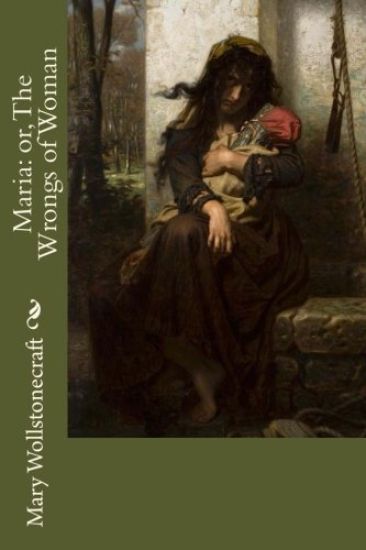
Maria: or, The Wrongs of Woman

Maria: or, The Wrongs of Woman

Mary Wollstonecraft

Createspace Independent Publishing Platform
2017
nidottu
Wollstonecraft's philosophical and gothic novel revolves around the story of a woman imprisoned in an insane asylum by her husband. It focuses on the societal rather than the individual "wrongs of woman" and criticizes what Wollstonecraft viewed as the patriarchal institution of marriage in eighteenth-century Britain and the legal system that protected it. Source: Wikipedia]
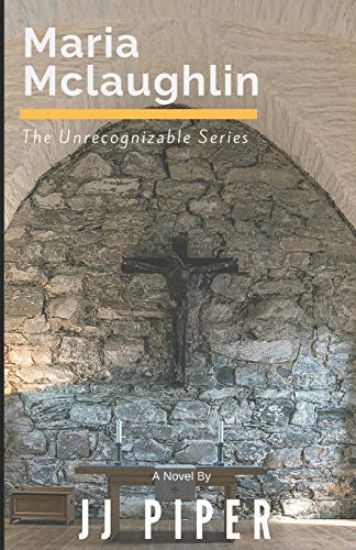
Maria McLaughlin

Maria McLaughlin

Jj Piper

Independently Published
2018
nidottu
After the clinic shuts down and Maria loses her dream job, she finds herself working 12 hour shifts at the local hospital. She knows she should feel lucky but something is missing. With both her sisters long gone, Maria is left alone with her over-bearing mother. She decides something has to change... but God's plan isn't always our plan.
Maria: Or, the Wrongs of Woman

Maria: Or, the Wrongs of Woman

Mary Wollstonecraft

Createspace Independent Publishing Platform
2018
nidottu
Thank you for checking out this book by Theophania Publishing. We appreciate your business and look forward to serving you soon. We have thousands of titles available, and we invite you to search for us by name, contact us via our website, or download our most recent catalogues. THE WRONGS OF WOMAN, like the wrongs of the oppressed part of mankind, may be deemed necessary by their oppressors: but surely there are a few, who will dare to advance before the improvement of the age, and grant that my sketches are not the abortion of a distempered fancy, or the strong delineations of a wounded heart. In writing this novel, I have rather endeavoured to pourtray passions than manners. In many instances I could have made the incidents more dramatic, would I have sacrificed my main object, the desire of exhibiting the misery and oppression, peculiar to women, that arise out of the partial laws and customs of society. In the invention of the story, this view restrained my fancy; and the history ought rather to be considered, as of woman, than of an individual. The sentiments I have embodied. In many works of this species, the hero is allowed to be mortal, and to become wise and virtuous as well as happy, by a train of events and circumstances. The heroines, on the contrary, are to be born immaculate, and to act like goddesses of wisdom, just come forth highly finished Minervas from the head of Jove.
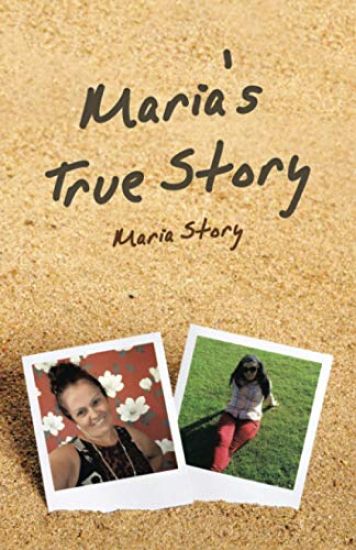
Maria's True Story

Maria's True Story

Maria Story

Balboa Press UK
2021
pokkari
I introduce myself as Maria come from Island of Madeira moved to the UK long time ago and I decided to publish my true story to share with everyone of yours all the good you can learn from yourself and others listen to your gut instinct was right.
Maria's True Story

Maria's True Story

Maria Story

Balboa Press UK
2021
sidottu
I introduce myself as Maria come from Island of Madeira moved to the UK long time ago and I decided to publish my true story to share with everyone of yours all the good you can learn from yourself and others listen to your gut instinct was right.
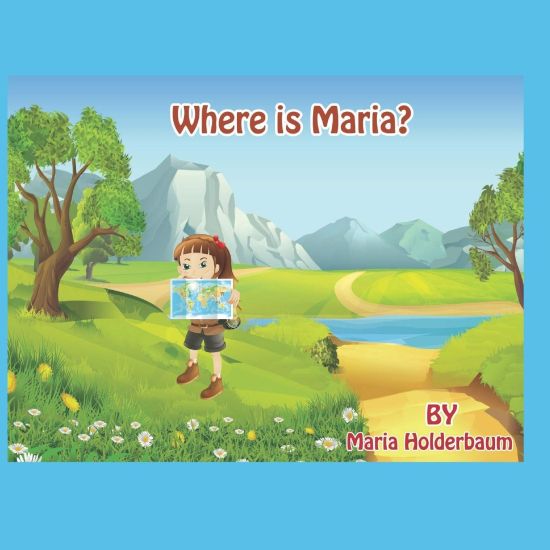
Where is Maria?

Where is Maria?

Maria Holderbaum

Independently Published
2018
nidottu
Where is Maria?, written by avid traveler Maria Holderbaum is a book to get children interested in traveling and exploring the world. Maria explores each country to learn their language, eat new foods, explore cities and countrysides and to see wild native animals. Follow along with Maria on her journey through 14 different countries, everywhere from Australia to Vietnam. Maria wants children to get excited and interested in learning about new people, cultures and countries. She wants children to dream about going to far away lands and experience something they can't experience at home.Maria will have children guessing which country she is in by giving them clues and hints on animals, food, landmarks and language. Follow along to see how many countries you explored, or better yet how many you will want to explore after you've read this book.
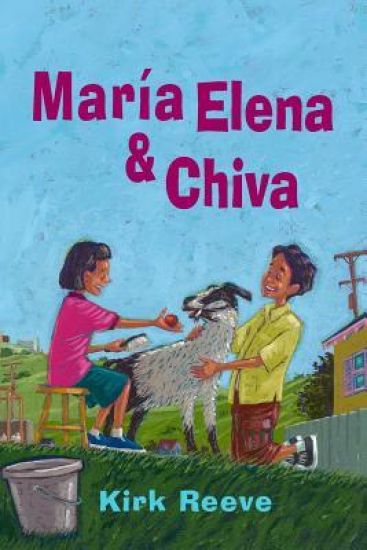
Maria Elena & Chiva

Maria Elena & Chiva

Kirk Reeve

Independently Published
2018
nidottu
"Why does Papa want a goat?" is the question that puzzles nine-year-old Maria Elena. When Papa makes it clear that it will eventually be butchered and roasted as part of the menu for a family celebration, Maria Elena rebels with considerable persistence. Twists and turns will keep you guessing what's next until the surprise ending. Have fun with it
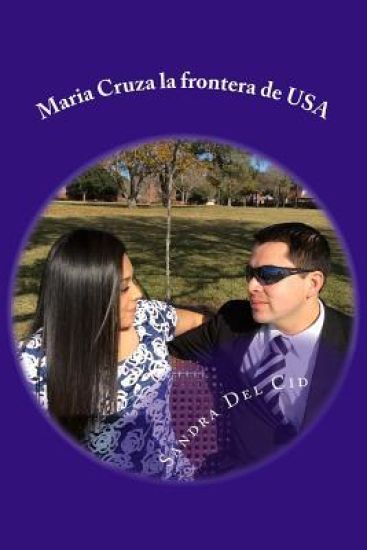
Maria: Cruza La Frontera de USA

Maria: Cruza La Frontera de USA

Sandra del Cid

Createspace Independent Publishing Platform
2018
nidottu
Maria es una joven bella y inocente, la pobreza de Mexico la oblige a cruzar la frontera sin papeles, su jornada es dificil al caer en manos de traficantes humanos, Estela ayuda a rescatarle y al conozer al millonario Tom Powers su vida cambia cuando el se casa con ella por Amor, una cenicienta moderna inspirada en un historia real.
Maria Letter Tracing for Kids Trace my Name Workbook: Tracing Books for Kids ages 3 - 5 Pre-K & Kindergarten Practice Workbook
MARIA Name Tracing Workbook - Preschoolers Kindergarten Practice Workbook - Toddlers Writing Notebook - Learn How to Write MARIA - Preschoolers Activities Teaching your child the basics of writing is a difficult task especially if he or she is full of energy and finds it more difficult to focus. In order to give him a push in the first years of school or kindergartner, we are presenting a revolutionary way of teaching your baby the basics of the alphabet: the name tracing workbook for children. Why our workbook? The name tracing workbook has been designed specifically to teach children the basic of spelling and writing. By learning to write his own name, your child will develop the abilities and skills needed in the first years of schools while having fun. The 100 pages activity book is the perfect choice if you are searching to invest in your child's education from the beginning so don't hesitate and get him the only workbook he needs LEARNING THE FIRST LETTERS teaching your toddler the first letters and how to spell his or her name is difficult, which is why we have designed a special workbook that will make the learning process easier and a lot more fun, adding to the baby's educational fund. PERSONALIZED WORKING: the name is the first word any child should learn how to spell, but it is almost impossible to find special help for that task. MARIA Name Tracing Workbook is divided in 12 themed chapters that will teach your toddler how to spell his or her name in a fun and interactive way. WHAT IT CONTAINS: MARIA Name Tracing Workbook counts no less than 100 pages divided in 12 themed sheets that propose recognition activities, letter tracing practice and letter games, that are sure to teach your child the basics of writing and spelling. FOR TODDLERS: MARIA Name Tracing Workbook is made especially for children aged 3 to 6 so your son or daughter will be well prepared for both kindergarten and first grade Learning the alphabet will be a piece of cake if your kid will already have the foundation letter tracing so why not give him a head start in school. THE PERFECT GIFT: offering a present to a toddler that is both fun and parents-approved is an almost impossible task, but the name tracing workbook has it all: it is educational, personalized and made especially for youngsters ages 3 to 6 so, if you're trying to bring a smile on a kid's face, this is it
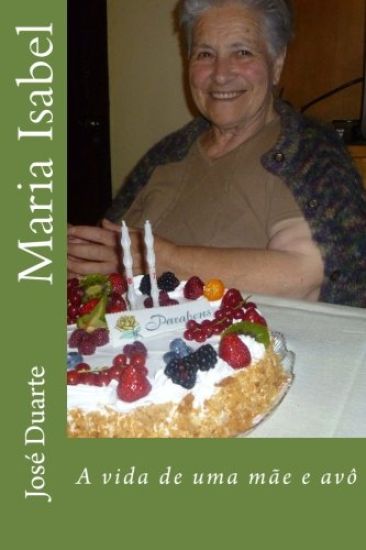
Maria Isabel: A vida de uma mãe e avô

Maria Isabel: A vida de uma mãe e avô

Jose Duarte

Createspace Independent Publishing Platform
2018
nidottu
Sinopse Maria Isabel uma biografia de uma m e modelo dos anos entre 1924 at hoje e por muitos anos ainda, viveu uma vida para a fam lia sem se interessar pela vaidade de vida para seu benef cio, o amor aos outros e aos seus foi sempre o objetivo de ouro, no seu comportamento e atitude, a sua f com Deus ajudou-lhe a travessar e a compreender os caminhos da vida mais dif ceis e injustos, sem nunca se esquecer de agradecer a Deus os bons e graciosos momentos de vida que se tornaram a raz o a que foi destinada de viver a sua exist ncia. Maria Isabel atravessou a vida como uma abelha reina sem se mostrar mas sempre a aconselhar os outros aos bons caminhos a andar a riqueza e pureza do seu cora o deu amor e carinho a todos aqueles que se quiseram serv