Im Fluss der sich formierenden Geschichten. Alle Zeichen sind vorhanden. Alles ist in Bewegung. Die auftauchenden Fragen sind nicht leicht zu beantworten. Narration bedeutet, geeignete Elemente zu zeigen und ungeeignete Elemente zu verstecken. Was wie Alltag aussieht, k nnte durchaus etwas anderes sein.
Der Stoff, aus dem Tr ume entstehen. Die Worte, aus denen Metadaten entstehen. Die Punkte, aus denen ein Profil entsteht. Die Dinge, die sich verselbstst ndigen. Die Fragmente, die sich zusammenf gen lassen. Die Fakten, die ohne Kontext existieren. Die Ideen, die nur isoliert einen Sinn ergeben.
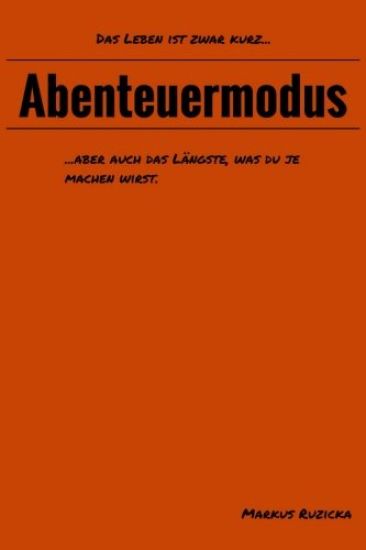
Der Tod gilt gemeinhin als die ultimative Grenze. Er l sst sich nur selten aufschieben, jedoch niemals austricksen oder gar aufhalten. Auch f r Menschen, die an die Wiedergeburt glauben, gilt: in diesem Leben ist das Erleben des eigenen Lebens das L ngste, was sie machen werden. F r die anderen gilt: dieses Leben ist das L ngste, was sie JE machen werden. Viel zu viele leben aber so, als ob sie noch drei, vier weitere Leben irgendwo aus dem Hut zaubern k nnten. Wichtiges wird auf morgen verschoben. "Morgen" gilt dabei fast schon als Synonym f r den "Ort, an dem alle Tr ume und Ziele in Erf llung gehen." Am n chsten Tag, also morgen, dann dasselbe Spiel. Es scheint, als w re die Anzahl unserer Tage wie ein magischer Brunnen, der niemals versiegt. Marktforschungsstudien belegen brigens, dass uns zu gro e Auswahl l hmt. Lethargie durch berfluss also. Doch dieser vermeintliche berfluss ist ein Trugschluss. Mithin der gef hrlichste, den wir treffen k nnen. Auch wenn der Tod in unserer Kultur als Tabu gilt, gestorben wird t glich und berall. Jederzeit kann es uns treffen. Egal ob durch Krankheit, Unfall, oder erst nach einem langen Leben. Weil wir es nicht wissen (k nnen), vertr deln wir einen Tag nach dem anderen. Jeder stirbt, aber fast niemand lebt wirklich, es ist, als ob viele vergessen, dass es ein Leben vor dem Tod gibt. (Davon dann aber wirklich nur eines.) Also, wenn das kein Grund ist, das Beste aus unserem einen( ) Leben zu machen.
Many consider the nature of human consciousness to be one of the last great unsolved mysteries. Why should the light turn on, so to speak, in human beings at all? And how is the electrical storm of neurons under our skull connected with our consciousness? Is the self only our brain’s user interface, a kind of stage on which a show is performed that we cannot freely direct? In this book, philosopher Markus Gabriel challenges an increasing trend in the sciences towards neurocentrism, a notion which rests on the assumption that the self is identical to the brain. Gabriel raises serious doubts as to whether we can know ourselves in this way. In a sharp critique of this approach, he presents a new defense of the free will and provides a timely introduction to philosophical thought about the self – all with verve, humor, and surprising insights. Gabriel criticizes the scientific image of the world and takes us on an eclectic journey of self-reflection by way of such concepts as self, consciousness, and freedom, with the aid of Kant, Schopenhauer, and Nagel but also Dr. Who, The Walking Dead, and Fargo.
At the centre of modern epistemology lurks the problem of scepticism: how can we know that the forms of our cognition are compatible with the world? How can we state success conditions for knowledge claims without somehow transcending our discursive and fallible nature as knowers? By distinguishing different forms of scepticism, Markus Gabriel shows how all objective knowledge relies on shared discourses and how the essential corrigibility of knowledge claims is a crucial condition of their objectivity. We should understand scepticism not so much as posing a threat, but as offering a vital lesson about the fallibility of discursive thinking. By heeding this lesson, we can begin to reintegrate the solipsistic subject of modern epistemology back into the community of actual knowers. Taking his cue from Hegel, Wittgenstein and Brandom, Gabriel shows how intentionality as such is a public rather than a private phenomenon. He concedes that the sceptic can prove the necessary finitude of objective knowledge, but denies that this has to lead us into an aporia. Instead, it shows us the limits of the modern project of epistemology. Through an examination of different kinds of sceptical paradoxes, Gabriel not only demonstrates their indispensable role within epistemological theorising, but also argues for the necessary failure of all totalizing knowledge claims. In this way, epistemology, as the discipline that claims knowledge about knowledge, begins to grasp its own fallibility and, as a result, the true nature of its objectivity. The Limits of Epistemology will be of great value to students and scholars of philosophy.
At the centre of modern epistemology lurks the problem of scepticism: how can we know that the forms of our cognition are compatible with the world? How can we state success conditions for knowledge claims without somehow transcending our discursive and fallible nature as knowers? By distinguishing different forms of scepticism, Markus Gabriel shows how all objective knowledge relies on shared discourses and how the essential corrigibility of knowledge claims is a crucial condition of their objectivity. We should understand scepticism not so much as posing a threat, but as offering a vital lesson about the fallibility of discursive thinking. By heeding this lesson, we can begin to reintegrate the solipsistic subject of modern epistemology back into the community of actual knowers. Taking his cue from Hegel, Wittgenstein and Brandom, Gabriel shows how intentionality as such is a public rather than a private phenomenon. He concedes that the sceptic can prove the necessary finitude of objective knowledge, but denies that this has to lead us into an aporia. Instead, it shows us the limits of the modern project of epistemology. Through an examination of different kinds of sceptical paradoxes, Gabriel not only demonstrates their indispensable role within epistemological theorising, but also argues for the necessary failure of all totalizing knowledge claims. In this way, epistemology, as the discipline that claims knowledge about knowledge, begins to grasp its own fallibility and, as a result, the true nature of its objectivity. The Limits of Epistemology will be of great value to students and scholars of philosophy.
In this highly original book, Markus Gabriel offers an account of the human self that overcomes the deadlocks inherent in the standard positions of contemporary philosophy of mind. His view, Neo-Existentialism, is thoroughly anti-naturalist in that it repudiates any theory according to which the ensemble of our best natural-scientific knowledge is able to account fully for human mindedness. Instead, he shows that human mindedness consists in an open-ended proliferation of mentalistic vocabularies. Their role in the human life form consists in making sense of the fact that the human being does not merely blend in with inanimate nature and the rest of the animal kingdom. Humans rely on a self-portrait that locates them in the broadest conceivable context of the universe. What distinguishes this self-portrait from our knowledge of natural reality is that we change in light of our true and false beliefs about the human being. Gabriel’s argument is challenged in this volume by Charles Taylor, Andrea Kern and Jocelyn Benoist. In defending his argument against these and other objections and in spelling out his theory of self-constitution, Gabriel refutes naturalism’s metaphysical claim to epistemic exclusiveness and opens up new paths for future self-knowledge beyond the contemporary ideology of the scientific worldview.
In this highly original book, Markus Gabriel offers an account of the human self that overcomes the deadlocks inherent in the standard positions of contemporary philosophy of mind. His view, Neo-Existentialism, is thoroughly anti-naturalist in that it repudiates any theory according to which the ensemble of our best natural-scientific knowledge is able to account fully for human mindedness. Instead, he shows that human mindedness consists in an open-ended proliferation of mentalistic vocabularies. Their role in the human life form consists in making sense of the fact that the human being does not merely blend in with inanimate nature and the rest of the animal kingdom. Humans rely on a self-portrait that locates them in the broadest conceivable context of the universe. What distinguishes this self-portrait from our knowledge of natural reality is that we change in light of our true and false beliefs about the human being. Gabriel’s argument is challenged in this volume by Charles Taylor, Andrea Kern and Jocelyn Benoist. In defending his argument against these and other objections and in spelling out his theory of self-constitution, Gabriel refutes naturalism’s metaphysical claim to epistemic exclusiveness and opens up new paths for future self-knowledge beyond the contemporary ideology of the scientific worldview.
From populist propaganda attacking knowledge as ‘fake news’ to the latest advances in artificial intelligence, human thought is under unprecedented attack today. If computers can do what humans can do and they can do it much faster, what’s so special about human thought? In this new book, bestselling philosopher Markus Gabriel steps back from the polemics to re-examine the very nature of human thought. He conceives of human thinking as a ‘sixth sense’, a kind of sense organ that is closely tied our biological reality as human beings. Our thinking is not a form of data processing but rather the linking together of images and imaginary ideas which we process in different sensory modalities. Our time frame expands far beyond the present moment, as our ideas and beliefs stretch far beyond the here and now. We are living beings and the whole of evolution is built into our life story. In contrast to some of the exaggerated claims made by proponents of AI, Gabriel argues that our thinking is a complex structure and organic process that is not easily replicated and very far from being superseded by computers. With his usual wit and intellectual verve, Gabriel combines philosophical insight with pop culture to set out a bold defence of the human and a plea for an enlightened humanism for the 21st century. This timely book will be of great value to anyone interested in the nature of human thought and the relations between human beings and machines in an age of rapid technological change.
Many consider the nature of human consciousness to be one of the last great unsolved mysteries. Why should the light turn on, so to speak, in human beings at all? And how is the electrical storm of neurons under our skull connected with our consciousness? Is the self only our brain’s user interface, a kind of stage on which a show is performed that we cannot freely direct? In this book, philosopher Markus Gabriel challenges an increasing trend in the sciences towards neurocentrism, a notion which rests on the assumption that the self is identical to the brain. Gabriel raises serious doubts as to whether we can know ourselves in this way. In a sharp critique of this approach, he presents a new defense of the free will and provides a timely introduction to philosophical thought about the self – all with verve, humor, and surprising insights. Gabriel criticizes the scientific image of the world and takes us on an eclectic journey of self-reflection by way of such concepts as self, consciousness, and freedom, with the aid of Kant, Schopenhauer, and Nagel but also Dr. Who, The Walking Dead, and Fargo.
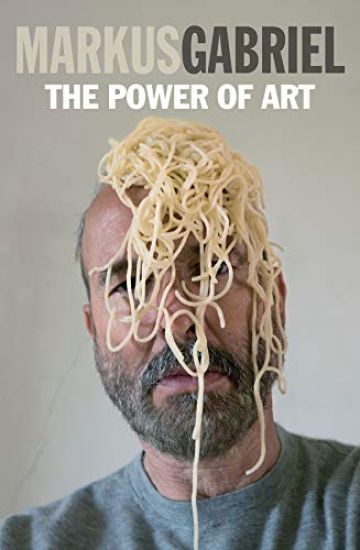
We live in an era of aesthetics. Art has become both pervasive and powerful – it is displayed not only in museums and galleries but also on the walls of corporations and it is increasingly fused with design. But what makes art so powerful, and in what does its power consist? According to a widespread view, the power of art – its beauty – lies in the eye of the beholder. What counts as art appears to be a function of individual acts of evaluation supported by powerful institutions. On this account, the power of art stems from a force that is not itself aesthetic, such as the art market and the financial power of speculators. Art expresses, in a disguised form, the power of something else – like money – that lies behind it. In one word, art has lost its autonomy. In this short book, Markus Gabriel rejects this view. He argues that art is essentially uncontrollable. It is in the nature of the work of art to be autonomous to such a degree that the art world will never manage to overpower it. Ever since the cave paintings of Lascaux, art has taken hold of the human mind and implemented itself in our very being. Thanks to the emergence of art we became human beings, that is, beings who lead their lives in light of an image of the human being and its position in the world and in relation to other species. Due to its structural, ontological power, art itself is and remains radically autonomous. Yet, this power is highly ambiguous, as we cannot control its unfolding. In this book, a leading proponent of New Realism applies this philosophical perspective to art to create a new aesthetic realism.
We live in an era of aesthetics. Art has become both pervasive and powerful – it is displayed not only in museums and galleries but also on the walls of corporations and it is increasingly fused with design. But what makes art so powerful, and in what does its power consist? According to a widespread view, the power of art – its beauty – lies in the eye of the beholder. What counts as art appears to be a function of individual acts of evaluation supported by powerful institutions. On this account, the power of art stems from a force that is not itself aesthetic, such as the art market and the financial power of speculators. Art expresses, in a disguised form, the power of something else – like money – that lies behind it. In one word, art has lost its autonomy. In this short book, Markus Gabriel rejects this view. He argues that art is essentially uncontrollable. It is in the nature of the work of art to be autonomous to such a degree that the art world will never manage to overpower it. Ever since the cave paintings of Lascaux, art has taken hold of the human mind and implemented itself in our very being. Thanks to the emergence of art we became human beings, that is, beings who lead their lives in light of an image of the human being and its position in the world and in relation to other species. Due to its structural, ontological power, art itself is and remains radically autonomous. Yet, this power is highly ambiguous, as we cannot control its unfolding. In this book, a leading proponent of New Realism applies this philosophical perspective to art to create a new aesthetic realism.
From ancient philosophy to contemporary theories of fiction, it is a common practice to relegate illusory appearances to the realm of the non-existent, like shadows on the wall of Plato’s cave. Contrary to this traditional mode of drawing a metaphysical distinction between reality and fiction, Markus Gabriel argues that the realm of the illusory, fictional, imaginary and conceptually indeterminate is as real as it gets. Being in touch with reality need not and cannot require that we overcome appearances in order to grasp a meaningless reality which exists ‘out there’, outside and maybe even beyond our minds. Human mindedness (Geist) exists in the mode of fictions through which we achieve self-consciousness. This novel approach provides a fresh perspective on our existence as subjects who lead their lives in the light of self-conceptions. Fictions also develops a social ontology according to which the social unfolds as a constant renegotiation of dissent, of different points of view onto the same reality. Thus we cannot ever hope to ground human society in a fiction-free realm of objective transactions. However, this does not mean that truth and reality are somehow outdated concepts. On the contrary, we need to enlarge our conception of reality so that it fully encompasses ourselves as specifically minded social animals. This major new work of philosophy will be of interest to students and scholars throughout the humanities and to anyone interested in contemporary philosophy and social thought.
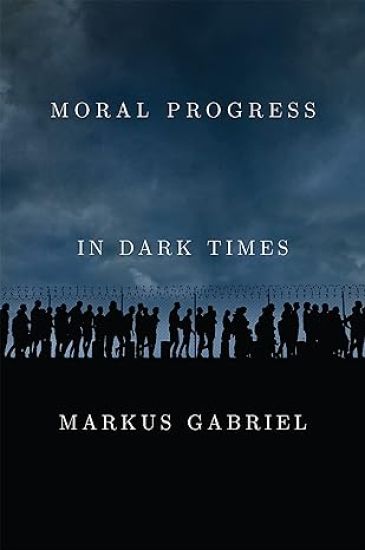
The challenges we face today are unprecedented, from the existential crisis of climate change to the global security threats posed by aggression in Ukraine and elsewhere. Add to this the crisis of liberal democracy and we seem to be swirling in a state of moral disarray, unsure whether there are any principles to which we can appeal today that would be anything other than particularistic. In contrast to this view, Markus Gabriel puts forward the bold argument that there are guiding moral principles for human behaviour. These guiding principles extend across cultures; they are universally valid and form the source of universal values in the twenty-first century. In developing what he calls a ‘New Moral Realism’, Gabriel breathes fresh life into the idea that humanity’s task on our planet is to enable moral progress through cooperation. It is only by achieving moral progress in a way that incorporates universal values – and thus embraces all of humanity – that we can avoid the abyss into which we will otherwise slide. Written with verve, wit and imagination, Gabriel's call for a new enlightenment is a welcome antidote to the value relativism and nihilism of our times, and it lays out a moral framework within which we can work together – as surely we must – to deal with the great challenges we now face.
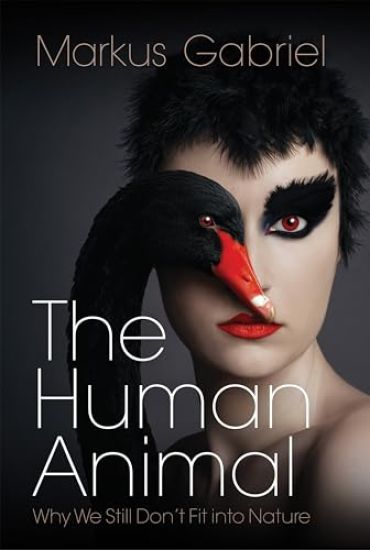
The climate crisis has forced us to recognize that we are not separate from nature but are part of the natural world on which we depend: human beings are animals and we must understand much better our place in nature and our impact on our environment if we are to avoid our own annihilation as a species. And yet we feel nevertheless that we do not entirely fit into nature, that we stand apart from other animals in some way – in what way, exactly?Markus Gabriel argues that what distinguishes humans from other animals is that humans are minded living beings who seek to understand the world and themselves and who possess ethical insight into moral contexts. Mind is the capacity to lead one’s life in the light of a conception of who or what one is. The undeniable difference between us and other animals defines the human condition and places a special responsibility on us to consider our actions in the context of other living beings and our shared habitat. It also calls on us to cultivate an ethics of not-knowing: to recognize that, however much we may seek to understand the world, we will never completely master it. Our grasp of reality, mediated by our animal minds, will always be limited: much is and will remain alien to us, lending itself only to speculation – and to remember this is to stand us in better stead for carving out an existence among the environmental crisis that looms before us all.
Das Wiederentdecken des bereits bekannten. Das Einleben in der marokkanischen W ste. Die Tage ausf llen. Die Erinnerungen in den Griff bekommen. Was aus Langeweile begann, nimmt ernsthafte Ausma e an. Auf der Schwelle zu einer monstr sen Welt. Aus dem Z gern wird ein Zaudern. Nichts ist richtig und nichts ist falsch.