Kirjojen hintavertailu. Mukana 11 717 486 kirjaa ja 12 kauppaa.

Kirjahaku

Etsi kirjoja tekijän nimen, kirjan nimen tai ISBN:n perusteella.

1000 tulosta hakusanalla Martin Bech

Martin l'enfant retrouvé

Martin l'enfant retrouvé

Eugene Sue

Createspace Independent Publishing Platform
2014
nidottu
Martin, abandonn d s son plus jeune ge par son p re, un comte autoritaire, d prav , sans coeur, conna tra la vie des enfants trouv s de cette poque. Mais gr ce son bon fond, il surmontera sa vie cauchemardesque, et retrouvera son p re. pilogue tr s moral... Eug ne Sue nous expose dans ces quatre volumes sa th se socialiste, d nonce l'affreuse mis re des travailleurs et nous d crit de mani re peu flatteuse la classe des nantis.
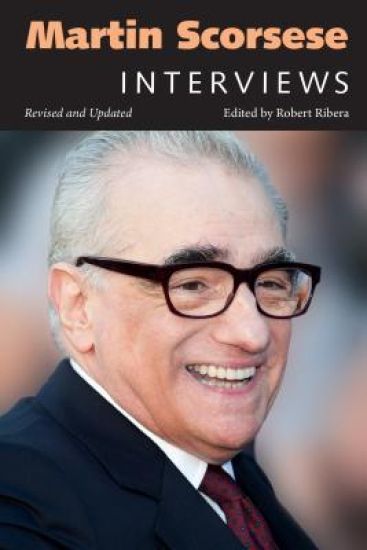
Martin Scorsese

Martin Scorsese

University Press of Mississippi
2017
sidottu
Martin Scorsese (b. 1942) has long been considered one of America’s greatest cinematic storytellers. Over the last fifty years he has created some of the most iconic moments in American film, never afraid to confront controversial issues with passion. While few of his films are directly autobiographical, his upbringing in New York’s Little Italy, the childhood asthma that kept him from playing sports, and his early desire to enter the priesthood all helped form his sensibilities and later shaped his distinct style. Community, religion, violence?these themes drive a Scorsese picture, and whether he examines the violence that bursts forth in the hand of Travis Bickle or the passion of Jesus Christ, Scorsese’s mastery of the history, art, and craft of filmmaking is undeniable.This collection was originally edited by the late Peter Brunette in 1999 and is now revised and extensively updated by Robert Ribera. It traces Scorsese’s evolution from the earliest days of the New American Cinema, his work with Roger Corman, and his days at New York University’s film program to his efforts to preserve the legacy of cinema, his documentary work, and his recent string of successes. Among new movies discussed are The Departed, Hugo, and The Wolf of Wall Street, and the documentaries No Direction Home and The Blues. Scorsese stands out as a director, producer, scholar, preservationist, and icon. His work both behind the camera and in the service of its history are a cornerstone of American and world cinemas. In these interviews, Scorsese takes us from Elizabeth Street to the heights of Hollywood and all the journeys in between.
Martin Scorsese

Martin Scorsese

University Press of Mississippi
2017
nidottu
Martin Scorsese (b. 1942) has long been considered one of America’s greatest cinematic storytellers. Over the last fifty years he has created some of the most iconic moments in American film, never afraid to confront controversial issues with passion. While few of his films are directly autobiographical, his upbringing in New York’s Little Italy, the childhood asthma that kept him from playing sports, and his early desire to enter the priesthood all helped form his sensibilities and later shaped his distinct style. Community, religion, violence?these themes drive a Scorsese picture, and whether he examines the violence that bursts forth in the hand of Travis Bickle or the passion of Jesus Christ, Scorsese’s mastery of the history, art, and craft of filmmaking is undeniable.This collection was originally edited by the late Peter Brunette in 1999 and is now revised and extensively updated by Robert Ribera. It traces Scorsese’s evolution from the earliest days of the New American Cinema, his work with Roger Corman, and his days at New York University’s film program to his efforts to preserve the legacy of cinema, his documentary work, and his recent string of successes. Among new movies discussed are The Departed, Hugo, and The Wolf of Wall Street, and the documentaries No Direction Home and The Blues. Scorsese stands out as a director, producer, scholar, preservationist, and icon. His work both behind the camera and in the service of its history are a cornerstone of American and world cinemas. In these interviews, Scorsese takes us from Elizabeth Street to the heights of Hollywood and all the journeys in between.
Martin R. Delany’s Civil War and Reconstruction
Militant? Uncompromising? Pragmatic? Utilitarian? Accommodating? Conservative? To engage Martin Robison Delany (1812–1885) is to wrestle with almost all the complexities and paradoxes of nineteenth-century black leadership in one public intellectual. After his previous book on Delany, senior historian Tunde Adeleke has compiled here letters, speeches, contemporary nineteenth-century newspaper articles, and reports written by and about Delany. These vital primary sources cover his Civil War and Reconstruction career in South Carolina and include key critical reactions to Delany’s ideas and writings from his contemporaries. There are over ninety documents, the vast majority not previously published. Delany remains the Subject of conflicting and confusing interpretations. Adeleke indicates that Delany actually manifested complex dispositions. He presaged manifestations of the strands of both protest and compromise that would define the early twentieth-century world of Booker T. Washington and W. E. B. Du Bois. An African American abolitionist and journalist, Delany advocated for black nationalism, one of the first to do so. After working alongside Frederick Douglass to publish the North Star in the 1840s, Delany looked into establishing a Settlement in West Africa. Yet during the Civil War, he served as the first African American field grade officer in the Union Army. Then he labored for the Freedmen’s Bureau in South Carolina. Delany even ran unsuccessfully for lieutenant governor as a Republican and later defected to the Democrats. These documents will prove an indispensable call and response to an unparalleled intellectual life.
Martin R. Delany’s Civil War and Reconstruction
Militant? Uncompromising? Pragmatic? Utilitarian? Accommodating? Conservative? To engage Martin Robison Delany (1812–1885) is to wrestle with almost all the complexities and paradoxes of nineteenth-century black leadership in one public intellectual. After his previous book on Delany, senior historian Tunde Adeleke has compiled here letters, speeches, contemporary nineteenth-century newspaper articles, and reports written by and about Delany. These vital primary sources cover his Civil War and Reconstruction career in South Carolina and include key critical reactions to Delany’s ideas and writings from his contemporaries. There are over ninety documents, the vast majority not previously published. Delany remains the Subject of conflicting and confusing interpretations. Adeleke indicates that Delany actually manifested complex dispositions. He presaged manifestations of the strands of both protest and compromise that would define the early twentieth-century world of Booker T. Washington and W. E. B. Du Bois. An African American abolitionist and journalist, Delany advocated for black nationalism, one of the first to do so. After working alongside Frederick Douglass to publish the North Star in the 1840s, Delany looked into establishing a Settlement in West Africa. Yet during the Civil War, he served as the first African American field grade officer in the Union Army. Then he labored for the Freedmen’s Bureau in South Carolina. Delany even ran unsuccessfully for lieutenant governor as a Republican and later defected to the Democrats. These documents will prove an indispensable call and response to an unparalleled intellectual life.
Martin Luther's Theologia Germanica

Martin Luther's Theologia Germanica

Martin Luther

Literary Licensing, LLC
2014
sidottu
Martin Luther's Theologia Germanica is a book that explores the teachings of Christianity as they were understood in Germany during the late Middle Ages. The book is attributed to Martin Luther, although it is unclear whether he actually wrote it or merely edited an existing manuscript. The Theologia Germanica is written in a question-and-answer format and covers a wide range of topics, including the nature of God, the role of faith in salvation, and the importance of living a virtuous life. The book emphasizes the importance of personal experience and direct communication with God, rather than relying solely on the teachings of the church. It also emphasizes the importance of humility and self-awareness, and encourages readers to examine their own thoughts and motivations in order to better understand themselves and their relationship with God. Overall, Martin Luther's Theologia Germanica is a powerful and thought-provoking exploration of Christian theology that continues to be relevant and influential today.This Is A New Release Of The Original 1922 Edition.This scarce antiquarian book is a facsimile reprint of the old original and may contain some imperfections such as library marks and notations. Because we believe this work is culturally important, we have made it available as part of our commitment for protecting, preserving, and promoting the world's literature in affordable, high quality, modern editions, that are true to their original work.
Martin Luther: The Problem with Faith and Reason

Martin Luther: The Problem with Faith and Reason

David Andersen

Wipf Stock Publishers
2012
sidottu
Luther's critics have consistently charged him as an irrationalist and pessimist concerning reason's capabilities, and even by his followers as a fideist who sees little or no relationship between faith and reason. In this book, David Andersen offers a fresh and timely re-evaluation of Luther and his understanding of the relationship between faith and reason based upon a thorough engagement with Luther's mature writings. Dr. Andersen persuasively argues that, far from being either an irrationalist or a fideist, Luther stands within an empiricist tradition and that his pronouncements on fallen human reason can be understood only from that philosophical perspective. Based upon recent research into the writings of William of Ockham, who positively influenced Luther in this area, Dr. Andersen also shows that Luther can no longer be charged as a pessimist concerning human knowledge. Reason has an important role to play for Luther in bringing one to faith, and the objectivity of Christ's resurrection serves as that focal point that validates all Christian discourse. In subordinating itself to the facts of the death and resurrection of Christ for the forgiveness of sins, reason's created function is restored to some extent as it receives that forgiveness in the words of Holy Scripture and the visible means of Baptism and the Lord's Supper.