
Kirjahaku
Etsi kirjoja tekijän nimen, kirjan nimen tai ISBN:n perusteella.
1000 tulosta hakusanalla Martin Meisel
Martin Luther: The Hero of the Reformation 1483 to 1546
Henry Eyster Jacobs
Literary Licensing, LLC
2014
nidottu
Martin Luther's Two Ways of Viewing Life and the Educational Foundation of a Lutheran Ethos
Leonard S Smith
Pickwick Publications
2011
sidottu

Luther's critics have consistently charged him as an irrationalist and pessimist concerning reason's capabilities, and even by his followers as a fideist who sees little or no relationship between faith and reason. In this book, David Andersen offers a fresh and timely re-evaluation of Luther and his understanding of the relationship between faith and reason based upon a thorough engagement with Luther's mature writings. Dr. Andersen persuasively argues that, far from being either an irrationalist or a fideist, Luther stands within an empiricist tradition and that his pronouncements on fallen human reason can be understood only from that philosophical perspective. Based upon recent research into the writings of William of Ockham, who positively influenced Luther in this area, Dr. Andersen also shows that Luther can no longer be charged as a pessimist concerning human knowledge. Reason has an important role to play for Luther in bringing one to faith, and the objectivity of Christ's resurrection serves as that focal point that validates all Christian discourse. In subordinating itself to the facts of the death and resurrection of Christ for the forgiveness of sins, reason's created function is restored to some extent as it receives that forgiveness in the words of Holy Scripture and the visible means of Baptism and the Lord's Supper.
Martin Luther on Reading the Bible as Christian Scripture
William M Marsh; Robert Kolb
Pickwick Publications
2017
sidottu

In a 1934 speech, marking the Twenty-fifth Reunion of his high school class, Martin Heidegger spoke eloquently of classmates killed in the Great War and called on his audience to recognize that the national rebirth now occuring in Hitler’s Germany must continue to draw inspiration from the war dead. In this process, he refers to the war of 1914–1918 as “the First World War.” Since the condition for the possibility of “the First” is a Second World War, Martin Heidegger and the First World War raises the question: how could Heidegger have already known in 1934 that another war was coming? The answer is to be found by reading Being and Time (1927) as a funeral oration for the warriors of the Great War, a reading that validates Heidegger’s paradoxical claim that the genuinely historical must emerge from the future. By using Lincoln’s “Gettysburg Address” as an archetype of the genre, William H. F. Altman shows that Heidegger’s concept of temporality in Being and Time replicates the way past, present, and future interweave in the classic funeral oration and argues that if there is a visible path connecting Being and Time to its author’s subsequent decision for National Socialism, it runs through the trenches of the Great War and its author’s successful attempt to evade them. The analysis and conclusions in this book will be of great value to students and scholars interested in philosophy, history, intellectual history, German studies, and political science.
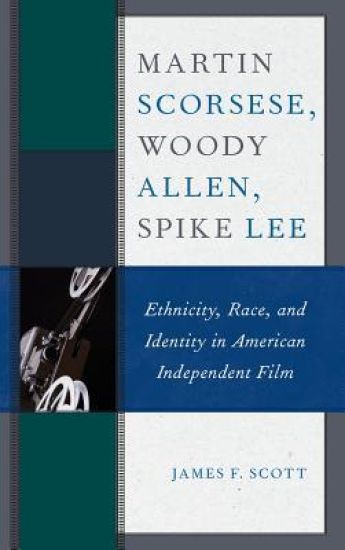
Directors Martin Scorsese, Woody Allen, and Spike Lee emerged as filmmakers toward the end of the 1960s, when the breakdown of the studio system paved the way for new production partnerships and gave more creative authority to directors, actors, and writers. In what has come to be called the “Indie” movement, these directors were able to explore ethno-racial themes with more frankness than previously allowed. From the perspectives of their own minority communities, Scorsese, Allen, and Lee dramatized and critiqued the challenges this restless, ethno-racial underclass posed to the “White Republic” imagined by the Founding Fathers. The three directors whose work is at the heart of this book explore the question of how identity formation is a process of negotiation, particularly among America’s ethno-racial minorities. They emphasize the stresses related to the double burden in the assimilative process of patterning oneself after the majoritarian culture, while acknowledging in complex ways the culture of the community of origin. Annie Hall tells Alvie Singer, “you’re a real Jew.” Buggin’ Out instructs his homeboy friend, “Stay Black, Mookie!” What implications do these phrases carry? Will Alvie have a chance to modify his identity? Should he? Will Mookie honor his friend’s admonition? Is “black” also susceptible to a cultural makeover? Is identity a personal choice? This book highlights how various films by these three directors explore the ways in which “cultural capital” (musical, artistic, intellectual, athletic, etc.) is used to erase “ethno-racial taint” (skin tones, supposed biological “traits,” offensive cultural habits). The formula ordains that assimilation and interculturation will be asymmetrical, favoring those groups or individuals who bring with them the most cultural capital.

Directors Martin Scorsese, Woody Allen, and Spike Lee emerged as filmmakers toward the end of the 1960s, when the breakdown of the studio system paved the way for new production partnerships and gave more creative authority to directors, actors, and writers. In what has come to be called the “Indie” movement, these directors were able to explore ethno-racial themes with more frankness than previously allowed. From the perspectives of their own minority communities, Scorsese, Allen, and Lee dramatized and critiqued the challenges this restless, ethno-racial underclass posed to the “White Republic” imagined by the Founding Fathers. The three directors whose work is at the heart of this book explore the question of how identity formation is a process of negotiation, particularly among America’s ethno-racial minorities. They emphasize the stresses related to the double burden in the assimilative process of patterning oneself after the majoritarian culture, while acknowledging in complex ways the culture of the community of origin. Annie Hall tells Alvie Singer, “you’re a real Jew.” Buggin’ Out instructs his homeboy friend, “Stay Black, Mookie!” What implications do these phrases carry? Will Alvie have a chance to modify his identity? Should he? Will Mookie honor his friend’s admonition? Is “black” also susceptible to a cultural makeover? Is identity a personal choice? This book highlights how various films by these three directors explore the ways in which “cultural capital” (musical, artistic, intellectual, athletic, etc.) is used to erase “ethno-racial taint” (skin tones, supposed biological “traits,” offensive cultural habits). The formula ordains that assimilation and interculturation will be asymmetrical, favoring those groups or individuals who bring with them the most cultural capital.
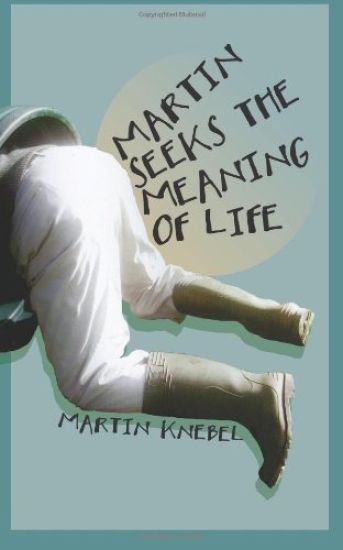
Martin Seeks The Meaning of Life
Martin Knebel
Createspace Independent Publishing Platform
2014
nidottu
Martin Seeks the Meaning of Life is an autobiography filled with rich turns of phrase, describing commerce in all its "marginal honesty" and of the immense pleasure in producing a poem, likening it to the satisfaction a hen appears to feel when it lays an egg From this it is easy to intuit that this is no run-of-the-mill memoir - it is full of historical interest and references, and wry personal anecdotes. It tells of a much older brother who wrote to TS Eliot to get a job at the publisher, Faber & Faber, and an older sister who was a remarkable artist and who was admitted to St Martins School of Art at the age of 14; and of parents who started life in the east end of London and their progress through a 'Tolstoyan colony' in the Cotswolds. It tells of life with a gamekeeper in a tower, of the forestry and timber trades, of religion in the form of the Oxford Group, of twelve years running a stately home, and of sailing many times down the Bay of Biscay. This is a story of the colourful lives of many remarkable people, but mostly it gives a deep insight into the life of the author, a poet who wrote 'Funny Old World' and who elucidates further on that concept in this, his autobiography.
Works of Martin Luther Volume I: With Introductions and Notes
Martin Luther
Createspace Independent Publishing Platform
2014
nidottu
Martin Eden: Original and Unabridged
Jack London
Createspace Independent Publishing Platform
2014
nidottu
Martin Eden, by American author Jack London, is about a young proletarian autodidact struggling to become a writer.Eden represents writer' frustration with publishers by speculating that when he mails off a manuscript, a "cunning arrangement of cogs" immediately puts it in a new envelope and returns it automatically with a rejection slip. The central theme of Eden's developing artistic sensibilities places the novel in the tradition of the K nstlerroman, in which is narrated the formation and development of an artist.Eden differs from London in that Eden rejects socialism, attacking it as "slave morality", and relies on a Nietzschean individualism. In a note to Upton Sinclair, London wrote, "One of my motifs, in this book, was an attack on individualism (in the person of the hero). I must have bungled, for not a single reviewer has discovered it."
CHAPITRE PREMIER. LA DOUBLE CHASSE. Cette partie de la Sologne, o viennent se confiner, du nord au sud, les d partements du Loiret et du Loir-et-Cher, et dont une portion forme ce qu'on appelle le bassin de la Sauldre, offre une physionomie particuli re: ce sont g n ralement d'immenses bois de sapins coup s et l par de grandes plaines de bruy res, ou par des terrains tourbeux, que submergent presque toujours les d bordements des rivi res et des ruisseaux. Ce sont encore de vastes tangs encadr s de touffes d'iris et de joncs fleuris, eaux dormantes souvent effleur es par le vol circulaire des courlis, des arcanettes ou des martin-p cheurs; et l quelques vall es, des prairies, sem es de massifs de ch nes, rompent l'aspect uniforme de ce paysage aux lignes planes et tranquilles. Rien ne saurait rendre le calme m lancolique de ce pays d sert, aux vastes horizons form s par les masses toujours vertes des for ts de sapins; de ces solitudes profondes, o r sonne, de temps autre, le choc sonore de la cogn e du b cheron, et d'o s' l ve, lorsque le vent souffle, un bruit sourd, prolong , imposant, comme le lointain mugissement de la mer; bruit caus par l'agitation et le fr lement des branchages des arbres verts; ce n'est pas non plus un spectacle sans majest que de voir le soleil s'abaisser lentement derri re ces plaines immenses, unies comme un lac, et couvertes de bruy res roses et d'ajoncs d'un jaune d'or que la brise du soir fait doucement onduler, ainsi qu'une nappe de verdure de fleurs. Les oiseaux de proie, qui choisissent pour repaire les grands bois d serts, les jean-le-blancs, les aigles de Sologne, les bondr es, les faucons, sont aussi nombreux dans ces solitudes que les oiseaux aquatiques. Ce qui donne, surtout l'hiver, cette contr e un aspect singulier, c'est l' ternelle et sombre verdure de ses sapini res m l es de taillis de bouleaux et de ch nes, o g tent toujours le renard, le chevreuil, le loup, et o s'aventurent souvent les cerfs et les sangliers des for ts voisines. Aussi ce pays est-il la terre promise du chasseur et cons quemment du braconnier, car le li vre, la perdrix rouge, le faisan y abondent, et le lapin y pullule de telle sorte que, depuis le riche propri taire dont il ronge les jeunes bois, jusqu'aux pauvres cultivateurs dont il broute les maigres gu rets, tous le regardent comme un fl au destructeur.
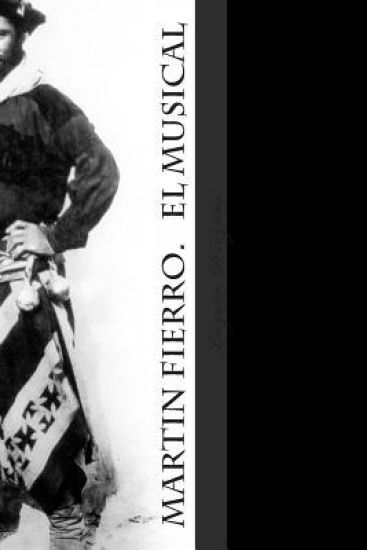
Martin Fierro. El musical: La obra de José Hernández convertida en comedia musical
Lazaro Droznes
Createspace Independent Publishing Platform
2009
nidottu
Comedia musical folcl rica basada la primera parte del libro de Jos Hernandez. La historia no es m s una relato en tercera persona de las desventuras del gaucho, sino que se convierte en una obra dram tica en la que los personajes interact an a trav s de la m sica, el canto y el baile para recrear as , una vez m s, este relato fundacional de la sociedad argentina.