Kirjojen hintavertailu. Mukana 11 627 220 kirjaa ja 12 kauppaa.

Kirjahaku

Etsi kirjoja tekijän nimen, kirjan nimen tai ISBN:n perusteella.

1000 tulosta hakusanalla Max Pece

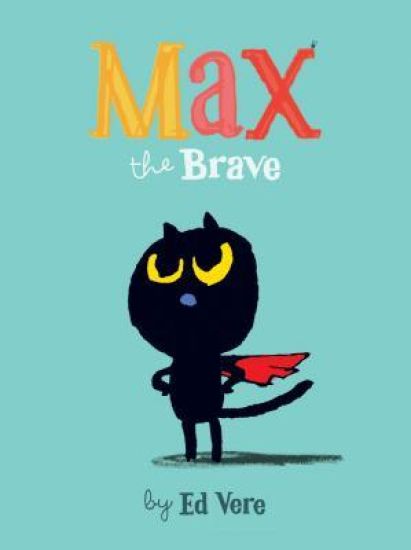
Max the Brave

Max the Brave

Ed Vere

Sourcebooks Jabberwocky
2017
sidottu
A New York Times and USA Today Bestseller Max is a fearless kitten. Max is a brave kitten. Max is a kitten who chases mice. There's only one problem--Max doesn't know what a mouse looks like With a little bit of bad advice, Max finds himself facing a much bigger challenge. Maybe Max doesn't have to be Max the Brave all the time...Join this adventurous black cat as he very politely asks a variety of animals for help in finding a mouse. Young readers will delight in Max's mistakes, while adults will love the subtle, tongue-in-cheek humor of this new children's classic.Praise for Max the Brave: "A cat-and-mouse game to be laughed at and reread." --Kirkus"Full of playful humor...enhanced by the humorous text, character expressions, and a not-scary monster to boot. VERDICT Highly recommended." -- School Library Journal"Both the punchy text and illustrations command attention, and plenty of readers will get a kick out of feeling superior to Max." --Publishers Weekly
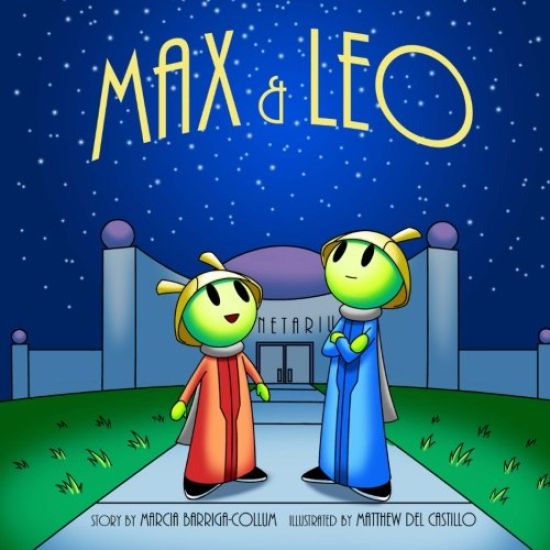
Max and Leo

Max and Leo

Marcia L. Collum

Createspace Independent Publishing Platform
2013
nidottu
Being the new kids in town can be pretty scary, especially for little newcomers, Max and Leo. They have somehow found themselves in a whole new world that's completely unfamiliar. Wouldn't you be a little scared? Luckily for them, their exceptional knowledge of stars and space has landed them a job at the planetarium. That's quite a coincidence, don't you think? But, will they like their new home in the planetarium? Will they make new friends? In case you hadn't noticed, they don't look like the other kids. One thing is for certain, many new adventures await Max and Leo Max and Leo is a 390-word picture book about two friends who must adapt to their new surroundings. They are not unlike other children. They feel scared and anxious about the same kinds of things. "Max and Leo" is a delightful, colorful and friendly story that children of all ages will enjoy and relate to on many levels. Max and Leo will quickly become their friends too.
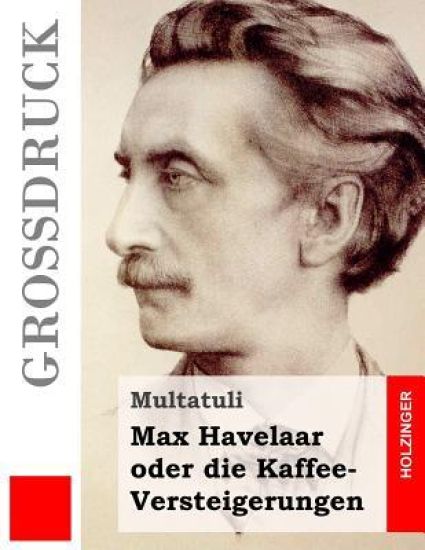
Max Havelaar oder die Kaffee-Versteigerungen (Großdruck)

Max Havelaar oder die Kaffee-Versteigerungen (Großdruck)

Multatuli

Createspace Independent Publishing Platform
2013
nidottu
Multatuli: Max Havelaar oder Die Kaffee-Versteigerungen der Niederl ndischen Handels-Gesellschaft Lesefreundlicher Gro druck in 16-pt-Schrift Edition Holzinger. Gro format, 216 x 279 mm Berliner Ausgabe, 2015 Vollst ndiger, durchgesehener Neusatz mit einer Biographie des Autors bearbeitet und eingerichtet von Michael Holzinger Erstdruck: Amsterdam (de Ruyter) 1860 (2 Bde). Hier nach der bers. v. Dr. Karl Mischke. Originaltitel: Max Havelaar of de koffijveilingen der Nederlandsche Handelsmaatschappij Textgrundlage ist die Ausgabe: Multatuli (Eduard Douwes Dekker): Max Havelaar. bers. v. Dr. Karl Mischke, Halle a. d. S aale]: Verlag von Otto Hendel, o. J.]. Herausgeber der Reihe: Michael Holzinger Reihengestaltung: Viktor Harvion Umschlaggestaltung unter Verwendung des Bildes: Lithographie von August Alleb (1874) nach einem Foto von Boussaud Valadon (1864) Gesetzt aus Minion Pro, 16 pt.
Max Havelaar: Or the Coffee Auctions of the Dutch Trading Company (1868)

Max Havelaar: Or the Coffee Auctions of the Dutch Trading Company (1868)

Eduard Douwes Dekker; Multatuli

Literary Licensing, LLC
2014
sidottu
Max Havelaar: Or The Coffee Auctions Of The Dutch Trading Company is a novel written by Multatuli and first published in 1868. The book is a fictionalized account of the author's experiences as an assistant-resident in the Dutch East Indies (now Indonesia) during the mid-19th century. The story follows the character Max Havelaar, a Dutch civil servant who is appointed to a post in the Javanese district of Lebak. Havelaar is a man of high moral principles who is determined to expose the corruption and exploitation of the local people by the Dutch colonial authorities and their native collaborators. He is met with resistance and hostility from his superiors and colleagues, who are more interested in maintaining their own power and wealth. The novel is a critique of colonialism and capitalism, and it exposes the hypocrisy and injustice of the Dutch colonial system. It also explores themes of love, loyalty, and betrayal, as Havelaar struggles to balance his duty to his country and his conscience. The book is written in a complex and innovative style, with multiple narrators and a non-linear structure. It also includes satirical elements, such as the character of Droogstoppel, a coffee trader who represents the greed and narrow-mindedness of the Dutch bourgeoisie. Max Havelaar: Or The Coffee Auctions Of The Dutch Trading Company is considered a masterpiece of Dutch literature and a seminal work of colonial and postcolonial studies. It has been translated into many languages and has influenced writers and thinkers around the world. The book's impact on Dutch society was so significant that it is credited with inspiring reforms in the colonial administration and the birth of the Dutch labor movement.This Is A New Release Of The Original 1868 Edition.This scarce antiquarian book is a facsimile reprint of the old original and may contain some imperfections such as library marks and notations. Because we believe this work is culturally important, we have made it available as part of our commitment for protecting, preserving, and promoting the world's literature in affordable, high quality, modern editions, that are true to their original work.
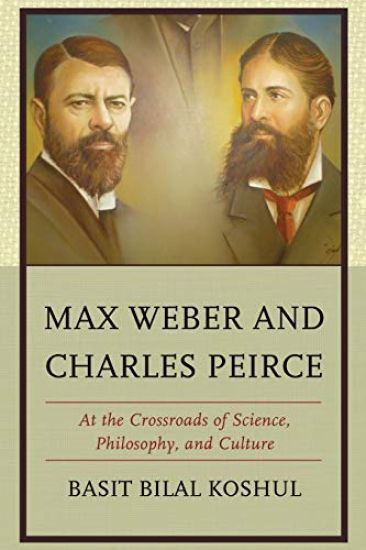
Max Weber and Charles Peirce

Max Weber and Charles Peirce

Basit Bilal Koshul

Lexington Books
2016
nidottu
Max Weber and Charles Peirce: At the Crossroads of Science, Philosophy, and Culture shows that a relational conception of science is implicit in Max Weber’s reflections on scientific inquiry as a bridge between the Geisteswissenschaften (soft sciences) and Naturwissenschaften (hard sciences). Because he is not a trained philosopher, Weber does not have the precise philosophical language in which to articulate his ideas clearly. Consequently, his relational vision of science remains obscure. Basit Bilal Koshul brings clarity and precision to Weber’s insights using the pragmaticist philosophy of Charles Peirce. He makes explicit the phenomenology, semiotics, and logic that are implicit in Weber’s methodological writings and translates them into Peircean terms. Since Peirce explicitly offers his philosophy of science as a critique of the modern divide between the humanistic and natural sciences and of the divide between religion and science, this translation has a double effect. It clarifies Weber’s insights on the methodology of scientific inquiry, and it extends the reparative force of these insights into the larger culture of which science is one part. The reconstruction of Weber’s relational conception of science along the lines of Peirce’s pragmaticism, in turn, reveals that Weber’s work points toward deep affinities between religion and science. Given the fact that the same phenomenology, semiotics, and logic that underpin Peirce’s philosophy of science are also at the root of his philosophy of religion, we can begin to appreciate the fact that Weber’s work makes an important contribution to bridging the divide between religion and science. In providing models that bridge divides and move towards complementary relationships, Weber and Peirce not only help us to better understand disenchantment as the fate of our times, but also offer uniquely valuable resources to reach for cultural horizons that lie beyond it.