Kirjojen hintavertailu. Mukana 12 390 323 kirjaa ja 12 kauppaa.

Kirjahaku

Etsi kirjoja tekijän nimen, kirjan nimen tai ISBN:n perusteella.

1000 tulosta hakusanalla NOT KNOWN

Obey Not Know

Obey Not Know

Colin P a Jones

Kurodahan Press
2019
pokkari
Like many things Japanese, the Japanese legal system has its peculiarities... and Professor Jones applies his decades of legal and teaching experience to shed light on its mysteries. As with most legal systems there is method to its madness, and while the reasoning behind it all is a bit different from the approaches of Western nations, it works. Usually. Based on the author's long-running feature in The Japan Times, the book offers a selection of his most important columns, plus other articles drawn from numerous sources, and including a number of never-before published pieces. Older articles have been updated to reflect more recent developments, but remain vitally important to understanding how things work in Japan. And in spite of being written by an attorney, the book is in everyday English, peppered with entertaining and sometimes stinging asides. Here, at last, is a glimpse into the Japanese legal system, ideal for foreign residents of Japan as well as legal researchers and practitioners.
Knowing When You Do not Know

Knowing When You Do not Know

World Bank Publications
2012
nidottu
Economists have long sought to predict how macroeconomic shocks will affect individual welfare. Macroeconomic data and forecasts are easily available when crises strike. But policy action requires not only understanding the magnitude of a macro shock, but also identifying which households or individuals are being hurt by (or benefit from) the crisis. A popular solution is to extrapolate the welfare impact of a shock from the historical response of income or consumption poverty to changes in output, by estimating an 'elasticity' of poverty to growth. Although this method provides an estimate for the aggregate poverty impact of a macro shock, it has limited value for analysts and policymakers alike. Aggregate numbers are useful to capture the attention of policymakers and the international community, but in the absence of any information on who is affected and to what extent, provide little guidance on what actions need to be taken. This volume outlines a more comprehensive approach to the problem, showcasing a microsimulation model, developed in response to demand from World Bank staff working in countries and country governments in the wake of the global financial crisis of 2008-09. Starting with the idea of using simple macroeconomic projections as the 'macro linkages' to a micro behavioral model built from household data, the model was conceptualized, refined and tested in a diverse mix of countries: Bangladesh, Philippines, Mexico, Poland and Mongolia. The results fed into country policy dialogue and lending operations of Bank teams, as well as various reports, research papers and briefs.
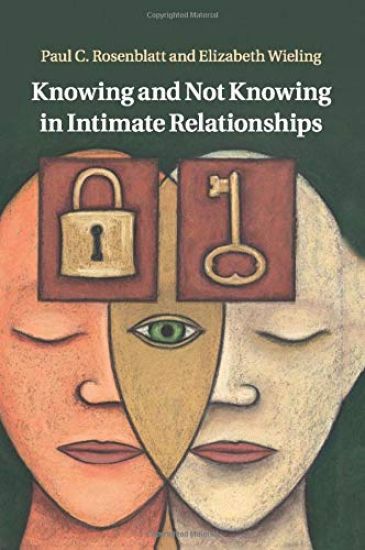
Knowing and Not Knowing in Intimate Relationships

Knowing and Not Knowing in Intimate Relationships

Paul C. Rosenblatt; Elizabeth Wieling

Cambridge University Press
2013
sidottu
In the extensive literature on couples and intimacy, little has been written about knowing and not knowing as people experience and understand them. Based on intensive interviews with thirty-seven adults, this book shows that knowing and not knowing are central to couple relationships. They are entangled in love, sexual attraction, trust, commitment, caring, empathy, decision making, conflict, and many other aspects of couple life. Often the entanglement is paradoxical. For example, many interviewees revealed that they hungered to be known and yet kept secrets from their partner. Many described working hard at knowing their partner well, and yet there were also things about their partner and their partner's past that they wanted not to know. This book's qualitative, phenomenological approach builds on and adds to the largely quantitative social psychological, communications and family field literature to offer a new and accessible insight into the experience of intimacy.
Knowing and Not Knowing in Intimate Relationships

Knowing and Not Knowing in Intimate Relationships

Paul C. Rosenblatt; Elizabeth Wieling

Cambridge University Press
2015
pokkari
In the extensive literature on couples and intimacy, little has been written about knowing and not knowing as people experience and understand them. Based on intensive interviews with thirty-seven adults, this book shows that knowing and not knowing are central to couple relationships. They are entangled in love, sexual attraction, trust, commitment, caring, empathy, decision making, conflict, and many other aspects of couple life. Often the entanglement is paradoxical. For example, many interviewees revealed that they hungered to be known and yet kept secrets from their partner. Many described working hard at knowing their partner well, and yet there were also things about their partner and their partner's past that they wanted not to know. This book's qualitative, phenomenological approach builds on and adds to the largely quantitative social psychological, communications and family field literature to offer a new and accessible insight into the experience of intimacy.
Knowing and Not Knowing
The social world is saturated with powerful formations of knowledge that colonise individual and institutional identities. Some knowledge emerges as legitimised and authoritative; other knowledge is resisted or repressed. Psychosocial approaches highlight the unstable basis of knowledge, learning and research; of knowing and not knowing. How do we come to formulate knowledge in the ways that we do? Are there other possible ways of knowing that are too difficult or unsettling for us to begin to explore? Do we need the authority of legitimised institutions and regularized methods to build secure knowledge? What might it mean to build insecure edifices of knowledge? How might we trouble notions of knowledge in processes of teaching, learning and research?This collection addresses these questions, drawing on a range of psychoanalytic and social theory, from Bion, Freud and Lacan, to Derrida, Kristeva and Zizek. Showcasing work from North America, Europe and Japan, contributors explore writing as a practice that can stabilise or unsettle subjectivities; the unconscious relations between school practices, subjectivities, educational spaces and ideologies; implications of the productive energies and the deadening inwardness associated with mourning and melancholia for formal and informal learning; and the authority we invest in apparently rigid or ephemeral institutional spaces. Strongly empirical as well as theoretical in approach, this collection will be of interest to students and academics seeking ways to resist normative orders of legitimacy and coherence in education and research. This book was originally published as a special issue of Pedagogy, Culture & Society.
Knowing and Not Knowing
The social world is saturated with powerful formations of knowledge that colonise individual and institutional identities. Some knowledge emerges as legitimised and authoritative; other knowledge is resisted or repressed. Psychosocial approaches highlight the unstable basis of knowledge, learning and research; of knowing and not knowing. How do we come to formulate knowledge in the ways that we do? Are there other possible ways of knowing that are too difficult or unsettling for us to begin to explore? Do we need the authority of legitimised institutions and regularized methods to build secure knowledge? What might it mean to build insecure edifices of knowledge? How might we trouble notions of knowledge in processes of teaching, learning and research?This collection addresses these questions, drawing on a range of psychoanalytic and social theory, from Bion, Freud and Lacan, to Derrida, Kristeva and Zizek. Showcasing work from North America, Europe and Japan, contributors explore writing as a practice that can stabilise or unsettle subjectivities; the unconscious relations between school practices, subjectivities, educational spaces and ideologies; implications of the productive energies and the deadening inwardness associated with mourning and melancholia for formal and informal learning; and the authority we invest in apparently rigid or ephemeral institutional spaces. Strongly empirical as well as theoretical in approach, this collection will be of interest to students and academics seeking ways to resist normative orders of legitimacy and coherence in education and research. This book was originally published as a special issue of Pedagogy, Culture & Society.
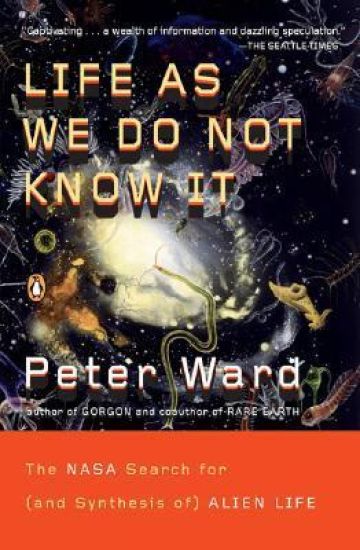
Life As We Do Not Know It

Life As We Do Not Know It

Peter Ward

Penguin Books Ltd
2007
nidottu
A revealing exploration of the latest NASA research into the possibility of extraterrestrial life also poses a hypothesis about the origins of life on Earth, examining the controversial idea of creating non-DNA life in a laboratory as well as the scientific possibilities of the range of life throughout the universe. By the author of Gorgon. Reprint. 20,000 first prinitng.
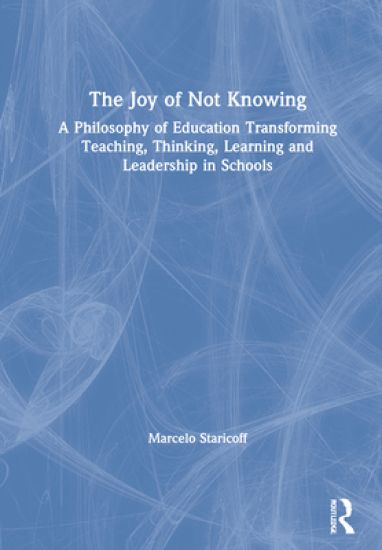
The Joy of Not Knowing

The Joy of Not Knowing

Marcelo Staricoff

Routledge
2020
sidottu
The Joy of Not Knowing takes every aspect of the curriculum and of school life and transforms it into a personalised, meaningful and enjoyable experience for all. It offers readers an innovative, theoretical and practical guide to establish a values-based, enquiry-led and challenge-rich learning to learn approach to teaching and learning and to school leadership. This thought-provoking guide provides the reader with a wealth of whole-class, easy-to-implement, malleable, practical ideas and case studies that can be personalised to the vision of each setting, age-group and curriculum. It brings together, as a whole-school framework, the strategies that have been shown to have the greatest impact on practitioner’s professional fulfilment and on children’s life chances, love of learning, intrinsic motivation and enthusiasm for wanting to know. The Joy of Not Knowing enables schools to launch the academic year with a bespoke JONK Learning to Learn Week that enables every student to succeed develops philosophical, creative and critical problem-solving and multi-lingual thinking skills establishes collaborative cultures of thinking, learning and leadership informs practice through active action research incorporates a values-led democratic approach to school life nurtures school-pupil-family-community partnershipsDesigned for school leaders and practitioners at all levels and across all ages, this practical guide shows how all students can thrive and develop the dispositions of successful lifelong learners and global citizens.
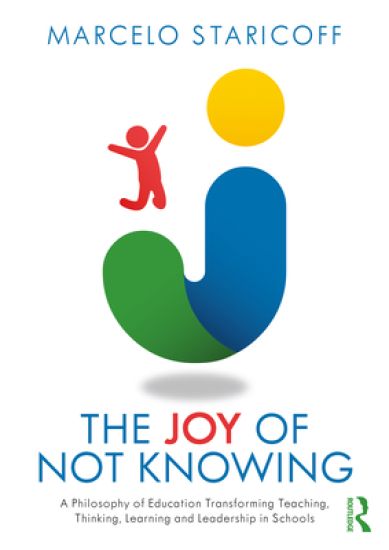
The Joy of Not Knowing

The Joy of Not Knowing

Marcelo Staricoff

Routledge
2020
nidottu
The Joy of Not Knowing takes every aspect of the curriculum and of school life and transforms it into a personalised, meaningful and enjoyable experience for all. It offers readers an innovative, theoretical and practical guide to establish a values-based, enquiry-led and challenge-rich learning to learn approach to teaching and learning and to school leadership. This thought-provoking guide provides the reader with a wealth of whole-class, easy-to-implement, malleable, practical ideas and case studies that can be personalised to the vision of each setting, age-group and curriculum. It brings together, as a whole-school framework, the strategies that have been shown to have the greatest impact on practitioner’s professional fulfilment and on children’s life chances, love of learning, intrinsic motivation and enthusiasm for wanting to know. The Joy of Not Knowing enables schools to launch the academic year with a bespoke JONK Learning to Learn Week that enables every student to succeed develops philosophical, creative and critical problem-solving and multi-lingual thinking skills establishes collaborative cultures of thinking, learning and leadership informs practice through active action research incorporates a values-led democratic approach to school life nurtures school-pupil-family-community partnershipsDesigned for school leaders and practitioners at all levels and across all ages, this practical guide shows how all students can thrive and develop the dispositions of successful lifelong learners and global citizens.
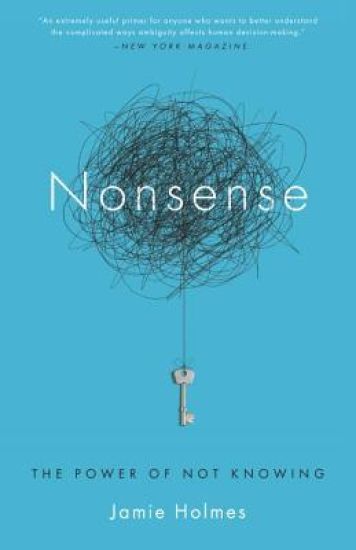
Nonsense: The Power of Not Knowing

Nonsense: The Power of Not Knowing

Jamie Holmes

Crown Publishing Group (NY)
2016
nidottu
An illuminating look at the surprising upside of ambiguity and how, properly harnessed, it can inspire learning, creativity, even empathy Life today feels more overwhelming and chaotic than ever. Whether it s a confounding work problem or a faltering relationship or an unclear medical diagnosis, we face constant uncertainty. And we re continually bombarded with information, much of it contradictory. Managing ambiguity in our jobs, our relationships, and daily lives is quickly becoming an essential skill. Yet most of us don t know where to begin. As Jamie Holmes shows in Nonsense, being confused is unpleasant, so we tend to shutter our minds as we grasp for meaning and stability, especially in stressful circumstances. We re hard-wired to resolve contradictions quickly and extinguish anomalies. This can be useful, of course. When a tiger is chasing you, you can t be indecisive. But as Nonsense reveals, our need for closure has its own dangers. It makes us stick to our first answer, which is not always the best, and it makes us search for meaning in the wrong places. When we latch onto fast and easy truths, we lose a vital opportunity to learn something new, solve a hard problem, or see the world from another perspective. In other words, confusion that uncomfortable mental place has a hidden upside. We just need to know how to use it. This lively and original book points the way. Over the last few years, new insights from social psychology and cognitive science have deepened our understanding of the role of ambiguity in our lives and Holmes brings this research together for the first time, showing how we can use uncertainty to our advantage. Filled with illuminating stories from spy games and doomsday cults to Absolut Vodka s ad campaign and the creation of Mad Libs Nonsense promises to transform the way we conduct business, educate our children, and make decisions. In an increasingly unpredictable, complex world, it turns out that what matters most isn t IQ, willpower, or confidence in what we know. It s how we deal with what we don t understand.
You Can't Not Know

You Can't Not Know

Jack Spenser

Board Certified Press
2020
pokkari
This second book in the Jack Spenser, M.D., series describes the years of training it takes to become a physician/pathologist. The story focuses on the complex relationship between an apprentice and master whose credo is "You can't not know." Jack's struggle to meet such a high standard results in a compelling story with highs, lows, success, failure, and ultimately wisdom. In addition, some parts of the book are really funny.
The crime of not knowing your crime

The crime of not knowing your crime

Karen Throssell

Interventions Inc
2021
pokkari
My grandmother was one of Australia's greatest novelists, my grandfather won the Victoria Cross for gallantry and my father was hounded all his life as a spy. This is a three generational story. It's about my life; it's about my father, Ric; it's about my grandparents, the writer Katharine Susannah Prichard and the war hero Hugo Throssell. It's a study of the psychology of spies and those who obsess about them, a narrative of guilt and innocence told through poetry, prose and historical documents. It's a tale from another time - but one with obvious relevance, given how regularly governments rely on fear and scapegoating today.Let me tell you what was done to my family. "Through entwined poetry and prose, Karen Throssell illuminates ASIO's persecution of her extraordinary family. In the post 9/11 era, too many Australians have forgotten what happened in the Cold War. That's why this story matters".Jeff Sparrow, writer and broadcaster
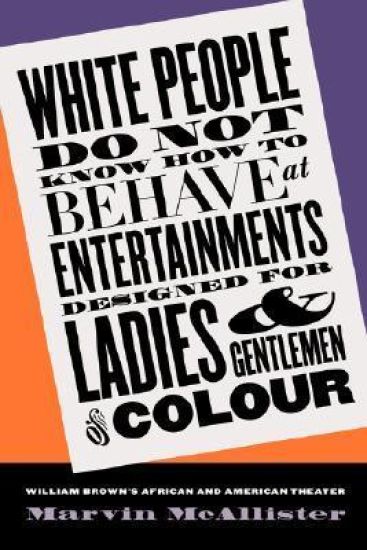
White People Do Not Know How to Behave at Entertainments Designed for Ladies and Gentlemen of Colour
In August 1821, William Brown, a free man of color and a retired ship's steward, opened a pleasure garden on Manhattan's West Side. It catered to black New Yorkers, who were barred admittance to whites-only venues offering drama, music, and refreshment. Over the following two years, Brown expanded his enterprises, founding a series of theaters that featured African Americans playing a range of roles unprecedented on the American stage and that drew increasingly integrated audiences. Marvin McAllister explores Brown's pioneering career and reveals how each of Brown's ventures - the African Grove, the Minor Theatre, the American Theatre, and the African Company - explicitly cultivated an intercultural, multiracial environment. He also investigates the negative white reactions, verbal and physical, that led to Brown's managerial retirement in 1823. Brown left his mark on American theater by shaping the careers of his performers and creating new genres of performance. Beyond that legacy, says McAllister, this nearly forgotten theatrical innovator offered a blueprint for a truly inclusive national theater.
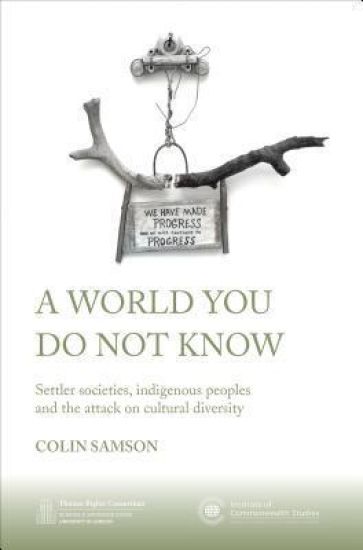
A World You Do Not Know

A World You Do Not Know

Colin Samson

Institute of Commonwealth Studies
2014
pokkari
A World You Do Not Know explains how the willful ignorance of indigenous peoples was a major dynamic in the European colonization of North America. Using the Innu of Labrador-Quebec as one powerful contemporary example, Colin Samson shows how the processes of displacement, land-grabbing, and assimilation today are in their intentions and effects no different from U.S. and Canadian policies of the 19th century. While nation building, capitalism, and industrialization are shown to have undermined indigenous peoples' social stability, health, and wellbeing, Samson describes how the values that guide many indigenous societies are very much The book concludes by showcasing how land-based activities of indigenous groups in Canada and the United States are being maintained and recast. Samson argues that by continuing to hunt, fish, and live from what is left of their lands, indigenous peoples are talking back to the ignorance that transformed them and holding out the promise for more positive futures.
I Did Not Know That

I Did Not Know That

Suzanne Searcy Johnson

Suzanne Searcy Johnson
2024
sidottu
A sweet and delightful chapter book for young readers.Sofia loves to explore the forest with its welcoming animals and lovely wildflowers and trees. Join her on her adventures as she meets friends and learns some unexpected lessons along the way.Charmingly illustrated by Kim Gatto, I Did Not Know That by Suzanne Searcy Johnson celebrates the beauty of nature, the companionship of animals, and the importance of accepting and caring for ourselves and others.
I Did Not Know That

I Did Not Know That

Suzanne Searcy Johnson

Suzanne Searcy Johnson
2024
pokkari
A sweet and delightful chapter book for young readers. Sofia loves to explore the forest with its welcoming animals and lovely wildflowers and trees. Join her on her adventures as she meets friends and learns some unexpected lessons along the way. Charmingly illustrated by Kim Gatto, I Did Not Know That by Suzanne Searcy Johnson celebrates the beauty of nature, the companionship of animals, and the importance of accepting and caring for ourselves and others.
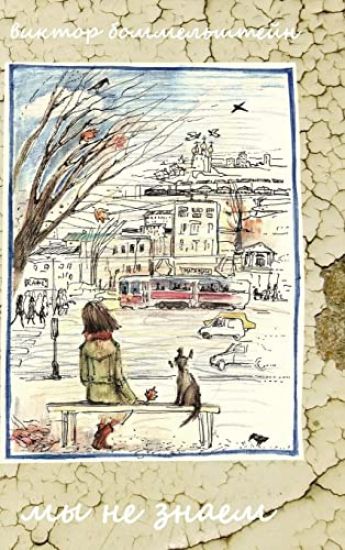
We do not know

We do not know

Victor Bommelstein

Ailuros Publishing
2012
sidottu
Виктор Боммельштейн. Мы не знаем. - Нью-Йорк, Айлурос, 2012. - 124 с. ISBN 978-0-9838762-4-3 В первую книгу автора вошли стихи и короткая проза. Книга издана в переплёте. Художник обложки Ирина Глебова. Редактор Елена Сунцова. Бумажная версия книги доставляется в любую точку мира. PDF книги доступен для скачивания бесплатно по этой ссылке http: //www.elenasuntsova.com/bommelstein