George Parsons Lathrop (1851-1898) was an American poet and novelist. Nathaniel Hawthorne ( born Nathaniel Hathorne; July 4, 1804 - May 19, 1864) was an American novelist, Dark Romantic, and short story writer. He was born in 1804 in Salem, Massachusetts, to Nathaniel Hathorne and the former Elizabeth Clarke Manning. His ancestors include John Hathorne, the only judge involved in the Salem witch trials who never repented of his actions. Nathaniel later added a "w" to make his name "Hawthorne" in order to hide this relation. He entered Bowdoin College in 1821, was elected to Phi Beta Kappa in 1824, and graduated in 1825. Hawthorne published his first work, a novel titled Fanshawe, in 1828; he later tried to suppress it, feeling it was not equal to the standard of his later work. He published several short stories in periodicals, which he collected in 1837 as Twice-Told Tales. The next year, he became engaged to Sophia Peabody. He worked at the Boston Custom House and joined Brook Farm, a transcendentalist community, before marrying Peabody in 1842. The couple moved to The Old Manse in Concord, Massachusetts, later moving to Salem, the Berkshires, then to The Wayside in Concord. The Scarlet Letter was published in 1850, followed by a succession of other novels. A political appointment as consul took Hawthorne and family to Europe before their return to Concord in 1860. Hawthorne died on May 19, 1864, and was survived by his wife and their three children. Much of Hawthorne's writing centers on New England, many works featuring moral allegories with a Puritan inspiration. His fiction works are considered part of the Romantic movement and, more specifically, Dark romanticism. His themes often center on the inherent evil and sin of humanity, and his works often have moral messages and deep psychological complexity. His published works include novels, short stories, and a biography of his college friend Franklin Pierce
A comprehensive study guide offering in-depth explanation, essay, and test prep for selected works by Nathaniel Hawthorne, renowned American novelist. Titles in this study guide include The Marble Faun, The House of the Seven Gables, and The Scarlet Letter. As an author of the nineteenth-century, his novels and short stories primarily contained themes of mortality, religion, and history. Moreover, his writing influenced and followed the literary subgenre of dark romanticism, which reflected a fascination of the irrational and strange. This Bright Notes Study Guide explores the context and history of Nathaniel Hawthorne's classic work, helping students to thoroughly explore the reasons they have stood the literary test of time. Each Bright Notes Study Guide contains: - Introductions to the Author and the Work - Character Summaries - Plot Guides - Section and Chapter Overviews - Test Essay and Study Q&As The Bright Notes Study Guide series offers an in-depth tour of more than 275 classic works of literature, exploring characters, critical commentary, historical background, plots, and themes. This set of study guides encourages readers to dig deeper in their understanding by including essay questions and answers as well as topics for further research.
Nathaniel Gadsden's Writers Wordshop a 501(c)(3) organization began as an idea to bring a 'people's poetry venue" to the Harrisburg area. A chance meeting with Mim Warden, founder of the "People Place" Arts Center, lead to the formation of a wonderful relationship with her organization and the birth of Nathaniel Gadsden's Writers Wordshop.The name Writers Wordshop (which was supposed to be Writers Workshop) was actually a mistake on Mim's part, while she was completing an application to the National Endowment on the Arts. The name "Wordshop" stuck with us and we never let it go. As I was in the process of incorporating the Writers Wordshop, I discovered that there are other organizations name "The Writers Wordshop." On the advice from a good friend, I simply added my name, and our organization was firmly imprinted on the fabric of the Harrisburg area arts scene.The Writers Wordshop currently has a dynamic Advisory Board and wonderful relationships with Mid-Town Scholar Bookstore, which provides space for our weekly Open Poetry Reading Series, and the Harrisburg Police Athletic League. We also enjoy incredible partnerships with the State Museum of Pennsylvania, which provides us with the use of their venue six times a year to sponsor free programs to the community, and Harrisburg Mall, which teams with us to sponsor a great Pre-Kwanzaa Festival that the whole community embraces.This Anthology represents the heart of Nathaniel Gadsden's Writers Wordshop. The writings in this collection span over 43 years of personal inspiration, wisdom, insight, and investment of the human spirit. The Poets and Writers in this collection are all "Souls of the Word" who have graced the Writers Wordshop with the blessing of their unique gift - their voice. They are only a small representation of the many who have found the uplifting stage of the Writers Wordshop and used it as a platform to soar with other "Eagles of the Muse." Enjoy this journey of real life, magic, tears, and laughter. The heart of the Wordshop is on display in these pages. Get inspired Join us on this wonderful voyage Join Nathaniel Gadsden's Writers Wordshop Find your voice and share it with the world The contributing authors of this anthology are as follows: Ronnie Banks, Terri Durden, Lunden McClain, Daniel Snowden, Jasmira Hunter, James Roethlein, Gwendolyn Holland, Winde Washington-Nnochirionye, Taft Nnochirionye, Edward Daniels, Maria James-Thiaw, Keyontay Ricks, Terri D, Roe Braddy and Kimmika L. H. Williams-Witherspoon.
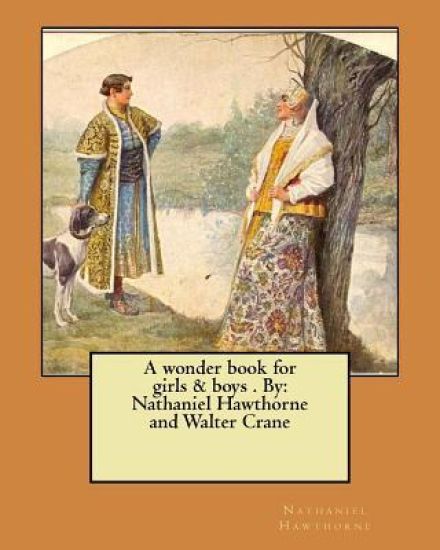
A Wonder-Book for Girls and Boys (1851) is a children's book by American author Nathaniel Hawthorne in which he retells several Greek myths. It was followed by a sequel, Tanglewood Tales. The stories in A Wonder-Book for Girls and Boys are all stories within a story, the frame story being that a Williams College student, Eustace Bright, is telling these tales to a group of children at Tanglewood, an area in Lenox, Massachusetts, where Hawthorne lived for a time. All the tales are modified from the original myths. "Midas' Daughter Turned to Gold" by Walter Crane, illustrating the Midas myth for an 1893 edition A Wonder-Book for Girls and Boys covers the myths of The Gorgon's Head - recounts the story of Perseus killing Medusa at the request of the king of the island, Polydectes. The Golden Touch - recounts the story of King Midas and his "Golden Touch". The Paradise of Children - recounts the story of Pandora opening the box filled with all of mankind's Troubles. The Three Golden Apples - recounts the story of Heracles procuring the Three Golden Apples from the Hesperides' orchard, with the help of Atlas. The Miraculous Pitcher - recounts the story of Baucis and Philemon providing food and shelter to two strangers who were Zeus and "Quicksilver" (Hermes) in disguise. Baucis and Philemon were rewarded by the gods for their kindness; they were promised never to live apart from one another. The Chim ra - recounts the story of Bellerophon taming Pegasus and killing the Chim ra.
A personalised storybook for boys called NATHANIEL. The story is based on the letters of the child's own name. All books are different from one another. The boy wakes up but can't remember his name. Magic Mouse knows how to solve the problem. They go on a wonderful adventure in the Magic Bus Translated and adapted by the author from the top-selling Finnish language children's namebook series "Tytt /Poika, joka unohti nimens ". The beautiful hand-drawn pictures will delight both the young and the young-at-heart Looking for a namebook "What's my name?" but couldn't find a book for the name you are looking for? Please don't hesitate to contact me with your name request -Tiina Walsh Author fb.me/whatsmynamestorybooks for more details about the storybooks
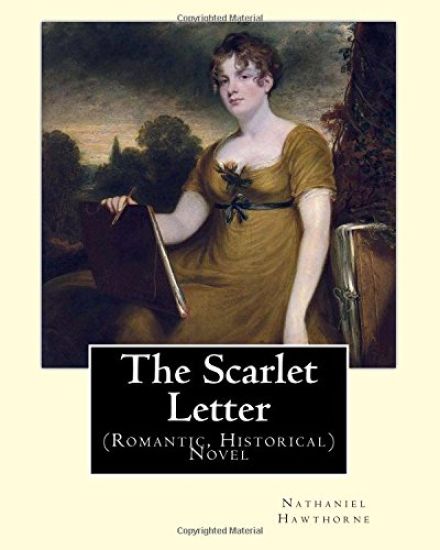
George Parsons Lathrop (August 25, 1851 - April 19, 1898) was an American poet and novelist........ The Scarlet Letter: A Romance, an 1850 novel, is a work of historical fiction written by American author Nathaniel Hawthorne. It is considered his "masterwork". Set in 17th-century Puritan Massachusetts Bay Colony, during the years 1642 to 1649, it tells the story of Hester Prynne, who conceives a daughter through an affair and struggles to create a new life of repentance and dignity. Throughout the book, Hawthorne explores themes of legalism, sin, and guilt. PLOT: In an extended introduction, Hawthorne describes his employment in the Salem Custom House, and how he purportedly found an old document and a piece of cloth embroidered with the letter "A" in a pile of old papers. This fictitious document being the germ of the story that Hawthorne writes, as follows. In June 1642, in a Puritan Boston, Massachusetts, a crowd gathers to witness the punishment of Hester Prynne, a young woman who has given birth to a baby of unknown parentage. She is required to wear a scarlet "A" on her dress when she is in front of the townspeople to shame her. "A" stands for adulteress, although this is never said explicitly in the novel. Her "punishment" (because adultery is illegal at the time) is to stand on the scaffold for three hours, exposed to public humiliation, and to wear the scarlet "A" for the rest of her life. As Hester approaches the scaffold, many of the women in the crowd are angered by her beauty and quiet dignity. When demanded and cajoled to name the father of her child, Hester refuses. As Hester looks out over the crowd, she notices a small, misshapen man and recognizes him as her long-lost husband, who has been presumed lost at sea. When the husband sees Hester's shame, he asks a man in the crowd about her and is told the story of his wife's adultery. He angrily exclaims that the child's father, the partner in the adulterous act, should also be punished and vows to find the man. He chooses a new name - Roger Chillingworth - to aid him in his plan. The Reverend John Wilson and the minister of Hester's church, Arthur Dimmesdale, question the woman, but she refuses to name her lover. After she returns to her prison cell, the jailer brings in Roger Chillingworth, a physician, to calm Hester and her child with his roots and herbs. He and Hester have an open conversation regarding their marriage and the fact that they were both in the wrong. Her lover, however, is another matter and he demands to know who it is; Hester refuses to divulge such information. He accepts this, stating that he will find out anyway, and forces her to hide that he is her husband. If she ever reveals him, he warns her, he will destroy the child's father. Hester agrees to Chillingworth's terms although she suspects she will regret it. Following her release from prison, Hester settles in a cottage at the edge of town and earns a meager living with her needlework, which is of extraordinary quality. She lives a quiet, somber life with her daughter, Pearl, and performs acts of charity for the poor. She is troubled by her daughter's unusual fascination with Hester's scarlet "A". The shunning of Hester also extends to Pearl, who has no playmates or friends except her mother. As she grows older, Pearl becomes capricious and unruly. Her conduct starts rumours, and, not surprisingly, the church members suggest Pearl be taken away from Hester. Hester, hearing rumors that she may lose Pearl, goes to speak to Governor Bellingham. With him are ministers Wilson and Dimmesdale. Hester appeals to Dimmesdale in desperation, and the minister persuades the governor to let Pearl remain in Hester's care.... Nathaniel Hawthorne ( born Nathaniel Hathorne; July 4, 1804 - May 19, 1864) was an American novelist, dark romantic, and short story writer......
Passages from the French and Italian Note-Books of Nathaniel Hawthorne - Vol. 1 is an unchanged, high-quality reprint of the original edition of 1896. Hansebooks is editor of the literature on different topic areas such as research and science, travel and expeditions, cooking and nutrition, medicine, and other genres. As a publisher we focus on the preservation of historical literature. Many works of historical writers and scientists are available today as antiques only. Hansebooks newly publishes these books and contributes to the preservation of literature which has become rare and historical knowledge for the future.






![The Dolliver Romance; Fanshawe; [and], Septimius Felton, by Nathaniel Hawthorne: With an Appendix Containing the Ancestral Footstep, Complete works of](/covers/9781534660212.jpg)