Kirjojen hintavertailu. Mukana 11 699 587 kirjaa ja 12 kauppaa.

Kirjahaku

Etsi kirjoja tekijän nimen, kirjan nimen tai ISBN:n perusteella.

1000 tulosta hakusanalla Paul Durand-Ruel

Paul the Apostle

Paul the Apostle

J.Christiaan Beker

Augsburg Fortress
1980
nidottu
With a new preface by the author, this book posists two pillars as the foundations of Paul's thought: the interaction between coherence and contingency in Paul's interpretation of the gospel and the apocalyptic character of his gospel.
Paul, the Law, and the Jewish People

Paul, the Law, and the Jewish People

E. P. Sanders

Augsburg Fortress
1983
pokkari
This book is devoted both to the problem of Paul's view of the law as a whole, and to his thought about and relation to his fellow Jews. Building upon his previous study, the critically acclaimed Paul and Palestinian Judaism, E.P. Sanders explores Paul's Jewishness by concentrating on his overall relationship to Jewish tradition and thought. Sanders addresses such topics as Paul's use of scripture, the degree to which he was a practicing Jew during his career as apostle to the Gentiles, and his thoughts about his "kin by race" who did not accept Jesus as the messiah. In short, Paul's thoughts about the law and his own people are re-examined with new awareness and great care. Sanders addresses an important chapter in the history of the emergence of Christianity. Paul's role in that development -- specially in light of Galatians and Romans -- is now re-evaluated in a major way. This book is in fact a significant contribution to the study of the emergent normative self-definition in Judaism and Christianity during the first centuries of the common era.
Paul and His Letters

Paul and His Letters

Gerhard Krodel

Augsburg Fortress
1988
pokkari
In this revised and enlarged edition, Leander E. Keck presents a succinct, comprehensive, and up-to-date scholarly interpretation of Paul's theology. Keck has revised the volume to account more fully for Paul's understanding of the law and of faith/trust. He has retained the basic structure of the first edition but now apprises the reader of specific details of his own continuing thinking in light of select scholarly discussions. Entirely new to the volume is an appendix, Paul's Theology in Historical Criticism, a summary of the scholarly effort to account for, understand, and interpret Paul's theology.
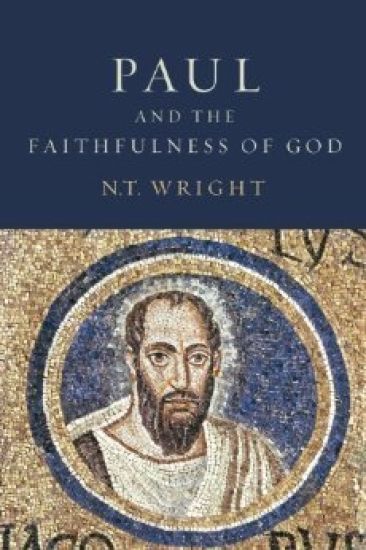
Paul and the Faithfulness of God

Paul and the Faithfulness of God

N. T. Wright

Fortress Press,U.S.
2013
pokkari
This highly anticipated two-book fourth volume in N. T. Wright's magisterial series, Christian Origins and the Question of God, is destined to become the standard reference point on the subject for all serious students of the Bible and theology. The mature summation of a lifetime's study, this landmark book pays a rich tribute to the breadth and depth of the apostle's vision, and offers an unparalleled wealth of detailed insights into his life, times, and enduring impact. Wright carefully explores the whole context of Paul's thought and activity - Jewish, Greek and Roman, cultural, philosophical, religious, and imperial - and shows how the apostle's worldview and theology enabled him to engage with the many-sided complexities of first-century life that his churches were facing. Wright also provides close and illuminating readings of the letters and other primary sources, along with critical insights into the major twists and turns of exegetical and theological debate in the vast secondary literature. The result is a rounded and profoundly compelling account of the man who became the world's first, and greatest, Christian theologian.
Paul and the Gentiles

Paul and the Gentiles

Terence L. Donaldson

Augsburg Fortress
1997
pokkari
In the first major analysis of Paul's understanding of Gentile salvation in several years, Bible scholar Terence Donaldson offers a creative approach to the apostle's theological convictions. According to Donaldson, Paul as a believer in Jesus Christ did not abandon his Jewish frame of reference but reconfigured it, especially by the stimulus of his mission to the Gentiles.
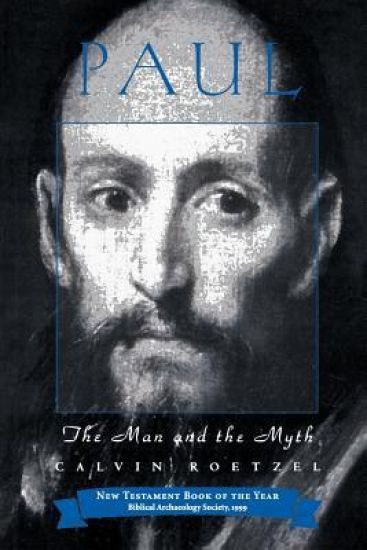
Paul: the Man and the Myth

Paul: the Man and the Myth

Calvin J. Roetzel

Augsburg Fortress
1999
nidottu
Winner of Biblical Archaeology Society Award - Best New Testament Book "We are left to construct a portrait of Paul with only scraps of what was once a large and imposing canvas - a small collection of letters and a historical narrative written a generation after his death. This reconstruction focuses on important parts of the image that usually fall in the shadows, parts dealing with Paul's sexual asceticism, his preoccupation with holiness - holy Spirit, holy community, and holy ethos - the evolution of his theology, and his emergence as a legendary figure. Although I have tried to follow the strict rules of historical investigation, of necessity much guesswork is involved in any exploration of Paul's life... All of these efforts are attempts to deal with the gaps in the text, understood in the broadest sense to include not just Paul's written words but also the culture, social world, and political realities surrounding them. - From the Introduction
Paul on the Cross

Paul on the Cross

David A. Brondos

Augsburg Fortress
2006
pokkari
This work offers a fresh, scholarly account of Pauline theology of salvation. It outlines the theological consequences of the "new perspective" on Paul for our understanding of the meaning of Jesus' death. It argues that Paul understood Jesus' death as the consequence of his mission to bring redemption to Israel.
Paul and the Popular Philosophers

Paul and the Popular Philosophers

Abraham J. Malherbe

Augsburg Fortress Publishing
2006
nidottu
These studies continue a tradition of scholarship that flourished around the turn of the century when new editions of ancient philosophical sources were published. Professor Malherbe, however, widens the scope to include other philosophical traditions. He recognizes and identifies the influences of Platonists, Peripatetics, Cynics, Stoics, Epicureans, and Pythagoreans. These popular philosophers aimed at moral reform; they shared both in their substance and in the techniques employed. Yet, they need to be distinguished in order to discern their influence, if any, on Paul.
Paul in the Grip of the Philosophers

Paul in the Grip of the Philosophers

Peter Frick

Fortress Press,U.S.
2013
sidottu
One of the remarkable developments in the contemporary study of Paul is the dramatic interest in his thought amongst European philosophers. This collection of leading scholars makes accessible a discussion often elusive to those not already conversant in the categories of European philosophy.
Paul and the Miraculous – A Historical Reconstruction

Paul and the Miraculous – A Historical Reconstruction

Graham H. Twelftree

Baker Academic, Div of Baker Publishing Group
2013
nidottu
How can we explain the difference between the "miraculous" Christianity expressed in the Gospels and the nearly miracle-free Christianity of Paul? In this historically informed study, senior New Testament scholar Graham Twelftree challenges the view that Paul was primarily a thinker and reimagines him as an apostle of Jesus for whom the miraculous was of profound importance. Highlighting often-overlooked material in Paul's letters, Twelftree offers a fresh consideration of what the life and work of Paul might teach us about miracles in early Christianity and sheds light on how early Christians lived out their faith.
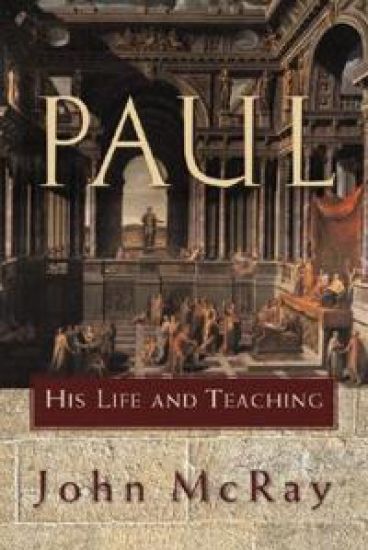
Paul – His Life and Teaching

Paul – His Life and Teaching

John McRay

Baker Academic, Div of Baker Publishing Group
2007
nidottu
The apostle Paul and his significance for the New Testament and Christianity is a perennial topic of interest, but few evangelical surveys of his life offer a truly holistic picture of the man and his world. Now available in trade paper, John McRay's Paul explores the apostle's preconversion days, missionary travels, and theological contributions. A specialist in archaeology, the author draws on his more than forty years of teaching experience as well as knowledge gained from extensive travels to the places Paul visited. Paul is a comprehensive and readable presentation of Paul's ministry and theology that weaves together historical backgrounds, archaeological discoveries, and theological themes.
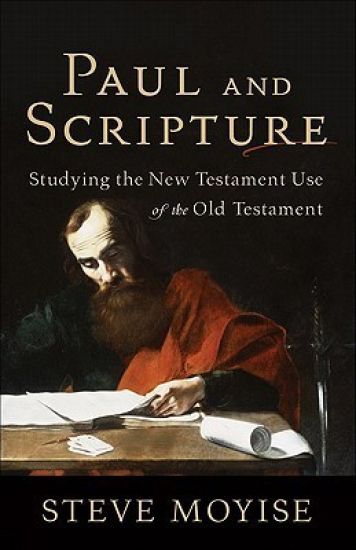
Paul and Scripture: Studying the New Testament Use of the Old Testament
There are over one hundred explicit quotations of Scripture in Paul's letters and at least two hundred allusions. The coming of Jesus and the birth of the church caused Paul to look at the Scriptures with new eyes, sometimes clarifying what was written and sometimes reinterpreting it. This volume illuminates Paul's use of the Old Testament, providing a big-picture overview for students of the New Testament. Steve Moyise, a recognized expert on the use of the Old Testament in the New, discusses Paul's handling of creation stories, Abraham, Moses, the Law, the Prophets, and the Writings. He then assesses competing contemporary approaches to Paul's interpretations of Scripture.
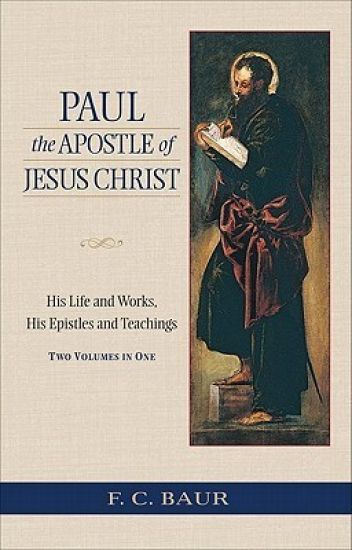
Paul the Apostle of Jesus Christ

Paul the Apostle of Jesus Christ

Baker Academic, Div of Baker Publishing Group
2013
pokkari
"One hundred and sixty years ago F. C. Baur posed, in inescapably sharp form, a question which has haunted Christianity throughout its history: is Christianity simply a form of Judaism, development from Judaism, or was it, as Baur argued, from the beginning something quite distinct, a religious spirit or consciousness which could not be or become itself until it broke through the limits and restrictions of its historical origins? Baur's radical answer set the agenda for the rest of the nineteenth century, and though neglected for most of the twentieth century, the question has reemerged with renewed force in a post-Holocaust world."--James D. G. Dunn, Emeritus Lightfoot Professor of Divinity, University of Durham "It will be extremely helpful to New Testament critics to have F. C. Baur's influential work on Paul--long out of print and often no longer even available on most theological library shelves--conveniently at hand. Baur's application of Hegel's dialectical theories to the writings of Paul profoundly shaped the discourse of his mid-nineteenth-century German contemporaries, including that of those who sought to challenge certain aspects of his interpretation. They did not escape the powerful force of his conceptualization of the world, including a deeply negative evaluation of the Oriental spirit (i.e., Judaism and Jewishness), which was central to his project. The legacy of these developments--the so-called TUbingen school--has deeply influenced NT studies (and arguably world history) ever since and continues to assert its influence on the interpretation of Paul's voice to this day, although often now in unrecognized ways. With the availability of this edition, that is about to change."--Mark D. Nanos, author of The Galatians Debate, The Irony of Galatians, and The Mystery of Romans"Perhaps the most influential book of nineteenth-century New Testament scholarship, Paul the Apostle of Jesus Christ offered a novel, breathtaking synthesis of the apostle's place in the development of early Christianity. . . . In seeking the authentic writings of Paul, the generative center of his thought, the role of the law and its relationship to the gospel of Jesus Christ, the historical value of the book of Acts, and the views of Paul's opponents, Baur's work set an agenda that continues to dominate modern inquiry."--A. Andrew Das, Niebuhr Distinguished Chair, professor of religious studies, Elmhurst College "The history of Pauline and even New Testament studies is a continuing dialogue with the assumptions and conclusions of Ferdinand Christian Baur. No Pauline scholar--recent efforts notwithstanding--has so shaped the set of questions asked of Paul's letters as did Baur. This is not to say that Baur got it right--far from it. He was no doubt wrong, and sometimes quite wrong, on a number of crucial issues in each of the areas that he so significantly influenced. Nevertheless, his legacy regarding the influence of fundamental conflicts in the early church, and the need for critical rather than simply theological scrutiny of the letters, is still of importance as we continue to study Paul's letters in the context of the New Testament and early Christianity."--Stanley E. Porter, president, dean, and professor of New Testament, McMaster Divinity College
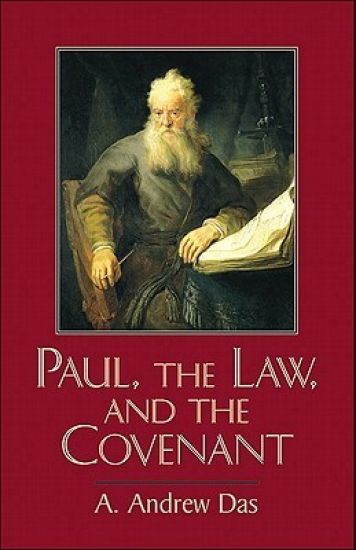
Paul, the Law, and the Covenant

Paul, the Law, and the Covenant

A Das

Baker Academic, Div of Baker Publishing Group
2012
nidottu
The now familiar "new perspective" asserts that the "covenantal nomism" characteristic of second-temple Judaism softened the Mosaic law's requirement of perfect obedience. Because of God's gracious covenant with Israel, manifested in election and the provision of atoning sacrifices, one could be righteous under the law despite occasional failures to obey the law perfectly. This view concludes that Paul, as a first-century Jew, could not have been troubled by the law's stringent demands, because it was generally understood that the gracious framework of the covenant provided a way of dealing with occasional lapses. Consequently, it is claimed, Paul's problem with the law must have to do with its misuse as a means of enforcing ethnic boundaries and excluding Gentile believers. However, as Das demonstrates in this book, whenever the gracious framework of covenantal nomism is called into question, the law's demands take on central importance. Das traces this development in a number of second-temple Jewish works and especially in the writings of Paul. "Covenantal nomism" is probably an apt characterization of Paul's opponents, and indeed of Paul's past life; thus he can assert that formerly he was "blameless" under the law. But now Paul sees God's grace as active only in Christ. He emphatically denies that God will show special grace in his judgment of Jews; to do so would be favoritism. Similarly, Paul sees no atoning benefit to the sacrificial system. In effect, Paul is no longer a "covenantal nomist." Since the gracious framework of the covenant has collapsed, all that remains for Paul is the law, with its oppressive requirement of perfect obedience and ethnic exclusivism. Contra the "new perspective," the "works of the law" should not be construed so narrowly as only the law's ethnic exclusivity. Christ is "the end" of the law in general, both in the sense that he is the goal to which the law always pointed, and in that he is the sole agent of God's grace apart from which the law's demands would be impossible.
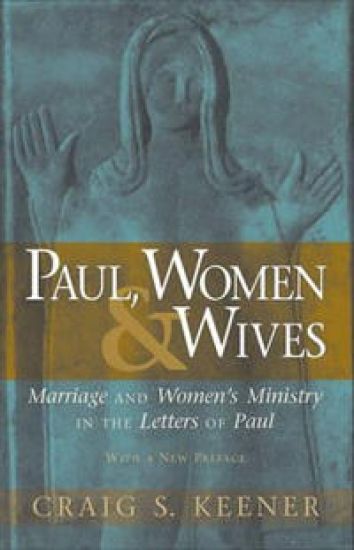
Paul, Women, and Wives – Marriage and Women`s Ministry in the Letters of Paul

Paul, Women, and Wives – Marriage and Women`s Ministry in the Letters of Paul

Craig S. Keener

Baker Academic, Div of Baker Publishing Group
1992
nidottu
Paul's letters stand at the center of the dispute over women, the church, and the home, with each side championing passages from the Apostle. Now, in a challenging new attempt to wrestle with these thorny texts, Craig Keener delves as deeply into the world of Paul and the apostles as anyone thus far. Acknowledging that we must take the biblical text seriously, and recognizing that Paul's letters arose in a specific time and place for a specific purpose, Keener mines the historical, lexical, cultural, and exegetical details behind Paul's words about women in the home and ministry to give us one of the most insightful expositions of the key Pauline passages in years.
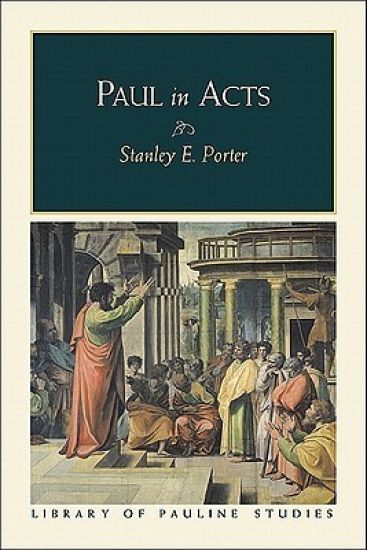
Paul in Acts

Paul in Acts

Stanley E. Porter

Baker Academic Brazos Press
2012
nidottu
Stanley E. Porter focuses upon the depiction of Paul in the book of Acts from literary-critical, rhetorical, and theological perspectives, among several others. The essays within this volume examine various topics related to the Paul of Acts such as the extent to which the "we" passages of Acts should function as a source regarding Paul, and the theology and perspective of these passages in terms of their portrait of him. Porter analyzes the Acts passages that deal with Paul and the Holy Spirit and the question of whether Paul is an epistolographer or rhetorician. He examines Paul's missionary speeches and apologetic speeches in Acts. Porter also looks at Acts 21 and Paul's arrest in Jerusalem before he closes with an analysis of some common conceptions and misconceptions of the Paul of Acts and the Paul of the letters. The Library of Pauline Studies is a series of books exploring key issues in Pauline and related studies. This series is edited by Stanley E. Porter, principal, dean, and professor of New Testament at McMaster Divinity College in Hamilton, Ontario, Canada.
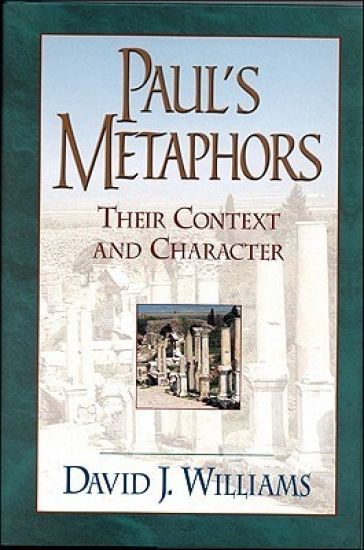
Paul`s Metaphors – Their Context and Character

Paul`s Metaphors – Their Context and Character

David J. Williams

Baker Academic, Div of Baker Publishing Group
2003
nidottu
Paul's writings are laced with vivid images from the bustling New Testament world. To understand these metaphors, David J. Williams delves into that Greco-Roman world and uses ancient sources to explore a wide variety of topics such as architecture, law, commerce, health care, and education. Williams studies this world in chapters with titles such as "Life in the City," "Family Life," "Slavery and Freedom," "Citizens and Courts of Law," "Travel," and "Warfare and Soldiering."Paul's metaphors, set apart in bold type, are examined in the light of this background information and restored to their original vitality. Well-known metaphors--the Christian as a slave of Christ, the church as a body, Paul's two natures being at war within him, the Christian as an athlete striving toward the prize, Jesus' return as a thief in the night, Christians as adopted heirs of God--and lesser-known metaphors come to life for the modern reader through Williams's careful exposition.The main text is accessible to the general reader; scholars will appreciate footnotes that discuss the Greek text and provide resources for further study. Appendix 1 lists a select chronology of the Roman Empire and appendix 2 provides dates and descriptions of significant ancient authors and tests. Scripture, ancient source, and modern author indexes add to the usefulness of this work.
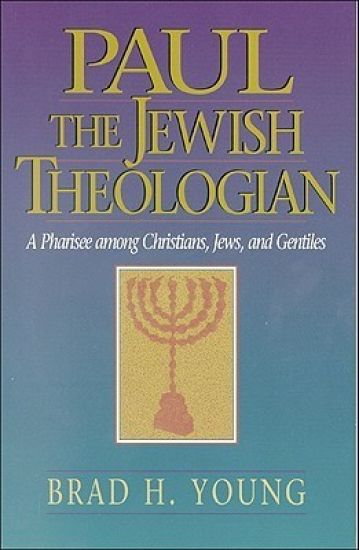
Paul the Jewish Theologian – A Pharisee among Christians, Jews, and Gentiles

Paul the Jewish Theologian – A Pharisee among Christians, Jews, and Gentiles

Brad H. Young; Cheryl Brown; Burton Visotzky

Baker Academic, Div of Baker Publishing Group
1995
nidottu
Paul the Jewish Theologian reveals Saul of Tarsus as a man who, though rejected in the synagogue, never truly left Judaism. Author Young disagrees with long held notions that Hellenism was the context which most influenced Paul's communication of the Gospel. This skewed notion has led to widely divergent interpretations of Paul's writings. Only in rightly aligning Paul as rooted in his Jewishness and training as a Pharisee can he be correctly interpreted. Young asserts that Paul's view of the Torah was always positive, and he separates Jesus' mission among the Jews from Paul's call to the Gentiles.