

Kirjahaku
Etsi kirjoja tekijän nimen, kirjan nimen tai ISBN:n perusteella.
1000 tulosta hakusanalla Peter J Fast

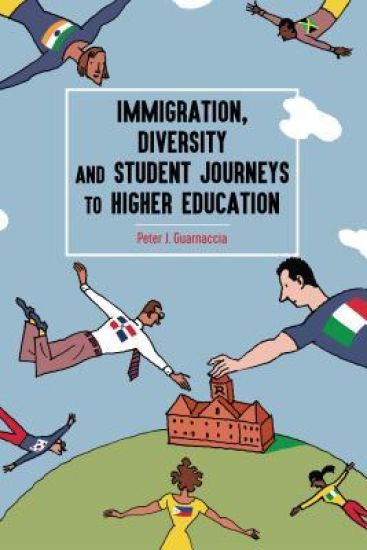
Immigration, Diversity and Student Journeys to Higher Education
Peter J. Guarnaccia
Peter Lang Publishing Inc
2019
nidottu
Immigration, Diversity and Student Journeys to Higher Education presents an in-depth understanding of how immigrant students at a major public research university balanced keeping their family cultures alive and learning U.S. culture to get to college. A revitalized anthropological understanding of acculturation provides the theoretical framework for the book. The text builds its analysis using extensive quotes from the 160 immigrant students who participated in the 21 focus groups that form the core of this study. The students’ families come from Africa, Asia, the Caribbean, Europe and Latin America, and reflect a wide diversity of experiences and insights into how these students successfully pursued higher education. A key theme of the book is the "immigrant bargain," where students repay their parents’ hard work and migration sacrifices by excelling in school. A large majority of the parents made clear that a major motivation for immigrating was so their children could have better educational opportunities; these parents had the original dreams for their children. Immigration, Diversity and Student Journeys to Higher Education examines the similarities and differences across this diverse group of students, ending with a series of recommendations about how to improve acculturation research and how to facilitate immigrant students’ journeys to educational success.
Few fields in philosophy are so seemingly distant from ordinary human experience as theories of knowledge. How much information do we draw in from bodies outside of us? And to what degree do our perceptual and mental processes subjectify that information to the point of becoming non-objective? The Heart of Matter: Bridging the Kantian Gap in How We Know Things presents both a back history of current theories of perception and a plausible theory to span the gap between subject and object. This book begins with Sir Karl Popper’s theory of falsifiability, as a twentieth-century version of Kantian subjectivism. Before considering eighteenth-century transcendental philosophy, a look at both the empirical and rational theories that inspired Kant helps place his Critique of Pure Reason in context. This book highlights the developments in Kant’s thought, as he struggled to solve important problems within his Copernican revolution. How far does Kant’s theory coincide with our actual perceptual experience? Twentieth-century experimentation in perception sheds important light on human knowing. The Heart of Matter follows Cornelio Fabro’s study of those psychological findings and especially his ability to incorporate those findings into a coherent description and explanation. Many current theories of knowledge dismiss any possibility of our objectively knowing bodies outside of us; this book takes a candid look at both the major dilemmas implied in such a dismissal, as well as our actual perception of things. On this account, a fruitful exchange does appear to take place between the mind and reality in perception. "This book is a clear and brilliant contribution to the philosophy of knowledge. Through a detailed study of Cornelio Fabro’s theory of knowledge, involving modern advances in psychology of perception, the author convincingly bridges the problem of the gap between senses and thought. The key-point in this volume is the importance given to sensations integrated in perception and penetrated by the intellectual grasp of the world around us. I recommend this book both to scholars and students. They will enjoy the elegant and fresh style which makes its reading very pleasant." —Juan Jose Sanguineti, Professor emeritus, Faculty of Philosophy, Holy Cross University (Rome)
God's Kingdom through God's Covenants
Peter J. Gentry; Stephen J. Wellum
Crossway Books
2015
pokkari
In this abridgement of the groundbreaking book Kingdom through Covenant, a biblical scholar and a theologian offer readers an accessible overview of the overarching structure of the Bible. Tracing the significance of the concept of “covenant” through both the Old and New Testaments, this book charts a middle way between covenant theology and dispensationalism—exploring the covenantal framework undergirding the history of redemption.

Is there evidence to believe the Gospels? The Gospels—Matthew, Mark, Luke, John—are four accounts of Jesus’s life and teachings while on earth. But should we accept them as historically accurate? What evidence is there that the recorded events actually happened? Presenting a case for the historical reliability of the Gospels, New Testament scholar Peter Williams examines evidence from non-Christian sources, assesses how accurately the four biblical accounts reflect the cultural context of their day, compares different accounts of the same events, and looks at how these texts were handed down throughout the centuries. Everyone from the skeptic to the scholar will find powerful arguments in favor of trusting the Gospels as trustworthy accounts of Jesus’s earthly life.
Kingdom through Covenant is a careful exposition of how the biblical covenants unfold and relate to one another—a widely debated topic, critical for understanding the narrative plot structure of the whole Bible. By incorporating the latest available research from the ancient Near East and examining implications of their work for Christology, ecclesiology, eschatology, and hermeneutics, scholars Peter J. Gentry and Stephen J. Wellum present a thoughtful and viable alternative to both covenant theology and dispensationalism. This second edition features updated and revised content, clarifying key material and integrating the latest findings into the discussion.
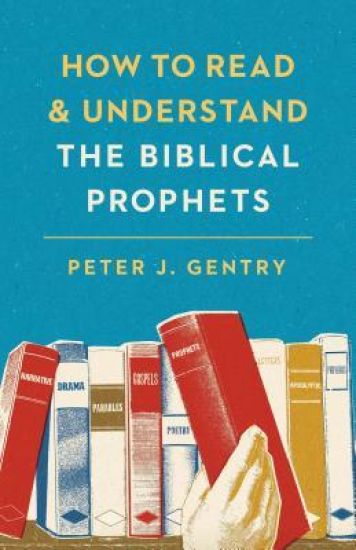
A Concise Guide to Reading the Prophetic Books The Prophetic Books of the Bible are full of symbolic speeches, dramatic metaphors, and lengthy allegories—a unique blend of literary styles that can make them hard to comprehend. How can we know if we are reading them the way God intended them to be read? In this accessible guide, leading Old Testament scholar Peter Gentry identifies seven common characteristics of prophetic literature in the Bible that help us understand each book’s message. With illustrations and clear examples, Gentry offers guidance for reading these challenging texts—teaching us practical strategies for deeper engagement with the biblical text as we seek to apply God’s Word to our lives today.

Is there evidence to believe the Gospels? The GospelsMatthew, Mark, Luke, Johnare four accounts of Jesus's life and teachings while on earth. But should we accept them as historically accurate? What evidence is there that th

How the Story of the Prodigal Son Illuminates Jesus’s Genius When someone thinks of Jesus, “genius” is not likely the first word that comes to mind. But when studied in detail, Jesus’s teachings and interactions with others combined high levels of knowledge and insight, verbal skill, and simplicity—showing his genius. In The Surprising Genius of Jesus, Peter J. Williams examines the story of the prodigal son in Luke 15 to show the genius, creativity, and wisdom of Jesus’s teachings. He used simple but powerful stories to confront the Pharisees and scribes of the day, drawing on his knowledge of the Jewish Scriptures to teach his audience through complex layers and themes. Williams challenges those who question whether Jesus really was the source of the parables recorded in the Gospels, pointing readers to the truth of who Jesus is and why that matters for them today. Clear and Insightful: Accessible for general readers with in-depth footnotes for those wanting to learn more Biblical: Comprehensive, interscriptural analysis of the story of the prodigal son Written by Peter J. Williams: Author of Can We Trust the Gospels? and principal of Tyndale House, Cambridge


Running: How To Design And Execute A Winning Political Campaign
Peter J. Fusco
Createspace Independent Publishing Platform
2008
nidottu
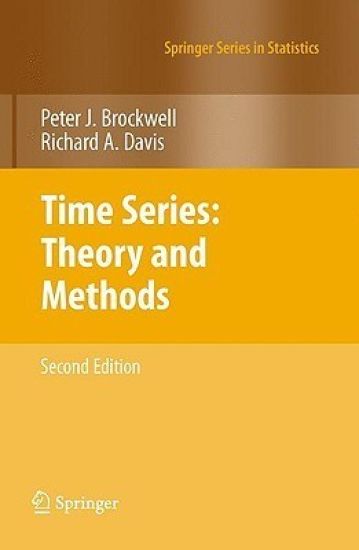
Time Series: Theory and Methods
Peter J. Brockwell; Richard A. Davis
Springer-Verlag New York Inc.
2009
nidottu
This edition contains a large number of additions and corrections scattered throughout the text, including the incorporation of a new chapter on state-space models. The companion diskette for the IBM PC has expanded into the software package ITSM: An Interactive Time Series Modelling Package for the PC, which includes a manual and can be ordered from Springer-Verlag. * We are indebted to many readers who have used the book and programs and made suggestions for improvements. Unfortunately there is not enough space to acknowledge all who have contributed in this way; however, special mention must be made of our prize-winning fault-finders, Sid Resnick and F. Pukelsheim. Special mention should also be made of Anthony Brockwell, whose advice and support on computing matters was invaluable in the preparation of the new diskettes. We have been fortunate to work on the new edition in the excellent environments provided by the University of Melbourne and Colorado State University. We thank Duane Boes particularly for his support and encouragement throughout, and the Australian Research Council and National Science Foundation for their support of research related to the new material. We are also indebted to Springer-Verlag for their constant support and assistance in preparing the second edition. Fort Collins, Colorado P. J. BROCKWELL November, 1990 R. A. DAVIS * /TSM: An Interactive Time Series Modelling Package for the PC by P. J. Brockwell and R. A. Davis. ISBN: 0-387-97482-2; 1991.

I recall during my early years as a clinical psychologist being asked by hospital staff to speak with a 32-year-old man addicted to alcohol who was being discharged following treatment for pancreatitis. This had been his third admission for the same illness, and hospital practitioners were exasperated by his choice to continue dri- ing despite being repeatedly told it would cause irreparable damage to his pancreas from which he would be unlikely to survive. I met him in a side-room on the ward. He sat in his pyjamas in the corner of the room, thin and ashen looking, with a worried frown fixed across his face. Our conversation was initially stilted and I was trying hard not to replicate the lectures and sermons he was likely to have already received from hospital staff. As we talked I was able to piece together bits of inf- mation about his current circumstances: he lived alone, he was unemployed, and his only family contact was with a brother who visited to check on him occasionally. He started to relax into the conversation and then talked about his long struggles with alcohol: his drinking had begun in his early teens; it had provided him with con- dence and friendships; he had had some serious motor vehicle accidents; he had tried to stop drinking but soon continued; he had lost friends, jobs, and family re- tionships; and in response he had increasingly sought intoxication as a refuge.
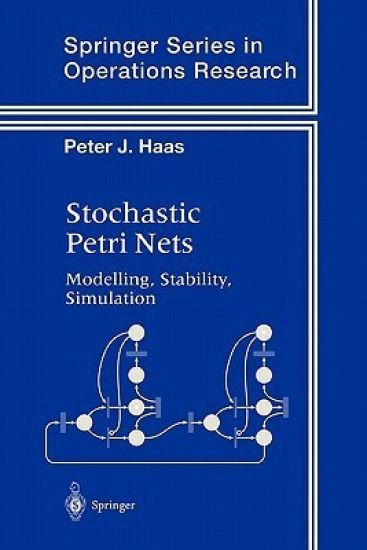
Written by a leading researcher this book presents an introduction to Stochastic Petri Nets covering the modeling power of the proposed SPN model, the stability conditions and the simulation methods. Its unique and well-written approach provides a timely and important addition to the literature. Appeals to a wide range of researchers in engineering, computer science, mathematics and OR.
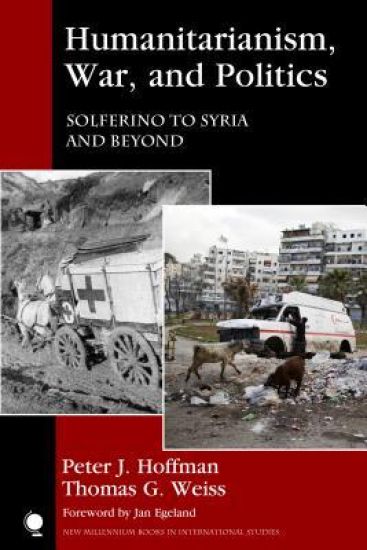
Humanitarianism, War, and Politics
Peter J. Hoffman; Thomas G. Weiss; Jan Egeland
Rowman Littlefield
2017
sidottu
What is humanitarianism? This authoritative book provides a comprehensive analysis of the original idea and its evolution, exploring its triangulation with war and politics. Peter J. Hoffman and Thomas G. Weiss trace the origins of humanitarianism, its social movement, and the institutions (international humanitarian law) and organizations (providers of assistance and protection) that comprise it. They consider the international humanitarian system’s ability to regulate the conduct of war, to improve the wellbeing of its victims, and to prosecute war criminals. Probing the profound changes in the culture and capacities that underpin the sector and alter the meaning of humanitarianism, they assess the reinventions that constitute “revolutions in humanitarian affairs.” The book begins with traditions and perspectives—ranging from classic international relations approaches to “Critical Humanitarian Studies” —and reviews seminal wartime emergencies and the creation and development of humanitarian agencies in the late nineteenth and twentieth centuries. The authors then examine the rise of “new humanitarianisms” after the Cold War’s end and contemporary cases after 9/11. The authors continue by unpacking the most recent “revolutions”—the International Criminal Court and the “Responsibility to Protect”—as well as such core challenges as displacement camps, infectious diseases, eco-refugees, and marketization. They conclude by evaluating the contemporary system and the prospects for further transformations, identifying scholarly puzzles and the acute operational problems faced by practitioners.
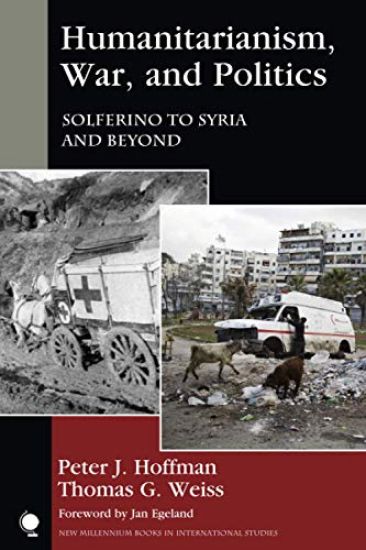
Humanitarianism, War, and Politics
Peter J. Hoffman; Thomas G. Weiss; Jan Egeland
Rowman Littlefield
2017
nidottu
What is humanitarianism? This authoritative book provides a comprehensive analysis of the original idea and its evolution, exploring its triangulation with war and politics. Peter J. Hoffman and Thomas G. Weiss trace the origins of humanitarianism, its social movement, and the institutions (international humanitarian law) and organizations (providers of assistance and protection) that comprise it. They consider the international humanitarian system’s ability to regulate the conduct of war, to improve the wellbeing of its victims, and to prosecute war criminals. Probing the profound changes in the culture and capacities that underpin the sector and alter the meaning of humanitarianism, they assess the reinventions that constitute “revolutions in humanitarian affairs.” The book begins with traditions and perspectives—ranging from classic international relations approaches to “Critical Humanitarian Studies” —and reviews seminal wartime emergencies and the creation and development of humanitarian agencies in the late nineteenth and twentieth centuries. The authors then examine the rise of “new humanitarianisms” after the Cold War’s end and contemporary cases after 9/11. The authors continue by unpacking the most recent “revolutions”—the International Criminal Court and the “Responsibility to Protect”—as well as such core challenges as displacement camps, infectious diseases, eco-refugees, and marketization. They conclude by evaluating the contemporary system and the prospects for further transformations, identifying scholarly puzzles and the acute operational problems faced by practitioners.