Kirjojen hintavertailu. Mukana 11 627 362 kirjaa ja 12 kauppaa.

Kirjahaku

Etsi kirjoja tekijän nimen, kirjan nimen tai ISBN:n perusteella.

1000 tulosta hakusanalla Peter J. Perry

Can We Trust the Gospels?

Can We Trust the Gospels?

Peter J. Williams

Crossway Books
2018
pokkari
Is there evidence to believe the Gospels? The Gospels—Matthew, Mark, Luke, John—are four accounts of Jesus’s life and teachings while on earth. But should we accept them as historically accurate? What evidence is there that the recorded events actually happened? Presenting a case for the historical reliability of the Gospels, New Testament scholar Peter Williams examines evidence from non-Christian sources, assesses how accurately the four biblical accounts reflect the cultural context of their day, compares different accounts of the same events, and looks at how these texts were handed down throughout the centuries. Everyone from the skeptic to the scholar will find powerful arguments in favor of trusting the Gospels as trustworthy accounts of Jesus’s earthly life.
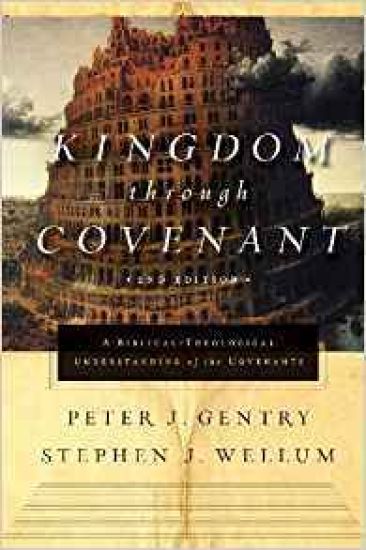
Kingdom through Covenant

Kingdom through Covenant

Peter J. Gentry; Stephen J. Wellum

Crossway Books
2018
sidottu
Kingdom through Covenant is a careful exposition of how the biblical covenants unfold and relate to one another—a widely debated topic, critical for understanding the narrative plot structure of the whole Bible. By incorporating the latest available research from the ancient Near East and examining implications of their work for Christology, ecclesiology, eschatology, and hermeneutics, scholars Peter J. Gentry and Stephen J. Wellum present a thoughtful and viable alternative to both covenant theology and dispensationalism. This second edition features updated and revised content, clarifying key material and integrating the latest findings into the discussion.
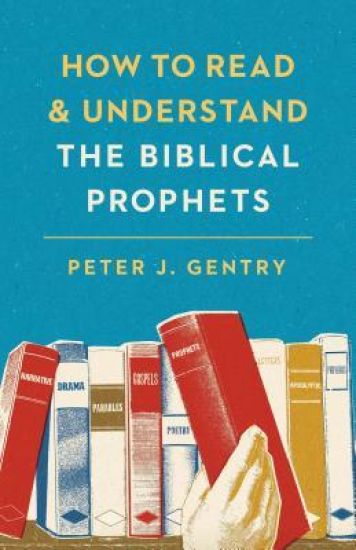
How to Read and Understand the Biblical Prophets
A Concise Guide to Reading the Prophetic Books The Prophetic Books of the Bible are full of symbolic speeches, dramatic metaphors, and lengthy allegories—a unique blend of literary styles that can make them hard to comprehend. How can we know if we are reading them the way God intended them to be read? In this accessible guide, leading Old Testament scholar Peter Gentry identifies seven common characteristics of prophetic literature in the Bible that help us understand each book’s message. With illustrations and clear examples, Gentry offers guidance for reading these challenging texts—teaching us practical strategies for deeper engagement with the biblical text as we seek to apply God’s Word to our lives today.
Can We Trust the Gospels?

Can We Trust the Gospels?

Peter J. Williams

Crossway Books
2018
nidottu
Is there evidence to believe the Gospels? The GospelsMatthew, Mark, Luke, Johnare four accounts of Jesus's life and teachings while on earth. But should we accept them as historically accurate? What evidence is there that th
The Surprising Genius of Jesus

The Surprising Genius of Jesus

Peter J. Williams

Crossway Books
2023
pokkari
How the Story of the Prodigal Son Illuminates Jesus’s Genius When someone thinks of Jesus, “genius” is not likely the first word that comes to mind. But when studied in detail, Jesus’s teachings and interactions with others combined high levels of knowledge and insight, verbal skill, and simplicity—showing his genius. In The Surprising Genius of Jesus, Peter J. Williams examines the story of the prodigal son in Luke 15 to show the genius, creativity, and wisdom of Jesus’s teachings. He used simple but powerful stories to confront the Pharisees and scribes of the day, drawing on his knowledge of the Jewish Scriptures to teach his audience through complex layers and themes. Williams challenges those who question whether Jesus really was the source of the parables recorded in the Gospels, pointing readers to the truth of who Jesus is and why that matters for them today. Clear and Insightful: Accessible for general readers with in-depth footnotes for those wanting to learn more Biblical: Comprehensive, interscriptural analysis of the story of the prodigal son Written by Peter J. Williams: Author of Can We Trust the Gospels? and principal of Tyndale House, Cambridge
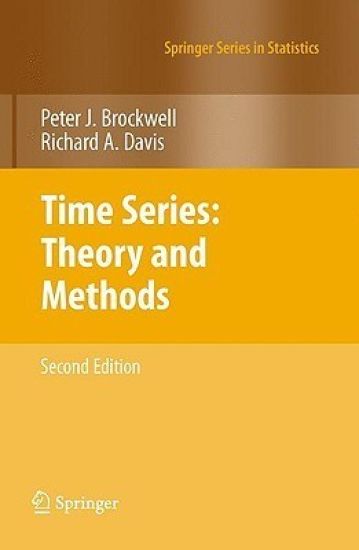
Time Series: Theory and Methods

Time Series: Theory and Methods

Peter J. Brockwell; Richard A. Davis

Springer-Verlag New York Inc.
2009
nidottu
This edition contains a large number of additions and corrections scattered throughout the text, including the incorporation of a new chapter on state-space models. The companion diskette for the IBM PC has expanded into the software package ITSM: An Interactive Time Series Modelling Package for the PC, which includes a manual and can be ordered from Springer-Verlag. * We are indebted to many readers who have used the book and programs and made suggestions for improvements. Unfortunately there is not enough space to acknowledge all who have contributed in this way; however, special mention must be made of our prize-winning fault-finders, Sid Resnick and F. Pukelsheim. Special mention should also be made of Anthony Brockwell, whose advice and support on computing matters was invaluable in the preparation of the new diskettes. We have been fortunate to work on the new edition in the excellent environments provided by the University of Melbourne and Colorado State University. We thank Duane Boes particularly for his support and encouragement throughout, and the Australian Research Council and National Science Foundation for their support of research related to the new material. We are also indebted to Springer-Verlag for their constant support and assistance in preparing the second edition. Fort Collins, Colorado P. J. BROCKWELL November, 1990 R. A. DAVIS * /TSM: An Interactive Time Series Modelling Package for the PC by P. J. Brockwell and R. A. Davis. ISBN: 0-387-97482-2; 1991.
Fragmented Intimacy

Fragmented Intimacy

Peter J. Adams

Springer-Verlag New York Inc.
2010
nidottu
I recall during my early years as a clinical psychologist being asked by hospital staff to speak with a 32-year-old man addicted to alcohol who was being discharged following treatment for pancreatitis. This had been his third admission for the same illness, and hospital practitioners were exasperated by his choice to continue dri- ing despite being repeatedly told it would cause irreparable damage to his pancreas from which he would be unlikely to survive. I met him in a side-room on the ward. He sat in his pyjamas in the corner of the room, thin and ashen looking, with a worried frown fixed across his face. Our conversation was initially stilted and I was trying hard not to replicate the lectures and sermons he was likely to have already received from hospital staff. As we talked I was able to piece together bits of inf- mation about his current circumstances: he lived alone, he was unemployed, and his only family contact was with a brother who visited to check on him occasionally. He started to relax into the conversation and then talked about his long struggles with alcohol: his drinking had begun in his early teens; it had provided him with con- dence and friendships; he had had some serious motor vehicle accidents; he had tried to stop drinking but soon continued; he had lost friends, jobs, and family re- tionships; and in response he had increasingly sought intoxication as a refuge.
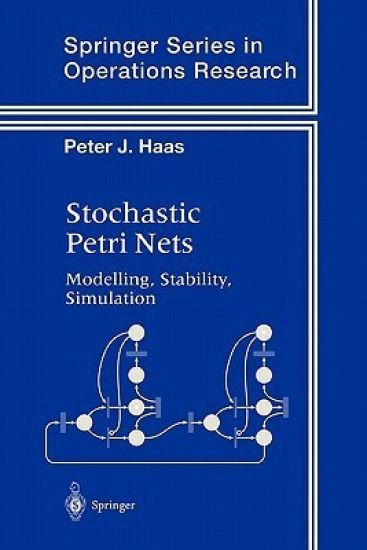
Stochastic Petri Nets

Stochastic Petri Nets

Peter J. Haas

Springer-Verlag New York Inc.
2010
nidottu
Written by a leading researcher this book presents an introduction to Stochastic Petri Nets covering the modeling power of the proposed SPN model, the stability conditions and the simulation methods. Its unique and well-written approach provides a timely and important addition to the literature. Appeals to a wide range of researchers in engineering, computer science, mathematics and OR.
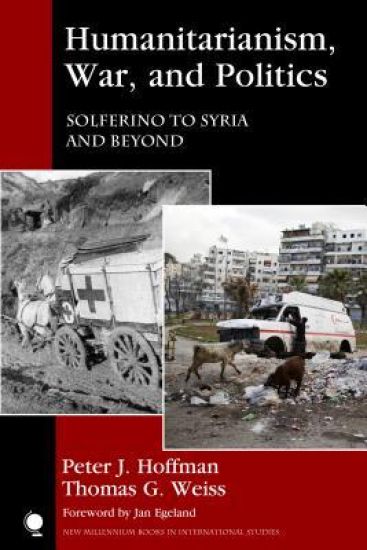
Humanitarianism, War, and Politics

Humanitarianism, War, and Politics

Peter J. Hoffman; Thomas G. Weiss; Jan Egeland

Rowman Littlefield
2017
sidottu
What is humanitarianism? This authoritative book provides a comprehensive analysis of the original idea and its evolution, exploring its triangulation with war and politics. Peter J. Hoffman and Thomas G. Weiss trace the origins of humanitarianism, its social movement, and the institutions (international humanitarian law) and organizations (providers of assistance and protection) that comprise it. They consider the international humanitarian system’s ability to regulate the conduct of war, to improve the wellbeing of its victims, and to prosecute war criminals. Probing the profound changes in the culture and capacities that underpin the sector and alter the meaning of humanitarianism, they assess the reinventions that constitute “revolutions in humanitarian affairs.” The book begins with traditions and perspectives—ranging from classic international relations approaches to “Critical Humanitarian Studies” —and reviews seminal wartime emergencies and the creation and development of humanitarian agencies in the late nineteenth and twentieth centuries. The authors then examine the rise of “new humanitarianisms” after the Cold War’s end and contemporary cases after 9/11. The authors continue by unpacking the most recent “revolutions”—the International Criminal Court and the “Responsibility to Protect”—as well as such core challenges as displacement camps, infectious diseases, eco-refugees, and marketization. They conclude by evaluating the contemporary system and the prospects for further transformations, identifying scholarly puzzles and the acute operational problems faced by practitioners.
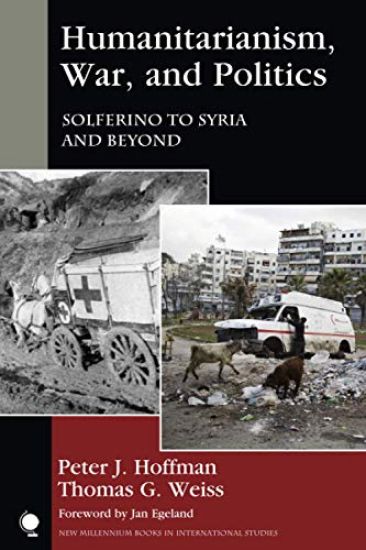
Humanitarianism, War, and Politics

Humanitarianism, War, and Politics

Peter J. Hoffman; Thomas G. Weiss; Jan Egeland

Rowman Littlefield
2017
nidottu
What is humanitarianism? This authoritative book provides a comprehensive analysis of the original idea and its evolution, exploring its triangulation with war and politics. Peter J. Hoffman and Thomas G. Weiss trace the origins of humanitarianism, its social movement, and the institutions (international humanitarian law) and organizations (providers of assistance and protection) that comprise it. They consider the international humanitarian system’s ability to regulate the conduct of war, to improve the wellbeing of its victims, and to prosecute war criminals. Probing the profound changes in the culture and capacities that underpin the sector and alter the meaning of humanitarianism, they assess the reinventions that constitute “revolutions in humanitarian affairs.” The book begins with traditions and perspectives—ranging from classic international relations approaches to “Critical Humanitarian Studies” —and reviews seminal wartime emergencies and the creation and development of humanitarian agencies in the late nineteenth and twentieth centuries. The authors then examine the rise of “new humanitarianisms” after the Cold War’s end and contemporary cases after 9/11. The authors continue by unpacking the most recent “revolutions”—the International Criminal Court and the “Responsibility to Protect”—as well as such core challenges as displacement camps, infectious diseases, eco-refugees, and marketization. They conclude by evaluating the contemporary system and the prospects for further transformations, identifying scholarly puzzles and the acute operational problems faced by practitioners.
The End of the Charter Revolution

The End of the Charter Revolution

Peter J. McCormick

University of Toronto Press
2014
pokkari
The Canadian Charter of Rights and Freedoms became an entrenched part of the Canadian Constitution on April 17, 1982. The Charter represented a significant change in Canadian constitutional order and carried the courts, and the Supreme Court in particular, decisively into some of the biggest controversies in Canadian politics. Although the impact of the Charter on Canadian law and society was profound, a new status quo has been established. Even though there will be future Charter surprises and decisions that will claim news headlines, Peter J. McCormick argues that these cases will be occasional rather than frequent, and that the Charter "revolution" is over. Or, as he puts it in his introduction, "I will tell a story about the Charter, about the big ripples that have gradually but steadily died away such that the surface of the pond is now almost smooth." The End of the Charter Revolution explores the Canadian Charter of Rights and Freedoms, beginning with a general historical background, followed by a survey of the significant changes brought about as Charter decisions were made. The book addresses a series of specific cases made before the Dickson, Lamer, and McLachlin Courts, and then provides empirical data to support the argument that the Charter revolution has ended. The Supreme Court has without question become "a national institution of the first order," but even though the Charter is a large part of why this has happened, it is not Charter decisions that will showcase the exercise of this power in the future.
The End of the Charter Revolution

The End of the Charter Revolution

Peter J. McCormick

University of Toronto Press
2014
sidottu
The Canadian Charter of Rights and Freedoms became an entrenched part of the Canadian Constitution on April 17, 1982. The Charter represented a significant change in Canadian constitutional order and carried the courts, and the Supreme Court in particular, decisively into some of the biggest controversies in Canadian politics. Although the impact of the Charter on Canadian law and society was profound, a new status quo has been established. Even though there will be future Charter surprises and decisions that will claim news headlines, Peter J. McCormick argues that these cases will be occasional rather than frequent, and that the Charter "revolution" is over. Or, as he puts it in his introduction, "I will tell a story about the Charter, about the big ripples that have gradually but steadily died away such that the surface of the pond is now almost smooth." The End of the Charter Revolution explores the Canadian Charter of Rights and Freedoms, beginning with a general historical background, followed by a survey of the significant changes brought about as Charter decisions were made. The book addresses a series of specific cases made before the Dickson, Lamer, and McLachlin Courts, and then provides empirical data to support the argument that the Charter revolution has ended. The Supreme Court has without question become "a national institution of the first order," but even though the Charter is a large part of why this has happened, it is not Charter decisions that will showcase the exercise of this power in the future.
Berlin Mitte und die Welt - wie sie einmal war
Die Geschichte Deutschlands von 1914 bis 1989 ware ohne die einzigartige, dramatische und spannende Vergangenheit von Berlin Mitte so gar nicht vorhanden. Das Buch ist eine Einfuhrung in dieses so genannte kurze, aber dennoch bedeutendste Jahrhundert der Menschheit, erzahlt, wie es drei Generationen in Relation zu Berlin und den USA erlebt haben. Es liest sich wie ein Roman, alle Tatsachen und Ereignisse sind jedoch historisch korrekt und ausfuhrlich illustriert durch dreizehn Fotostrecken mit betexteten Bildern - bestehend aus gut Tausend Einzelaufnahmen. Berlin Mitte und die Welt - wie sie einmal war ist ein interessantes Buch fur alle Geschichtsinteressierte sowie fur Journalisten und Politiker - und fur die, die es werden mochten.