Kirjojen hintavertailu. Mukana 11 699 587 kirjaa ja 12 kauppaa.

Kirjahaku

Etsi kirjoja tekijän nimen, kirjan nimen tai ISBN:n perusteella.

1000 tulosta hakusanalla Philo

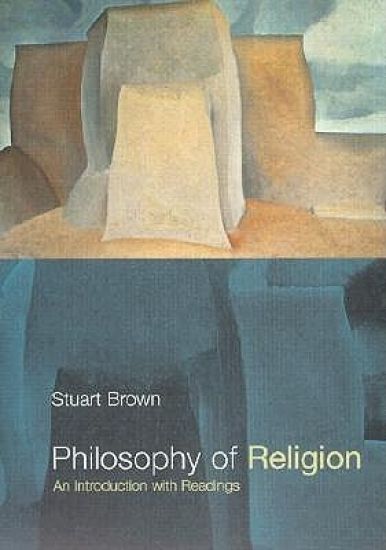
Philosophy of Religion

Philosophy of Religion

Stuart Brown

Routledge
2000
nidottu
With the entry-level student in mind, Stuart Brown guides the reader through three main topics: whether or not there is life after death; whether or not there is a powerful, beneficent intelligence controlling the universe; and the nature and appropriate defence of religious belief or faith. Each chapter is linked to readings by commentators on religion and belief, such as David Hume, John Hick, Richard Dawkins and William James. Key features also include activities and exercises, chapter summaries and guides to further reading.
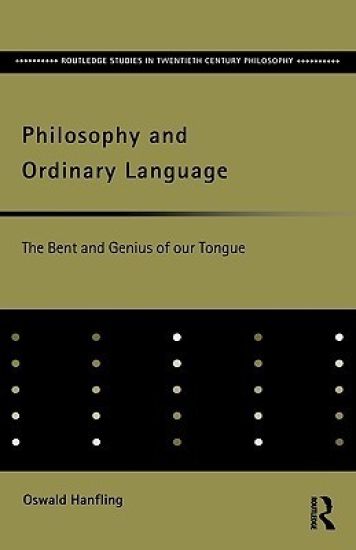
Philosophy and Ordinary Language

Philosophy and Ordinary Language

Oswald Hanfling

Routledge
1999
sidottu
What is philosophy about and what are its methods? Philosophy and Ordinary Language is a defence of the view that philosophy is largely about questions of language, which to a large extent means ordinary language. Some people argue that if philosophy is about ordinary language, then it is necessarily less deep and difficult than it is usually taken to be but Oswald Hanfling shows us that this isn't true.Hanfling, a leading expert in the development of analytic philosophy, covers a wide range of topics, including scepticism and the definition of knowledge, free will, empiricism, folk psychology, ordinary versus artificial logic, and philosophy versus science. Drawing on philosophers such as Austin, Wittgenstein, and Quine, this book explores the nature of ordinary language in philosophy.
Philosophy in Late Antiquity

Philosophy in Late Antiquity

Andrew Smith

Routledge
2004
sidottu
Philosophy in Late Antiquity provides an essential new introduction to the key ideas of the Neoplatonists, which affected approaches to Plato as late as the nineteenth century. Andrew Smith shows how they influenced Christian thought and his approach not only allows us to appreciate these philosophical ideas in their own right, but it also gives us significant insights into the mentality of the age which produced them.
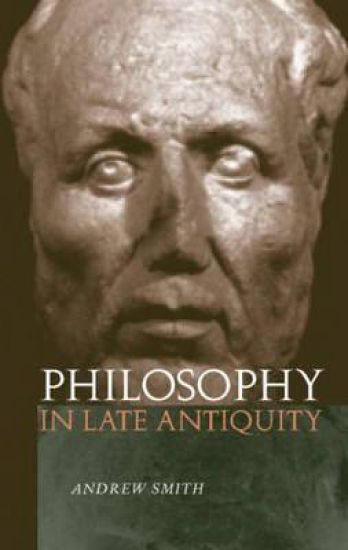
Philosophy in Late Antiquity

Philosophy in Late Antiquity

Andrew Smith

Routledge
2004
nidottu
Philosophy in Late Antiquity provides an essential new introduction to the key ideas of the Neoplatonists, which affected approaches to Plato as late as the nineteenth century. Andrew Smith shows how they influenced Christian thought and his approach not only allows us to appreciate these philosophical ideas in their own right, but it also gives us significant insights into the mentality of the age which produced them.
Philosophical Studies

Philosophical Studies

G.E. Moore

Routledge
2000
sidottu
First published in 2000. This is Volume V of six in the International Library of Philosophy looking at the area of Nineteenth and Twentieth Century Anglo-American Philosophy. Written in 1922, it focuses on Philosophical studies and a selection of papers and lectures.
Philosophy of the Unconscious

Philosophy of the Unconscious

Eduard Von Hartmann

Routledge
2000
sidottu
This is Volume VII of eight in a series on the Philosophy of Mind and Language. Originally published in 1931, this book presents Speculative Results according to the Inductive Method of Physical Science. Interest in Hartmann’s conception of the Unconscious until the beginning of the present century was primarily metaphysical; his treatise was merely the first, and most significant, of the thirty volumes which set forth his “system.”
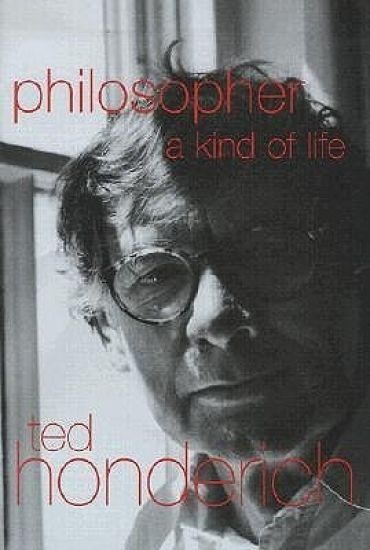
Philosopher A Kind Of Life

Philosopher A Kind Of Life

Prof Ted Honderich; Ted Honderich

Routledge
2000
sidottu
The story of Ted Honderich, philosopher, a story of a perilous philosophical life, marked by critical examination, and a compelling personal life full of human drama. This is the story of Ted Honderich's perilous progress from boyhood in Canada to the Grote Professorship of Mind and Logic at University College London, A. J. Ayer's chair. It is compelling, candid and revealing about the beginning and the goal, and everything in between: early work as a journalist on The Toronto Star, travels with Elvis Presley, arrival in Britain, loves and friendships, academic rivalries and battles, marriages and affairs, self-interest and empathy. It sets out resolutely to explain how and why it all happened.It is as much a narrative of Ted Honderich's philosophy. He makes hard problems real. Philosophy from consciousness and determinism to political violence and democracy comes into sharp focus.Along the way, questions keep coming up. Does the free marriage owe anything to the analytic philosophy? What are the costs of truth? Are the politics of England slowly making it an ever-better place? Is an action's rightness independent of the mixture of motives out of which it came?
Philosophy and the Adventure of the Virtual

Philosophy and the Adventure of the Virtual

Keith Ansell-Pearson; Keith Ansell Pearson

Routledge
2001
sidottu
With the development of new technologies and the Internet, the notion of the virtual has grown increasingly important. In this lucid collection of essays, Pearson bridges the continental-analytic divide in philosophy, bringing the virtual to centre stage and arguing its importance for re-thinking such central philosophical questions as time and life. Drawing on philosophers from Bergson, Kant and Nietzsche to Proust, Russell, Dennett and Badiou, Pearson examines the limits of continuity, explores relativity, and offers a concept of creative evolution.
Philosophy and the Adventure of the Virtual

Philosophy and the Adventure of the Virtual

Keith Ansell-Pearson; Keith Ansell Pearson

Routledge
2001
nidottu
With the development of new technologies and the Internet, the notion of the virtual has grown increasingly important. In this lucid collection of essays, Pearson bridges the continental-analytic divide in philosophy, bringing the virtual to centre stage and arguing its importance for re-thinking such central philosophical questions as time and life. Drawing on philosophers from Bergson, Kant and Nietzsche to Proust, Russell, Dennett and Badiou, Pearson examines the limits of continuity, explores relativity, and offers a concept of creative evolution.
Philosophy in Cultural Theory

Philosophy in Cultural Theory

Peter Osborne

Routledge
2000
sidottu
Philosophy in Cultural Theory boldly crosses disciplinary boundaries to offer a philosophical critique of cultural theory today. Drawing on the legacy of Walter Benjamin, Peter Osborne looks critically at central philosophical debates in cultural theory, such as:* the relationship between sign and image* the technological basis of cultural form* the conceptuality of art* the place of fantasy in human affairs.It will appeal to those in philosophy, cultural studies and art theory.
Philosophy in Cultural Theory

Philosophy in Cultural Theory

Peter Osborne

Routledge
2000
nidottu
Philosophy in Cultural Theory boldly crosses disciplinary boundaries to offer a philosophical critique of cultural theory today. Drawing on the legacy of Walter Benjamin, Peter Osborne looks critically at central philosophical debates in cultural theory, such as:* the relationship between sign and image* the technological basis of cultural form* the conceptuality of art* the place of fantasy in human affairs.It will appeal to those in philosophy, cultural studies and art theory.
Philosophy: The Classics

Philosophy: The Classics

Nigel Warburton

Routledge
2001
sidottu
The second edition of this best-seller includes four entirely new chapters on classics by Boethius, Machiavelli, Spinoza and Rawls. In his inimitable style, Nigel Warburton takes us on a guided tour through philosophy's greatest works, from Plato's Republic to Wittgenstein's Philosophical Investigations. Each chapter explores a key classic text, identifying and explaining core themes as well as subjecting them to critical scrutiny.These classic texts deal with problems that are as important today as when they were written, and Philosophy: The Classics offers an accessible introduction for all those who hesitated to approach them - until now.
Philosophy in Classical India

Philosophy in Classical India

Jonardon Ganeri

Routledge
2001
sidottu
This original work focuses on the rational principles of Indian philosophical theory, rather than the mysticism more usually associated with it. Ganeri explores the philosophical projects of a number of major Indian philosophers and looks into the methods of rational inquiry deployed within these projects. In so doing, he illuminates a network of mutual reference, criticism, influence and response, in which reason is used to call itself into question. This fresh perspective on classical Indian thought unravels new philosophical paradigms, and points towards new applications for the concept of reason.
Philosophy in Classical India

Philosophy in Classical India

Jonardon Ganeri

Routledge
2001
nidottu
This original work focuses on the rational principles of Indian philosophical theory, rather than the mysticism more usually associated with it. Ganeri explores the philosophical projects of a number of major Indian philosophers and looks into the methods of rational inquiry deployed within these projects. In so doing, he illuminates a network of mutual reference, criticism, influence and response, in which reason is used to call itself into question. This fresh perspective on classical Indian thought unravels new philosophical paradigms, and points towards new applications for the concept of reason.
Philosophical Discussion in Moral Education
In recent years there has been an increase in the number of calls for moral education to receive greater public attention. In our pluralist society, however, it is difficult to find agreement on what exactly moral education requires. Philosophical Discussion in Moral Education develops a detailed philosophical defence of the claim that teachers should engage students in ethical discussions to promote moral competence and strengthen moral character. Paying particular attention to the teacher's role, this book highlights the justification for, and methods of, creating a classroom community of ethical inquiry.
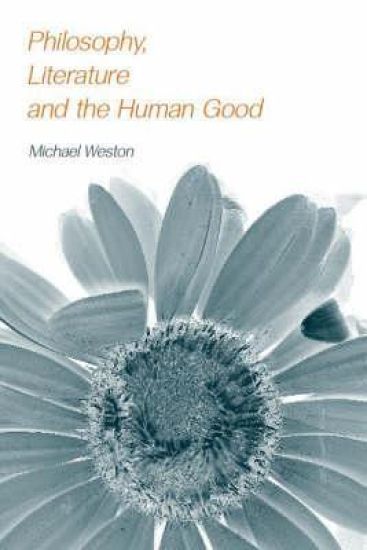
Philosophy, Literature and the Human Good
In this provocative new examination of the philosophical, moral and religious significance of literature, Michael Weston explores the role of literature in both analytic and continental traditions. He initiates a dialogue between them and investigates the growing importance of these issues for major contemporary thinkers.Each chapter explores a philosopher or literary figure who has written on the relation between literature and the good life, such as Derrida, Kierkegaard, Murdoch and Blanchot. Challenging and insightful, Philosophy, Literature and the Human Good is ideal for all students of philosophy and literature.
Philosophical Romanticism
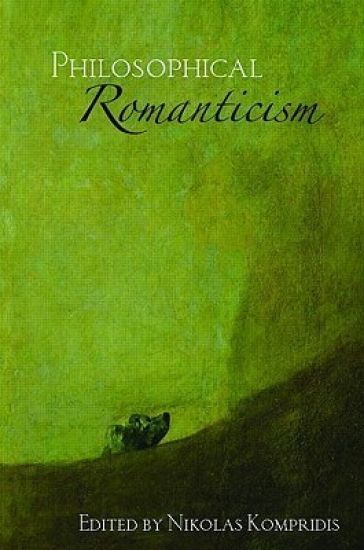
Philosophical Romanticism is one of the first books to address the relationship between philosophy and romanticism, an area which is currently undergoing a major revival. This collection of specially-written articles by world-class philosophers explores the contribution of romantic thought to topics such as freedom, autonomy, and subjectivity; memory and imagination; pluralism and practical reasoning; modernism, scepticism and irony; art and ethics; and cosmology, time and technology.While the roots of romanticism are to be found in early German idealism, Philosophical Romanticism shows that it is not a purely European phenomenon: the development of romanticism can be traced through to North American philosophy in the era of Emerson and Dewey, and up to the current work of Stanley Cavell and Richard Rorty. The articles in this collection suggest that philosophical romanticism offers a compelling alternative to both the reductionist tendencies of the naturalism in 'analytic' philosophy, and deconstruction and other forms of scepticism found in 'continental' philosophy.This outstanding collection will be of interest to those studying philosophy, literature and nineteenth and twentieth century thought.
Philosophical Romanticism
Philosophical Romanticism is one of the first books to address the relationship between philosophy and romanticism, an area which is currently undergoing a major revival. This collection of specially-written articles by world-class philosophers explores the contribution of romantic thought to topics such as freedom, autonomy, and subjectivity; memory and imagination; pluralism and practical reasoning; modernism, scepticism and irony; art and ethics; and cosmology, time and technology.While the roots of romanticism are to be found in early German idealism, Philosophical Romanticism shows that it is not a purely European phenomenon: the development of romanticism can be traced through to North American philosophy in the era of Emerson and Dewey, and up to the current work of Stanley Cavell and Richard Rorty. The articles in this collection suggest that philosophical romanticism offers a compelling alternative to both the reductionist tendencies of the naturalism in 'analytic' philosophy, and deconstruction and other forms of scepticism found in 'continental' philosophy.This outstanding collection will be of interest to those studying philosophy, literature and nineteenth and twentieth century thought.
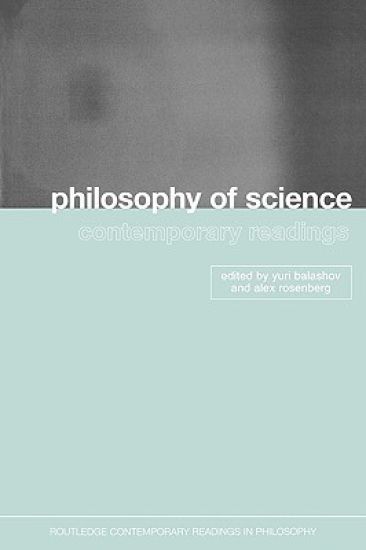
Philosophy of Science: Contemporary Readings
This comprehensive anthology draws together writings by leading philosophers on the philosophy of science. Each section is prefaced by an introductory essay from the editors, guiding students gently into the topic. Accessible and wide-ranging, the text draws on both contemporary and twentieth century sources.The readings are designed to complement Alex Rosenberg's textbook, Philosophy of Science: A Contemporary Introduction (Routledge 2000), but can also serve as a stand-alone volume in any philosophy of science course.Includes readings from the following leading philosophers: Achinstein, Anderson, Bloor, Earman, Feyerabend, Gutting, Hanson, Hempel, Kitcher, Kuhn, Laudan, Leplin, Mackie, McMullin, Nagel, Popper, Quine, Rosenberg, Russell, Salmon, Schlick, Shapere, Van Fraassen.
Philosophy of Science: Contemporary Readings
This comprehensive anthology draws together writings by leading philosophers on the philosophy of science. Each section is prefaced by an introductory essay from the editors, guiding students gently into the topic. Accessible and wide-ranging, the text draws on both contemporary and twentieth century sources.The readings are designed to complement Alex Rosenberg's textbook, Philosophy of Science: A Contemporary Introduction (Routledge 2000), but can also serve as a stand-alone volume in any philosophy of science course.Includes readings from the following leading philosophers: Achinstein, Anderson, Bloor, Earman, Feyerabend, Gutting, Hanson, Hempel, Kitcher, Kuhn, Laudan, Leplin, Mackie, McMullin, Nagel, Popper, Quine, Rosenberg, Russell, Salmon, Schlick, Shapere, Van Fraassen.