Kirjahaku
Etsi kirjoja tekijän nimen, kirjan nimen tai ISBN:n perusteella.
1000 tulosta hakusanalla Pi Eriksson
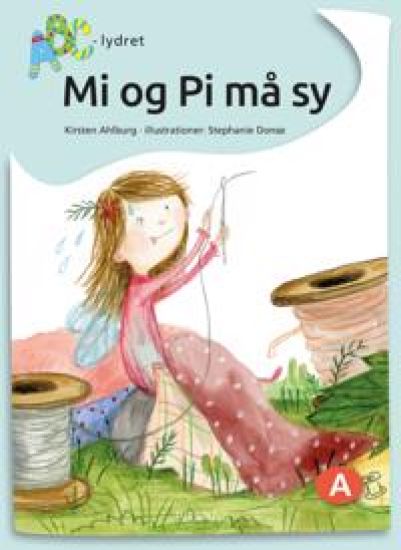
Se nu Mi.Og se Pi.De må sy og sy og sy.Lix: 3Lettal: 8Bogen tilhører serien ABC-lydret.Der findes frit tilgængelige opgaver til bogen på turbine-undervisning.dk.
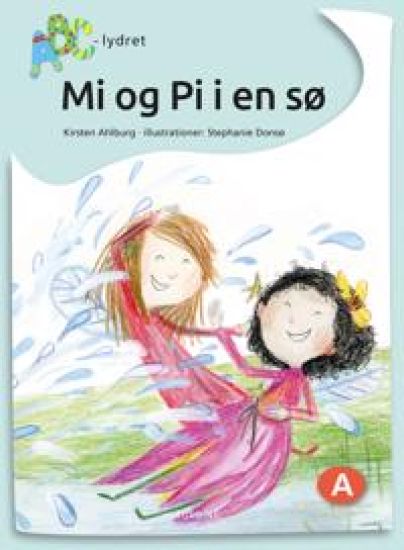
Mi og Pi må ud.De må udpå en sø.Åh.Se nu en ål.Lix: 4Lettal: 9Bogen tilhører serien ABC-lydret.Der findes frit tilgængelige opgaver til bogen på turbine-undervisning.dk.
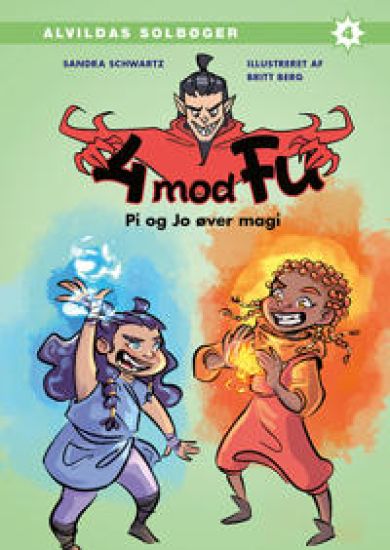
Denne bog indeholder ord på op til fire bogstaver.Her er Pi, Jo og Ri. De skal øve magi. Men den onde Fu er på lur!Bøgerne i serien 4 mod Fu kan læses uafhængigt af hinanden.
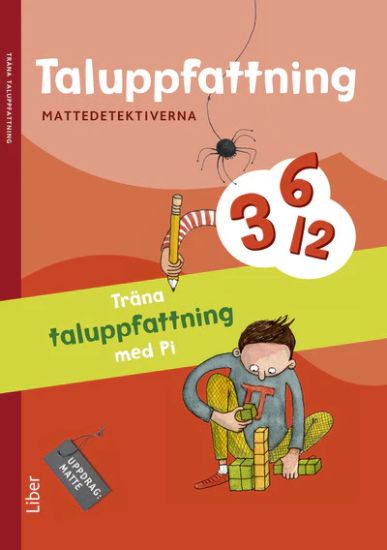
Mattedetektiverna Träna Taluppfattning med Pi 10-pack
Anna Kavén; Hans Persson; Lena Palovaara; Mats Wänblad
Liber
2013
nidottu
Mattedetektiverna Träna är 11 fristående häften för färdighetsträning i matematik på den allra mest grundläggande nivån. Häftena tränar addition, subtraktion, taluppfattning, geometri och siffror inom olika talområden. Varje häfte är på 16 sidor med facit på sista sidan. Häftena säljs i 10-pack.
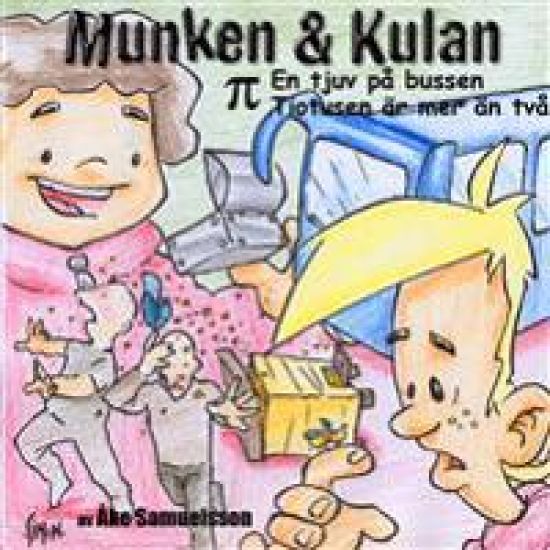
Varje CD innehåller 2 berättelser på c:a 20-25 min vardera. Det är författaren själv, Åke Samuelsson, som berättar om de fromma busfröna live inför en massa barn som vrider sig av skratt. Underbara, finurliga, roliga och pedagogiska berättelser som ofta anknyter till ett bibelord. Den som börjar lyssna på en CD vill ofta fortsätta med hela serien. Målgruppen är barn mellan 5 - 1 4 år, men även vuxna har stor behållning av skivorna
Hai kuan yu¨ yen pi hsu¨; An Anglo-Chinese glossary for customs and commercial use
C A S Williams
Alpha Edition
2019
pokkari
This book has been considered by academicians and scholars of great significance and value to literature. This forms a part of the knowledge base for future generations. So that the book is never forgotten we have represented this book in a print format as the same form as it was originally first published. Hence any marks or annotations seen are left intentionally to preserve its true nature.
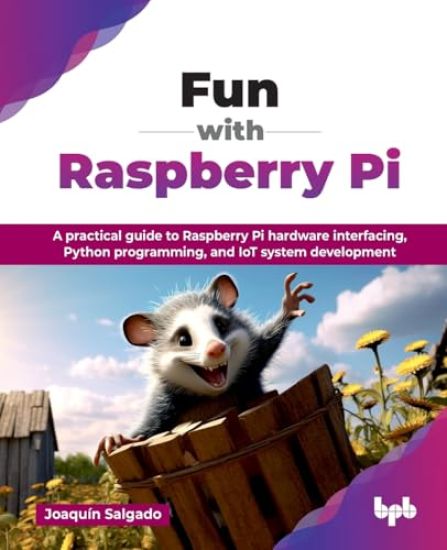
DESCRIPTION Raspberry Pi empowers makers and learners to build innovative projects, from simple electronics to complex IoT systems. It is powerful and adaptable enough to be used in almost any project scenario or problem to be solved. This book serves as your practical guide, transforming you from a beginner to a confident Raspberry Pi developer by leading you through hands-on projects and essential coding skills. Starting with the core components and GPIO connections of Raspberry Pi, you will learn to interface with hardware using both visual Scratch programming and Python. You will progress to integrating multimedia components like cameras and microphones, building projects like a video doorbell. The book then guides you through motor control and robotics, creating a smart car with sensor integration and remote control. You will explore Arduino integration for advanced sensor applications, construct a basic robot, and dive into IoT by building smart home systems. Finally, you will tackle a comprehensive project, applying all learned concepts to create a complex, integrated system.By the end of this book, you will possess the practical skills and knowledge to confidently design, build, and deploy a wide range of Raspberry Pi projects, making you a competent creator in the world of embedded systems and IoT. WHAT YOU WILL LEARN● Raspberry Pi GPIO, HATs, Arduino integration, and basic IoT device connectivity.● Scratch and Python for hardware interfacing, GPIO control, and library utilization.● Camera and audio integration, image/video processing, and recording/playback systems.● Motor control, robotics, remote car operation, and sensor-driven speed regulation.● Sense HAT sensor data acquisition and LED matrix display programming techniques.● Arduino and Raspberry Pi hybrid project design for sensor-based automated systems.WHO THIS BOOK IS FORThis book is for curious makers, students, and engineers, from beginners to experienced programmers, who want to explore the capabilities of Raspberry Pi and its integration into practical computing solutions.
Ellinika Sto Pi Fi Greek Language Course
Patakis
2021
pokkari
'Two-timing bargirls, suspicious spouses, and lesbian lovers'--it was all in a day's work for Bangkok Private Eye Warren Olson." Fluent in Thai and Khmer, Olson walked the mean streets of Bangkok and was able to go where other Private Eyes feared to tread. The stories are based on Olson's case files, fictionalized (to protect the innocent, and the guilty) by bestselling author Stephen Leather.
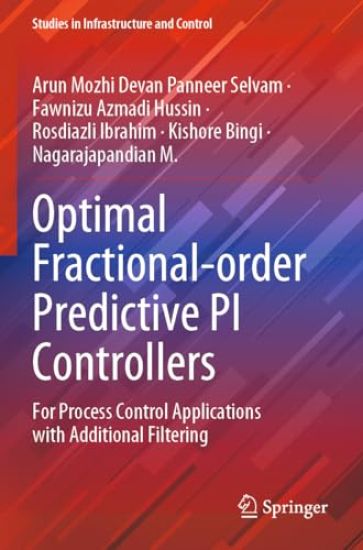
Optimal Fractional-order Predictive PI Controllers
Arun Mozhi Devan Panneer Selvam; Fawnizu Azmadi Hussin; Rosdiazli Ibrahim; Kishore Bingi; Nagarajapandian M.
SPRINGER VERLAG, SINGAPORE
2022
sidottu
This book presents the study to design, develop, and implement improved PI control techniques using dead-time compensation, structure enhancements, learning functions and fractional ordering parameters. Two fractional-order PI controllers are proposed and designed: fractional-order predictive PI and hybrid iterative learning based fractional-order predictive PI controller. Furthermore, the proposed fractional-order control strategies and filters are simulated over first- and second-order benchmark process models and further validated using the real-time experimentation of the pilot pressure process plant. In this book, five chapters are structured with a proper sequential flow of details to provide a better understanding for the readers. A general introduction to the controllers, filters and optimization techniques is presented in Chapter 1. Reviews of the PI controllers family and their modifications are shown in the initial part of Chapter 2, followed by the development of the proposed fractional-order predictive PI (FOPPI) controller with dead-time compensation ability. In the first part of chapter 3, a review of the PI based iterative learning controllers, modified structures of the ILC and their modifications are presented. Then, the design of the proposed hybrid iterative learning controller-based fractional-order predictive PI controller based on the current cyclic feedback structure is presented. Lastly, the results and discussion of the proposed controller on benchmark process models and the real-time experimentation of the pilot pressure process plant are given. Chapter 4 presents the development of the proposed filtering techniques and their performance comparison with the conventional methods. Chapter 5 proposes the improvement of the existing sine cosine algorithm (SCA) and arithmetic optimization algorithm (AOA) to form a novel arithmetic-trigonometric optimization algorithm (ATOA) to accelerate the rate of convergence in lesser iterations with mitigation towards getting caught in the same local position. The performance analysis of the optimization algorithm will be carried out on benchmark test functions and the real-time pressure process plant.
Optimal Fractional-order Predictive PI Controllers
Arun Mozhi Devan Panneer Selvam; Fawnizu Azmadi Hussin; Rosdiazli Ibrahim; Kishore Bingi; Nagarajapandian M.
SPRINGER VERLAG, SINGAPORE
2023
nidottu
This book presents the study to design, develop, and implement improved PI control techniques using dead-time compensation, structure enhancements, learning functions and fractional ordering parameters. Two fractional-order PI controllers are proposed and designed: fractional-order predictive PI and hybrid iterative learning based fractional-order predictive PI controller. Furthermore, the proposed fractional-order control strategies and filters are simulated over first- and second-order benchmark process models and further validated using the real-time experimentation of the pilot pressure process plant. In this book, five chapters are structured with a proper sequential flow of details to provide a better understanding for the readers. A general introduction to the controllers, filters and optimization techniques is presented in Chapter 1. Reviews of the PI controllers family and their modifications are shown in the initial part of Chapter 2, followed by the development of the proposed fractional-order predictive PI (FOPPI) controller with dead-time compensation ability. In the first part of chapter 3, a review of the PI based iterative learning controllers, modified structures of the ILC and their modifications are presented. Then, the design of the proposed hybrid iterative learning controller-based fractional-order predictive PI controller based on the current cyclic feedback structure is presented. Lastly, the results and discussion of the proposed controller on benchmark process models and the real-time experimentation of the pilot pressure process plant are given. Chapter 4 presents the development of the proposed filtering techniques and their performance comparison with the conventional methods. Chapter 5 proposes the improvement of the existing sine cosine algorithm (SCA) and arithmetic optimization algorithm (AOA) to form a novel arithmetic-trigonometric optimization algorithm (ATOA) to accelerate the rate of convergence in lesser iterations with mitigation towards getting caught in the same local position. The performance analysis of the optimization algorithm will be carried out on benchmark test functions and the real-time pressure process plant.
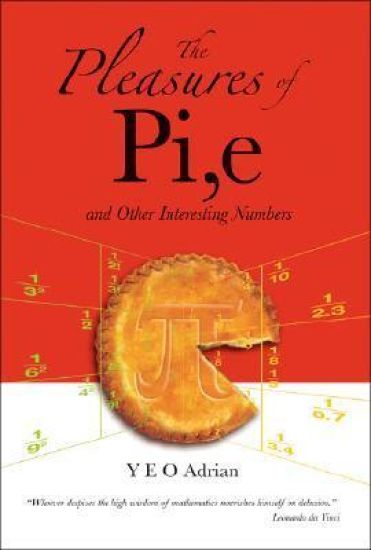
Pleasures Of Pi, E And Other Interesting Numbers, The
Adrian Ning Hong Yeo
World Scientific Publishing Co Pte Ltd
2006
sidottu
This is a mathematics book written specifically for the enjoyment of non-mathematicians and those who “hated math in school.” The book is organized into two sections: (I) Beauty for the Eye (shallow water for the non-swimmer); and (II) A Feast for the Mind (slowly getting deeper for the more adventurous).The author covers beautiful infinite series beginning with those that a young child can understand to one that even Isaac Newton, Gottfried Liebniz and the famous Bernoulli brothers could not sum.
Pleasures Of Pi, E And Other Interesting Numbers, The
Adrian Ning Hong Yeo
World Scientific Publishing Co Pte Ltd
2006
nidottu
This is a mathematics book written specifically for the enjoyment of non-mathematicians and those who “hated math in school.” The book is organized into two sections: (I) Beauty for the Eye (shallow water for the non-swimmer); and (II) A Feast for the Mind (slowly getting deeper for the more adventurous).The author covers beautiful infinite series beginning with those that a young child can understand to one that even Isaac Newton, Gottfried Liebniz and the famous Bernoulli brothers could not sum.
Zero and Pi
Amalkumar Mukhopadhyay; Siddheshwar Rameshwar Bhatt
SPRINGER VERLAG, SINGAPORE
2024
sidottu
The book, divided into two major parts, discusses the evolution of the concept and symbols of zero and the history of pi. Both the topics are discussed from the Neolithic Age to the nineteenth century. The book also clears the assumption that Johann Heinrich Lambert (AD 1761) only invented the irrationality of pi by crediting Lambert jointly with André Marie Legendre (AD 1794).Part 1, consisting of six stages spread in six chapters, meets a challenge to the authors as eminent scholars of the history of mathematics have diverse opinions based on conjectures. This part primarily discusses how the symbol O, in the Vedic religious practices, considered a replica of the universe prescribed for meditation on the unknown Brahman (conceived of as the space supreme in the Upanishads), was later transcended to the symbol of an unknown quantity in mathematics along with a dot for zero in an arena of atheism. It also highlights how the zero notation and the decimal system of Indian numerals embellished with the algebraic thoughts of Brahmagupta passed on to China and Europe via Arabia. Topics in this part have traced the development from the origin to the final form as seen today after the western practice and try to put an end to the long-standing debate over history. Appendices contain the Sanskrit verses (transliterated with meanings into English) along with the essential mathematical deduction referred to in the body of the part to help the reader to have a better understanding.Part 2 speaks of a novel idea of unveiling the nature of pi interwoven with threads of historical ups and downs in the world scenario. This part, containing five chapters, collects all available up-to-date data in every field of history to make the presentation complete in all respects. This part discusses the origin of the definition of pi as the rim of a wheel is thrice its diameter at the Indus Valley in the fourth millennium BC. This part also discusses the enlightenment of China in circle-squaring (classical method), Indian mathematics with astronomical knowledge along the Buddhist channel, and India’s discovering circumference/diameter as a non-Euclidean number.
Zero and Pi
Amalkumar Mukhopadhyay; Siddheshwar Rameshwar Bhatt
SPRINGER VERLAG, SINGAPORE
2025
nidottu
The book, divided into two major parts, discusses the evolution of the concept and symbols of zero and the history of pi. Both the topics are discussed from the Neolithic Age to the nineteenth century. The book also clears the assumption that Johann Heinrich Lambert (AD 1761) only invented the irrationality of pi by crediting Lambert jointly with André Marie Legendre (AD 1794).Part 1, consisting of six stages spread in six chapters, meets a challenge to the authors as eminent scholars of the history of mathematics have diverse opinions based on conjectures. This part primarily discusses how the symbol O, in the Vedic religious practices, considered a replica of the universe prescribed for meditation on the unknown Brahman (conceived of as the space supreme in the Upanishads), was later transcended to the symbol of an unknown quantity in mathematics along with a dot for zero in an arena of atheism. It also highlights how the zero notation and the decimal system of Indian numerals embellished with the algebraic thoughts of Brahmagupta passed on to China and Europe via Arabia. Topics in this part have traced the development from the origin to the final form as seen today after the western practice and try to put an end to the long-standing debate over history. Appendices contain the Sanskrit verses (transliterated with meanings into English) along with the essential mathematical deduction referred to in the body of the part to help the reader to have a better understanding.Part 2 speaks of a novel idea of unveiling the nature of pi interwoven with threads of historical ups and downs in the world scenario. This part, containing five chapters, collects all available up-to-date data in every field of history to make the presentation complete in all respects. This part discusses the origin of the definition of pi as the rim of a wheel is thrice its diameter at the Indus Valley in the fourth millennium BC. This part also discusses the enlightenment of China in circle-squaring (classical method), Indian mathematics with astronomical knowledge along the Buddhist channel, and India’s discovering circumference/diameter as a non-Euclidean number.
The son of a zookeeper, Pi Patel has an encyclopedic knowledge of animal behavior and a fervent love of stories. When Pi is sixteen, his family emigrates from India to North America aboard a Japanese cargo ship, along with their zoo animals bound for new homes. The ship sinks. Pi finds himself alone in a lifeboat, his only companions a hyena, an orangutan, a wounded zebra, and Richard Parker, a 450-pound Bengal tiger. Soon the tiger has dispatched all but Pi, whose fear, knowledge, and cunning allow him to coexist with Richard Parker for 227 days while lost at sea. When they finally reach the coast of Mexico, Richard Parker flees to the jungle, never to be seen again. The Japanese authorities who interrogate Pi refuse to believe his story and press him to tell them "the truth." After hours of coercion, Pi tells a second story, a story much less fantastical, much more conventional--but is it more true?
The judging panel found Marsh's collection exhilarating: "The poems are sensuous but strong, using lush imagery and clear rhythms and repetitions to power them forward." Touching on the poet's community, ancestry, influences, and history, this debut collection of poetry lives up to the meaning behind the artist's name-""writer of tales."" The featured verse is sensuous but strong, using lush imagery, clear rhythms, and repetitions to power it forward.
Programming the Raspberry Pi Pico/W in MicroPython, Third Edition
Mike James; Harry Fairhead
I/O Press
2025
pokkari
Computers are no longer beige boxes that sit on our desks or foldable aluminium books - they are embedded into almost everything we own. Our doorbells, kitchen gadgets, vacuum cleaners, and media players are all powerful computing devices running software that someone has written. Learning to program no longer means learning to control things on a screen, it means learning to control hardware that interacts with the real world. The Raspberry Pi platforms offer a wide range of powerful ways to interact with the world, but sometimes the choice can be bewildering. Using the flexible Python programming language, we'll show you how to get the most out of both the Pico range of microcontrollers and the larger Linux-powered Raspberry Pi boards. Learn how to: Select the perfect hardware Control sensors and motors Build a smart weather station Make your own games console Embed Artificial Intelligence into your projects You'll then be able to take the skills you've learned in the book and build your own projects powered by Raspberry Pi hardware. This book is perfect for intermediate users who want to sense, control and take over the world with homemade digital assistants, smart devices, and robots.