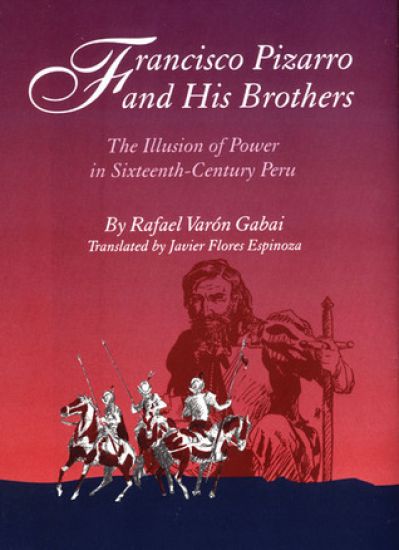
In Francisco Pizarro and His Brothers, Rafael Varón Gabai breaks fresh ground in his reconstruction of the Pizarros' conquest as a new form of business enterprise, built up by Francisco Pizarro both to conduct government and to manage his family's exploitation of Peru.The private nature of the Pizarro enterprise, together with the public political support it received at first from the Spanish Crown, allowed Pizarro to build an organization of several hundred people.
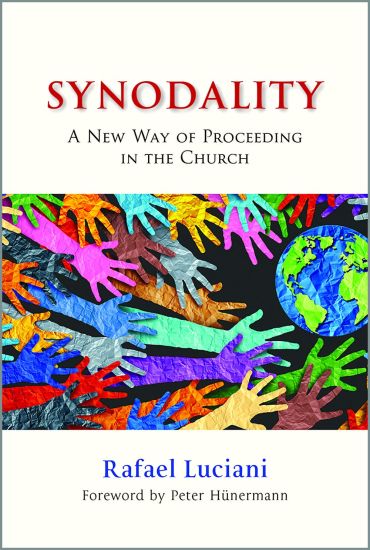
During the Commemoration of the 50th Anniversary of the Institution of the Synod of Bishops, Francis described synodality as the new model of Church. He said that “a synodal Church is a Church that listens…in which everyone has something to learn.” Listening reconfigures the whole process of interaction among all ecclesial subjects in a reciprocal and horizontal dynamics founded on the ecclesiology of the People of God. In this model, bishops should not only listen to the People of God but listen as part of the People of God. And what is heard should then find ecclesial channels and structures—or as Francis said, “concrete mediations”— that link it to ecclesial reforms. Synodality represents a deepening of the ecclesiology of the People of God by which Francis opens a new phase in the reception of the Council. The book explores a new way of proceeding in the Church at all levels, and as “a constitutive dimension of the Church.” This path calls for a reconfiguration in the relations, communicative dynamics, and structures of the current institutional model of the Church. We have the challenge to contribute to the building of this new way of being Church. Rafael Luciani is a professor at the Andrés Bello Catholic University of Caracas and extraordinary professor at the Ecclesiastical Faculty of Boston College School of Theology and Ministry.†
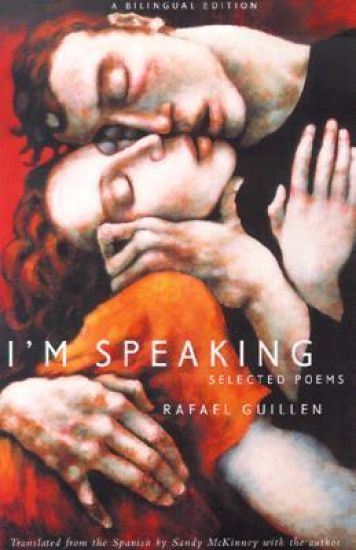
Rafael Guillen's poems are infused with the land and the people of Andalusia. He lays before us all the harshness and beauty of his country - the calm seashore and the violent revolutions, the wheat fields and the famine, the children and the laborers suffering through ""days like hot coals."" In light of this history, Guillen gives his words sharp edges tinged with a certain tender grief. A quiet force builds up behind the complex imagery and compact language as Guillen reflects on coming of age in Civil War Spain and situations of love, life, death, and faith in modern-day Granada, Paris, and the United States. Sandy McKinney, working closely with Guillen, accurately captures the unusual syntax and emotional tone of the work of this important Spanish poet. Included here is McKinney's interview with the poet where Guillen explains his connection to the tradition of Andalusian poetry, a proud literary tradition filled with a ""sensual delight in the beauty of particular words, in their sound as well as their significance.
The Index of American Periodical Verse is an important work for contemporary poetry research and is an objective measure of poetry that includes poets from the United States, Canada, and the Caribbean as well as other lands, cultures, and times. It reveals trends in the output of particular poets and the cultural influences they represent. The publications indexed cover a broad cross-section of poetry, literary, scholarly, popular, general, and "little" magazines, journals, and reviews.
The Index of American Periodical Verse is an important work for contemporary poetry research and is an objective measure of poetry that includes poets from the United States, Canada, and the Caribbean as well as other lands, cultures, and times. It reveals trends in the output of particular poets and the cultural influences they represent. The publications indexed cover a broad cross-section of poetry, literary, scholarly, popular, general, and "little" magazines, journals, and reviews.
The Index of American Periodical Verse is an important work for contemporary poetry research and is an objective measure of poetry that includes poets from the United States, Canada, and the Caribbean as well as other lands, cultures, and times. It reveals trends in the output of particular poets and the cultural influences they represent. The publications indexed cover a broad cross-section of poetry, literary, scholarly, popular, general, and "little" magazines, journals, and reviews.
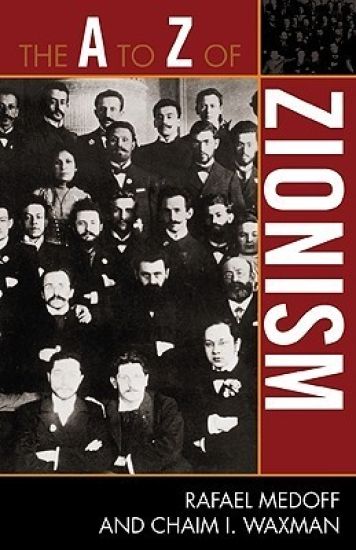
The Jewish attachment to Zion is many centuries old. While the modern Zionist movement was organized a little more than a century ago, the roots of the Zionist idea reach back close to 4,000 years ago, to the day that the biblical patriarch Abraham left his home in Ur of the Chaldees to settle in the Promised Land, where the Jewish state subsequently arose. From that day to the establishing of the state of Israel in 1948, the Jewish people have been in a constant struggle to either regain or maintain their homeland. Although 60 years have now passed since the establishment of Israel, many of the political and religious factions that made up the Zionist movement in the pre-state era remain active. The A to Z of Zionism—through its chronology, maps, introductory essay, bibliography, and over 200 cross-referenced dictionary entries on crucial persons, organizations, and events—is a valuable contribution to the appreciation for both the diversity and consensus that characterize the Zionist experience.
Only a couple of days before the state visit of the President of the United States, Filiberto Garcia -- an impeccably groomed "gun for hire," ex-Mexican revolutionary, and classic anti-hero -- is recruited by the Mexican police to discover how much truth there might be to KGB and FBI reports of a Chinese-Mongolian plot to assassinate the Soviet and American presidents during the unveiling of a statue.Garcia kills various bad guys as he searches for clues in the opium dens, curio shops, and Cantonese restaurants of Mexico City's Chinatown -- clues that appear to point not to Mongolia, but to Cuba. Yet as the bodies pile up, he begins to find traces of slimy political dealings: are local gears grinding away in these machinations of an "international incident"? Pulsating behind the smokescreen of this classic noir are fierce curses, a shockingly innocent affair, smoldering dialog, and unforgettable riffs about the meaning of life, the Mexican Revolution, women, and the best gun to use for close-range killing.
On the Edge opens with the discovery of a rotting corpse in the marshes on the outskirts of Olba, Spain--a town wracked by despair after the burst of the economic bubble, and a microcosm of a world of defeat, debt, and corruption. Stuck in this town is Esteban--his small factory bankrupt, his investments stolen by a "friend," and his unloved father, a mute invalid, entirely his personal burden. Much of the novel unfolds in Esteban's raw and tormented monologues. But other voices resound from the wreckage--soloists stepping forth from the choir--and their words, sharp as knives, crowd their terse, hypnotic monologues of ruin, prostitution, and loss. Chirbes alternates this choir of voices with a majestic third-person narration, injecting a profound and moving lyricism and offering the hope that a new vitality can emerge from the putrid swamps. On the Edge, even as it excoriates, pulsates with robust life, and its rhythmic, torrential style marks the novel as an indelible masterpiece.
Along the Mediterranean coastline of Spain, real-estate developers scramble to transform the once pastoral landscape into tourist resorts, nightclubs, and beachfront properties with lavish bars and pools. The booming post-Franco years have left everything up for grabs. Cremation opens with the death of Matías, a paterfamilias who had rejected all of these changes and whose passing sets off a chain reaction, uncovering a past that had been buried for years, and leading those closest to him to question the paths they’ve chosen. In a rich mosaic narrative, filled with a hypnotic chorus of voices, Cremation explores the coked-up champagne fizz of luxurious parties shadowed by underworlds of political corruption, prostitution, and ruthless financial speculation. The novel enters that melancholy ouroboros of capitalist greed that led to the financial crash and captures something essential about our values, our choices, and our all too human mistakes. Like William Faulkner or Francis Bacon, Chirbes stares, clear-eyed, into the abyss, and portrays us as we really are.
A bitter drunk forsakes civilization and takes to the Mexican jungle, trapping animals, selling their pelts to buy liquor for colossal benders, and slowly rotting away in his fetid hut. His neighbors, a clan of the Lacodón tribe of Chiapas, however, see something more in him than he does himself (dubbing him Wise Owl): when he falls deathly ill, a shaman named Black Ant saves his life—and, almost by chance, in driving out his fever, she exorcises the demon of alcoholism as well. Slowly recovering, weak in his hammock, our antihero discovers a curious thing about the mosquitoes’ buzzing, “which to human ears seemed so irritating and pointless.” Perhaps, in fact, it constituted a language he might learn—and with the help of a flute and a homemade dictionary—even speak. Slowly, he masters Mosquil, with astonishing consequences… Will he harness the mosquitoes’ global might? And will his new powers enable him to take over the world that’s rejected him? A book far ahead of its time, His Name Was Death looks down the double-barreled shotgun of ecological disaster and colonial exploitation—and cackles a graveyard laugh.
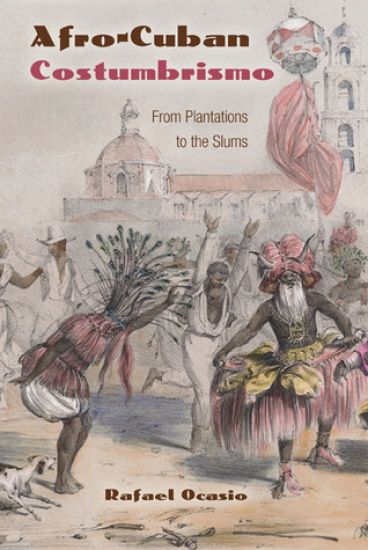
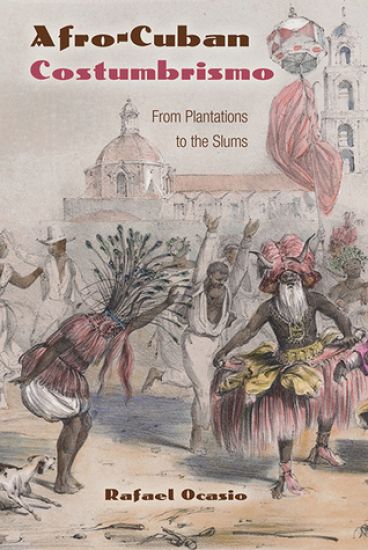
Costumbrismo, which refers to depictions of life in Latin America during the nineteenth century, introduced some of the earliest black themes in Cuban literature. Rafael Ocasio delves into this literature to offer up a new perspective on the development of Cuban identity, as influenced by black culture and religion, during the sugar cane boom. Comments about the slave trade and the treatment of slaves were often censored in Cuban publications; nevertheless white Costumbrista writers reported on a vast catalogue of stereotypes, religious beliefs, and musical folklore, and on rich African traditions in major Cuban cities. Exploring rare and seldom discussed nineteenth-century texts, Ocasio offers insight into the nuances of black representation in Costumbrismo while analysing authors such as Suarez y Romero, an abolitionist who wrote from the perspective of a plantation owner. Afro-Cuban Costumbrismo expands the idea of what texts constitute Costumbrismo and debunks the traditional notion that this writing reveals little about the Afro-Cuban experience. The result is a novel examination of how white writers' representations of black culture heavily inform our current understanding of nineteenth-century Afro-Cuban culture and national identity.
Costumbrismo, which refers to depictions of life in Latin America during the nineteenth century, introduced some of the earliest black themes in Cuban literature. Rafael Ocasio delves into this literature to offer up a new perspective on the development of Cuban identity, as influenced by black culture and religion, during the sugar cane boom.Comments about the slave trade and the treatment of slaves were often censored in Cuban publications; nevertheless white Costumbrista writers reported on a vast catalogue of stereotypes, religious beliefs, and musical folklore, and on rich African traditions in major Cuban cities. Exploring rare and seldom discussed nineteenth-century texts, Ocasio offers insight into the nuances of black representation in Costumbrismo while analyzing authors such as Sua'rez y Romero, an abolitionist who wrote from the perspective of a plantation owner.Afro-Cuban Costumbrismo expands the idea of what texts constitute Costumbrismo and debunks the traditional notion that this writing reveals little about the Afro-Cuban experience. The result is a novel examination of how white writers' representations of black culture heavily inform our current understanding of nineteenth-century Afro-Cuban culture and national identity.
Law and Religion in a Secular Age seeks to restore the connection between spirituality and justice, religion and law, theology and jurisprudence, and natural law and positive law by building a new bridge suitable for pluralistic societies in the secular age. The author argues for a multidimensional view of reality that includes legal, political, moral, and spiritual dimensions of human nature and society. Each of these dimensions of life needs to recognize the existence, influence, and function of the others, which act as a filter or check on the excesses of each other. This multidimensionality of reality clarifies why no legal theory can fully account for law from the legal dimension alone, just as no moral theory makes perfect sense of morality from the moral dimension--and, for that matter, nothing in physics can fully interpret the physical dimension of reality. The premises of a legal system cannot be fully explained by the legal dimension alone because the fundamental conditions and qualities of justice, freedom, and dignity touch all the dimensions of reality in which the human person acts, including the moral and the spiritual, not just the legal. Building on this multidimensional theory of reality, the author explores the core differences and the essential interconnections between law, morality, religion, and spirituality and some of the legal implications of these connections.Rafael Domingo reminds readers of the vital role of religion in shaping the conceptual framework of Western legal systems, underscores the spirit of Christianity that inspired legal institutions, principles, and values, and recalls the contributions of specific Christian jurists as central figures for the development of justice in society.Law and Religion in a Secular Age aims to be a valuable antidote against the dominant legal positivism that has cornered public morality, the defiant secularism that has marginalized religion, and any other legal doctrine that diminishes the spiritual dimension of law and justice.
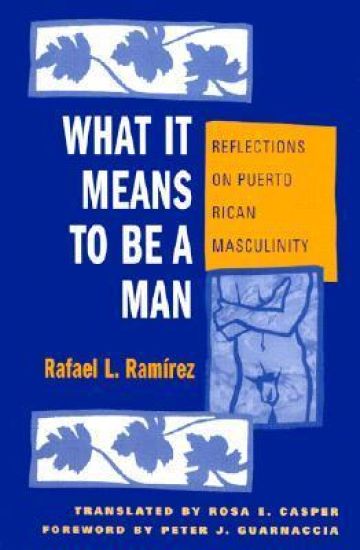
Rafael L. Ramírez presents an insightful examination of Puerto Rican culture and the ways in which Puerto Rican masculinity is constructed. What It Means to Be a Man begins with a discussion of machismo set in the context of the social construction of masculinity. Ramírez presents his interpretation of what it means to be a Puerto Rican man, discussing the attributes and demands of masculinity, and pointing out the ways in which strength, competition, and sexuality are joined with power and pleasure. He examines the erotic relationships between men as part of the expressions of masculinity, and analyzes how the homosexual experience reproduces the dominant masculine ideology. Finally, Ramírez draws on the literature of the recent men's movements, offering Puerto Rican men the possibility of constructing a new masculinity, liberated from power games, to provide them with a chance to not only be better understood by others, but also to better understand themselves and their place in society.
Roman Law: An Introduction offers a clear and accessible introduction to Roman law for students of any legal tradition. In the thousand years between the Law of the Twelve Tables and Justinian’s massive Codification, the Romans developed the most sophisticated and comprehensive secular legal system of Antiquity, which remains at the heart of the civil law tradition of Europe, Latin America, and some countries of Asia and Africa. Roman lawyers created new legal concepts, ideas, rules, and mechanisms that most Western legal systems still apply. The study of Roman law thus facilitates understanding among people of different cultures by inspiring a kind of legal common sense and breadth of knowledge.Based on over twenty-five years’ experience teaching Roman law, this volume offers a comprehensive examination of the subject, as well as a historical introduction which contextualizes the Roman legal system for students who have no familiarity with Latin or knowledge of Roman history. More than a compilation of legal facts, the book captures the defining characteristics and principal achievements of Roman legal culture through a millennium of development.
Roman Law: An Introduction offers a clear and accessible introduction to Roman law for students of any legal tradition. In the thousand years between the Law of the Twelve Tables and Justinian’s massive Codification, the Romans developed the most sophisticated and comprehensive secular legal system of Antiquity, which remains at the heart of the civil law tradition of Europe, Latin America, and some countries of Asia and Africa. Roman lawyers created new legal concepts, ideas, rules, and mechanisms that most Western legal systems still apply. The study of Roman law thus facilitates understanding among people of different cultures by inspiring a kind of legal common sense and breadth of knowledge.Based on over twenty-five years’ experience teaching Roman law, this volume offers a comprehensive examination of the subject, as well as a historical introduction which contextualizes the Roman legal system for students who have no familiarity with Latin or knowledge of Roman history. More than a compilation of legal facts, the book captures the defining characteristics and principal achievements of Roman legal culture through a millennium of development.
Missile Guidance, Second Edition provides a timely survey of missile control and guidance theory, based on extensive work the author has done using the Lyapunov approach. This new edition also presents the Lyapunov-Bellman approach for choosing optimal parameters of the guidance laws, and direct and inverse optimal problems are considered. This material is important for readers working in the areas of optimization and optimal theory. This edition also contains updated coverage of guidance and control system components, since the efficiency of guidance laws depends on their realization. The text concludes with information on the new generation of intercept systems now in development.
Illegalized: Undocumented Youth Movements in the United States takes readers on a journey through the history of the rise of undocumented youth social movements in the United States in the twenty-first century. The book follows the documentation trail of undocumented youth activists spanning over two decades of organizing. Each chapter carefully analyzes key organizing strategies used by undocumented youth to produce direct forms of activism that expose and critique repressive forms of state control and violence. This inquiry is particularly generative in relation to how immigrant bodies are erased, contained, and imagined as “aliens” or “illegal.” Rafael A. MartÍnez, an undocu-scholar, intricately weaves his lived experience into this deeply insightful exploration. MartÍnez’s interdisciplinary approach will engage scholars and readers alike, resonating with disciplines such as history, American studies, Chicana and Chicano studies, and borderlands studies.Illegalized shows that undocumented youth and their activism represent a disruption to the social imaginary of the U.S. nation-state and its figurative and physical borders. It invites readers to explore how undocumented youth activists changed the way immigrant rights are discussed in the United States today.