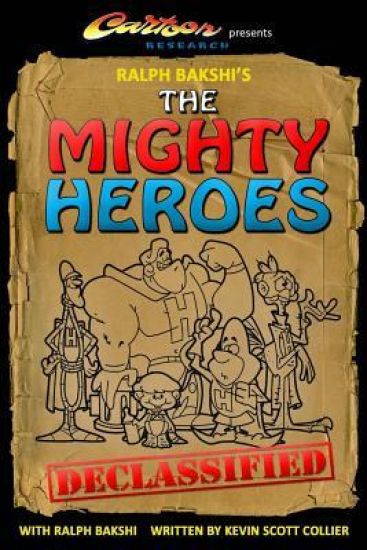
Cartoon Research presents "Ralph Bakshi's The Mighty Heroes Declassified." The origin, history and adventures of Bakshi's ground-breaking, super-hero cartoon series. This launched his historic career as producer, director and designer of award-winning animation films. Bakshi, in his own words, walks readers through how The Mighty Heroes came to be, production of the series, and its lasting effect with fans. Includes photos, artwork, cartoon series guide, and comic book appearances. A must-have for any Ralph Bakshi fan.
Edward L. Stratemeyer (October 4, 1862 - May 10, 1930) was an American publisher and writer of children's fiction. He was one of the most prolific writers in the world, producing in excess of 1,300 books himself, selling in excess of 500 million copies. He also created many well-known fictional book series for juveniles, including The Rover Boys, The Bobbsey Twins, Tom Swift, The Hardy Boys, and Nancy Drew series, many of which sold millions of copies and are still in publication today. On Stratemeyer's legacy, Fortune wrote: "As oil had its Rockefeller, literature had its Stratemeyer.Stratemeyer was born the youngest of six children in Elizabeth, New Jersey, to Henry Julius Stratemeyer, a tobacconist, and Anna Siegel. They were both from Hanover, Germany, immigrating to the United States in 1837. Although they were German, he and his siblings were educated in English and spoke English to each other. Growing up, Edward read the likes of Horatio Alger and William T. Adams, writers who penned beloved rags-to-riches tales of the hardworking young American. These stories greatly influenced him. 5] As a teenager, Stratemeyer operated his own printing press in the basement of his father's tobacco shop, distributing flyers and pamphlets among his friends and family. These included stories called The Newsboy's Adventure and The Tale of a Lumberman. After he graduated from high school, he went to work in his father's store. It wasn't until the age of 26 in 1888 that Stratemeyer sold his first story, Victor Horton's Idea, to the popular children's magazine Golden Days for $76-over six times the average weekly paycheck at the time.
Edward L. Stratemeyer (October 4, 1862 - May 10, 1930) was an American publisher and writer of children's fiction. He was one of the most prolific writers in the world, producing in excess of 1,300 books himself, selling in excess of 500 million copies. He also created many well-known fictional book series for juveniles, including The Rover Boys, The Bobbsey Twins, Tom Swift, The Hardy Boys, and Nancy Drew series, many of which sold millions of copies and are still in publication today. On Stratemeyer's legacy, Fortune wrote: "As oil had its Rockefeller, literature had its Stratemeyer.Stratemeyer was born the youngest of six children in Elizabeth, New Jersey, to Henry Julius Stratemeyer, a tobacconist, and Anna Siegel. They were both from Hanover, Germany, immigrating to the United States in 1837. Although they were German, he and his siblings were educated in English and spoke English to each other. Growing up, Edward read the likes of Horatio Alger and William T. Adams, writers who penned beloved rags-to-riches tales of the hardworking young American. These stories greatly influenced him. As a teenager, Stratemeyer operated his own printing press in the basement of his father's tobacco shop,
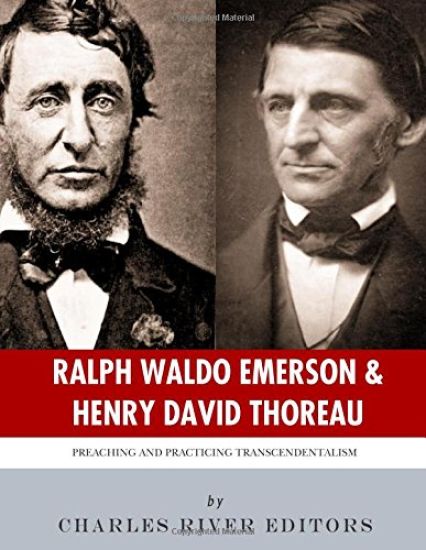
*Includes inspirational quotes from both Emerson and Thoreau *Includes Emerson's article about Thoreau's life in the August 1862 edition of Atlantic Monthly *Includes a Bibliography of their works and secondary works about them. *Includes pictures of Emerson, Thoreau and important people and places in their lives. "Standing on the bare ground, - my head bathed by the blithe air, and uplifted into infinite space, - all mean egotism vanishes. I become a transparent eye-ball; I am nothing; I see all; the currents of the Universal Being circulate through me; I am part or particle of God." - Ralph Waldo Emerson "A living dog is better than a dead lion. Shall a man go and hang himself because he belongs to the race of pygmies, and not be the biggest pygmy that he can? Let every one mind his own business, and endeavor to be what he was made. Why should we be in such desperate haste to succeed and in such desperate enterprises? If a man does not keep pace with his companions, perhaps it is because he hears a different drummer. Let him step to the music which he hears, however measured or far away." - Henry David Thoreau In the mid-19th century, Romantic literature was still in full bloom across the West, but some American authors began producing literature that, while still Romantic, was unique enough to be considered a different genre. This new genre, Transcendentalism, focused on the spirituality of the self and nature, not rejecting religion outright but concentrating on pragmatism and the importance of individuals as the spiritual center of the cosmos. In addition to drawing upon the Age of Enlightenment, Transcendentalist authors also utilized the philosophy of Plato, who taught that self-fulfillment through attaining knowledge should be an individual's ultimate goal. The leader of Transcendentalism, and the man who ushered the movement's practices and literature, was Ralph Waldo Emerson (1802-1883), one of America's most famous writers and speakers. Emerson initiated Transcendentalism with the publishing of his essay Nature in 1836, which espoused the virtues of nature and the interconnectedness of all life in nature. With his focus on the environment and natural history, Emerson became the first major American writer whose work was not influenced in any way by European literature. Emerson established group meetings, gave a series of lectures, and helped produce a Transcendentalist publication in the 1840s, which included his famous essay Self-Reliance. As Emerson's movement and stature grew, he befriended other authors, including Henry David Thoreau, who became his greatest prot g . As a prot g of Ralph Waldo Emerson, Thoreau took the values of the movement to heart and was particularly interested in the interconnection between man and nature, writing in Walden, "Most of the luxuries and many of the so-called comforts of life are not only not indispensable, but positive hindrances to the elevation of mankind." That famous work was Thoreau's account of his experience living for two years in a small cabin in a forest along the shore of Walden Pond in Concord, Massachusetts. In 1846, Thoreau was arrested for failing to pay taxes, which was based on his opposition to slavery and other ways the government spent taxpayers' money. After being freed, he gave a lecture about the roles of governments and individuals in society, which eventually became the famous essay "Civil Disobedience." Thoreau's message of civil disobedience has resonated more than any of his other Transcendentalist values, and it had a profound influence on the philosophy and nonviolent protests of activists like Mahatma Gandhi and Martin Luther King, Jr. Ralph Waldo Emerson & Henry David Thoreau looks at the lives and works of both men, examining their ideology and the Transcendentalist movement.
Excursions is an 1863 anthology of several essays by American transcendentalist Henry David Thoreau. The anthology contains an introduction entitled "Biographical Sketch" in which fellow transcendentalist Ralph Waldo Emerson provides a description of Thoreau. The book, other than R. W. Emerson's biography of Thoreau, contains nine of Thoreau's essays: Natural History of Massachusetts, A Walk to Wachusett, The Landlord, A Winter Walk, The Succession of Forest Trees, Walking, Autumnal Tints, Wild Apples, and Night and Moonlight.... Henry David Thoreau (see name pronunciation; July 12, 1817 - May 6, 1862) was an American essayist, poet, philosopher, abolitionist, naturalist, tax resister, development critic, surveyor, and historian. A leading transcendentalist, Thoreau is best known for his book Walden, a reflection upon simple living in natural surroundings, and his essay "Civil Disobedience" (originally published as "Resistance to Civil Government"), an argument for disobedience to an unjust state. Thoreau's books, articles, essays, journals, and poetry amount to more than 20 volumes. Among his lasting contributions are his writings on natural history and philosophy, in which he anticipated the methods and findings of ecology and environmental history, two sources of modern-day environmentalism. His literary style interweaves close observation of nature, personal experience, pointed rhetoric, symbolic meanings, and historical lore, while displaying a poetic sensibility, philosophical austerity, and Yankee attention to practical detail.He was also deeply interested in the idea of survival in the face of hostile elements, historical change, and natural decay; at the same time he advocated abandoning waste and illusion in order to discover life's true essential needs.He was a lifelong abolitionist, delivering lectures that attacked the Fugitive Slave Law while praising the writings of Wendell Phillips and defending the abolitionist John Brown. Thoreau's philosophy of civil disobedience later influenced the political thoughts and actions of such notable figures as Leo Tolstoy, Mahatma Gandhi, and Martin Luther King Jr. citation needed] Thoreau is sometimes referred to as an anarchist. Though "Civil Disobedience" seems to call for improving rather than abolishing government-"I ask for, not at once no government, but at once a better government"the direction of this improvement points toward anarchism: "'That government is best which governs not at all;' and when men are prepared for it, that will be the kind of government which they will have.".... Ralph Waldo Emerson (May 25, 1803 - April 27, 1882) was an American essayist, lecturer, and poet who led the transcendentalist movement of the mid-19th century. He was seen as a champion of individualism and a prescient critic of the countervailing pressures of society, and he disseminated his thoughts through dozens of published essays and more than 1,500 public lectures across the United States. Emerson gradually moved away from the religious and social beliefs of his contemporaries, formulating and expressing the philosophy of transcendentalism in his 1836 essay "Nature". Following this work, he gave a speech entitled "The American Scholar" in 1837, which Oliver Wendell Holmes Sr. considered to be America's "intellectual Declaration of Independence". Emerson wrote most of his important essays as lectures first and then revised them for print. His first two collections of essays, Essays: First Series (1841) and Essays: Second Series (1844), represent the core of his thinking. They include the well-known essays "Self-Reliance", "The Over-Soul", "Circles", "The Poet" and "Experience". Together with "Nature", these essays made the decade from the mid-1830s to the mid-1840s Emerson's most fertile period.....
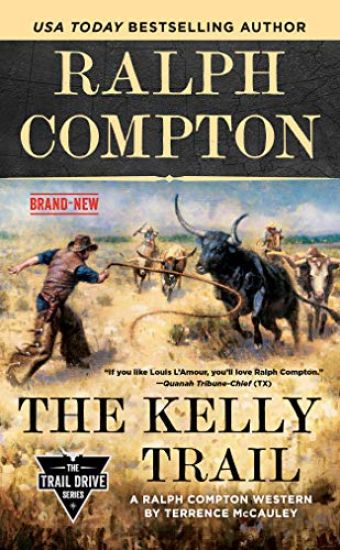
In this new Ralph Compton Western, William "Bull" Kelly brings his five sons onto the cattle drive, but when rustlers stampede the herd and injure them, he'll do anything to protect his own. Over the past twenty years, William "Bull" Kelly acquired a reputation as one of the best ramrods in Texas. He has led legendary cattle drives to almost every railhead in the middle of the country. Most impressive of all, he once drove his herd all the way up to Montana. But after years of working for other people, he decided to run cattle on his own, with his five sons. Everything starts off fine, but when a group of cattle thieves try to stampede the herd, some of Kelly's sons are hurt in the melee. The rustlers quickly find out that Kelly isn't called "Bull" because he insists on riding at the head of the herd. He's called "Bull" because of his skill with the harsh whip coiled on his belt.
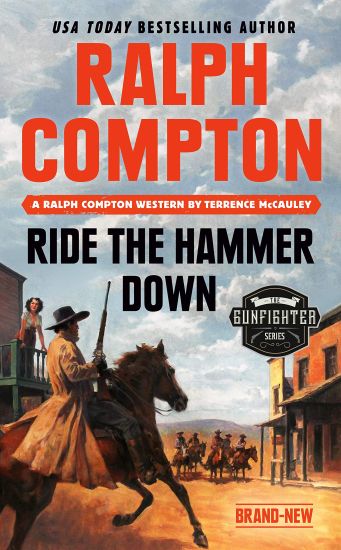
In this racing new installment in bestseller Ralph Compton's the Gunfighter series, Marshal John Beck is a man who has spent his career dispensing justice throughout the West, but now the justice is personal.Marshal John Beck was the law in the dangerous town of Mother Lode, Arizona. On his own, he'd managed to keep bandits, rustlers, and desperados at bay. It was a tough job for one man to handle, but he made it work...until the day Bram Hogan and his Brickhouse Gang got the drop on the lawman. They beat Beck to within an inch of his life and dropped him in the desert where nothing but a slow, painful death awaited him. But the gang underestimated Beck. Even at his lowest point, he found a way to survive. Now, he's coming back and anyone who stands against him is going to ride the hammer down to the grave.
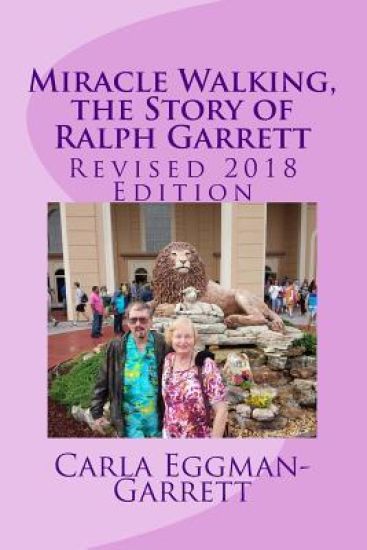
"When my car hit the tree, I blacked out. When I came to, I couldn't move the right side of my body at all. I was able to take my left hand and wipe my face and saw that I had blood all over my hand. . . All of a sudden, I was standing on the outside of my car and I could see my body inside the car. . .Then suddenly, my angel came and grabbed my left hand. We went into outer darkness . . We kept going and went into a tunnel with all these flashing lights . . The miraculous story of Ralph Garrett came to my attention when I met and married him. This accident I described happened six days after we were married. This was not the first time he went to heaven. He was born three months premature with him and his twin sister weighing a total of three pounds. His twin died three days later and the doctors told him mother to get a casket for him, also. He had a double cleft pallet, double pneumonia and asthma. He had 36 operations on his face and pallet including a baby lamb's pallet put into his upper mouth. He endured many taunts and torture from his peers then got saved in Christ Jesus and in turn saved and is still saving all who listen to him. It has been a privilege to be married to him for the past 31 years. He helped raise my five children and adopted the youngest. He has helped me in my callings from God as I have helped him. He has taught me that "All things are possible with God " May whoever reads this book find out the same truth in their lives.
In the early days of the American experiment, as the states spread across the continent and the young nation was reshaped by the Industrial Revolution, no intellectual held more power than Ralph Waldo Emerson. The leading light of the Transcendentalists, Emerson spent his life devising a uniquely American philosophy, a worldview as suited to the bustling docks of Boston as it is to the endless expanses of the West. Through lectures, letters, and essays, Emerson helped a nation discover its identity.
Glutathione is an extremely important anti-oxidant, produced naturally inside the cells of the human body. It is the effective and efficient production of this substance that the human body is able to fight against diseases and maintain its strength. The core purpose it serves is to reverse the harmful effects of oxidants in the body, the presence of which is inevitable due to uncontrollable factors like pollution and passive smoking, among others. The book titled L-Glutathione-Science, Production and Benefits talks about the value of this anti-oxidant and explains in detail about its composition, highest concentrations in the body, its role as an anti-oxidant, crucial functions it performs, its optimum ratios in the body, the impact of its deficiency, the diseases it helps in preventing and curing and finally, its efficacy in the form of a supplement as L-Glutathione.Being detailed but easily understandable, this book will be an extremely helpful source to people looking for information regarding this anti-oxidant and primary cell defender of the body. It is written in a structured manner where it starts off with the basics and gradually delves into the detailed mechanisms of how glutathione works.When you read the book, you will get to know about the composite amino acids that make up Glutathione and the role of each amino acid in imparting this anti-oxidant its central properties. Afterwards, you will be given an account of what oxidation is, how it releases dangerous free radicals in the body and how Glutathione carries out the reverse process of anti-oxidation. Problems such as Oxidative Stress, Heavy Metal Toxicity, Hindrance in DNA Repair and Cell Alteration are just some of the problems that Glutathione protects against if produced in the optimum quantities in the body. After forming a sound basis regarding the significance of this anti-oxidant, this book will take you through some of the major diseases, their mechanism, their core link with the deficiency of glutathione and how they can be reversed or managed to a great extent with taking the supplement L-glutathione. Some of the diseases that the book touches upon are Cancer, Skin Diseases such as Psoriasis, Parkinson's Disease, Viral and Bacterial Infections, Multiple Sclerosis, Pulmonary Diseases and Psychological Disorders. In short, this book is a well-rounded and comprehensive insight into not only the naturally produced glutathione but also the efficacy of the supplement available and its role in maintaining your overall well being and quality of life.
Ralph the Robot Monkey toils away in the big city but feels something is missing inside. He asks other animal robots if they feel the same but they cannot help him so Ralph goes on a journey of discovery and finds the jungle as well as the real animals that live within.
Medical treatments designed to help people can also be harmful or fatal. Around 2.5 million people die this way each year. So if any kind of medicine makes someone unwell, they or their doctor should report it. Those reports, from nearly every country in the world, go to the Uppsala Monitoring Centre (UMC) in Sweden. As the Centre’s first director, Professor Ivor Ralph Edwards transformed it from a tiny operation with limited horizons into an internationally acclaimed scientific organization at the heart of the World Health Organization’s Programme for International Drug Monitoring. He was then succeeded by his wife, Dr Marie Lindquist.This is the story of how a new science developed and a passionate and dedicated pursuit of worldwide medicines safety, with an unerring focus on the welfare of patients. The pioneering work of Ralph, Marie and their collaborators on every continent protected the lives of millions of people. It may yet improve the lives of billions more.
Medical treatments designed to help people can also be harmful or fatal. Around 2.5 million people die this way each year. So if any kind of medicine makes someone unwell, they or their doctor should report it. Those reports, from nearly every country in the world, go to the Uppsala Monitoring Centre (UMC) in Sweden. As the Centre’s first director, Professor Ivor Ralph Edwards transformed it from a tiny operation with limited horizons into an internationally acclaimed scientific organization at the heart of the World Health Organization’s Programme for International Drug Monitoring. He was then succeeded by his wife, Dr Marie Lindquist.This is the story of how a new science developed and a passionate and dedicated pursuit of worldwide medicines safety, with an unerring focus on the welfare of patients. The pioneering work of Ralph, Marie and their collaborators on every continent protected the lives of millions of people. It may yet improve the lives of billions more.
Das True Intellectual System of the Universe des englischen Philosophen Ralph Cudworth (1617-1688) gilt als Höhepunkt der Philosophie der Cambridge Platonists. In ihm bündelt Cudworth die zentralen Probleme der Naturphilosophie und Theologie seiner Zeit und versucht, sie einer Lösung zuzuführen, die umfänglich erklärt, wie Gott in der Natur wirkt. Die vorliegende Arbeit zeigt erstmalig umfassend, wie Cudworth sein neuplatonisches System aus einer kongenialen Verbindung von Textform und Inhalt entwickelt und dabei zugleich ein komplettes Panorama der antiken Philosophie entfaltet. Dabei zeigt sich, dass Cudworths welterklärendes System aus dem system- und sinngenerierenden Zusammenspiel der (spät-)antiken Referenztexte hervorgeht: Es basiert auf einem neuplatonischen Prinzipien- und Gottesbegriff und lässt die Struktur der Welt als ein intelligibles Kräftekontinuum verstehbar werden, das seinen Ursprung in einem vernünftigen Gott besitzt. Gleichzeitig berücksichtigt die vorliegende Untersuchung, wie dieser metaphysische Inhalt leserlenkend und gleichsam performativ inszeniert wird und derart beim Lesen eine intelligible Einsicht hervorbringen kann.
Der Verfasser vergleicht Toblers Prosahymnus -Die Natur- mit Nature (1836) bzw. -Nature- (1844) und leistet einen Beitrag zur Moglichkeit einer Rezeption des Werkes durch Emerson. Ziel der Untersuchung ist es, das Verhaltnis beider Emerson-Texte zum Tobler-Text auf Gemeinsamkeiten, Ahnlichkeiten und Unterschiede zu prufen und sie auf Affinitat oder Beeinflussung Emersons durch Tobler zuruckzufuhren. Moglichkeiten des Einflusses sollen gepruft werden, um Stellung zu nehmen zur bisher unzureichend begrundeten Behauptung, beide Natur-Essays Emersons seien durch das -Fragment- beeinflusst."
Ralph Waldo Emerson: His Life, Genius, And Writings - A Biographical Sketch is an unchanged, high-quality reprint of the original edition of 1882. Hansebooks is editor of the literature on different topic areas such as research and science, travel and expeditions, cooking and nutrition, medicine, and other genres. As a publisher we focus on the preservation of historical literature. Many works of historical writers and scientists are available today as antiques only. Hansebooks newly publishes these books and contributes to the preservation of literature which has become rare and historical knowledge for the future.
Ralph Wilton's Weird - A Novel is an unchanged, high-quality reprint of the original edition of 1875. Hansebooks is editor of the literature on different topic areas such as research and science, travel and expeditions, cooking and nutrition, medicine, and other genres. As a publisher we focus on the preservation of historical literature. Many works of historical writers and scientists are available today as antiques only. Hansebooks newly publishes these books and contributes to the preservation of literature which has become rare and historical knowledge for the future.