Kirjojen hintavertailu. Mukana 11 342 296 kirjaa ja 12 kauppaa.

Kirjahaku

Etsi kirjoja tekijän nimen, kirjan nimen tai ISBN:n perusteella.

1000 tulosta hakusanalla Robert Cornforth

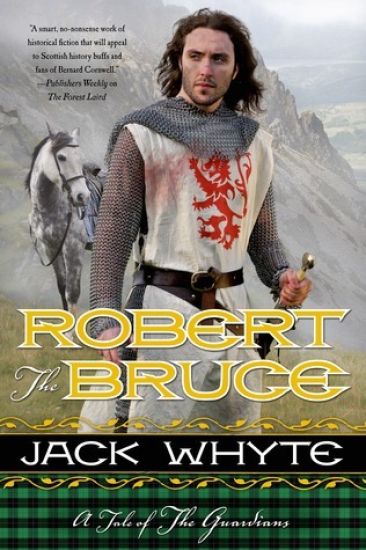
Robert the Bruce: A Tale of the Guardians
From author Jack Whyte comes the true story of Robert the Bruce: a passionate man. An incredible warrior. And one of Scotland's finest. Robert I, or as he is known to a grateful Scottish nation, Robert the Bruce, was one of Scotland's greatest kings, as well as one of the most famous warriors of his generation. He spearheaded the valiant Scots in their quest for freedom, leading his people during the Wars of Scottish Independence against the Kingdom of England during the middle ages. His reign saw the recognition of Scotland as an independent nation, and today Bruce is remembered in Scotland as a national hero. It was by no means a fair and easy road for this indomitable fighter. As a young man he saw the English king Edward I award the vacant Crown of Scotland to John Balliol. The nation quickly splintered into factions and this spurred Robert and his father to at first side with Edward and then against John, whom many of the nobles did not feel was the correct person to guide the nation. Thus began a decades-long path for Scottish freedom. To achieve this goal, Robert sometimes had to delicately balance the power of the nobles against the might of the English. He was a tireless campaigner and after a full life of battle and diplomacy, in May 1328, King Edward III signed the Treaty of Edinburgh-Northampton, which recognized Scotland as an independent kingdom and Bruce as its king. "We now have the Arthurian legend the way the noncoms saw it: tough and gritty and compelling."--Tom Shippey, former Professor of English Language and Medieval English Literature, University of Leeds on The Skystone
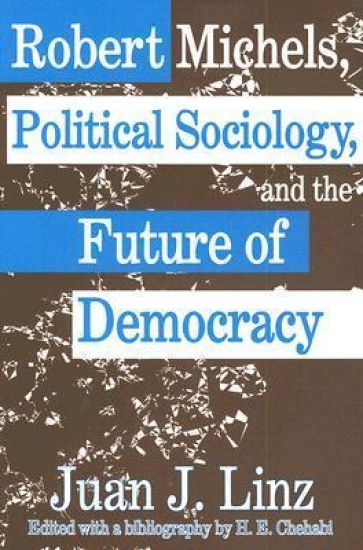
Robert Michels, Political Sociology and the Future of Democracy
These essays by the brilliant historian of political science Juan Linz comprise a remarkable intellectual review of the life and work of Robert Michels, his major book Political Parties, and the dimensions of democracy as a functioning system.Linz elucidates the importance of Michels in a way that offers more than a mechanical view of political parties as some sort of precisely ordered system of authority and influence. Instead, Michels offers a view of politics that is bottom up and untidy, what he calls a "reciprocal deference structure." Michels is not simply the father of the iron law of oligarchy, but the idea of politics as a less than orderly network of responsiveness, responsibility, and accountability. Linz demonstrates, with magisterial power, why Michels must be ranked as a foremost thinker in classical political sociology. The remaining three segments of the volume cover areas with which Linz has also long been identified. Each in its own way illumines aspects of Michels as well. "Time and Regime Change" articulates differences between change within a regime and change of a regime--sometimes hard to identify because of the elongated time frames involved. The next essay explains why Spain is neither a traditional society nor a successful modern nation. The reliance upon central authority displaced the hoped for evolution of a society based on representative democratic institutions. The final section. "Freedom and Autonomy of Intellectuals and Artists" is a topic that gripped Michels and Linz alike. Freedom as a goal of the intelligentsia has been frustrated by those who provide ideological justification for repression of ideas and actions in the name of higher values. This segment provides a bridge between Michels and Weber--not to mention both of these major figures with Linz himself. The role of state power in mediating intellectual freedom is the leitmotif that blankets the twentieth century. The work is graced by a full-length bibliography of the writings of Juan J. Linz, prepared by his student and colleague, H. E. Chehabi.
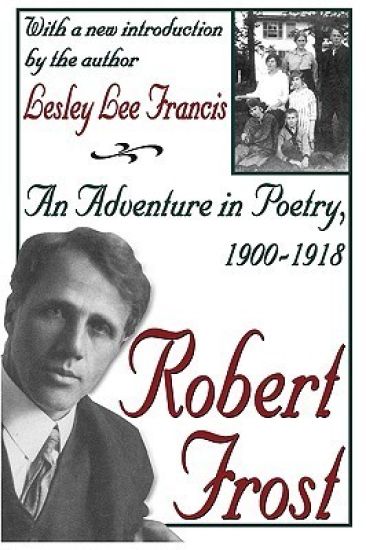
Robert Frost

Robert Frost

Lesley Lee Francis

Transaction Publishers
2004
nidottu
In this volume, Lesley Lee Francis, granddaughter of Robert Frost, brings to life the Frost family's idyllic early years. Through their own words, we enter the daily lives of Robert, known as RF to his family and friends, his wife, Elinor, and their four children, Lesley, Carol, Irma, and Marjorie. The result is a meticulously researched and beautifully written evocation of a fleeting chapter in the life of a literary family.Taught at home by their father and mother, the Frost children received a remarkable education. Reared on poetry, nurtured on the world of the imagination, and instructed in the art of direct observation, the children produced an exceptional body of writing and artwork in the years between 1905 and 1915. Drawing upon previously unexamined journals, notebooks, letters, and the little magazine entitled The Bouquet produced by the Frost children and their friends, Francis shows how the genius of Frost was enriched by his interactions with his children. Francis depicts her grandfather as a generous, devoted, and playful man with a striking ability to communicate with his children and grandchildren. She traces the family's adventures from their farm years in New Hampshire through their nearly three years in England. This enchanting evocation of the Frost family's life together makes more poignant the unforeseen personal tragedies that would befall its members in later years.