

Kirjahaku
Etsi kirjoja tekijän nimen, kirjan nimen tai ISBN:n perusteella.
1000 tulosta hakusanalla Rowson

How do we arrive at aesthetic knowledge? This might seem an odd question for philosophers to ask. Some will take its answer to be obvious: we learn about the aesthetic qualities of paintings by looking at them, of musical works by listening to them, and so on. Others will take the question to be misguided, how can there be aesthetic knowledge when aesthetics is merely 'a matter of taste'? Finally, aesthetic knowledge itself might seem singularly unimportant. We don't engage with beautiful artworks to learn that they're beautiful but, rather, to appreciate that beauty. This Element argues that each of these objections is misplaced. Aesthetic knowledge is both valuable and attainable, but canonical philosophical (and folk) views of how we attain it are mistaken. The Element surveys some recent arguments against the reliability of aesthetic perception and in favour of other, more social, sources of aesthetic knowledge.
How do we arrive at aesthetic knowledge? This might seem an odd question for philosophers to ask. Some will take its answer to be obvious: we learn about the aesthetic qualities of paintings by looking at them, of musical works by listening to them, and so on. Others will take the question to be misguided, how can there be aesthetic knowledge when aesthetics is merely 'a matter of taste'? Finally, aesthetic knowledge itself might seem singularly unimportant. We don't engage with beautiful artworks to learn that they're beautiful but, rather, to appreciate that beauty. This Element argues that each of these objections is misplaced. Aesthetic knowledge is both valuable and attainable, but canonical philosophical (and folk) views of how we attain it are mistaken. The Element surveys some recent arguments against the reliability of aesthetic perception and in favour of other, more social, sources of aesthetic knowledge.
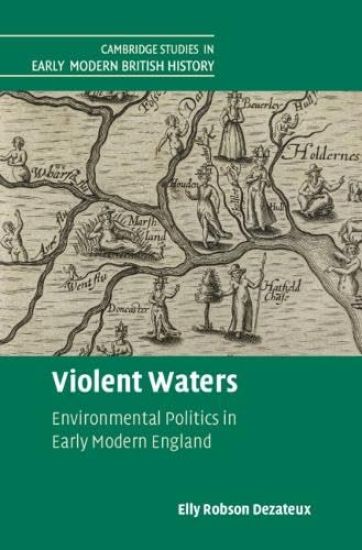
How were environments and politics remade by sovereigns, floods, mapmakers, migrants, rioters, and writers during wetland improvement projects in early modern England? Violent Waters examines flagship ventures which promised to transform unruly fenland fringes into orderly terrain at the heart of national power and productivity. In practice, these projects sparked constitutional controversy, new floods, and huge riots. The first state-led project in Hatfield Level brought local, national, and transnational interests into contact and conflict for almost a century. Elly Robson Dezateux traces the environmental politics that emerged as water and land were constructed and contested, both mentally and materially. These disputes pivoted on urgent questions about risk and justice, which became entangled in civil war conflict and exposed the limits of central authority and technology. Ultimately, improvement was destabilised by a lack of legitimacy and the dynamism of local custom as a method of environmental management and collective action. Wetland communities, as much as improvers and sovereigns, remade the terrain of politics and the future of the fens.

This work has been selected by scholars as being culturally important and is part of the knowledge base of civilization as we know it.This work is in the public domain in the United States of America, and possibly other nations. Within the United States, you may freely copy and distribute this work, as no entity (individual or corporate) has a copyright on the body of the work.Scholars believe, and we concur, that this work is important enough to be preserved, reproduced, and made generally available to the public. To ensure a quality reading experience, this work has been proofread and republished using a format that seamlessly blends the original graphical elements with text in an easy-to-read typeface.We appreciate your support of the preservation process, and thank you for being an important part of keeping this knowledge alive and relevant.


Property Taxation and Urban Development; Effects of the Property Tax on City Growth and Change
Mary Rawson
Hassell Street Press
2021
nidottu
This work has been selected by scholars as being culturally important and is part of the knowledge base of civilization as we know it.This work is in the public domain in the United States of America, and possibly other nations. Within the United States, you may freely copy and distribute this work, as no entity (individual or corporate) has a copyright on the body of the work.Scholars believe, and we concur, that this work is important enough to be preserved, reproduced, and made generally available to the public. To ensure a quality reading experience, this work has been proofread and republished using a format that seamlessly blends the original graphical elements with text in an easy-to-read typeface.We appreciate your support of the preservation process, and thank you for being an important part of keeping this knowledge alive and relevant.


Through Bosnia and Herzegovina With a Paint Brush
Edward Robson Whitwell
Anson Street Press
2025
pokkari
The Expositor's Bible
J Rawson (Joseph Rawson) Lumby; W Robertson (William Roberts Nicoll
Anson Street Press
2025
pokkari

The Expositor's Bible
J Rawson (Joseph Rawson) Lumby; W Robertson (William Roberts Nicoll
Anson Street Press
2025
sidottu


The Man Who Found Himself
Margaret Robson Stacpoole; H De Vere (Henry De Vere) Stacpoole
Anson Street Press
2025
pokkari

The Man Who Found Himself
Margaret Robson Stacpoole; H De Vere (Henry De Vere) Stacpoole
Anson Street Press
2025
sidottu