In Australia, regions are not just geographic locations, they are also cultural ideas. Being regional means being located outside the nation’s capital cities and in the periphery of its centres of power and influence. Regional development in Australia is thus significantly different than its European or American counterparts. However, surprisingly little has been written about the unique dynamics of development in Australia's regions; this book has been written to fill this gap. In recent decades the Australian government has made repeated policy efforts to achieve sustainable development in its non-metropolitan areas. Over the same period, those who live and work outside the nation’s capital cities have come to identify as regional Australians. This book takes an anthropological approach to understanding the particularities of regional development in Australia. It draws upon rich, on-the-ground observations of towns, industries, universities, development organisations, and communities across different settings to provide an in-depth understanding of the subject. This book will be of interest to researchers and practitioners concerned with regional development and policy.
Migrant workers from the Philippines are ubiquitous to global capitalism, with nearly 10 percent of the population employed in almost two hundred countries. In a visit to the United States in 2003, Philippine president Gloria Macapagal Arroyo even referred to herself as not only the head of state but also “the CEO of a global Philippine enterprise of eight million Filipinos who live and work abroad.” Robyn Magalit Rodriguez investigates how and why the Philippine government transformed itself into what she calls a labor brokerage state, which actively prepares, mobilizes, and regulates its citizens for migrant work abroad. Filipino men and women fill a range of jobs around the globe, including domestic work, construction, and engineering, and they have even worked in the Middle East to support U.S. military operations. At the same time, the state redefines nationalism to normalize its citizens to migration while fostering their ties to the Philippines. Those who leave the country to work and send their wages to their families at home are treated as new national heroes. Drawing on ethnographic research of the Philippine government’s migration bureaucracy, interviews, and archival work, Rodriguez presents a new analysis of neoliberal globalization and its consequences for nation-state formation.
A sweeping overview of how and what humans have eaten in their long history as a speciesThe Story of Food in the Human Past: How What We Ate Made Us Who We Are uses case studies from recent archaeological research to tell the story of food in human prehistory. Beginning with the earliest members of our genus, Robyn E. Cutright investigates the role of food in shaping who we are as humans during the emergence of modern Homo sapiens and through major transitions in human prehistory such as the development of agriculture and the emergence of complex societies. Cutright begins her fascinating study with a discussion of how food shaped humans in evolutionary terms by examining what makes human eating unique, the use of fire to cook, and the origins of cuisine as culture and adaptation through the example of Neanderthals. The second part of the book describes how cuisine was reshaped when humans domesticated plants and animals and examines how food expressed ancient social structures and identities such as gender, class, and ethnicity. Cutright shows how food took on special meaning in feasts and religious rituals and also pays attention to the daily preparation and consumption of food as central to human society. Cutright synthesizes recent paleoanthropological and archaeological research on ancient diet and cuisine and complements her research on daily diet, culinary practice, and special-purpose mortuary and celebratory meals in the Andes with comparative case studies from around the world to offer readers a holistic view of what humans ate in the past and what that reveals about who we are.
A sweeping overview of how and what humans have eaten in their long history as a speciesThe Story of Food in the Human Past: How What We Ate Made Us Who We Are uses case studies from recent archaeological research to tell the story of food in human prehistory. Beginning with the earliest members of our genus, Robyn E. Cutright investigates the role of food in shaping who we are as humans during the emergence of modern Homo sapiens and through major transitions in human prehistory such as the development of agriculture and the emergence of complex societies. Cutright begins her fascinating study with a discussion of how food shaped humans in evolutionary terms by examining what makes human eating unique, the use of fire to cook, and the origins of cuisine as culture and adaptation through the example of Neanderthals. The second part of the book describes how cuisine was reshaped when humans domesticated plants and animals and examines how food expressed ancient social structures and identities such as gender, class, and ethnicity. Cutright shows how food took on special meaning in feasts and religious rituals and also pays attention to the daily preparation and consumption of food as central to human society. Cutright synthesizes recent paleoanthropological and archaeological research on ancient diet and cuisine and complements her research on daily diet, culinary practice, and special-purpose mortuary and celebratory meals in the Andes with comparative case studies from around the world to offer readers a holistic view of what humans ate in the past and what that reveals about who we are.
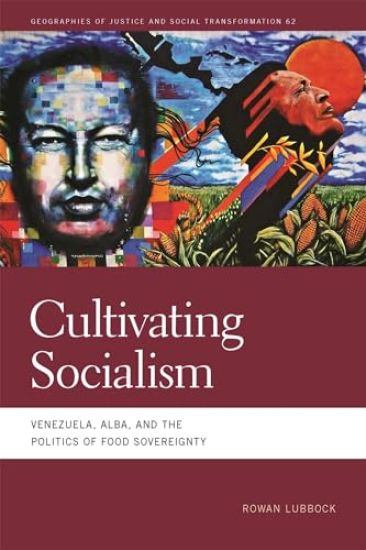
Launched in 2004, the Latin American regional institution of ALBA (Alianza Bolivariana para los Pueblos de Nuestra América: Bolivarian Alliance for the Peoples of Our America) sought to overcome the historical legacies of neocolonial domination by consecrating the values of cooperation, inclusive development, and popular power. As part of a region-wide effort among states and social movements to break out of the destructive effects of capitalist agriculture, the elevation of food sovereignty—based on the protection of rural livelihoods, land redistribution, and sustainable agricultural production (agroecology)—became a cornerstone of ALBA’s development policy. And yet, these regional aspirations barely saw the light of day, while Venezuela (the beating heart of ALBA) experienced the worst food crisis in its history. How did this come to pass? Based on extensive fieldwork in Venezuela, where the majority of ALBA’s food policies reside, Cultivating Socialism provides the first in-depth study of the ways in which peasants, workers, and states working through ALBA attempted to redress the inequities of commercial agriculture and the limits and contradictions encountered on the road to a regional food sovereignty regime. With his analysis of the politics of food sovereignty within ALBA, Rowan Lubbock offers important lessons about how we might think about emancipatory politics today and in the future.
Launched in 2004, the Latin American regional institution of ALBA (Alianza Bolivariana para los Pueblos de Nuestra América: Bolivarian Alliance for the Peoples of Our America) sought to overcome the historical legacies of neocolonial domination by consecrating the values of cooperation, inclusive development, and popular power. As part of a region-wide effort among states and social movements to break out of the destructive effects of capitalist agriculture, the elevation of food sovereignty—based on the protection of rural livelihoods, land redistribution, and sustainable agricultural production (agroecology)—became a cornerstone of ALBA’s development policy. And yet, these regional aspirations barely saw the light of day, while Venezuela (the beating heart of ALBA) experienced the worst food crisis in its history. How did this come to pass? Based on extensive fieldwork in Venezuela, where the majority of ALBA’s food policies reside, Cultivating Socialism provides the first in-depth study of the ways in which peasants, workers, and states working through ALBA attempted to redress the inequities of commercial agriculture and the limits and contradictions encountered on the road to a regional food sovereignty regime. With his analysis of the politics of food sovereignty within ALBA, Rowan Lubbock offers important lessons about how we might think about emancipatory politics today and in the future.
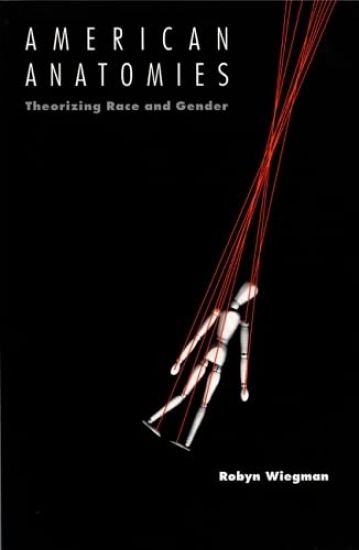
In this brilliantly combative study, Robyn Wiegman challenges contemporary clichÉs about race and gender, a formulation that is itself a clichÉ in need of questioning. As part of what she calls her "feminist disloyalty," she turns a critical, even skeptical, eye on current debates about multiculturalism and "difference" while simultaneously exposing the many ways in which white racial supremacy has been reconfigured since the institutional demise of segregation. Most of all, she examines the hypocrisy and contradictoriness of over a century of narratives that posit Anglo-Americans as heroic agents of racism’s decline. Whether assessing Uncle Tom’s Cabin, lynching, Leslie Fiedler’s racialist mapping of the American novel, the Black Power movement of the 60s, 80s buddy films, or the novels of Richard Wright and Toni Morrison, Wiegman unflinchingly confronts the paradoxes of both racism and antiracist agendas, including those advanced from a feminist perspective. American Anatomies takes the long view: What epistemological frameworks allowed the West, from the Renaissance forward, to schematize racial and gender differences and to create social hierarchies based on these differences? How have those epistemological regimes changed-and not changed-over time? Where are we now? With painstaking care, political passion, and intellectual daring, Wiegman analyzes the biological and cultural bases of racial and gender bias in order to reinvigorate the discussion of identity politics. She concludes that, for very different reasons, identity proves to be dangerous to minority and majority alike.
In this brilliantly combative study, Robyn Wiegman challenges contemporary clichÉs about race and gender, a formulation that is itself a clichÉ in need of questioning. As part of what she calls her "feminist disloyalty," she turns a critical, even skeptical, eye on current debates about multiculturalism and "difference" while simultaneously exposing the many ways in which white racial supremacy has been reconfigured since the institutional demise of segregation. Most of all, she examines the hypocrisy and contradictoriness of over a century of narratives that posit Anglo-Americans as heroic agents of racism’s decline. Whether assessing Uncle Tom’s Cabin, lynching, Leslie Fiedler’s racialist mapping of the American novel, the Black Power movement of the 60s, 80s buddy films, or the novels of Richard Wright and Toni Morrison, Wiegman unflinchingly confronts the paradoxes of both racism and antiracist agendas, including those advanced from a feminist perspective. American Anatomies takes the long view: What epistemological frameworks allowed the West, from the Renaissance forward, to schematize racial and gender differences and to create social hierarchies based on these differences? How have those epistemological regimes changed-and not changed-over time? Where are we now? With painstaking care, political passion, and intellectual daring, Wiegman analyzes the biological and cultural bases of racial and gender bias in order to reinvigorate the discussion of identity politics. She concludes that, for very different reasons, identity proves to be dangerous to minority and majority alike.
No concept has been more central to the emergence and evolution of identity studies than social justice. In historical and theoretical accounts, it crystallizes the progressive politics that have shaped the academic study of race, gender, and sexuality. Yet few scholars have deliberated directly on the political agency that notions of justice confer on critical practice. In Object Lessons, Robyn Wiegman contemplates this lack of attention, offering the first sustained inquiry into the political desire that galvanizes identity fields. In each chapter, she examines a key debate by considering the political aspirations that shape it. Addressing Women's Studies, she traces the ways that "gender" promises to overcome the exclusions of "women." Turning to Ethnic Studies, she examines the deconstruction of "whiteness" as an antiracist methodology. As she explores American Studies, she links internationalization to the broader quest for noncomplicity in contemporary criticism. Her analysis of Queer Studies demonstrates how the commitment to antinormativity normalizes the field. In the penultimate chapter, Wiegman addresses intersectionality as the most coveted theoretical approach to political resolution in all of these fields.
No concept has been more central to the emergence and evolution of identity studies than social justice. In historical and theoretical accounts, it crystallizes the progressive politics that have shaped the academic study of race, gender, and sexuality. Yet few scholars have deliberated directly on the political agency that notions of justice confer on critical practice. In Object Lessons, Robyn Wiegman contemplates this lack of attention, offering the first sustained inquiry into the political desire that galvanizes identity fields. In each chapter, she examines a key debate by considering the political aspirations that shape it. Addressing Women's Studies, she traces the ways that "gender" promises to overcome the exclusions of "women." Turning to Ethnic Studies, she examines the deconstruction of "whiteness" as an antiracist methodology. As she explores American Studies, she links internationalization to the broader quest for noncomplicity in contemporary criticism. Her analysis of Queer Studies demonstrates how the commitment to antinormativity normalizes the field. In the penultimate chapter, Wiegman addresses intersectionality as the most coveted theoretical approach to political resolution in all of these fields.
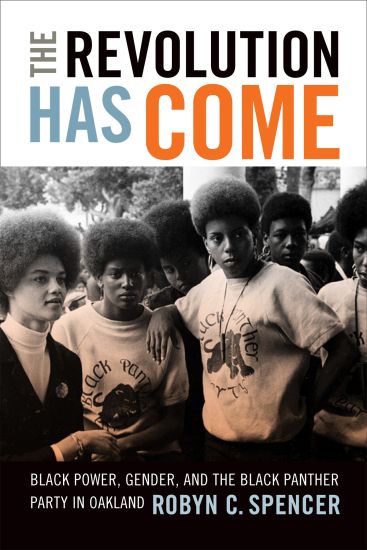
In The Revolution Has Come Robyn C. Spencer traces the Black Panther Party's organizational evolution in Oakland, California, where hundreds of young people came to political awareness and journeyed to adulthood as members. Challenging the belief that the Panthers were a projection of the leadership, Spencer draws on interviews with rank-and-file members, FBI files, and archival materials to examine the impact the organization's internal politics and COINTELPRO's political repression had on its evolution and dissolution. She shows how the Panthers' members interpreted, implemented, and influenced party ideology and programs; initiated dialogues about gender politics; highlighted ambiguities in the Panthers' armed stance; and criticized organizational priorities. Spencer also centers gender politics and the experiences of women and their contributions to the Panthers and the Black Power movement as a whole. Providing a panoramic view of the party's organization over its sixteen-year history, The Revolution Has Come shows how the Black Panthers embodied Black Power through the party's international activism, interracial alliances, commitment to address state violence, and desire to foster self-determination in Oakland's black communities.
In The Revolution Has Come Robyn C. Spencer traces the Black Panther Party's organizational evolution in Oakland, California, where hundreds of young people came to political awareness and journeyed to adulthood as members. Challenging the belief that the Panthers were a projection of the leadership, Spencer draws on interviews with rank-and-file members, FBI files, and archival materials to examine the impact the organization's internal politics and COINTELPRO's political repression had on its evolution and dissolution. She shows how the Panthers' members interpreted, implemented, and influenced party ideology and programs; initiated dialogues about gender politics; highlighted ambiguities in the Panthers' armed stance; and criticized organizational priorities. Spencer also centers gender politics and the experiences of women and their contributions to the Panthers and the Black Power movement as a whole. Providing a panoramic view of the party's organization over its sixteen-year history, The Revolution Has Come shows how the Black Panthers embodied Black Power through the party's international activism, interracial alliances, commitment to address state violence, and desire to foster self-determination in Oakland's black communities.
Rethinking God as Gift is situated at the intersection of philosophy, critical theory and theology. The first sustained study of the work of Jean-Luc Marion in English, it offers a unique perspective on contemporary questions and their theological relevance. Taking its point of departure from the problem of the gift as articulated by Jacques Derrida, who argues that the conditions of possibility of the gift are also its conditions of impossibility, Horner pursues a series of questions concerning the nature of thought, the viability of phenomenology, and, most urgently, the possibility of grace. For Marion, phenomenology, as the thought of the given, offers a path for philosophy to proceed without being implicated in metaphysics. His retrieval of several important insights of Edmund Husserl, along with his reading of Martin Heidegger and Emmanuel Lévinas, enables him to work out a phenomenology where even "impossible" phenomena such as revelation and the gift might be examined. In this important confrontation between Marion and Derrida issues vital to the negotiation of postmodern concerns in philosophy and theology emerge with vigour. The careful elucidation of those issues in an interdisciplinary context, and the snapshot it provides of the state of contemporary debate, make Rethinking God as Gift an important contribution to theological and philosophical discussion.
Rethinking God as Gift is situated at the intersection of philosophy, critical theory and theology. The first sustained study of the work of Jean-Luc Marion in English, it offers a unique perspective on contemporary questions and their theological relevance. Taking its point of departure from the problem of the gift as articulated by Jacques Derrida, who argues that the conditions of possibility of the gift are also its conditions of impossibility, Horner pursues a series of questions concerning the nature of thought, the viability of phenomenology, and, most urgently, the possibility of grace. For Marion, phenomenology, as the thought of the given, offers a path for philosophy to proceed without being implicated in metaphysics. His retrieval of several important insights of Edmund Husserl, along with his reading of Martin Heidegger and Emmanuel Lévinas, enables him to work out a phenomenology where even "impossible" phenomena such as revelation and the gift might be examined. In this important confrontation between Marion and Derrida issues vital to the negotiation of postmodern concerns in philosophy and theology emerge with vigour. The careful elucidation of those issues in an interdisciplinary context, and the snapshot it provides of the state of contemporary debate, make Rethinking God as Gift an important contribution to theological and philosophical discussion.
What is the destiny of the human soul in this life and the next? Dare we hope to “see God face to face,” or will our vision of God remain forever filtered “through a glass, darkly”? In this remarkable volume, Rowan A. Greer turns to the New Testament, the church fathers, and later writers to throw light on their own visions of the human soul. He suggests that Augustine of Hippo and Gregory of Nyssa represent two distinct strands of Christian thinking that find expression later in writers such as John Donne and Jeremy Taylor. Greer, who has trained two generations of historians and theologians in the rich thought of the early church, has succeeded in writing a volume that is both full of original scholarly insight and, by virtue of his elegant writing, accessible to laypeople and non-specialists.
Many of the controversial religious debates of our day grow out of disagreements about how to interpret scripture correctly. Is it a historical or theological text? How do we address the apparent contradictions? In Anglican Approaches to Scripture, the sequel to ATB Book of the Year Christian Hope and Christian Life, Greer shows the multi-layered Anglican tradition of what scripture is and how it is to be interpreted.
German immigrants came to America for two main reasons: to seek opportunities in the New World, and to avoid political and economic problems in Europe. In German Settlement in Missouri, Robyn Burnett and Ken Luebbering demonstrate the crucial role that the German immigrants and their descendants played in the settlement and development of Missouri's architectural, political, religious, economic, and social landscape. Relying heavily on unpublished memoirs, letters, diaries, and official records, the authors provide important new narratives and firsthand commentary from the immigrants themselves.Between 1800 and 1919, more than 7 million people came to the United States from German-speaking lands. The German immigrants established towns as they moved up the Missouri River into the frontier, resuming their traditional ways as they settled. As a result, the culture of the frontier changed dramatically. The Germans farmed differently from their American neighbors. They started vineyards and wineries, published German-language newspapers, and entered Missouri politics.The decades following the Civil War brought the golden age of German culture in the state. The populations of many small towns were entirely German, and traditions from the homeland thrived. German-language schools, publications, and church services were common. As the German businesses in St. Louis and other towns flourished, the immigrants and their descendants prospered. The loyalty of the Missouri Germans was tested in World War I, and the anti-immigrant sentiment during the war and the period of prohibition after it dealt serious blows to their culture. However, German traditions had already found their way into mainstream American life.Informative and clearly written, German Settlement in Missouri will be of interest to all readers, especially those interested in ethnic history.
Robyn Burnett and Ken Luebbering first looked at how immigration has affected Missouri's cultural landscape in their popular book German Settlement in Missouri: New Land, Old Ways. Now they tell the stories of women from all across Europe who left the Old World for Missouri. Drawing heavily on the women's own stories, Immigrant Women in the Settlement of Missouri illustrates common elements of their lives without minimizing the diversity and complexity of each individual's experience. The book begins with descriptions culled from diaries, letters, and memoirs documenting preparations for the journey, the perilous Atlantic crossing, and the sometimes equally long and arduous trip from the port of entry to Missouri. Burnett and Luebbering go on to examine how women, once in Missouri, coped with the problems of daily life in an unfamiliar and occasionally hostile environment. Whether it was the hardships of the frontier, the harsh realities of urban life, childbirth, the deaths of family members, isolation, or prejudice, their new lives brought numerous challenges. Many found success and contentment, as well, and the book also documents their joys and triumphs: physical survival, economic prosperity, thriving families, friendships, and community celebrations. Because it examines the lives of women from many social classes and ethnic backgrounds, Immigrant Women in the Settlement of Missouri does much to explain the rich cultural diversity Missouri enjoys today. The photographs and narratives relating to Czech, French, German, Hungarian, Irish, Italian, and Polish life will remind descendants of immigrants that many customs and traditions they grew up practicing have roots in their home countries and will also promote understanding of the customs of other cultures. In addition to the ethnic and class differences that affected these women's lives, the book also notes the impact of the various eras in which they lived, their education, the circumstances of their migrations, and their destinations across Missouri. With their engaging and straightforward narrative, Burnett and Luebbering take the reader chronologically through the history of the state from the colonial period to the Civil War and industrialization. Like all Missouri Heritage Readers, this one is presented in an accessible format with abundant illustrations, and it is sure to please both general readers and those engaged in immigrant and women's studies.
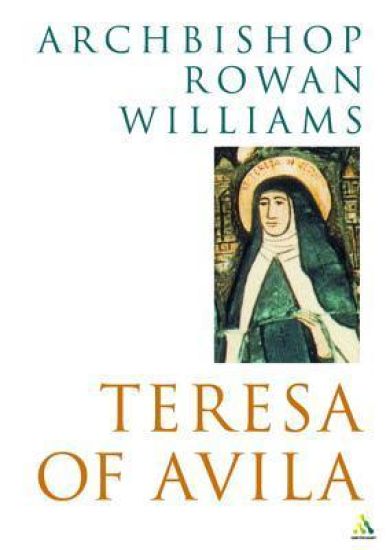
Archbishop Rowan Williams's study of Teresa of Avila exemplifies his own deep spiritual theology.Together with her contemporary and friend, St. John of the Cross, Teresa of Avila stands at the highest point of Catholic spiritual writing in the troubled age of the Reformation and Counter-Reformation. She is also one of the founding figures of modern Spanish literature. Teresa's vivid descriptions of her experiences in prayer have long made her an object of intense interest to psychologists of religion.This book makes use of recent historical research on Teresa and her society and provides a full introduction to all her major works. It shows Teresa as more than just a chronicler of paranormal states of consciousness. She emerges as a genuine theologian in her own right, with a powerful contribution to make to contemporary understanding of God.
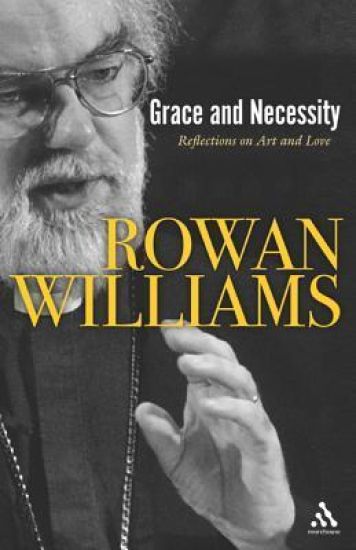
This is Rowan Williams' first major work of theology since "Lost Icons" and since his enthronement as Archbishop of Canterbury. It is a work of quite exceptional originality and profundity. This most original new book by Rowan Williams sketches out a new theological aesthetic or, put more simply, a new understanding of how human beings open themselves to transcendence. In describing an aesthetic of transcendence, Dr Williams draws on three key influences: the French Catholic philosopher, Jacques Maritain, the Welsh poet and painter, David Jones, and the American novelist and short story writer, Mary Flannery O'Connor. The influence is as broad as Dr Williams' perception is deep. Through the poetic and creative imagination of these three influences, we read of a new doctrine of God that puts gift and dispossession at the foundation of everything. The result is a book which combines innovation with clarity, and certainly breathes fresh air into a theological enterprise, which often seems turgid, or which may seem to amount at times to little more than intellectual pirouetting. In a real sense, Rowan Williams fulfils his stated ambition for Christianity to engage with contemporary culture, at least in its more imaginative aspects. That a man who holds highest office in the Church has the time and intellectual energy to write such original theology is encouraging for all of us.