Winner of the 2015 Bertrand Russell Society Book AwardBertrand Russell's Bundle Theory of Particulars presents and evaluates Russell's arguments for two competing theories on the nature of particulars at different stages in his career: the substratum theory of particulars (1903-1913) and the bundle theory of particulars (1940-1948). Through its original focus on Russell's little known metaphysics in the later part of his career, this study explains why Russell's theory of particulars is relevant today. It argues that a Russellian realist bundle theory is indeed the best explanation of similarities and differences that we observe around us thanks to the ontological economy such a theory provides and its strength and completeness as a theory of the nature of reality. Tackling the major criticisms levelled against the realist bundle theory - the problem of individuation, the problem of necessity, and the problem of analyticity - this study presents and defends a tenable Russellian bundle theory which can answer the objections. Bertrand Russell's Bundle Theory of Particulars is a novel and significant contribution to Russell scholarship.
"Certainly I have no objection to necessity and possibility when interpreted in Russell's way." -W. V. O. Quine, note to the author dated October 23, 1990, quoted in the book, page 27. SECOND EDITION: "Looks like a seminal work." -Paul C. Nascimbene. "Impressive." - Panayot Butchvarov. "It shows originality and great care." -J. Michael Dunn. PUBLISHED REVIEW OF THE SECOND EDITION: "In the scope of more than six hundred pages, Dejnozka brought to light many aspects of Russell's philosophy which, implicitly or explicitly, record Russell's interest in modal matters. Dejnozka's strategy is quite straightforward: to gather together relevant quotations including modal notions and, consequently, interpret them in a systematic and 'Russell friendly' way. S]uch a comprehensive overview is unique and of interest to] a wider group of philosophers.... Bertrand Russell on Modality and Logical Relevance is literally a full-length study of Russell's views on modality. It does both, highlight the 'modality bearing' passages in which Russell implicitly or explicitly comments on the problems of modality, and interprets them in a spirit of the overall unity, systematicity and Russell's ingenuity. I]t is always a hard and risky enterprise to find... important, although to...date ignored, features in the life works of the most influential philosophers of the] 20th century. But Dejnozka's book does present one such enterprise and as such is a stimulative and worthy contribution to (the history) of philosophy." Martin Vacek, Organon F. PUBLISHED REVIEW OF THE FIRST EDITION: "Dejnozka's book is the first full-length study of modality in Russell. It is useful for its very full survey of passages in which Russell makes use of or alludes to modal notions. Dejnozka's command of Russell's huge output is indeed impressive and his utilization of it thorough...." - Nicholas Griffin, Studia Logica. PUBLISHED REVIEW OF THE FIRST EDITION: "Dejnozka's book raises a very important point in the history of formal logic. Until now the major studies on this topic have drawn heavily on the development of classical logic as standardized by Gottlob Frege and Bertrand Russell. Dejnozka challenges the reader to open his mind for a new interpretation of Russell's work, in particular that modal and relevance notions have a greater place in his philosophy of logic than has been stressed before.... Dejnozka rightly observes that many of Russell's insights on modality are a result of his discussions with Hugh MacColl, who was indeed the first to seriously attempt to develop formal modal logic. This particularly applies to Russell's conception of a modal logic without modal operators.... That is, classical logic can be used to simulate modal expressions. Thus, the notions of (logical) necessity and possibility are not 'fundamental notions'.... On this basis, Dejnozka develops a higher level of modality, where the quantification scope extends to the predicates yielding what Russell calls 'fully general propositions'.... The best studied translation method is known as the standard translation, and it is quite compatible with Dejnozka's suggestions.... Dejnozka's book is full of material which stimulates one] to rethink Russell's philosophy of logic and...it is greatly to the author's credit that he brings to light such a wealth of crucial issues in the history and philosophy of logic." - Shahid Rahman, History and Philosophy of Logic.
A leaking loose nuke is coming to an American city near you -A truck pulling a load of rebars drives past Los Alamos and sets off every radiation alarm on the site. -An irradiated cargo ship and its cargo must be buried at sea. -An Imam reports that someone stole a bomb, sent by an Iranian general to a possible terrorist cell in his mosque. The ever alert Imam was planning to turn the bomb over to the FBI on its arrival in Los Angeles but it was stolen before he could get his hands on it. - In a secret organization, Truckers for a Safe America, vets are organizing. But, are they organizing to save America, take back America or pay back the administration that sent them to war in unarmored Humvees and housed them beside irradiated tanks destroying their health and lives forever? -Is the bulls eye drawn over Washington DC on a giant map in a militia leader's home a warning or disinformation? -Are the men who were sent home poisoned, blown apart and desperately sick, seeking revenge? -Does anyone know where the bomb is headed? -The FBI Special Agent Rinda Bolton must follow a trail of radiation, sick and dying vets to find the bomb and save millions of innocent Americans from being blown apart in a destination city of one man's choosing.
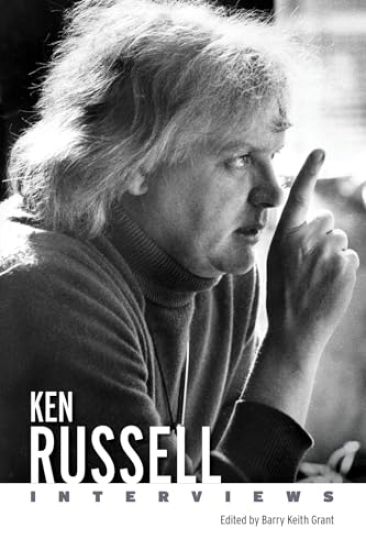
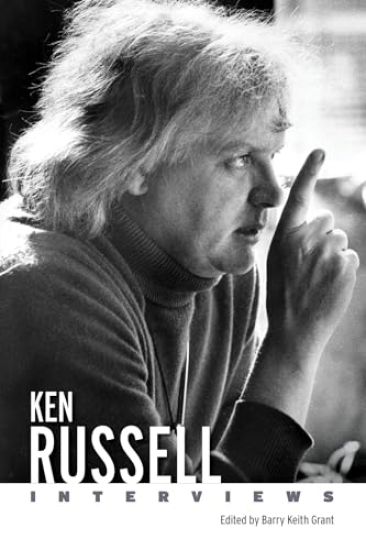
In the 1970s, British filmmaker Ken Russell (1927–2011) quickly gained a reputation as the enfant terrible of British cinema. His work, like the man himself, was regarded as flamboyant, excessive, and unrestrained. Inheriting and yet subverting the venerable mantle of British documentary, Russell did not fit comfortably in the context of a national cinema dominated by sober realism. His distinct style combined realism with fictional devices, often in audacious ways, to create the biographical ""docudrama."" In Ken Russell: Interviews, the filmmaker discusses his colorful life and career, from his youth fascinated by movies to his early work in television through his feature films and his retreat to home movies.Russell first drew notice in the early 1960s for a series of unorthodox biographical films about artists and composers. In these early television films, Russell was already exhibiting an unconventional approach to biography that combined historical fact, aesthetic interpretation, and outlandish personal vision. After the critical and commercial success of his adaptation of D. H. Lawrence’s Women in Love, Russell continued to explore the related themes of art, sexuality, and music in The Music Lovers, The Boy Friend, Mahler, Tommy, and Lisztomania. His career foundered after Valentino, however, and he found it increasingly difficult to get funding. Toward the end of his career, Russell was restricted to making movies with his own equipment, using family and friends as actors, with virtually no budget.Throughout the ups and downs of his career, Russell alternately embraced and resented his characterization as an enfant terrible. While Russell’s comments are often meant to provoke and shock, he is articulate when discussing his films, his approach to cinema, music and composers, and, of course, his critics.
In the 1970s, British filmmaker Ken Russell (1927–2011) quickly gained a reputation as the enfant terrible of British cinema. His work, like the man himself, was regarded as flamboyant, excessive, and unrestrained. Inheriting and yet subverting the venerable mantle of British documentary, Russell did not fit comfortably in the context of a national cinema dominated by sober realism. His distinct style combined realism with fictional devices, often in audacious ways, to create the biographical ""docudrama."" In Ken Russell: Interviews, the filmmaker discusses his colorful life and career, from his youth fascinated by movies to his early work in television through his feature films and his retreat to home movies.Russell first drew notice in the early 1960s for a series of unorthodox biographical films about artists and composers. In these early television films, Russell was already exhibiting an unconventional approach to biography that combined historical fact, aesthetic interpretation, and outlandish personal vision. After the critical and commercial success of his adaptation of D. H. Lawrence’s Women in Love, Russell continued to explore the related themes of art, sexuality, and music in The Music Lovers, The Boy Friend, Mahler, Tommy, and Lisztomania. His career foundered after Valentino, however, and he found it increasingly difficult to get funding. Toward the end of his career, Russell was restricted to making movies with his own equipment, using family and friends as actors, with virtually no budget.Throughout the ups and downs of his career, Russell alternately embraced and resented his characterization as an enfant terrible. While Russell’s comments are often meant to provoke and shock, he is articulate when discussing his films, his approach to cinema, music and composers, and, of course, his critics.
Jack Russell Training Book; Listen, From the Car Ride Home: - Training Your Jack Russell Terrier Begins. -Updated Constantly ] Why? Because "we figure, you may want us to be on top of our game, when you train"Jack Russell Terrier training system: Fastest Way to No More Jack Russell Terrier Poop For both new and seasoned Jack Russell Terrier owners, whether a puppy, or adult Jack Russell Terrier. Just open it up and read simple, clear, step by step Jack Russell Terrier dog training techniques and start training your puppy in hour one. NOW ]Jack Russell Terrier Breed Expert Step- by-Step Guide for rapid learning and retaining This is EXACTLY How to train your Jack Russell Terrier puppy, and adult dog too, while using specifically designed dog training methods, made to be simple, fun, fast and effective to train and adopt for both you and your Jack Russell Terrier. Jack Russell Terrier training specifically geared towards your breed, I created the Rapid Command Adoption training system. I am sincere and caring when considering the importance of delivering a best of breed specific puppy and dog training system. I am serious about the information you need, the steps you will take, and the results you both deserve when you act today for a long term, healthy and happy life together. So serious in fact, I managed to pepper in a wee bit of humor along the way. There is design and reasoning behind my terrible one-liners too. You see, a major secret to your Jack Russell Terrier puppy training success includes and certainly depends on your happiness, attention, attitude, approach, and type of command delivery you use. It's an easy philosophy too; the more you have fun, the better responses you will get, and the better experience your dog will have too. You can secure your outcome simply by choosing right now to put my cutting edge Breed Specific Jack Russell Terrier Training System to work with your dog now, and immediately start seeing positive dog obedience results from using my Rapid Command Adoption training system.Jack Russell Terrier puppies and adult dogs can enjoy rapid dog-training results. My purpose is to offer you and your new puppy or dog, the best possible results-getting-dog-training-system. Most of all I am serious about your results, and you might have some fun during the process of training your Jack Russell Terrier using my system. It's all laid out for you right now in an exacting, yet simple, fun, short, fast, and highly effective dog training guide for Jack Russell Terriers.Title says it all. Think Like a Dog, but don't eat your poop - How to Train Your Jack Russell Terrier Go ahead and download it, I guarantee my training materials. Who knows right? You may just have a laugh while teaching your dog rapid command adoption. Enjoy Thanks for reading, my family is grateful, and we sincerely appreciate your business, Paul Allen Pearce Author, Trainer, Dog Lover of the Jack Russell Terrier P.S. - Remember to always "Think Like a Dog But Don't Eat Your Poop " - While Training Your Jack Russell Terrier Jack Russell Terrier, Jack Russell Terrier, Training, Jack Russell Terrier, Dog Training, Jack Russell Terrier, Jack Russell Terrier for Dummies, Jack Russell Terrier guide Dogs, Jack Russell Terrier Guide, Jack Russell Terrier Savvy, Training a Jack Russell Terrier, Jack Russell Terrier, Jack Russell Terrier training, potty training tips for Jack Russell Terrier puppy training, Jack Russell Terrier information, to train my Jack Russell Terrier training guide eBook, crate train my Jack Russell Terrier Breed, train my Jack Russell Terrier, Jack Russell Terriers
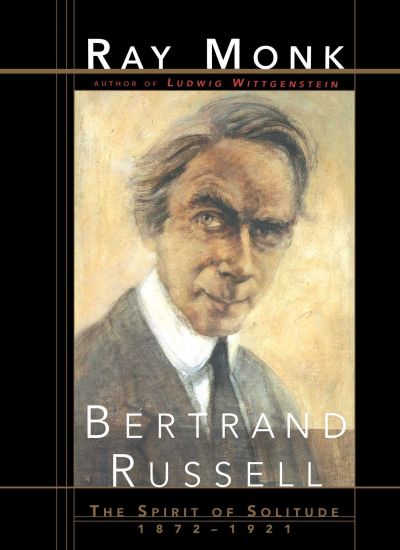
From the author of Ludwig Wittegenstein: The Duty of Genius comes a compelling biography of Bertrand Russell, the acclaimed philosopher of the twentieth century and the ingenious author of Principia Mathematica. Over the course of his life, Bertrand Russell grew from a major philosopher into a political activist and popular writer whose name was known around the world. A man who believed in a modern, rational approach to life and was able to guide popular opinion throughout the twentieth century, ended up living a life of tragedy in which he lost everything. Now, based on thousands of documents from the Russell archives in Canada, Ray Monk takes readers through the lifetime of this iconic figure, from the turbulence of his public activities to his often outrageous and sometimes paradoxical pronouncements. Bertrand Russell: The Spirit of Solitude takes readers into the mind of a crazed philosopher, featuring analysis of his public figure that enabled Monk to reveal the inner drama of Russell's personal life that led to his tragic ending.