Kirjojen hintavertailu. Mukana 11 342 296 kirjaa ja 12 kauppaa.

Kirjahaku

Etsi kirjoja tekijän nimen, kirjan nimen tai ISBN:n perusteella.

1000 tulosta hakusanalla Sebastian Hope

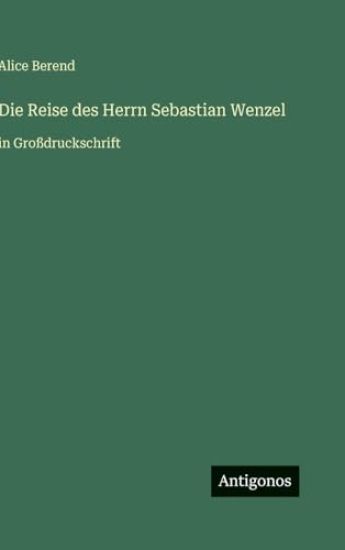
Die Reise des Herrn Sebastian Wenzel

Die Reise des Herrn Sebastian Wenzel

Alice Berend; Alice Berend

Antigonos Verlag
2025
pokkari
Reproduktion des Originals. Der Verlag Antigonos spezialisiert sich auf die Herausgabe von Nachdrucken historischer B cher. Wir achten darauf, dass diese Werke der ffentlichkeit in einem guten Zustand zug nglich gemacht werden, um ihr kulturelles Erbe zu bewahren.
Die Reise des Herrn Sebastian Wenzel

Die Reise des Herrn Sebastian Wenzel

Alice Berend

Antigonos Verlag
2025
sidottu
Reproduktion des Originals. Der Verlag Antigonos spezialisiert sich auf die Herausgabe von Nachdrucken historischer B cher. Wir achten darauf, dass diese Werke der ffentlichkeit in einem guten Zustand zug nglich gemacht werden, um ihr kulturelles Erbe zu bewahren.
Die Reise des Herrn Sebastian Wenzel

Die Reise des Herrn Sebastian Wenzel

Alice Berend; Alice Berend

Antigonos Verlag
2025
sidottu
Reproduktion des Originals. Der Verlag Antigonos spezialisiert sich auf die Herausgabe von Nachdrucken historischer B cher. Wir achten darauf, dass diese Werke der ffentlichkeit in einem guten Zustand zug nglich gemacht werden, um ihr kulturelles Erbe zu bewahren.
Das Orgelbuchlein Von Johann Sebastian Bach: Strukturen Und Innere Ordnung
Bachs 'Orgelbuchlein' (O=B) galt bislang als musikalischer Torso. Lediglich 46 von den insgesamt 164 im Autograph eingetragenen Choraltiteln wurden auch komponiert. Felix Pachlatko liefert anhand neu entdeckter arithmetischer Strukturen im Werk den Nachweis, dass das O=B nicht nur als in seiner vorliegenden Form geplant, sondern auch als vollendet betrachtet werden muss. Dabei ist die Art und Weise, wie Bach das O=B strukturierte, nicht neuartig. Die Grundlagen dieser Verbindung von Musik und Mathematik liegen im pythagoreischen Denken begrundet. Beispiele hierzu lassen sich in der Musik von der Mitte des 14. Jahrhunderts bis hin zu Bachs unmittelbaren Vorgangern finden. Neben ganzzahligen Verhaltnissen und Goldenen Schnitten werden im O=B erstmals auch Magische Quadrate und ein Magischer Kubus nachgewiesen. Das anspruchsvollste Konstrukt durfte jedoch ein ausserst genauer Goldener Schnitt sein, der die gesamte komponierte Anlage betrifft und der mit der Mitte der Cantica pro tempore zusammenfallt.
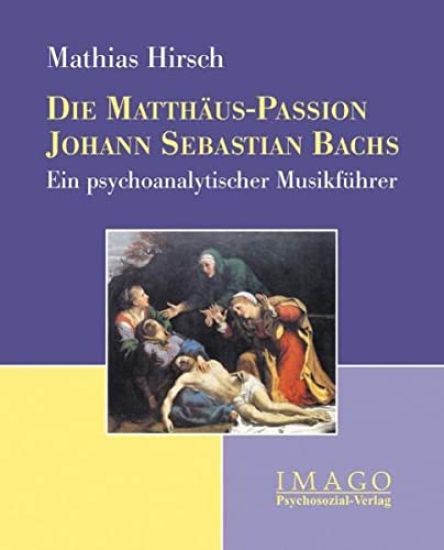
Die Matthäus-Passion Johann Sebastian Bachs

Die Matthäus-Passion Johann Sebastian Bachs

Mathias Hirsch

Psychosozial Verlag GbR
2008
nidottu
Bachs Musik verbindet in unnachahmlicher Weise den Text mit Affekten des Dramas, die im Hörer hervorgerufen werden. Die Passionsgeschichte nach Matthäus zeigt das Leiden Jesu Christi. Aus psychoanalytischer Sicht ist sie ein Beziehungsdrama, in dem Liebe, Verrat und Verlassenwerden Schuld erzeugen und dank der (nicht zuletzt musikalischen) Verarbeitung durch Reue schließlich Versöhnung entsteht. Die dramatische Handlung und ihre musikalische Überhöhung laden zu vielfältigen Identifikationen ein: zur Abwehr des tragischen Geschehens, zur Identifikation mit Jesus als Leidenden, vom Vater Verlassenen, zur Identifikation mit den am Tod Jesu Schuldigen und zur Identifikation mit einer Rollenumkehrung. So fühlt sich der Hörer als Kind zur Rettung der leidenden Mutterfigur verpflichtet. Die Matthäuspassion ist musikalische Trauerarbeit, konfrontiert mit dem eigenen Tod und erreicht mit musikalischen Mitteln die Versöhnung mit der Begrenztheit der Conditio Humana.
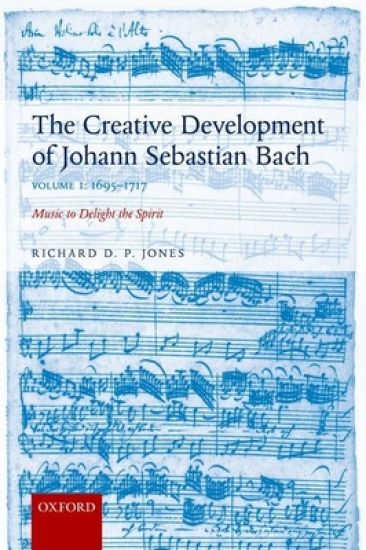
The Creative Development of Johann Sebastian Bach, Volume I: 1695-1717
This book gives an account of the individual works of one of the greatest composers. The first volume of a two-volume study of the music of J. S. Bach covers the earlier part of his composing career, 1695-1717. By studying the music chronologically a coherent picture of the composer's creative development emerges, drawing together all the strands of the individual repertoires (e.g. the cantatas, the organ music, the keyboard music). The volume is divided into twoparts, covering the early works and the mature Weimar compositions respectively. Each part deals with four categories of composition in turn: large-scale keyboard works; preludes, fantasias, and fugues; organ chorales; and cantatas. Within each category, the discussion is prefaced by a list of theworks to be considered, together with details of their original titles, catalogue numbers, and earliest sources. The study is thus usable as a handbook on Bach's works as well as a connected study of his creative development.As indicated by the subtitle Music to Delight the Spirit,, borrowed from Bach's own title-pages, Richard Jones draws attention to another important aspect of the book: not only is it a study of style and technique but a work of criticism, an analytical evaluation of Bach's music and an appreciation of its extraordinary qualities. It also takes account of the remarkable advances in Bach scholarship that have been made over the last 50 years, including the many studies that have appearedrelating to various aspects of Bach's early music, such as the varied influences to which he was subjected and the problematic issues of dating and authenticity that arise. In doing so, it attempts to build up a coherent picture of his development as a creative artist, helping us to understand whatdistinguishes Bach's mature music from his early works and from the music of his predecessors and contemporaries. Hence we learn why it is that his later works are instantly recognizable as 'Bachian'.
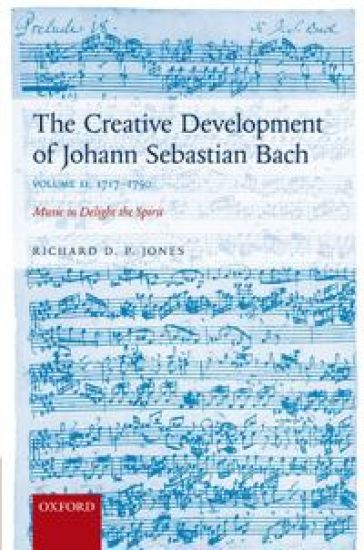
The Creative Development of Johann Sebastian Bach, Volume II: 1717-1750
This is the second of a two-volume study of the music of Johann Sebastian Bach. Taking into account the vast increase in our knowledge of the composer due to the Bach scholarship of the last sixty years, Richard Jones presents a vivid and in some respects radically new picture of his creative development during the Coethen (1717-23) and Leipzig years (1723-50). The approach is, as far as possible, chronological and analytical, but the author has also tried tomake the book readable so that it may be accessible to music lovers and amateur performers as well as to students, scholars, and professional musicians. There are many good biographies of Bach, but this is the first, fully-comprehensive, in-depth study of his music making it indispensable for those who wantto study specific pieces or learn how he developed as a composer.
The Creative Development of Johann Sebastian Bach, Volume II: 1717-1750
This is the second of a two-volume study of the music of Johann Sebastian Bach. Taking into account the vast increase in our knowledge of the composer due to the Bach scholarship of the last sixty years, Richard Jones presents a vivid and in some respects radically new picture of his creative development during the Cöthen (1717-23) and Leipzig years (1723-50). The approach is, as far as possible, chronological and analytical, but the author has also tried to make the book readable so that it may be accessible to music lovers and amateur performers as well as to students, scholars, and professional musicians. There are many good biographies of Bach, but this is the first, fully-comprehensive, in-depth study of his music making it indispensable for those who want to study specific pieces or learn how he developed as a composer.
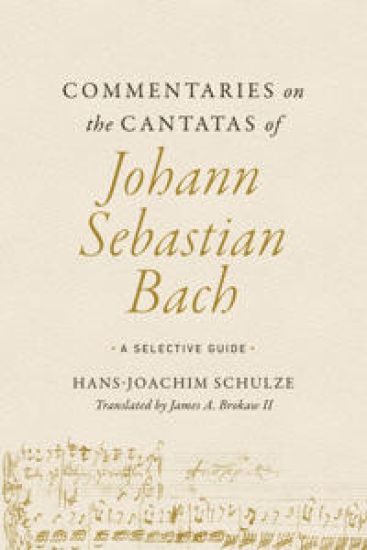
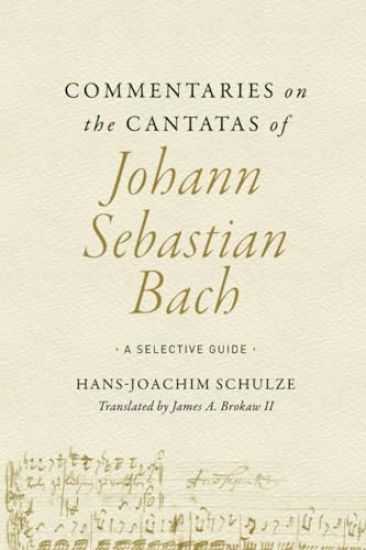
Commentaries on the Cantatas of Johann Sebastian Bach

Commentaries on the Cantatas of Johann Sebastian Bach

Hans-Joachim Schulze

UNIVERSITY OF ILLINOIS PRESS
2024
sidottu
Internationally recognized Bach authority Hans-Joachim Schulze authored a 225-part series on the cantatas of Johann Sebastian Bach. In this collection, James A. Brokaw II translates a selection of the essays, illuminating a wide range of biographical and cultural features of Bach’s life and creative milieu. Schulze’s lively and engaging discussions provide a wealth of rewarding insights and perspectives focusing on individual cantatas, their texts, and the questions of chronology and context that attend them. The University of Illinois Press has paired the volume with a special web-based companion overseen by the translator and hosted by the Illinois Open Publishing Network. This online resource includes Brokaw’s translations of all 225 of Schulze’s essays alongside digital tools for searching, sorting, and bundling the commentaries according to date of composition, position within the liturgical church year sequence, and librettist.
Commentaries on the Cantatas of Johann Sebastian Bach

Commentaries on the Cantatas of Johann Sebastian Bach

Hans-Joachim Schulze

UNIVERSITY OF ILLINOIS PRESS
2024
nidottu
Internationally recognized Bach authority Hans-Joachim Schulze authored a 225-part series on the cantatas of Johann Sebastian Bach. In this collection, James A. Brokaw II translates a selection of the essays, illuminating a wide range of biographical and cultural features of Bach’s life and creative milieu. Schulze’s lively and engaging discussions provide a wealth of rewarding insights and perspectives focusing on individual cantatas, their texts, and the questions of chronology and context that attend them. The University of Illinois Press has paired the volume with a special web-based companion overseen by the translator and hosted by the Illinois Open Publishing Network. This online resource includes Brokaw’s translations of all 225 of Schulze’s essays alongside digital tools for searching, sorting, and bundling the commentaries according to date of composition, position within the liturgical church year sequence, and librettist.