Kirjojen hintavertailu. Mukana 12 016 292 kirjaa ja 12 kauppaa.

Kirjahaku

Etsi kirjoja tekijän nimen, kirjan nimen tai ISBN:n perusteella.

1000 tulosta hakusanalla Seth A. Perry

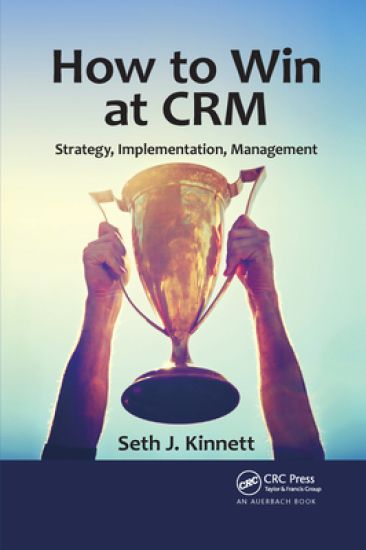
How to Win at CRM

How to Win at CRM

Seth Kinnett

CRC Press
2020
nidottu
This book provides clarity and guidance on effective strategy, implementation and management of CRM. It explores both the conceptual and cultural context of CRM initiatives along with the particulars of CRM system implementation and management. In order to provide this clarity, it surveyed the existing academic publications surrounding CRM, sales force automation, and related topics within information systems literature. The book supplements this research with insights from CRM experts to provide a robust picture of the CRM landscape and how to improve it no matter what role you play within your organization. This book is for everyone who wants to achieve CRM success.
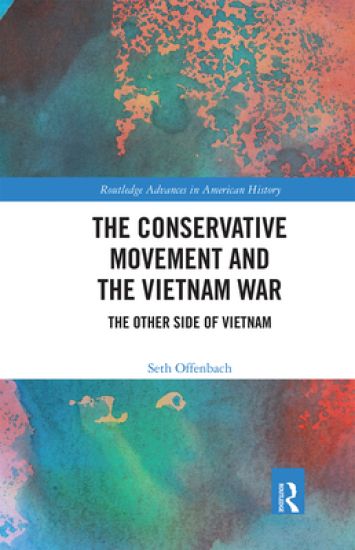
The Conservative Movement and the Vietnam War
The Vietnam War was the central political issue of the 1960s and 1970s. This study by Seth Offenbach explains how the conflict shaped modern conservatism. The war caused disputes between the pro-war anti-communists right and libertarian conservatives who opposed the war. At the same time, Christian evangelicals supported the war and began forming alliances with the mainstream, pro-war right. This enabled the formation of the New Right movement which came to dominate U.S. politics at the end of the twentieth century. The Conservative Movement and the Vietnam War explains the right’s changes between Barry Goldwater and Ronald Reagan.
Your Life Isn't for You

Your Life Isn't for You

Seth Adam Smith

Readhowyouwant
2014
pokkari
In this book, Seth Adam Smith expands on the philosophy behind his extraordinarily popular blog post ''Marriage Isn't for You'' - which received over 30 million hits and has been translated into over twenty languages - and shares how living for others can enrich every aspect of your life, just as it has his. With a mix of humor, candor, and ...
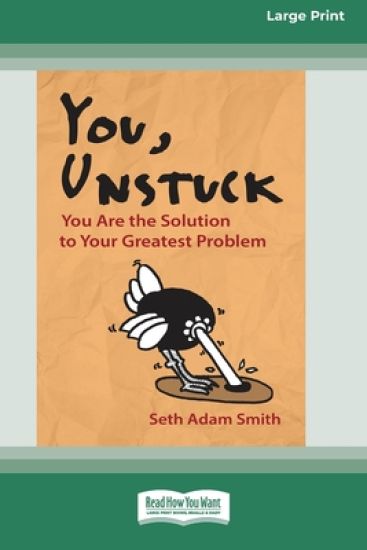
You, Unstuck

You, Unstuck

Seth Adam Smith

Readhowyouwant
2015
pokkari
What's holding you back? Seth Allen Smith says look in the mirror. It's who, not what. All of us feel trapped, stuck, or unable to move forward in life at some point. But ultimately, the greatest obstacle to achieving your full potential is you. But the good news is you can find the solution in the mirror too. This book combats a destructive mindset that we all sometimes fall into: I can't change. I am the victim of my circumstances and confined by my personal limitations. This philosophy, intangible though it is, destroys more dreams and limits more lives than any actual, physical obstacle. It is a philosophy of stagnation and damnation. Drawing on literature, history, and his personal experiences with chronic depression, as well as on encounters with remarkable ''ordinary'' people who've beaten the odds, Smith inspires us to see that no matter how dire our circumstances there is always some positive step you can take, however small it might be. He doesn't sugarcoat the difficulties or offer promises of overnight success. But he does promise that if you continue to see yourself as a victim you'll remain frozen and fearful. Nobody wants that. We may not be able to control what happens to us, but we can always control how we react. We all have the power to lift ourselves out of the abyss and into the light.
Mutual Funds

Mutual Funds

Seth Anderson; Parvez Ahmed

Springer-Verlag New York Inc.
2005
sidottu
Mutual funds are the dominant form of investment companies in the United States today, with approximately $7 trillion in assets under management. Over the past half century an important body of academic research has addressed various issues about the nature of these companies. These works focus on a wide range of topics, including fund performance, investment style, and expense issues, among others. MUTUAL FUNDS: Fifty Years of Research Findings is designed for the academic researcher interested in the various issues surrounding mutual funds and for the practitioner interested in funds for investment purposes. The authors briefly trace the historical evolution of funds, present important aspects of the Investment Company Act of 1940, and then summarize a substantial portion of the academic literature which has been written over the past five decades. "This book presents an outstanding wealth of information on mutual funds in a remarkably readable format. It is probably the most comprehensive work currently available on funds. The book sheds light on the numerous issues surrounding mutual fund performance and pricing and is an important resource for any serious investor." Kathleen A. Wayner, Bowling Portfolio Management, President and CEO
Investment Management and Mismanagement

Investment Management and Mismanagement

Seth Anderson

Springer-Verlag New York Inc.
2006
sidottu
Investment Management and Mismanagement: History, Findings, and Analysis will present the reader with: (1) a brief overview of portfolio management and its historical evolution , (2) the findings of a substantial amount of academic research into the performance of portfolio managers, (3) the various issues associated with both institutional and individual portfolio mismanagement, and (4) a treatment of the areas of suitability and churning The articles referenced are primarily works from academic journals, including: The Journal of Finance, Journal of Financial Economics, and others, as well as from practitioner-oriented venues, such as Financial Analyst Journal and various law journals. This work should be of value to academic researchers as a convenient source of summarized studies in these areas, while practitioners will find value its content as an efficient reference for determining the benefits of asset management as well as potential pitfalls.
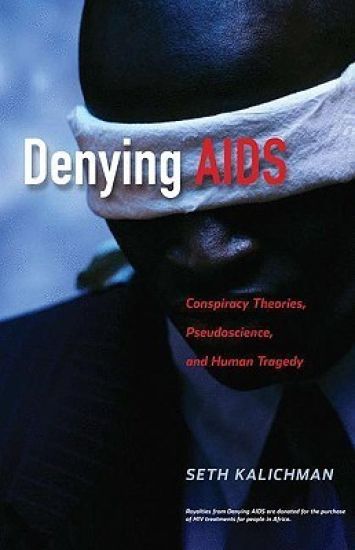
Denying AIDS

Denying AIDS

Seth C. Kalichman; Nicoli Nattrass

Springer-Verlag New York Inc.
2009
sidottu
Paralleling the discovery of HIV and the rise of the AIDS pandemic, a flock of naysayers has dedicated itself to replacing genuine knowledge with destructive misinformation—and spreading from the fringe to the mainstream media and the think tank. Now from the editor of the journal AIDS and Behavior comes a bold exposé of the scientific and sociopolitical forces involved in this toxic evasion. Denying AIDS traces the origins of AIDS dissidents disclaimers during the earliest days of the epidemic and delves into the psychology and politics of the current denial movement in its various incarnations. Seth Kalichman focuses not on the “difficult” or doubting patient, but on organized, widespread forms of denial (including the idea that HIV itself is a myth and HIV treatments are poison) and the junk science, faulty logic, conspiracy theories, and larger forces of homophobia and racism that fuel them. The malignant results of AIDS denial can be seen in those individuals who refuse to be tested, ignore their diagnoses, or reject the treatments that could save their lives. Instead of ignoring these currents, asserts Kalichman, science has a duty to counter them. Among the topics covered: Why AIDS denialism endures, and why science must understand it. Pioneer virus HIV researcher Peter Duesberg’s role in AIDS denialism. Flawed immunological, virological, and pharmacological pseudoscience studies that are central to texts of denialism. The social conservative agenda and the politics of AIDS denial, from the courts to the White House. The impact of HIV misinformation on public health in South Africa. Fighting fiction with reality: anti-denialism and the scientific community. For anyone affected by, interested in, or working with researchers in HIV/AIDS, and public health professionals in general, the insight and vision of Denying AIDS will inspire outrage, discussion, and ultimately action. See http://denyingaids.blogspot.com/ for more information.
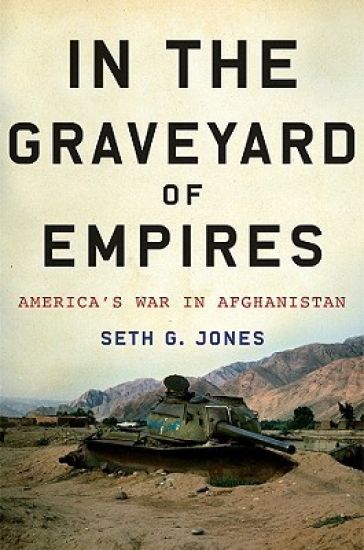
In the Graveyard of Empires

In the Graveyard of Empires

Seth G. Jones

WW Norton Co
2009
sidottu
After the swift defeat of the Taliban in 2001, American optimism has steadily evaporated in the face of mounting violence; a new “war of a thousand cuts” has now brought the country to its knees. In the Graveyard of Empires is a political history of Afghanistan in the “Age of Terror” from 2001 to 2009, exploring the fundamental tragedy of America’s longest war since Vietnam. After a brief survey of the great empires in Afghanistan—the campaigns of Alexander the Great, the British in the era of Kipling, and the late Soviet Union—Seth G. Jones examines the central question of our own war: how did an insurgency develop? Following the September 11 attacks, the United States successfully overthrew the Taliban regime. It established security throughout the country—killing, capturing, or scattering most of al Qa’ida’s senior operatives—and Afghanistan finally began to emerge from more than two decades of struggle and conflict. But Jones argues that as early as 2001 planning for the Iraq War siphoned off resources and talented personnel, undermining the gains that had been made. After eight years, he says, the United States has managed to push al Qa’ida’s headquarters about one hundred miles across the border into Pakistan, the distance from New York to Philadelphia. While observing the tense and often adversarial relationship between NATO allies in the Coalition, Jones—who has distinguished himself at RAND and was recently named by Esquire as one of the “Best and Brightest” young policy experts—introduces us to key figures on both sides of the war. Harnessing important new research and integrating thousands of declassified government documents, Jones then analyzes the insurgency from a historical and structural point of view, showing how a rising drug trade, poor security forces, and pervasive corruption undermined the Karzai government, while Americans abandoned a successful strategy, failed to provide the necessary support, and allowed a growing sanctuary for insurgents in Pakistan to catalyze the Taliban resurgence. Examining what has worked thus far—and what has not—this serious and important book underscores the challenges we face in stabilizing the country and explains where we went wrong and what we must do if the United States is to avoid the disastrous fate that has befallen many of the great world powers to enter the region.
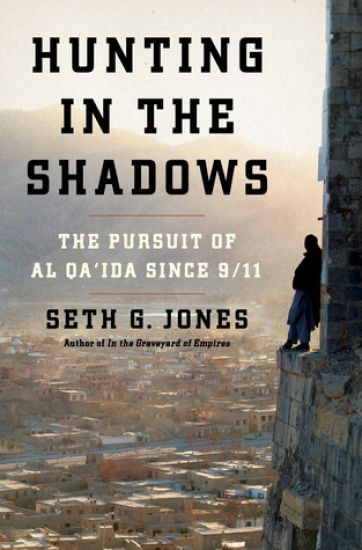
Hunting in the Shadows

Hunting in the Shadows

Seth G. Jones

WW Norton Co
2012
sidottu
This comprehensive, landmark history chronicles our ongoing battle against al-Qa’ida, the greatest threat the West has faced in the modern era. An internationally recognized authority on terrorism and counterinsurgency, Seth G. Jones presents a dramatic narrative of the on-the-ground police work; the elaborate, multiyear investigations led by the CIA, FBI, and Britain’s MI5; and the shifting and deadly alliances between terrorist groups that have characterized the conflict. With gripping detail he recounts the against-the-clock hunt for the Times Square bomber and reveals startling information about Osama bin Laden’s behavior during his final days. Drawing on recently declassified documents and court materials, transcripts of wiretapped conversations, and interviews with current and former government officials from the United States and key allies, Jones navigates the “waves” (al Qa’ida attacks) and “reverse waves” (successful efforts to disrupt al’Qa’ida), explaining how we might analyze past patterns in order to successfully counter al Qa’ida and its allies in the future.
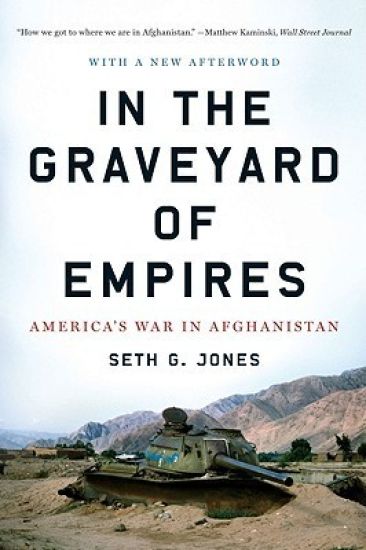
In the Graveyard of Empires

In the Graveyard of Empires

Seth G. Jones

WW Norton Co
2010
nidottu
After the swift defeat of the Taliban in 2001, American optimism has steadily evaporated in the face of mounting violence; a new “war of a thousand cuts” has now brought the country to its knees. In the Graveyard of Empires is a political history of Afghanistan in the “Age of Terror” from 2001 to 2009, exploring the fundamental tragedy of America’s longest war since Vietnam. After a brief survey of the great empires in Afghanistan—the campaigns of Alexander the Great, the British in the era of Kipling, and the late Soviet Union—Seth G. Jones examines the central question of our own war: how did an insurgency develop? Following the September 11 attacks, the United States successfully overthrew the Taliban regime. It established security throughout the country—killing, capturing, or scattering most of al Qa’ida’s senior operatives—and Afghanistan finally began to emerge from more than two decades of struggle and conflict. But Jones argues that as early as 2001 planning for the Iraq War siphoned off resources and talented personnel, undermining the gains that had been made. After eight years, he says, the United States has managed to push al Qa’ida’s headquarters about one hundred miles across the border into Pakistan, the distance from New York to Philadelphia. While observing the tense and often adversarial relationship between NATO allies in the Coalition, Jones—who has distinguished himself at RAND and was recently named by Esquire as one of the “Best and Brightest” young policy experts—introduces us to key figures on both sides of the war. Harnessing important new research and integrating thousands of declassified government documents, Jones then analyzes the insurgency from a historical and structural point of view, showing how a rising drug trade, poor security forces, and pervasive corruption undermined the Karzai government, while Americans abandoned a successful strategy, failed to provide the necessary support, and allowed a growing sanctuary for insurgents in Pakistan to catalyze the Taliban resurgence. Examining what has worked thus far—and what has not—this serious and important book underscores the challenges we face in stabilizing the country and explains where we went wrong and what we must do if the United States is to avoid the disastrous fate that has befallen many of the great world powers to enter the region.
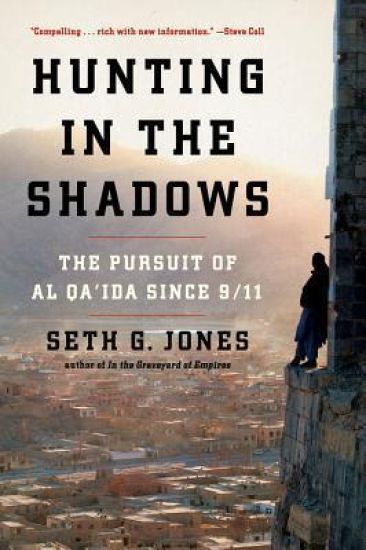
Hunting in the Shadows

Hunting in the Shadows

Seth G. Jones

WW Norton Co
2013
nidottu
This landmark history chronicles the dramatic, decade-long war against al Qa’ida and provides a model for understanding the ebb and flow of terrorist activity. Tracing intricately orchestrated terrorist plots and the elaborate, multiyear investigations to disrupt them, Seth G. Jones identifies three distinct “waves” of al Qa’ida violence. As Jonathan Mahler wrote in the New York Times Book Review, “studying these waves and the counterwaves that repelled them can tell us a lot about what works and what doesn’t when it comes to fighting terrorism.” The result is a sweeping, insider’s account of what the war has been and what it might become.
Revisiting Institutionalism in Sociology
There may not be a concept so central to sociology, yet so vaguely defined in its contemporary usages, than institution. In Revisiting Institutionalism in Sociology, Abrutyn takes an in-depth look at what institutions are by returning to some of the insights of classical theorists like Max Weber and Herbert Spencer, the functionalisms of Talcott Parsons and S.N. Eisenstadt, and the more recent evolutionary institutionalisms of Gerhard Lenski and Jonathan Turner. Returning to the idea that various levels of social reality shape societies, Abrutyn argues that institutions are macro-level structural and cultural spheres of action, exchange, and communication. They have emergent properties and dynamics that are not reducible to other levels of social reality. Rather than fall back on old functionalist solutions, Abrutyn offers an original and synthetic theory of institutions like religion or economy; the process by which they become autonomous, or distinct cultural spaces that shape the color and texture of action, exchange, and communication embedded within them; and how they gain or lose autonomy by theorizing about institutional entrepreneurship. Finally, Abrutyn lays bare the inner workings of institutions, including their ecology, the way structure and culture shape lower-levels of social reality, and how they develop unique patterns of stratification and inequality founded on their ecology, structure, and culture. Ultimately, Abrutyn offers a refreshing take on macrosociology that brings functionalist, conflict, and cultural sociologies together, while painting a new picture of how the seemingly invisible macro-world influences the choices humans make and the goals we set.
Abraham Lincoln: Vampire Hunter

Abraham Lincoln: Vampire Hunter

Seth Grahame-Smith

Grand Central Publishing
2011
nidottu
Indiana. Moonlight falls through the dense woods that surround a one-room cabin, where a nine-year-old Abraham Lincoln kneels at his suffering mother's bedside. She's been stricken with something the old-timers call Milk Sickness. My baby boy... she whispers before dying. Only later will the grieving Abe learn that his mother's fatal affliction was actually the work of a vampire. When the truth becomes known to young Lincoln, he writes in his journal, henceforth my life shall be one of rigorous study and devotion. I shall become a master of mind and body. And this mastery shall have but one purpose... Gifted with his legendary height, strength, and skill with an ax, Abe sets out on a path of vengeance that will lead him all the way to the White House. While Abraham Lincoln is widely lauded for saving a and freeing millions of slaves, his valiant fight against the forces of the undead has remained in the shadows for hundreds of years. That is, until Seth Grahame-Smith stumbled upon The Secret Journal of Abraham Lincoln, and became the first living person to lay eyes on it in more than 140 years. Using the journal as his guide and writing in the grand biographical style of Doris Kearns Goodwin and David McCullough, Seth has reconstructed the true life story of our greatest president for the first time-all while revealing the hidden history behind the Civil War and uncovering the role vampires played in the birth, growth, and near-death of our nation.
Unholy Night

Unholy Night

Seth Grahame-Smith

Grand Central Publishing
2012
nidottu
From the author of the New York Times bestselling Abraham Lincoln: Vampire Hunter, comes Unholy Night, the next evolution in dark historical revisionism. They're an iconic part of history's most celebrated birth. But what do we really know about the Three Kings of the Nativity, besides the fact that they followed a star to Bethlehem bearing strange gifts? The Bible has little to say about this enigmatic trio. But leave it to Seth Grahame-Smith, the brilliant and twisted mind behind Abraham Lincoln: Vampire Hunter and Pride and Prejudice and Zombies to take a little mystery, bend a little history, and weave an epic tale. In Grahame-Smith's telling, the so-called "Three Wise Men" are infamous thieves, led by the dark, murderous Balthazar. After a daring escape from Herod's prison, they stumble upon the famous manger and its newborn king. The last thing Balthazar needs is to be slowed down by young Joseph, Mary and their infant. But when Herod's men begin to slaughter the first born in Judea, he has no choice but to help them escape to Egypt. It's the beginning of an adventure that will see them fight the last magical creatures of the Old Testament; cross paths with biblical figures like Pontius Pilate and John the Baptist; and finally deliver them to Egypt. It may just be the greatest story never told.
The Citizen's Constitution

The Citizen's Constitution

Seth Lipsky

Basic Books
2011
pokkari
In this delightfully quick, witty, readable, and authoritative guide, Seth Lipsky, legendary newspaperman, places the United States Constitution and its clauses into context. In more than 300 sparkling annotations- fully updated for this paperback edition- The Citizen's Constitution draws on the writings of the Founders, case law from our greatest judges, and current events. Lipsky provides a no-nonsense, entertaining, and learned reference to the fundamental questions surrounding the document that governs how we govern our country.
Getting Change Right

Getting Change Right

Seth Kahan; Bill George

John Wiley Sons Inc
2010
sidottu
An innovative communication method for making change happen in any organization Getting Change Right presents a new view of leadership communication that says change doesn't flow top-down, bottom-up, or sideways, but inside-out. This is how change spreads through a complex system successfully-the other options are force or failure. Based on years of experience with organizations around the world, change expert Kahan presents a new model of communication, one that moves from a transactional view of information exchange to a collaborative construction of shared understanding. When the right people are having the right conversations and interactions, then they act in concert even though the situations they confront independently are impossible to predict or coordinate. This dynamic practitioner's guide to implementing change Presents the innovative co-creation communication model for creating changeReveals how communicating with a company's most valuable players is at the heart of organizational changeDraws on the author's wealth of experience with Fortune 100 companies, leading government agencies, and associations Getting Change Right offers business insights and field-tested, practical techniques that can be put to work immediately.
No Middle Ground

No Middle Ground

Seth Masket

The University of Michigan Press
2011
nidottu
“This is a fascinating book. It is one of the best studies of the ways that parties and politics get conducted in any American state. Masket shows that legislators can be perfectly content without parties that control agendas and does a terrific job of explaining the transition from free-wheeling legislators to rigidly partisan voting blocs.”—Sam Popkin, University of California at San Diego“No Middle Ground makes a significant contribution to the study of American parties and legislative politics.”—Matthew Green, Catholic University of AmericaDespite concerns about the debilitating effects of partisanship on democratic government, in recent years political parties have gained strength in state governments as well as in Washington. In many cases these parties function as machines. Unlike machines of the past that manipulated votes, however, today’s machines determine which candidates can credibly compete in a primary.Focusing on the history and politics of California, Seth E. Masket reveals how these machines evolved and how they stay in power by directing money, endorsements, and expertise to favored candidates, who often tend toward the ideological extreme. In a provocative conclusion, Masket argues that politicians are not inherently partisan. Instead, partisanship is thrust upon them by actors outside the government with the power to manipulate primary elections.
The European Union and the Rise of Regionalist Parties

The European Union and the Rise of Regionalist Parties

Seth Kincaid Jolly

The University of Michigan Press
2015
nidottu
Rather than weakening the forces of nationalism among member states, the expanding power of the European Union actually fosters conditions favourable to regionalist movements within traditional nation-states. Using a cross-national, quantitative study of the advent of regionalist political parties and their success in national parliamentary elections since the 1960s, along with a detailed case study of the fortunes of the pro-independence Scottish National Party, Seth K. Jolly demonstrates that supranational integration and subnational fragmentation are not merely coincidental but related in a theoretical and predictable way.At the core of his argument, Jolly posits the Viability Theory: the theory that the EU makes smaller states more viable and more politically attractive by diminishing the relative economic and political advantages of larger-sized states. European integration allows regionalist groups to make credible claims that they do not need the state to survive because their regions are part of the EU, which provides access to markets, financial institutions, foreign policy, and other benefits.Ultimately, Jolly emphasizes, scholars and policy-makers must recognize that the benefits of European integration come with the challenge of increased regionalist mobilization that has the potential to reshape the national boundaries of Europe.
The European Union and the Rise of Regionalist Parties

The European Union and the Rise of Regionalist Parties

Seth Kincaid Jolly

The University of Michigan Press
2015
sidottu
Rather than weakening the forces of nationalism among member states, the expanding power of the European Union actually fosters conditions favourable to regionalist movements within traditional nation-states. Using a cross-national, quantitative study of the advent of regionalist political parties and their success in national parliamentary elections since the 1960s, along with a detailed case study of the fortunes of the pro-independence Scottish National Party, Seth K. Jolly demonstrates that supranational integration and subnational fragmentation are not merely coincidental but related in a theoretical and predictable way.At the core of his argument, Jolly posits the Viability Theory: the theory that the EU makes smaller states more viable and more politically attractive by diminishing the relative economic and political advantages of larger-sized states. European integration allows regionalist groups to make credible claims that they do not need the state to survive because their regions are part of the EU, which provides access to markets, financial institutions, foreign policy, and other benefits.Ultimately, Jolly emphasizes, scholars and policy-makers must recognize that the benefits of European integration come with the challenge of increased regionalist mobilization that has the potential to reshape the national boundaries of Europe.