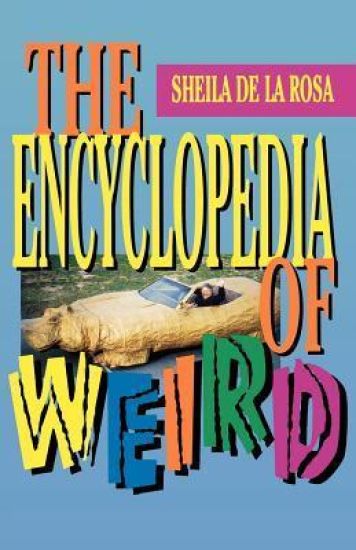
From A to Z and everything in between, here's a page-turning, eyebrow-raising head-shaking collection of "too-werid-to-be-true" facts.For instance. Turkey vultures are big meat-eaters. But they hate to kill. Instead, they feast on succulent leftovers...like roadkill Potent stomach acids help them digest the "ripe" meat. Yum....The longest worm in the world measure as astounding 180 feet long A man in Minnesota claims to have wound the world's largest twine ball: it's more than twelve feet around and weighs more than 21,000 pounds
Exploring topics covered in international management courses, this book pairs business articles and fictional short stories to provide practical guidelines and concrete examples and convey cultural subtleties and shades of meaning.
Exploring topics covered in international management courses, this book pairs business articles and fictional short stories to provide practical guidelines and concrete examples and convey cultural subtleties and shades of meaning.
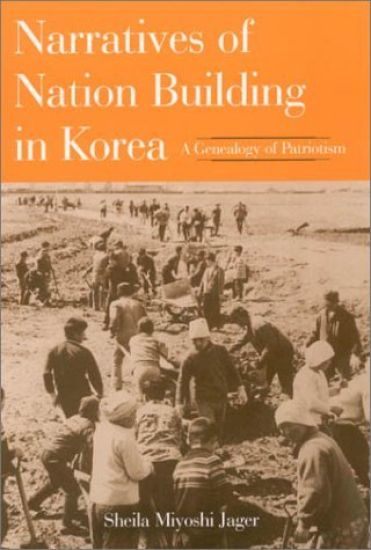
This book offers new insight on how key historical texts and events in Korea's history have contributed to the formation of the nation's collective consciousness. The work is woven around the unifying premise that particular narrative texts/events that extend back to the premodern period have remained important, albeit transformed, over the modern period and into the contemporary period. The author explores the relationship between gender and nationalism by showing how key narrative topics, such as tales of virtuous womanhood, have been employed, transformed, and re-deployed to make sense of particular national events. Connecting these narratives and historic events to contemporary Korean society, Jager reveals how these "sites" - or reference points - were also successfully re-deployed in the context of the division of Korea and the construction of Korea's modern consciousness.
This book offers new insight on how key historical texts and events in Korea's history have contributed to the formation of the nation's collective consciousness. The work is woven around the unifying premise that particular narrative texts/events that extend back to the premodern period have remained important, albeit transformed, over the modern period and into the contemporary period. The author explores the relationship between gender and nationalism by showing how key narrative topics, such as tales of virtuous womanhood, have been employed, transformed, and re-deployed to make sense of particular national events. Connecting these narratives and historic events to contemporary Korean society, Jager reveals how these "sites" - or reference points - were also successfully re-deployed in the context of the division of Korea and the construction of Korea's modern consciousness.
Author Sheila Griffin Llanas explores a variety of globe-spanning recipes that feature ingredients such as chorizo, honey, fava beans, coconut, and pineapple. Readers will discover how to make googs and soldiers from Australia, pannukakku from Finland, and French toast with coconut syrup from the Caribbean. Breakfast has never tasted so good. Readers find out how to become a better cook, and how to stay safe in the kitchen.
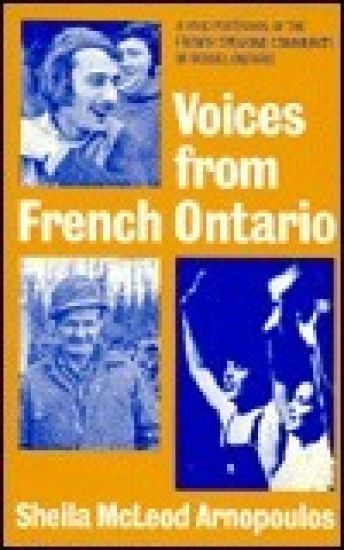
For more than a year and a half Sheila Arnopoulos travelled through the region visiting or living in Sudbury, Hearst, Dubreuilville, and Timmins. Here she chronicles the changes time has brought to the lives of some of the 700,000 people of French origin in Ontario. She describes the blossoming of a culture which draws from both French and English backgrounds. She features the stories of two celebrated Canadian businessmen from Sudbury, Paul Desmarais and Robert Campeau, in a discussion of the development of a new commercial and financial elite. Arnopoulos also writes of miners, poets, playwrights, lumber barons, and ordinary people, to give a vivid picture of their frustrations and aspirations. The French of Nouvel-Ontario have created a regional identity of their own. But under what conditions can French communities in English Canada hope to survive? Arnopoulos finds that federal bilingualism and the expansion of French Quebec businesses across the country are most likely the key factors.
Challenging accepted notions that elite dominance defined Acadian ideology, Sheila Andrew attributes the development of the Acadian elites not to the "Acadian renaissance" or an Acadian nationalist spirit but to emerging economic and political opportunities. Through an objective analysis of the formation and composition of elites in New Brunswick from 1861 to 1881, Andrew argues that there was no single elite class among Acadians, only a series of elites who were neither united nor in a position to influence Acadian society as a whole. She identifies four elite classes - the farming elite, the commercial elite, the educated elite, which includes priests and professionals, and the political elite - and examines their family and community backgrounds and career paths to determine how they achieved elite status. She investigates patterns of networking growth and continuity among elites as well as the relationship between elites and non-elites. Arguing that Acadian nationalism did not fit the traditional pattern of nationalism in a colonized country because of the peculiar nature of Acadian society and the minority status of francophone Acadians within anglophone New Brunswick, she situates the Acadian experience within the context of other cultural and linguistic minorities.
In 1807 genteel, Bermuda-born Fanny Palmer (1789-1814) married Jane Austen's youngest brother, Captain Charles Austen, and was thrust into a demanding life within the world of the British navy. Experiencing adventure and adversity in wartime conditions both at sea and onshore, the spirited and resilient Fanny travelled between Bermuda, Nova Scotia, and England. For just over a year, her home was in the city of Halifax. After crossing the Atlantic in 1811, she ingeniously made a home for Charles and their daughters aboard a working naval vessel and developed a supportive friendship with his sister, Jane. In Jane Austen's Transatlantic Sister Fanny's articulate and informative letters - transcribed in full for the first time and situated in their meticulously researched historical context - disclose her quest for personal identity and autonomy, her maturation as a wife and mother, and the domestic, cultural, and social milieu she inhabited. Sheila Johnson Kindred also investigates how Fanny was a source of naval knowledge for Jane, and how she was an inspiration for Austen's literary invention, especially for the female naval characters in Persuasion. Although she died young, Fanny's story is a compelling record of female naval life that contributes significantly to our limited knowledge of women's roles in the Napoleonic Wars. Enhanced by rarely seen illustrations, Fanny's life story is a rich new source for Jane Austen scholars and fans of her fiction, as well as for those interested in biography, women's letters, and history of the family.
In 1807 genteel, Bermuda-born Fanny Palmer (1789–1814) married Jane Austen's youngest brother, Captain Charles Austen, and was thrust into a demanding life within the world of the British navy. Experiencing adventure and adversity in wartime conditions both at sea and onshore, the spirited and resilient Fanny travelled between Bermuda, Nova Scotia, and England. For just over a year, her home was in the city of Halifax. After crossing the Atlantic in 1811, she ingeniously made a home for Charles and their daughters aboard a working naval vessel and developed a supportive friendship with his sister, Jane. In Jane Austen's Transatlantic Sister Fanny's articulate and informative letters – transcribed in full for the first time and situated in their meticulously researched historical context – disclose her quest for personal identity and autonomy, her maturation as a wife and mother, and the domestic, cultural, and social milieu she inhabited. Sheila Johnson Kindred also investigates how Fanny was a source of naval knowledge for Jane, and how she was an inspiration for Austen's literary invention, especially for the female naval characters in Persuasion. Although she died young, Fanny's story is a compelling record of female naval life that contributes significantly to our limited knowledge of women's roles in the Napoleonic Wars. Enhanced by rarely seen illustrations, Fanny's life story is a rich new source for Jane Austen scholars and fans of her fiction, as well as for those interested in biography, women's letters, and history of the family.
In this beautifully designed and richly illustrated book, Diane Eaton and Sheila Urbanek re-create Paul Kane's heroic journey across Canada and bring to life the people, places, and events he experienced. Determined to document the lives and customs of the Indians of the Northwest, Paul Kane set out in 1845 to cross the continent "with no companions but my portfolio and a box of paints, my gun and a stock of ammunition."Travelling via the Hudson's Bay Company fur brigade routes, he made his way from the Great Lakes to the Pacific coast and back again. When he returned to Toronto in the fall of 1848, he brought back some 500 field sketches as well as a remarkable collection of Indian "curiosities," which he used as raw material for one hundred oil paintings depicting scenes of Indian life.While the carefully executed oil paintings are deliberately romanticized images of the west, the original field sketches convey Kane's immediate impressions and offer tantalizing glimpses of what he describes as the "wild scenes amongst which I strayed almost alone." A fascinating complement to the sketches is contained in a small diary Kane kept while on his journey – brief and plainspoken, these entries were jotted down in his own idiosyncratic spelling and punctuation.Illustrated with a wide selection of the field sketches as well as his better-known oil paintings, this book reintroduces this remarkable artist to a modern audience.
In this beautifully designed and richly illustrated book, Diane Eaton and Sheila Urbanek re-create Paul Kane's heroic journey across Canada and bring to life the people, places, and events he experienced. Determined to document the lives and customs of the Indians of the Northwest, Paul Kane set out in 1845 to cross the continent "with no companions but my portfolio and a box of paints, my gun and a stock of ammunition."Travelling via the Hudson's Bay Company fur brigade routes, he made his way from the Great Lakes to the Pacific coast and back again. When he returned to Toronto in the fall of 1848, he brought back some 500 field sketches as well as a remarkable collection of Indian "curiosities," which he used as raw material for one hundred oil paintings depicting scenes of Indian life.While the carefully executed oil paintings are deliberately romanticized images of the west, the original field sketches convey Kane's immediate impressions and offer tantalizing glimpses of what he describes as the "wild scenes amongst which I strayed almost alone." A fascinating complement to the sketches is contained in a small diary Kane kept while on his journey – brief and plainspoken, these entries were jotted down in his own idiosyncratic spelling and punctuation.Illustrated with a wide selection of the field sketches as well as his better-known oil paintings, this book reintroduces this remarkable artist to a modern audience.
Sexing the Teacher is a provocative study of public and professional responses to female teacher sex scandals in Canada, the United States and Britain. Sheila Cavanagh examines the moral and professional panic over sexual transgressions in the educational milieu by analyzing several sensationalized legal cases, including Mary Kay Letourneau, Amy Gehring, and Heather Ingram.Deploying queer theory, psychoanalysis, postcolonial theory, and feminist film theory, Cavanagh analyses deep-seated anxieties about white female teacher sexualities and offers a critique of the damage that gets done in the name of child protectionism. Arguing that foundational assumptions about race, gender, class, sexuality, and family are all central to the panic, Cavanagh questions the conventional wisdom and politics governing our conceptualization of sex scandals in education. She also demonstrates that public upset over female teacher sexual transgressions, ostensibly about child welfare, is also about the regulation of gender, heteronormative, and white reproductive futures: a hidden curriculum in Western educational systems.Timely, original, and controversial, Sexing the Teacher will appeal to scholars and students in education, sociology, gender, sexuality, and cultural studies, as well as to general readers interested in the sensationalism over school sex scandals that has dominated recent headlines.
Sexing the Teacher is a provocative study of public and professional responses to female teacher sex scandals in Canada, the United States and Britain. Sheila Cavanagh examines the moral and professional panic over sexual transgressions in the educational milieu by analyzing several sensationalized legal cases, including Mary Kay Letourneau, Amy Gehring, and Heather Ingram.Deploying queer theory, psychoanalysis, postcolonial theory, and feminist film theory, Cavanagh analyses deep-seated anxieties about white female teacher sexualities and offers a critique of the damage that gets done in the name of child protectionism. Arguing that foundational assumptions about race, gender, class, sexuality, and family are all central to the panic, Cavanagh questions the conventional wisdom and politics governing our conceptualization of sex scandals in education. She also demonstrates that public upset over female teacher sexual transgressions, ostensibly about child welfare, is also about the regulation of gender, heteronormative, and white reproductive futures: a hidden curriculum in Western educational systems.Timely, original, and controversial, Sexing the Teacher will appeal to scholars and students in education, sociology, gender, sexuality, and cultural studies, as well as to general readers interested in the sensationalism over school sex scandals that has dominated recent headlines.
"Christmas wouldn't be Christmas without a Sheila Roberts story. This can't-miss author has a singular talent for touching the heart and the funnybone." --Susan Wiggs Three generations of travelers embark on a Christmas road trip filled with humor and heart, set against the snowy mountains of Washington State. Michelle and Max are not planning on a happy holiday. Their marriage is in shambles and the D word has entered their vocabulary. But now their youngest daughter, Julia, wants everyone to come to her new house in Idaho for Christmas, and she's got the guest room all ready for Mom and Dad. Oh, joy. Their other daughters, Audrey and Shyla, are driving up from California and hoping to meet a sexy rancher for Audrey along the way. What they don't plan on is getting stranded on a ranch when the car breaks down. The ones with the shortest drive are Grandma and Grandpa--also known as Hazel and Warren. It's still a bit of a trek, and Hazel doesn't like the idea of driving all that way in the snow, but Warren knows they'll have no problem. They have a reliable car--and snow tires and chains if they need them. They'll be fine. Surprises lie in store for all three sets of intrepid travelers as they set out on three very different adventures, all leading to one memorable family Christmas.
Three women. Three terrible Christmases. Can they finally perfect the holiday by celebrating every month? From USA TODAY bestselling author Sheila Roberts comes a story of family, second chances and holiday do-overs, brimming with warmth and Christmas charm.Sunny, Arianna and Molly are having three very different but equally terrible Christmases. Sunny is a newlywed with two new stepkids who want nothing to do with her; Arianna is newly divorced and hates having to send her daughter off to spend the holiday with her dad; for Molly, nothing is new, but her job at the post office is getting very, very old.The whole Christmas season has been a bust all around. But Sunny and Arianna have a wild idea: What if they had a Christmas do-over in January? February? On Saint Patrick's Day?Christmas all year long--what could that look like? As these three determined women chase the perfect holiday through twelve months of cooking disasters, over-the-top festivity, and lots of laughter and tears, they'll discover perfection is way overrated."When it comes to crafting feel-good stories that cleverly mix love and laughter, then skillfully wrap everything up with a bright holiday bow, Roberts is in a class by herself."--Booklist
" With] a set of characters so vivid we want to be their best friends, and a story that keeps us turning the pages, The Best Life Book Club is your book club book of the year. . . . A novel of pure delight --Patti Callahan Henry, NYT Bestselling author of The Secret Book of Flora LeaIt started as a book club. It became a way to build a better life together.Karissa Newcomb is ready for a new start in a new neighborhood, as far away as she can get from Seattle, where her husband cheated on her with the neighbor who was supposed to be her best friend. She and her nine-year-old daughter are moving on to the city of Gig Harbor on the bay in Puget Sound. She even has a new job as an assistant at a small publishing company right in Gig Harbor. Her new boss seems like a bit of a curmudgeon, but a job is a job, she loves to read, and the idea of possibly meeting writers sounds fabulous.Soon she finds she's not the only one in need of a refresh. Her new neighbors, Alice and Margot, are dealing with their own crises. Alice is still grieving her late husband and hasn't been able to get behind the wheel of a car since a close call after his death. Margot is floundering after getting divorced and laid off in quick succession. They could all use a distraction, and a book club seems like just the ticket. Together, the three women, along with Alice's grumpy older sister, Josie, embark on a literary journey that just might be the kick-start they need to begin building their best lives yet.
" With] a set of characters so vivid we want to be their best friends and a story that keeps us turning the pages, The Best Life Book Club is your book club book of the year... A novel of pure delight " --Patti Callahan Henry, New York Times bestselling author of The Secret Book of Flora Lea It started as a book club. It became a way to build a better life together. Karissa Newcomb is ready for a new start in a new neighborhood, as far away as she can get from Seattle, where her husband cheated on her with the neighbor who was supposed to be her best friend. She and her nine-year-old daughter are moving on to the city of Gig Harbor on the bay in Puget Sound. She even has a new job as an assistant at a small publishing company right in Gig Harbor. Her new boss seems like a bit of a curmudgeon, but a job is a job, she loves to read, and the idea of possibly meeting writers sounds fabulous. Soon she finds she's not the only one in need of a refresh. Her new neighbors, Alice and Margot, are dealing with their own crises. Alice is still grieving her late husband and hasn't been able to get behind the wheel of a car since a close call after his death. Margot is floundering after getting divorced and laid off in quick succession. They could all use a distraction, and a book club seems like just the ticket. Together, the three women, along with Alice's grumpy older sister, Josie, embark on a literary journey that just might be the kick start they need to begin building their best lives yet.