Kirjojen hintavertailu. Mukana 12 083 983 kirjaa ja 12 kauppaa.

Kirjahaku

Etsi kirjoja tekijän nimen, kirjan nimen tai ISBN:n perusteella.

1000 tulosta hakusanalla Simmonds Peter Lund

The Little Lion of the Southwest

The Little Lion of the Southwest

Marc Simmons

Swallow Press
1983
pokkari
Manuel Antonio Chaves' life straddled three eras of New Mexican history: he was born (1818) at the tag end of the Spanish colonial period, he grew to manhood in the rough and heady days of the Santa Fe trade during the quarter century of Mexican rule (1821–1846), and he spent his mature years under the territorial regime established by the United States. Manuel Chaves' long career (died 1889) was interwoven with almost every major historical event which occurred during his adult life—the Texan-Santa Fe Expedition, the Mexican War, the Civil War, skirmishes with Utes, Navajos, and Apaches. He was called El Leoncito, The Little Lion, having earned the name as an Indian fighter. He lived for two years in St. Louis and was a well-travelled man, doing business in New Orleans, New York, and Cuba. A hundred years ago when men still gathered around campfires and storytelling was a well-developed art, Chaves' exploits were known to all New Mexicans. But history has a capricious memory and his name became virtually forgotten. Around the turn of the century, Charles F. Lummis' flowery pen recalled brief attention to Chaves' life, and in 1927 he appeared as a minor character in Willa Cather's Death Comes for the Archbishop—but otherwise was virtually forgotten. Alas. Too few of our Spanish frontiersmen have been studied in depth. Manuel Chaves and his life should not be lost. He was one of the legendary but real men who pioneered and built the 19th century Southwest. Howard R. Lamar laments: "The Spanish-American population of New Mexico still lacks a historian." Marc Simmons' biography of Manuel Chaves helps fill that gap.

The Eclipse of Equality

The Eclipse of Equality

Solon Simmons

Stanford University Press
2013
sidottu
Red state vs. blue state. Republican vs. Democrat. Fox News vs. The Daily Show. The so-called culture wars have become such a fixture of American politics that dividing the country into rival camps seems natural and political gridlock seems inevitable. Entering the fray, Solon Simmons offers an intriguing twist on the debate: Our disagreements come not from unbridgeable divides, but from differing interpretations of a single underlying American tradition—liberalism. Both champions of traditional liberal values, Republicans have become the party of individual freedom while Democrats wear the mantle of tolerance. Lost in this battle of sides is the third pillar of liberalism—equality. Simmons charts the course of American politics through the episodes of Meet the Press. On the air since 1945, Meet the Press provides an unparalleled record of living conversation about the most pressing issues of the day. In weekly discussions, the people who directly influenced policy and held the reins of power in Washington set the political agenda for the country. Listening to what these people had to say—and importantly how they said it—Meet the Press opens a window on how our political parties have become so divided and how notions of equality were lost in the process. Telling the story of the American Century, Simmons investigates four themes that have defined politics and, in turn, debate on Meet the Press—war and foreign affairs, debt and taxation, race struggles, and class and labor relations—and demonstrates how political leaders have transformed these important political issues into symbolic pawns as each party advocates for their own understanding of liberty, whether freedom or tolerance. Ultimately, with The Eclipse of Equality, he looks to bring back to the debate the question lurking in the shadows—how can we ensure the protection of a peaceful civil society and equality for all?
The Little Book of Kyoto

The Little Book of Kyoto

Ben Simmons

TUTTLE PUBLISHING
2023
sidottu
The Little Book of Kyoto is a celebratory visual guide to one of the world's truly unique cities. Kyoto was Japan's imperial capital for one thousand years, as well as its cultural birthplace. A companion to the best-selling The Little Book of Japan, this captivating volume weaves words and images to form a rich tapestry of the fantastic sights of Kyoto, including dozens of World Heritage Sites, Zen gardens, temples, shrines, shopping areas, festivals, and food. A series of forty-eight highlights, organized into four chapters, cover Kyoto's imperial legacy, culture and customs, Zen heritage, top attractions, and its essential spirit. Veteran photojournalist Ben Simmons continues a journey of discovery begun over twenty-five years ago, seeking fresh insights and an immersive take on this endlessly compelling city. Explore its history, art, cultural commentary, and Japanese travel tips. Small enough to carry anywhere, this book is the perfect guide to accompany travelers on their trip to Kyoto—whether visiting for the first time or simply taking a more in-depth look beneath the surface of this ancient capital.
The Little Book of Tokyo

The Little Book of Tokyo

Ben Simmons

TUTTLE PUBLISHING
2023
sidottu
Take a photographic journey through the modern marvels and historical treasures of Tokyo with this informative, portable Japan travel guide. In The Little Book of Tokyo, veteran photojournalist Ben Simmons continues a quest he began over two decades ago to seek out and share his creative viewpoint and insider's perspective. Small enough to carry while traveling in Japan, this book is an ideal travel companion for a Tokyo experience, whether you're planning a trip, already on your way, or merely dream of going. A series of 50 informative mini essays are organized into four chapters: Tokyo's Edo Legacy Tokyo Towns City Perspectives Spirit of TokyoThe Little Book of Tokyo is the perfect introduction to this enchanting, ultra-modern megacity and provides an immersive take on Tokyo combining Japanese history, photography and cultural commentary. It weaves a tapestry of the city's many unique idiosyncrasies, offering strategies for exploring the High City to the Low City, Tokyo Bay to the top of Tokyo Skytree, and the most critical places and happenings in between, including architecture, festivals, and landmarks. It also beautifully captures the many inhabitants of Tokyo, painting a rich and multi-faceted picture of this capital city.
The Last Conquistador

The Last Conquistador

Marc Simmons

University of Oklahoma Press
1993
nidottu
This book chronicles the life and frontier career of Don Juan de Oñate, the first colonizer of the old Spanish Borderlands. Born in Zacatecas, Mexico, in the mid-sixteenth century, Don Juan was the prominent son of an aristocratic silver-mining family.In 1598, in his late forties, Oñate led a formidable expedition of settlers, with wagons and livestock, on an epic march northward to the upper Rio Grade Valley of New Mexico. There he established the first European settlement west of the Mississippi, launching a significant chapter in early American history.In his activities he displayed qualities typical of Spain's sixteenth-century men of action; in his career we find a summation of the motives, aspirations, intentions, strengths, and weaknesses of the Hispanic pioneers who settled the Borderlands.
The Deed

The Deed

Carole Simmons Oles

Louisiana State University Press
1991
nidottu
In Carole Simmons Oles's fourth collection of poetry, small events of everyday life throw open a door to meditations on the absence of a husband, on the separation from children, and on the sustenance gained from friendship and the sorrow its loss. Each poem has an ambitious range, sure in its leap from subject to subject. ""In Time, with Holsteins,"" for example, carries us from close observations on the daily life of cows to facts about Indian rites of penance and purification to worry about a friend's diagnosis of breast cancer.Even as the poems take their strength from the personal, they are informed by a global concern, the poet's belief in a network of trust and obligation. ""The Radioactive Ball"" reflects this concern:I caught itand screamed for water.Someone carried a pail,I plunged my hands in.The water boiled.I wore violet gloves beaded with glass.>Now what do I do with this water.How can I pick the pail up.Where should I set it.How to turn doorknobs and enter roomsand not lift my childIs it too late to cut them off.Where will I bury them.If I burn them, whowill breathe the air of their burning.Throw them into the ozone.Ship them to Mars,these death hands.No pockets will have them.In The Deed, Oles's strong female voice is dedicated to the exploration of loss tempered by the particulars of pleasure this world offers. In the generous embrace of its vision, this collection will appeal to a wide readership.
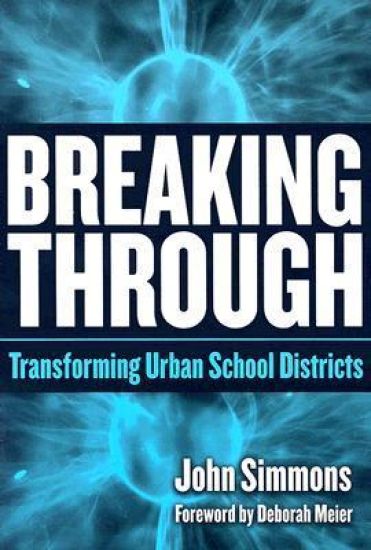
Breaking Through

Breaking Through

John Simmons; Deborah Meier

Teachers' College Press
2005
nidottu
Is it possible to fundamentally improve the daily workings of the urban classroom in less than seven years? According to John Simmons, it will take a revolution in the way that leaders of urban school systems think and operate, from the classroom to the boardroom. In this ambitious volume, Simmons and a stellar group of contributors, including Linda Darling-Hammond, Richard Elmore, Michael Fullan, Charlotte Danielson, Susan Moore Johnson, Adam Urbanski, Alan Odden, and Valerie Lee, bring the best current research to bear on a range of critical topics, creating a practical framework that superintendents and their teams can use to transform their big-city school systems into true learning communities. As it integrates many voices into a larger vision, this book: demonstrates convincingly how current, cutting-edge thinking about system change in business has been used to successfully transform schools and close the achievement gap among diverse students; provides an overview and assessment of the reform efforts of current large-district superintendents, including Alan Bersin, Tom Payzant, Arne Duncan, and Kaye Stripling; directs the reader towards a larger understanding of issues and priorities with three principles and four key strategies; applies current research to illuminate what has succeeded and what has not worked in cities such as Boston, San Diego, Houston, and especially Chicago; and, features the perspectives and experiences of notable experts who have been working in the trenches of school reform for decades.
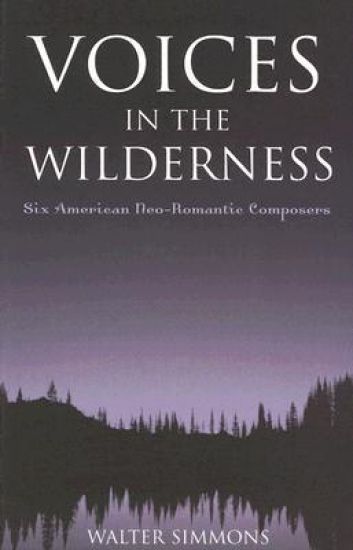
Voices in the Wilderness

Voices in the Wilderness

Walter Simmons

Scarecrow Press
2006
nidottu
Despite the Modernist search for new and innovative aesthetics and rejection of traditional tonality, several twentieth century composers have found their own voice while steadfastly relying on the aesthetics and techniques of Romanticism and 19th century composition principles. Musicological and reference texts have regarded these composers as isolated exceptions to modern thoughts of composition—exceptions of little importance, treated simplistically and superficially. Music critic and scholar Walter Simmons, however, believes these composers and their works should be taken seriously. They are worthy of more scholarly consideration, and deserve proper analysis, assessment, and discussion in their own regard. In Voices in the Wilderness, the first in a series of books celebrating the "Twentieth-Century Traditionalist," Simmons looks at six Neo-Romantic composers: Ernest Bloch Howard Hanson Vittorio Giannini Paul Creston Samuel Barber Nicolas Flagello Through biographical overviews and a comprehensive assessment of musical works, Simmons provides readers with a clear understanding of the significance of the composers, their bodies of work, and their placement in musicological history. The chapters delve deeply and objectively into each composer's oeuvre, addressing their origins, stylistic traits and consistencies, phases of development, strengths and weaknesses, and affinities with other composers. The composers' most representative works are identified, and each chapter concludes with a discography of essential recordings. Visit the author's website to read samples from the book and to listen to representative excerpts of each composer's work.
Gladesmen

Gladesmen

Glen Simmons; Laura Ogden

University Press of Florida
2010
nidottu
"An homage to the rugged 'swamp rats' who were largely overlooked or scorned by the region's historians, naturalists, and adventurers."--Miami Herald"Documents an aspect of Florida history and culture of which far too little has been written. . . . [Gladesmen] is alive with South Florida history and spiced with Simmons' understated humor and world view."--Folk Winds"Contains interesting tales of outlaws, moonshiners and other characters--some who lived on the edge of right and wrong--and roamed the inhospitable backcountry prairies of soft muck and massive mosquitoes."--South Dade News Leader"We Floridians sometimes . . . long for the simple life of pioneers and wonder how we would manage 'living off the land.' This book serves as a slap in the face of such fantasy."--St. Petersburg Times"Simmons tells us that he is no hero, but he is the stuff of Daniel Boone, Davey Crockett, Jim Bridger, and Alfred Wallace."--Florida Frontier Gazette"Simmons is Florida's answer to Huckleberry Finn."--Georgia Historical Quarterly
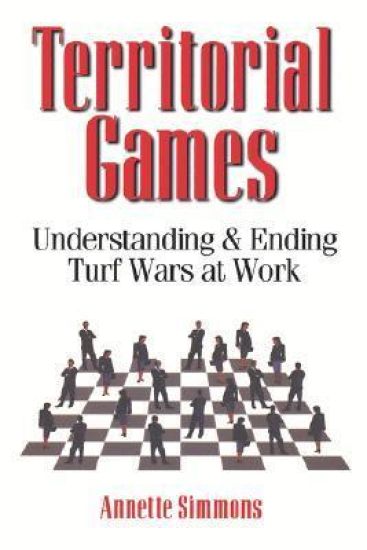
Territorial Games

Territorial Games

Annette Simmons

Amacom
2018
nidottu
This book analyzes 10 insidious and instinctual acts of gamesmanship, and supplies positive strategies for combating territorial behavior.Power, position, property. That's been the name of the game throughout human history. And the urge to gain new territory -- or keep what's already been acquired -- certainly shows up in our daily work lives. The workplace, in fact, is ablaze with battles over information, relationships, and authority -- and everyone is fighting for psychological survival.Written from the perspective of a behavioral scientist and drawn from in-depth interviews with corporate managers, Territorial Games explains how to:understand the roots of territorialityrecognize the signs and symptoms of territorial gamesfocus on organizational goals rather than individual turf warspromote teamwork throughout an organizationapply counterstrategies to change destructive behaviorCamouflage, occupation, shunning, and intimidation.…these turf wars are some of the most unproductive and morale-squashing activities that employees engage in. Learn how to understand and end turf wars at work with help from this insightful guide.
A Safe Place for Dangerous Truths
No more "checking for feet." This illuminating guide gets people to tell the truth at the meeting--not in the bathroom afterwards.Almost everybody lies. In one recent survey, 93% of people admitted to lying regularly at work! Why? Because it's safer than telling the truth. Sadly, organizations cannot succeed in this poisonous world of half-truths, strategic omissions, and doctored information.A Safe Place for Dangerous Truths shows how the formal process of "dialogue" can create a safe place to tell the truth.In a lively discussion, author Annette Simmons shows managers how to use this technique to:encourage truth-telling by reducing fearprompting self-examination, and opening mindsbuild trust where suspicion and cynicism held swayinspire individuals to think and learn as a grouphelp groups talk through tough issues and move to collaborative actionTo function optimally, businesses must create an environment where people feel free to tell the truth, no matter how disturbing. Only then can organizations unleash the responsiveness, creativity, and enthusiasm necessary to achieve their goals.
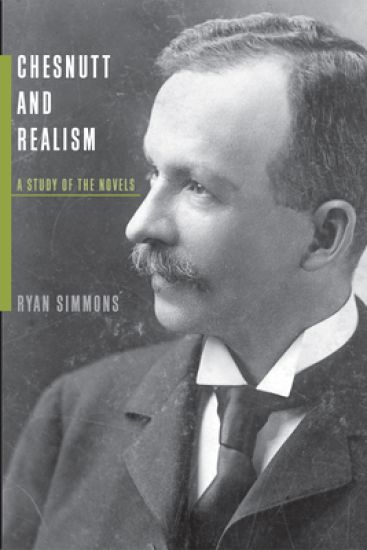
Chesnutt and Realism

Chesnutt and Realism

Ryan Simmons

The University of Alabama Press
2020
nidottu
Provides an important examination of Charles Chesnutt as a practitioner of realism Although Chesnutt is typically acknowledged as the most prominent African American writer of the realist period, scholars have paid little attention to the central question of this study: what does it mean to call Chesnutt a realist? As a writer whose career was restricted by the dismal racial politics of his era, Chesnutt refused to conform to literary conventions for depicting race. Nor did he use his imaginative skills to evade the realities he and other African Americans faced. Rather, he experimented with ways of portraying reality that could elicit an appropriate, proportionate response to it, as Ryan Simmons demonstrates in extended readings of each of Chesnutt’s novels, including important unpublished works overlooked by previous critics. In addition, Chesnutt and Realism addresses a curiously neglected subject in American literary studies—the relationship between American literary realism and race. By taking Chesnutt seriously as a contributor to realism, this book articulates the strategies by which one African American intellectual helped to de?ne the discourses that in?uenced his fate.
Burning Oracle

Burning Oracle

Sandra Simonds

WESLEYAN UNIVERSITY PRESS
2026
nidottu
A fierce, visionary book-length poem Burning Oracle is a visionary, book-length poem told from the fractures of a world on fire where myth, memory, and contemporary life collide. Cassandra—seer, mother, survivor—wanders through forests of digital noise and historical trauma, her voice both ancient and urgently new. At the heart of the poem is a pilgrimage to the grave of poet Paul Celan where she traces personal loss within the wider context of inherited trauma—particularly the Holocaust—and seeks meaning in the act of remembering. As floods rise and fires rage, the personal and historical ignite a mythic voice. Through the commonplace of stained dresses, shattered screens, and supermarket aisles, Cassandra encounters figures like Goya, Reynard the fox, and Celan himself, weaving their stories into an intertextual, image-rich landscape. Burning Oracle is a feminist reckoning, a personal mythography, and a testament to the power of poetry to animate the archive of history, memory, and everyday life. [sample poem] * From II No source, my Seine, a German one instead, Sixteen & reading Hölderlin's Der Rhein at the foot of a massive statue of Goethe and Schiller. Stupid anorexic American girl. But not really American. And not really French. And not really Turkish. And not really Syrian. And not really Spanish. And the tourists at the camp. Was I a tourist? Squeal of the cassette tape rewinding Pink Floyd's The Wall. Ah, when you speak German, no one can tell you're American. When you speak English no one can tell you're French. Too sick to go on. Anne of Green Gables Figurines. I'm always too sick to go on, that's my charm—a gray ruin turned maroon turned black. * It is easier to go mad, Francisco says, than one might think. Easy to lose things. People too. Perhaps too easy. Step inside and you may not come back. He listed the colors he liked: Black. Black. Black. Black. He told himself to stay inside the painting of the chartreuse river, stay inside, Reader, and he found his arms roping and looping into Cassandra holding a tray of dead pigeons.
Atopia

Atopia

Sandra Simonds

Wesleyan University Press
2021
sidottu
Tallahassee. Tallahassee. Tallahassee. Your mist today is incredible as it settles on this rose garden! When the largest rose shook off its dew and looked at me like a cartoon, I smiled back and promised not to break his neck. And here we are together again, walking in a park that honors dead children. A tree planted for each child on such a mild day in December. And how the dead children stream through me, scrolls of them: Lily! Rose! Bobby! Kierkegaard says anyone who follows through on an idea becomes unpopular. And also that a person needs a system, otherwise you become mere personality. He must not have known very many poets, so prone to tyrannical shifts in mood. Change in the weather is equal to don't let me go crazy. In the car on the way to school Charlotte says, "I like to be gentle with nature because I like nature." But my mind wouldn't rest, system-less, as I drive through dread: Lily! Rose! Bobby! You're dead, you're dead. Atopia grapples with the political climate of the United States manifested through our everyday lives. Sandra Simonds charts the formations and deformations of the social and political through the observations of the poem's speakers, interspersed with the language of social media, news reports, political speech, and the dialogue of friends, children, strangers, and politicians. The Los Angeles Review of Books characterized Simonds's work as "robust, energetic, fanciful, even baroque" and "a necessary counterforce to the structures of gender, power, and labor that impinge upon contemporary life." These poems reflect on what it means to be human, what it means to build communities within a political structure it also opposes.
Their Fathers' Voice

Their Fathers' Voice

Cynthia Simmons

Peter Lang Publishing Inc
1994
sidottu
Aksyonov, Venedikt Erofeev, Limonov, and Sokolov, -children of the sixties and seventies-, were among the first to test the limits of -glasnost- in the post-Stalin period. Although their major novels suggest a shared modernist belief in the power of verbal art to provide a place or promise of truth, and, perhaps, salvation, they set out first to recapture, for their abused native tongue, its ability to -mean-. They called into question the literary conventions concerning logicality, coherence, and propriety. Through their own -aberrant discourse- they sought to -mean- anew. Long in need of thorough explication, their works constitute the missing link between the -alternative prose- writers of the nineties and Russia's pre-Soviet literary heritage."
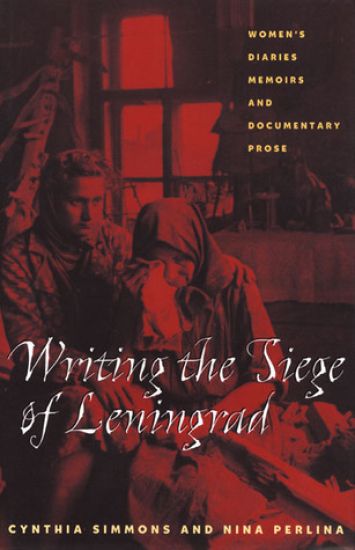
Writing the Siege of Leningrad

Writing the Siege of Leningrad

Cynthia Simmons; Nina M. Perlina

University of Pittsburgh Press
2005
nidottu
Silver Winner, ForeWord Magazine Book of the Year, HistoryFrom September 1941 until January 1944, Leningrad suffered under one of the worst sieges in the history of warfare. At least one million civilians died, many during the terribly cold first winter. Bearing the brunt of this hardship—and keeping the city alive through their daily toil and sacrifice—were the women of Leningrad. Yet their perspective on life during the siege has been little examined.Cynthia Simmons and Nina Perlina have searched archival holdings for letters and diaries written during the siege, conducted interviews with survivors, and collected poetry, fiction, and retrospective memoirs written by the blokadnitsy (women survivors) to present a truer picture of the city under siege. In simple, direct, even heartbreaking language, these documents tell of lost husbands, mothers, children; meager rations often supplemented with sawdust and other inedible additives; crime, cruelty, and even cannibalism. They also relate unexpected acts of kindness and generosity; attempts to maintain cultural life through musical and dramatic performances; and provide insight into a group of ordinary women reaching beyond differences in socioeconomic class, ethnicity, and profession in order to survive in extraordinary times.
Strengths-Based Batterer Intervention

Strengths-Based Batterer Intervention

Catherine Simmons

Springer Publishing Co Inc
2009
sidottu
This book harkens a new era of intimate partner violence intervention, one in which we are free to experiment with alternative ways to end intimate partner abuse." -Julia C. Babcock, PhD Professor, University of Houston, TX (From the Foreword) The book you hold in your hands offers a variety of approaches intended to help abusive men change by utilizing the strengths and assets they already possess." -Chris Huffine, PsyD Clinical Director Allies in Change Counseling Center Portland, OR (From the Foreword) Strengths-based batterer intervention programs serve as a unique approach to intimate partner violence (IPV), building on individual strengths-not deficits-to help IPV offenders end their abusive lifestyles. This book assists counselors in providing IPV offenders with the skills, knowledge, and resources they need to permanently change their offending behavior. The book discusses emerging theories and presents cutting-edge batterer intervention techniques that use positive psychology, such as solution-focused therapy, strengths-focused cognitive behavioral therapy, narrative therapy, and motivational interviewing. Key Features: Chapters are conveniently organized by therapeutic model, each discussing the latest research, core concepts, objectives, and applications Case studies, both real-life and hypothetical, presenting quotes from and dialogues with offenders undergoing treatment Counselor tools, including exercises, questions, and assessment strategies that build on the offenders' strengths and competencies Family violence professionals must recognize the power their clients have to utilize their strengths, skills, talents, desires, and dreams. It is from these strengths that clients will be able to transform themselves into the people they want to be."
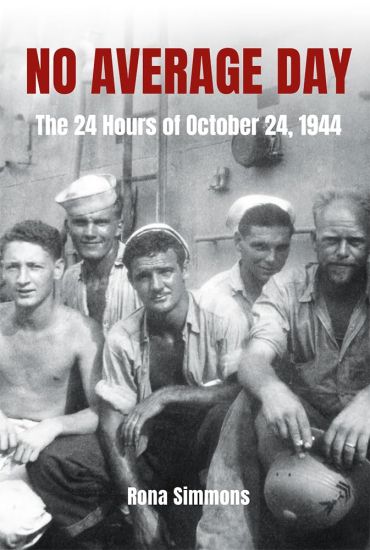
No Average Day

No Average Day

Rona Simmons

UNIVERSITY OF MISSOURI PRESS
2024
sidottu
October 24, 1944, is not a day of national remembrance. Yet, more Americans serving in World War II perished on that day than on December 7, 1941, when the Japanese attacked Pearl Harbor, or on June 6, 1944, when the Allies stormed the beaches of Normandy, or on any other single day of the war. In its telling of the events of October 24, No Average Day proceeds hour by hour and incident by incident. The book begins with Army Private First-Class Paul Miller’s pre-dawn demise in the Sendai #6B Japanese prisoner of war camp. It concludes with the death of Navy Seaman Second Class Wanza E. Matthews, moments before midnight, after the Japanese submarine I-56 attacked his ship off New Guinea. The sinking of the hellship Arisan Maru—a lesser-known tragedy of the war—bookends and weaves through the two-dozen selected other incidents. No Average Day eschews the conventional discourse of the war’s origins, its great battles, and the maneuvering of generals, admirals, and politicians. Instead, it directs its attention to ordinary individuals—clerks, radio operators, cooks, sailors, machinist mates, riflemen, and pilots and their air crews. These are men, perhaps a reader’s brother, father, or neighbor, who chose to serve their country and soon found themselves in a terrifying and otherworldly place. There, described in relatable terms, the men hunch their shoulders against the cold, wipe grit from their foreheads, or pen a letter home minutes before drawing their last breath. No Average Day reveals the vastness of the war as it reaches past the beaches in France and jungles in the South Pacific, to the villages, placid bays, and forested mountainsides across the globe where the war also raged.
New Mexico

New Mexico

Marc Simmons

University of New Mexico Press
1988
sidottu
For all who love New Mexico, and for those who aspire to know the state, this book is a graceful and compelling summary of what has made the Land of Enchantment its distinctive self. Originally published in 1977 to commemorate the bicentennial of American Independence, New Mexico is now available for the first time in a quality paperback edition with a new introduction by the author. In writing this book, Marc Simmons sets out to arrive at an understanding of the state's character. His is an interpretive, sensitive, individual--even personal--account. He shows that across the centuries the collision and mingling of cultures dominates New Mexico's history. Out of this complex interplay of human and natural forces he selects his examples of Pueblo life ways, Spanish domination, and Anglo control to make immediate and memorable the state's rich history.
Spanish Pathways

Spanish Pathways

Marc Simmons

University of New Mexico Press
2001
nidottu
Historian Marc Simmons is already a favourite among scholars, students, Hispanophiles, and borderland enthusiasts for his careful, readable histories of the American Southwest. In the twelve essays collected in here, the author's topical, in-depth approach to New Mexico's colonial period is skilfully deployed. His original research and unique insights transform New Mexico's colonial history into an engaging story of real people and the real events that shaped their lives - a true journey of discovery. Simmons finds in the commonplace moments of everyday life ways to place the reader fully within the realities of the past. Immersion in details permits us to understand the behaviour and character of a people and the true tenor of their times: how the average person lived and played, how he or she made economic choices, how worship and religious concerns were integrated into daily life. The book covers such topics as the Pueblo Revolt, New Mexico sheep and cattle ranching, Spanish irrigation practices, the settlement of Albuquerque, the smallpox epidemic of 1780-81, and the Feast of St. John. The society and economy of the upper Rio Grande were complex and richly textured, and the people who sustained themselves there became resilient and stoic, fashioning their own formulas for survival and forever impacting the directions taken by history's currents.