Kirjojen hintavertailu. Mukana 11 699 587 kirjaa ja 12 kauppaa.

Kirjahaku

Etsi kirjoja tekijän nimen, kirjan nimen tai ISBN:n perusteella.

1000 tulosta hakusanalla Steven Scaffidi

Digital Flows

Digital Flows

Steven Gamble

OXFORD UNIVERSITY PRESS INC
2024
sidottu
This is an open access title available under the terms of a CC BY-NC-ND 4.0 International licence. It is free to read on the Oxford Academic platform and offered as a free PDF download from OUP and selected open access locations. Some fifty years after its birth in the Bronx, hip hop has become one of the most influential cultural phenomena of the internet era. With the internet now enmeshed in our daily routines, hip hop thrives in the digital realm, constituting a third of all music streams. From Drake memes to viral TikTok dances and AI-generated rappers, hip hop is constantly created, shared, and discussed online. This shift challenges hip hop's conventional connections to place, authenticity, and community. Through this book, author Steven Gamble offers a fresh examination of hip hop's latest chapter, intricately interwoven with the interconnected cultural currents of the internet. With an innovative method encompassing music and cultural analysis, ethnography, and web data analysis, Gamble provides a cutting-edge account of the intersections between hip hop and the internet, supported by the latest practices in digital humanities and data ethics. The book extensively draws on scholarship in hip hop studies, internet studies, popular music studies, media studies, communication studies, cultural studies, Black studies, intersectional feminism, and more. Gamble provides in-depth insights into hip hop in the internet age, new net-native genres like Soundcloud rap and YouTube lofi beats, communities on social media and streaming platforms, online hip hop feminism in rap music videos, cultural appropriation and callout/cancel culture, and hip hop concerts on video game platforms. For old school heads and extremely online memesters alike, for fans and creatives, for students as well as academics seeking to understand digital transformations of music, Digital Flows uncovers what happens when a cultural form born on the streets thrives on the transformative technologies of global reach.

Digital Flows

Digital Flows

Steven Gamble

OXFORD UNIVERSITY PRESS INC
2024
nidottu
This is an open access title available under the terms of a CC BY-NC-ND 4.0 International licence. It is free to read on the Oxford Academic platform and offered as a free PDF download from OUP and selected open access locations. Some fifty years after its birth in the Bronx, hip hop has become one of the most influential cultural phenomena of the internet era. With the internet now enmeshed in our daily routines, hip hop thrives in the digital realm, constituting a third of all music streams. From Drake memes to viral TikTok dances and AI-generated rappers, hip hop is constantly created, shared, and discussed online. This shift challenges hip hop's conventional connections to place, authenticity, and community. Through this book, author Steven Gamble offers a fresh examination of hip hop's latest chapter, intricately interwoven with the interconnected cultural currents of the internet. With an innovative method encompassing music and cultural analysis, ethnography, and web data analysis, Gamble provides a cutting-edge account of the intersections between hip hop and the internet, supported by the latest practices in digital humanities and data ethics. The book extensively draws on scholarship in hip hop studies, internet studies, popular music studies, media studies, communication studies, cultural studies, Black studies, intersectional feminism, and more. Gamble provides in-depth insights into hip hop in the internet age, new net-native genres like Soundcloud rap and YouTube lofi beats, communities on social media and streaming platforms, online hip hop feminism in rap music videos, cultural appropriation and callout/cancel culture, and hip hop concerts on video game platforms. For old school heads and extremely online memesters alike, for fans and creatives, for students as well as academics seeking to understand digital transformations of music, Digital Flows uncovers what happens when a cultural form born on the streets thrives on the transformative technologies of global reach.

Sources for Forging America Volume One

Sources for Forging America Volume One

Steven Hahn

OXFORD UNIVERSITY PRESS INC
2023
nidottu
Designed to accompany Forging America by Steven Hahn, this sourcebook provides a diverse set of documents that situates U.S. History within a continental framework. Covering political, social, and cultural history, the nearly 100 selections--including thirty-three visual documents--are intended to spark discussion in the classroom and give students a deeper understanding of America's history. A general introduction on how to read primary sources provides students with guidance for working with documents. Headnotes and reading questions provide context and thinking prompts.
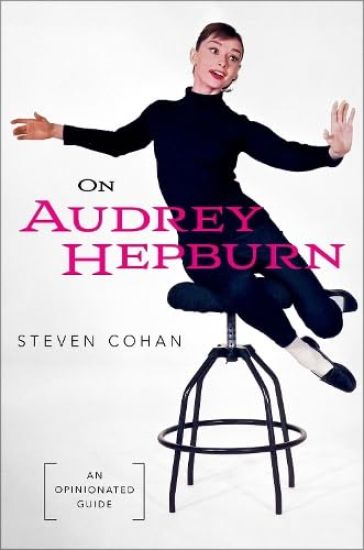
On Audrey Hepburn

On Audrey Hepburn

Steven Cohan

OXFORD UNIVERSITY PRESS INC
2024
sidottu
Why should Audrey Hepburn matter today? This lively and engaging book revises the contemporary view of Hepburn that sees her primarily as a fashion icon and style guru, frozen in images from Breakfast at Tiffany's and My Fair Lady. Author Steven Cohan argues that her films, more than her biography or her likeness in stock images and magazine photos, are essential to understanding both her importance as one of the all-time major stars to emerge in Hollywood after World War II and her lasting fame in the 21st century. On Audrey Hepburn examines the key elements--her expressive face, her distinctive voice, her unorthodox body-that contributed to her persona and led to her charismatic presence onscreen. While pointing to the many contradictions inhering in her star image, Cohan emphasizes the liminality Hepburn represented, demonstrating how her characters' mischief, intelligence, and desiring supplied the primary motor for the Cinderella plots, resisted the films' patriarchal template and closures, and complicated her asymmetrical casting opposite older male stars. Similarly, Hepburn's close relation with designer Hubert de Givenchy, which established her identification with haute couture, enhanced her movement onscreen, offering a pathway through spectacle for viewer identification with her energy and agency. With Hepburn in Givenchy on screen, Cohan argues, fashion worked as a transformative event for her characters. On Audrey Hepburn further looks at how, playing a woman threatened with deception and murder in thrillers, Hepburn reversed the conventional role of women in this genre through her strong female characters who confront and deal with danger on their own terms. Finally, the book examines Hepburn's skill as actress, considering her expert timing, use of props, facial and vocal expressions, interaction with other actors in an ensemble, and the overall nuance with which she developed complex characterizations. On Audrey Hepburn is an entertaining and insightful guide to this star through her films, reminding readers why she was so immediately popular after her breakout roles in Roman Holiday and Sabrina, why she had such a crucial influence on women's fashions, and why she received so much acclaim and award recognition as an actress in the US and abroad.
The Good Cartesian

The Good Cartesian

Steven Nadler

OXFORD UNIVERSITY PRESS INC
2024
sidottu
Steven Nadler presents a biographical and philosophical study of Louis de La Forge (1632-1666), a medical doctor who was an extremely important, but for a long time relatively neglected, follower of Descartes in the seventeenth century. His sophisticated contributions to the metaphysics, philosophy of mind, and physiology of Cartesianism in the decades after Descartes' death in 1650 were instrumental in making that philosophy the dominant philosophical paradigm of the period; it would be supplanted by Newtonianism only in the eighteenth century. La Forge began his Cartesian career by providing wood-cut illustrations and an extensive commentary for the 1664 edition of Descartes' Traité de l'homme, the first original-language publication of part of the larger, groundbreaking treatise Le Monde that was left unpublished in Descartes' lifetime. In his commentary, La Forge is a devoted and faithful but not uncritical disciple who defends, supplements, updates and even corrects Descartes' account of the human body, which treats it as a “machine” that operates on the principles of the mechanical philosophy. In 1666, La Forge published his own Traité de l'esprit de l'homme, a treatise on the human mind. Explaining the mind and its union with the body was something that Descartes had long planned to do but never really carried out in a systematic manner. La Forge's most innovative and influential philosophical contribution in the Traité--one which goes beyond anything Descartes envisioned--is his limited version of the doctrine of occasionalism, which accords God an active and ongoing causal role in the world and reduces natural substances to being “occasions” for God's efficacious activity. La Forge thereby set the stage for later, even more unorthodox developments in Cartesianism.
Xuedou's 100 Odes to Old Cases

Xuedou's 100 Odes to Old Cases

Steven Heine

OXFORD UNIVERSITY PRESS INC
2024
nidottu
Xuedou's 100 Odes to Old Cases is recognized as the seminal discourse in Chan Buddhism, one that has exerted significant influence on the way stories of former teachers (guze) have been appreciated and appropriated for the past thousand years. In this volume, Steven Heine offers a much-needed translation of this pivotal work along with extensive background and commentary. Heine brings important perspective to a 1000-year old text that became the basis for the Blue Cliff Record, which continues to have a profound impact on the overall legacy of East Asian Buddhist intellectual history and religious literature. Xuedou's verses reflect the author's unique capacity for taming through elegance the undisciplined and deluded minds of followers struggling with self-imposed obstacles to discern reality and thereby discover inner peace. Xuedou cites multiple Chan sources, uses irregular meter to disrupt the reader's expectations, and evokes unusual allusions to Chinese lore while often interjecting personal comments or lyrical imagery that goes beyond a reliance on doctrine. Xuedou's work is timeless, informative, and extremely influential. Heine offers us a glimpse into his mind and work, as we are taken back in time to the birth of the most essential aesthetic qualities of Chan and Zen Buddhist discourse.
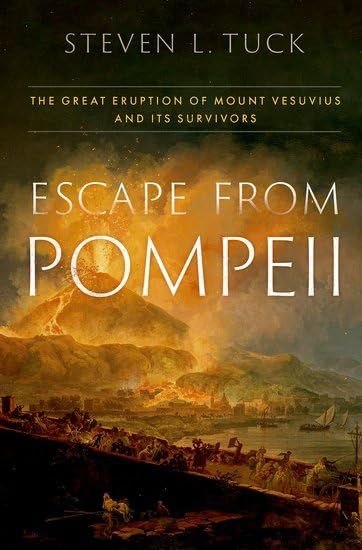
Escape from Pompeii

Escape from Pompeii

Steven L. Tuck

OXFORD UNIVERSITY PRESS INC
2026
sidottu
A story of triumph out of tragedy, uncovered in the ashes of Vesuvius The archaeological park of Pompeii is one of the most famous sites of destruction anywhere in the world. From the time of the eruption of Vesuvius in 79 CE until the eighteenth century, Pompeii and its neighbor Herculaneum lay preserved under a thick layer of volcanic material. Since excavations began three hundred years ago, Pompeii has been revealing the secrets of its victims and the ordinary shape of their lives prior to the catastrophe. But did anyone survive the disaster? In popular culture, the eruption is viewed as an apocalyptic event in which everyone died, while scholars generally assume that some escaped. Steven L. Tuck settles that debate. He starts by establishing the circumstances and timeline of the eruption and the evidence that people at both Pompeii and Herculaneum had the chance to escape the eruption. From there, he moves to the search for survivors. Using evidence from inscriptions supported by archaeological, documentary, and literary sources, Tuck finds survivors in twelve different communities and uncovers details on how they rebuilt their lives, livelihoods, and identities after fleeing the volcano. While some survivors integrated quickly into their new communities and used their new city's name in the personal names of their first generation, others preserved cultural markers from their destroyed communities through language, religious dedications, and renewed businesses. Many of the families that escaped intermarried with other refugee families, but also ran for public office in their new cities, made generous donations to their communities, and integrated while maintaining their former identity. Some refugee families came to the aid of the less fortunate by taking in poor and orphaned survivors, while others married beneath their previous station. The Roman government responded to the needs of the refugee communities with new housing, infrastructure, and services, but, as Tuck demonstrates, the real work was done by the refugees themselves. By asking new questions about Pompeii and innovatively examining the evidence, Escape from Pompeii proves the survival of Pompeians and Herculaneans after the eruption. It sheds new insight into their lives, pre- and post-eruption, and provides new conclusions about the Roman world and its response to unimaginable suffering.
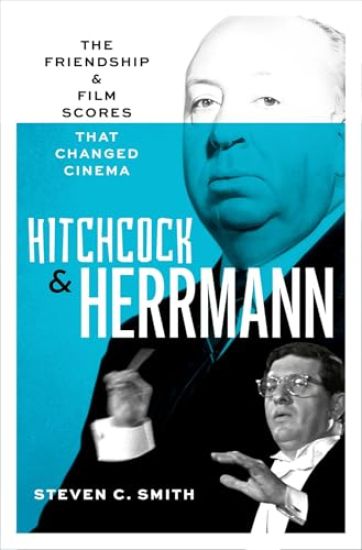
Hitchcock and Herrmann

Hitchcock and Herrmann

Steven C. Smith

OXFORD UNIVERSITY PRESS INC
2026
sidottu
This is the story of the game-changing collaboration between director Alfred Hitchcock and composer Bernard Herrmann, who channelled their inner fears and desires into films that would become the nightmarish narratives and soundtracks of our lives. The 11-year collaboration between Alfred Hitchcock and Bernard Herrmann is often called the greatest director-composer partnership in cinema history. Their eight films together include such classic thrillers as Vertigo, The Man Who Knew Too Much, North by Northwest, Psycho, and The Birds. In Hitchcock and Herrmann: The Friendship and Film Scores that Changed Cinema, Steven C. Smith delivers an intimate account of how the reserved, but deeply anxious, Hitchcock found his ideal creative partner in the cantankerous, but deeply romantic, Herrmann. Smith draws on four decades of research, including previously unpublished documents and new interviews, to deliver a riveting account of what made the teaming of "Benny and Hitch" so memorable and influential -- and why it came to a bitter end. Their story involves the tumultuous changes in Hollywood from the mid-1950s to mid-1960s, as the collapsing studio system gave way to independent, counterculture filmmaking. It also involves the key figures in Hitchcock and Herrmann's inner circle including the director's gifted wife and most valued critic, Alma Reville; Herrmann's beautiful, put-upon spouse, Lucy Anderson; and talent agent-turned-studio mogul Lew Wasserman. Wasserman's negotiations made Hitchcock's greatest filmmaking period possible, but over time Lew's commercial instincts as head of Universal Studios clashed with Herrmann's pure artistic vision. Hitchcock and Herrmann is both a deeply researched historical study and a fast-moving, cinematic narrative -- one that puts readers on the film sets and scoring stages of Hitchcock masterworks. Their collaboration ended in a bitter break; but today Herrmann's pulse-quickening music has become the soundtrack of our own anxious times. The music from their movies is more popular than ever, heard in Quentin Tarantino blockbusters and Lady Gaga music videos. In Smith's expert telling, readers get an an intimate look at two legendary creators who, despite seemingly opposite personalities, found in each other artistic completion.
Exploring Philosophy: An Introductory Anthology

Exploring Philosophy: An Introductory Anthology

Steven M. Cahn

Oxford University Press
2023
nidottu
Exploring Philosophy: An Introductory Anthology is a uniquely accessible and engaging introduction to philosophy. Steven M. Cahn brings together exceptionally clear recent essays by noted philosophers and supplements them with influential historical sources. Most importantly, the articles have been carefully edited to make them understandable to every reader. The readings are enhanced by concise introductions, study questions, explanatory notes, and suggestions for further reading.
The Science of Dignity

The Science of Dignity

Steven Hitlin; Matthew A. Andersson

OXFORD UNIVERSITY PRESS INC
2023
sidottu
This book provides original evidence arguing for dignity as an indicator of public health, by offering a scientific framework for measuring dignity and its social determinants. Hitlin and Andersson show that dignity can be efficiently measured by using simple survey items that ask individuals whether there is "dignity" in their life or in how they are treated by others. National survey data show that unhappiness, sadness, anger, and lower general health are far more common for those reporting undignified lives. These differences in reported dignity come from inequalities in social and economic resources and from experiences of disrespect, threat, or life stress. Social groups with less power generally report lower levels of dignity linked to these multifaceted resource and stress inequalities, which are examined throughout the book. Hitlin and Andersson show that dignity possesses universal value for health and well-being in America, providing a scientific basis for collective consensus and social inspiration.
Beyond Moral Fundamentalism

Beyond Moral Fundamentalism

Steven Fesmire

OXFORD UNIVERSITY PRESS INC
2025
sidottu
While complex global problems cry out for solutions devised with moral sensitivity and responsibility, a more common mentality tends to prevail, one that assumes those going the right way (“us”) are endangered by others (“them”) going the wrong way. Philosopher Steven Fesmire calls this approach “moral fundamentalism,” the idea that only we have access to the right diagnosis and prescription to our problems. Moral fundamentalism causes us to oversimplify, neglect broader context, take refuge in dogmatic absolutes, ignore possibilities for common ground, assume privileged access to the right way to proceed, and shut off honest inquiry. Moral fundamentalism--exacerbated by social media silos--also makes the worst of native impulses toward social bonding and antagonism. This depletes social capital and makes it impossible to debate and achieve superordinate goals, such as public health, justice, security, sustainability, peace, and democracy. Drawing from John Dewey's pluralistic and pragmatic approach, Fesmire develops an alternative to the oversimplification of moral fundamentalism and the arbitrariness of relativism. He proposes a “pragmatic pluralism” that can be applied to complex ethical, political, educational, and policy problems--without flattening variability among values or presuming that abstract theories determine what we ought to do. He argues that the single-right-way premise that logically underlies moral fundamentalism is both unwarranted and constrictive, and that grand philosophical quests for unifying principles can still be accommodated within a wider pluralistic approach. In an engaging style, Fesmire shows the reader a new perspective on the challenges and promises of democratic decision-making in societies that are struggling to grow beyond moral fundamentalism.
The Skeptic Isle

The Skeptic Isle

Steven Casey

OXFORD UNIVERSITY PRESS INC
2025
sidottu
A major reassessment of the British government's communication of the goals of World War II and how its propaganda undermined the people's faith in the reliability of war news and the credibility of political leaders. While waging war against enemies overseas, governments also need to win the hearts and minds of their own citizens. The media is critical to delivering the official message, raising public support for war, maintaining morale, spelling out what is to be achieved, downplaying setbacks, and presenting a bright vision of the postwar future. In public memory, the British people were united in their support for World War II. Yet this popular image of the People's War neglects the fact that the war had to be sold. In this work stretching from appeasement in 1938 through victory, award-winning historian Steven Casey examines how media, government, and armed forces worked to convince the British public to support the war, as well as the ways the British home front often questioned and challenged the official line. Using a vast array of primary sources, some of them previously untapped, he looks at the broad range of problems and policies that needed to be defended and explained, censored and concealed. The venues range widely from the battlefield to the football field, from the rubble-strewn cities of blitzed Britain to the faraway outposts of Empire. In his chronological narrative of the war, Casey shines light on numerous high-profile episodes, including Munich and Dunkirk, the Battle of Britain and Blitz, evacuation and rationing, and the campaigns in the Africa, Asia, and Europe. Throughout, Casey stresses how the British military forged a relationship with reporters, how this relationship shaped news coverage of the fighting, and how this coverage in turn exerted a profound impact on every other dimension of the government's private and public actions. No one before has examined how all the branches of the armed services kept the home front informed about progress and especially setbacks. Officials, Casey argues, failed to communicate effectively with the British people, which undermined public trust and called the credibility of the political leadership into question. Remarkably, the BBC and Fleet Street sometimes relayed German communiqués to the public because the British government failed to release timely reports of its own. The Skeptic Isle provides a bold reassessment of how the British government sold the Second World War to the British public. It powerfully showcases how the attempt to mold and manipulate coverage of battles created a major credibility gap that cast a long shadow over the British government's efforts to sell the different dimensions of the Second World War to the home front.
The American Child

The American Child

Steven Mintz; Peter N. Stearns

OXFORD UNIVERSITY PRESS INC
2025
sidottu
Historical perspective shows that concerns about the "kids these days" are as old as civilization itself. Today's young people are healthier than in the past and less likely to drink, smoke, or engage in reckless sex. The digital age has enabled them to learn, grow, and connect with the world in ways that were previously unimaginable. There is greater acceptance and understanding of diverse backgrounds, identities, and orientations, giving many children more freedom to express themselves and find communities that support them. Many young people are more politically knowledgeable and and socially aware than previous generations, speaking out about climate change, gun control, and social justice. Nonetheless, autism, attention deficit disorders, allergies, obesity, learning disorders, and online bullying, as well as suicidal ideation and self-harm, have become more prevalent. School shootings and the 24/7 news cycle make the world seem more dangerous for children than it actually is. Drawing on a wealth of previously untapped sources along with census data, reports, and surveys, Steven Mintz and Peter N. Stearns bring much-needed historical perspective to the profound transformations that have taken place in American childhood since World War II and their impact on children's well-being. Balancing genuine improvements with significant losses, they analyze how shifts in family life, education, and culture have reshaped childhood for good and for ill. Acutely attentive to issues of diversity in terms of class, ethnicity, gender, nationality, and race, this book places contemporary controversies-- rising rates of anxiety, depression, ADHD, and emotional distress-- within a historical context, challenging simplistic explanations that blame social media, the internet, or the decline of marriage. Instead, it reveals the deeper structural, cultural, and historical forces driving the challenges and opportunities facing today's children. The American Child examines the radical transformations in schooling, childrearing practices, children's play, kids' culture, and other areas to offer valuable insights on how childhood has changed, the consequences of those shifts, and what can be done to make childhood better.
The New Psychology of Pandemics

The New Psychology of Pandemics

Steven Taylor

OXFORD UNIVERSITY PRESS INC
2025
sidottu
Pandemics are global outbreaks of novel or re-emerging infectious diseases, and reveal aspects of humanity rarely seen in calmer times. Pandemics will likely become more prevalent in the coming years due to climate change, the growing global population, and other factors. Psychology plays an essential role in pandemics, in which people's beliefs, emotions, and behaviors influence the spreading and containment of infection. Uncertainty is an inherent aspect of pandemics; when faced with novel pathogens, people cope with these invisible, uncertain threats in various ways, including coping strategies that provide only an illusion of control, making people calmer but not safer. Other psychological phenomena observed during pandemics include polarized fear reactions (excessive alarm vs. undue disregard for the threat), fleeing, panic-buying, xenophobia, rumors and conspiracy theories, protests about wearing protective facemasks, anti-vaccination attitudes, lockdown protests, increases in mood and anxiety disorders, and other societal problems. Efforts to manage one problem (e.g., lockdown to stem the spread of infection) may worsen other problems (e.g., mental health). The New Psychology of Pandemics offers a comprehensive analysis of these and other issues concerning the psychology of pandemics, to prepare for future global outbreaks of infectious diseases. The book explores promising new directions for maintaining and improving mental health and enhancing adherence to pandemic mitigation measures such as social distancing, mask-wearing, and vaccination.
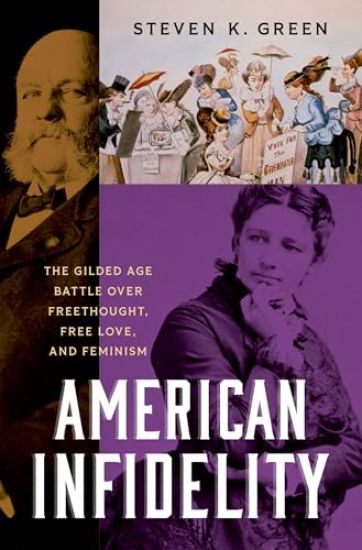
American Infidelity

American Infidelity

Steven K. Green

OXFORD UNIVERSITY PRESS INC
2026
sidottu
American Infidelity is a timely, provocative exploration of a forgotten chapter in American history--one that still echoes in our most urgent cultural debates. In the final decades of the 19th century, America stood at a cultural crossroads. Evangelical Protestantism reigned supreme, shaping laws, morals, and public life. But beneath the surface, a bold countercurrent surged--freethinkers, feminists, and sexual radicals who dared to imagine a freer, more equal society. In American Infidelity, historian Steven K. Green tells the riveting story of this ideological showdown. At its center were two powerful forces: a rising movement of skeptics and reformers who challenged religious orthodoxy and social convention, and the reactionary crusaders--led by the infamous Anthony Comstock--who fought to silence them. These "infidels," as Comstock branded them, weren't just questioning God--they were demanding access to birth control, advocating for divorce reform, and championing women's autonomy over their minds and bodies. Figures like Elizabeth Cady Stanton pushed feminism beyond the vote, calling for sexual and economic liberation. Freethought leaders rejected the idea that America was a Christian nation, insisting instead on reason, inquiry, and personal freedom. But their vision of a more open society collided head-on with a moral panic that sought to preserve traditional values at all costs. Green's gripping narrative reveals how this battle over belief, sex, and power shaped the cultural DNA of the United States. Drawing on vivid historical sources, he shows how the freethought and feminist movements were ultimately suppressed--but not extinguished. Their legacy lives on in today's ongoing struggles over reproductive rights, censorship, and the role of religion in public life.
Distinguo: Reading Montaigne Differently

Distinguo: Reading Montaigne Differently

Steven Rendall

Clarendon Press
1992
sidottu
Most modern critics (even those who have emphasized the `evolution' of Montaigne's ideas) have sought to explain away the contradictions and incoherences of Montaigne's Essais. Distinguo: Reading Montaigne Differently investigates the role of these internal differences in the opinions recorded, in voices and modes of discourse, in logical levels, in conceptions of writing and of reading, through a series of careful, lucid readings of selected passages from the Essais. The author tracks their operation in Montaigne's text and shows how Montaigne's writing constantly recontextualizes his own discourse (through his practice of interpolating new material in successive editions and adding new chapters) as well as that of other authors (through quotation, paraphrase, commentary). Rather than merely negative features, the author argues that such `differences' are essential to a practice of writing that both defines and challenges a notion of `unity', and can be seen as an uneasy and disturbing element related to a historical shift from earlier ways of controlling meaning, to one based on `the author function'. This careful and lucid book presents a fresh and significant interpretation of the Essais and shows how Montaigne's work might profitably and illuminatingly be read in a `different' way.
Satie the Bohemian

Satie the Bohemian

Steven Moore Whiting

Clarendon Press
1999
sidottu
Apologists have often tried to play down Erik Satie's connection to the bohemian subculture of Montmartre. In this book Whiting argues that far from harming his reputation, this connection decisively shaped his aesthetic priorities and compositional strategies.
Dumbstruck - A Cultural History of Ventriloquism

Dumbstruck - A Cultural History of Ventriloquism

Steven Connor

Oxford University Press
2000
sidottu
Why can none of us hear our own recorded voice without wincing? Why is the telephone still full of such spookiness and erotic possibility? Why does the metaphor of ventriloquism, the art of 'seeming to speak where one is not', speak so resonantly to our contemporary technological condition? These are the kind of questions which impel Steven Connor's wide-ranging, restlessly inquisitive history of ventriloquism and the disembodied voice. He tracks his subject from its first recorded beginnings in ancient Israel and Greece, through the fulminations of early Christian writers against the unholy (and, they believed, obscenely produced) practices of pagan divination, the aberrations of the voice in mysticism, witchcraft and possession, and the strange obsession with the vagrant figure of the ventriloquist, newly conceived as male rather than female, during the Enlightenment. He retrieves the stories of some of the most popular and versatile ventriloquists and polyphonists of the nineteenth century, and investigates the survival of ventriloquial delusions and desires in spiritualism and the 'vocalic uncanny' of technologies like telephone, radio, film, and internet. Learned but lucid, brimming with anecdote and insight, this is much more than an archaeology of one of the most regularly derided but tenaciously enduring of popular arts. It is also a series of virtuoso philosophical and psychological reflections on the problems and astonishments, the raptures and absurdities of the unhoused voice.
Tudor Frontiers and Noble Power

Tudor Frontiers and Noble Power

Steven G. Ellis

Clarendon Press
1995
sidottu
This controversial book offers a novel perspective on Tudor government and British state formation. It argues that traditional studies focusing on lowland England as 'the normal context of government' exaggerate the regime's successes by marginalizing the borderlands. Frontiers were normal in early-modern Europe, however, and central to the problem of state formation. England's peripheries were more extensive than the core and provide the real yardstick by which the effectiveness of government can be measured. Ellis demonstrates their importance by means of a detailed comparative study of two marches - Cumbria and Ireland - and their ruling magnates. He demonstrates the flaws in early Tudor policy, characterized by long periods of neglect, interspersed with sporadic attempts to adapt, at minimal cost, a centralized administrative system geared to lowland England for the government of outlying regions which had very different social structures. Ellis analyses the 1534 crisis in crown-magnate relations, reassesses the resulting policy of centralization and uniformity, and identifies the central role of these developments in establishing a British pattern of state formation.
Monarchy and Lordships in the Latin Kingdom of Jerusalem 1099-1291
Using contemporary sources, especially the chronicles of the twelfth and thirteenth centuries, Steven Tibble studies the relationship between monarchy and nobility in the Latin Kingdom of Jerusalem. He argues that the relative power of the seigneuries has been substantially overstated, and that the monarch exercised far more control over the baronage and feudal structure, particularly in the twelfth century, than has hitherto been recognized.