Kirjojen hintavertailu. Mukana 11 241 044 kirjaa ja 12 kauppaa.

Kirjahaku

Etsi kirjoja tekijän nimen, kirjan nimen tai ISBN:n perusteella.

1000 tulosta hakusanalla Stuart Howarth

From Tudor to Stuart

From Tudor to Stuart

Susan Doran

Oxford University Press
2024
sidottu
From Tudor to Stuart: The Regime Change from Elizabeth I to James I tells the story of the troubled accession of England's first Scottish king and the transition from the age of the Tudors to the age of the Stuarts at the dawn of the seventeenth century. From Tudor to Stuart: The Regime Change from Elizabeth I to James I tells the story of the dramatic accession and first decade of the reign of James I and the transition from the Elizabethan to the Jacobean era, using a huge range of sources, from state papers and letters to drama, masques, poetry, and a host of material objects. The Virgin Queen was a hard act to follow for a Scottish newcomer who faced a host of problems in his first years as king: not only the ghost of his predecessor and her legacy but also unrest in Ireland, serious questions about his legitimacy on the English throne, and even plots to remove him (most famously the Gunpowder Plot of 1605). Contrary to traditional assumptions, James's accession was by no means a smooth one. The really important question about James's reign, of course, is the extent of change that occurred in national political life and royal policies. Sue Doran also examines how far the establishment of a new Stuart dynasty resulted in fresh personnel at the centre of power, and the alterations in monarchical institutions and shifts in political culture and governmental policies that occurred. Here the book offers a fresh look at James and his wife Anna, suggesting a new interpretation of their characters and qualities. But the Jacobean era was not just about James and his wife, and Regime Change includes a host of historical figures, many of whom will be familiar to readers: whether Walter Raleigh, Robert Cecil, or the Scots who filled James's inner court. The inside story of the Jacobean court also brings to life the wider politics and national events of the early seventeenth century, including the Gunpowder Plot, the establishment of Jamestown in Virginia, the Plantations in Ulster, the growing royal struggle with parliament, and the doomed attempt to bring about union with Scotland.
Book Ownership in Stuart England

Book Ownership in Stuart England

David Pearson

Oxford University Press
2021
sidottu
This volume provides a wide-ranging account of the development and importance of private libraries and book ownership through the seventeenth century, based upon many kinds of evidence, including examination of thousands of books, and a list of over 1,300 known owners from diverse backgrounds. It considers questions of evolution, contents and size, and motives for book ownership, during a century when growing markets for both new and second-hand books meant that books would be found, in varying numbers, in the homes of all kinds of people from the humble to the wealthy. Book ownership by women, and by non-professional households, is explicitly explored. Other topics include the balance of motivation between books for use, or for display; the relationship between libraries and museums; and cultures of collecting. While presenting a wealth of information in this field, conveniently brought together, this volume also advances methodologies for book history, and makes extensive use of material evidence such as bookbindings. It challenges received wisdom around priorities for studying private libraries, and the terminology which is appropriate to use. In addition, the list of owners, detailed in the Appendix, make this book a work of permanent reference, alongside its value in advancing book history.
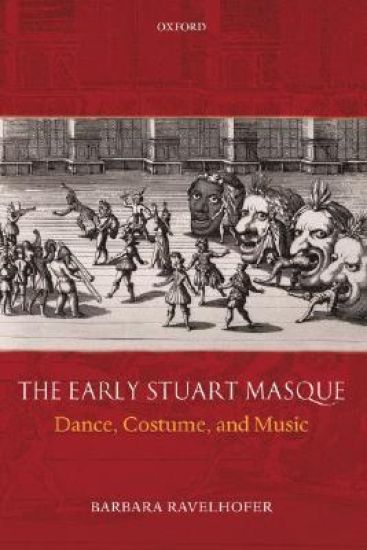
The Early Stuart Masque

The Early Stuart Masque

Ravelhofer Barbara

Oxford University Press
2006
sidottu
The Early Stuart Masque: Dance, Costume, and Music studies the complex impact of movements, costumes, words, scenes, music, and special effects in English illusionistic theatre of the Renaissance. Drawing on a massive amount of documentary evidence relating to English productions as well as spectacle in France, Italy, Germany, and the Ottoman Empire, the book elucidates professional ballet, theatre management, and dramatic performance at the early Stuart court. Individual studies take a fresh look at works by Ben Jonson, Samuel Daniel, Thomas Carew, John Milton, William Davenant, and others, showing how court poets collaborated with tailors, designers, technicians, choreographers, and aristocratic as well as professional performers to create a dazzling event. Based on extensive archival research on the households of Queen Anne and Queen Henrietta Maria, special chapters highlight the artistic and financial control of Stuart queens over their masques and pastorals. Many plates and figures from German, Austrian, French, and English archives illustrate accessibly-written introductions to costume conventions, early dance styles, male and female performers, the dramatic symbolism of colours, and stage design in performance. With splendid costumes and choreographies, masques once appealed to the five senses. A tribute to their colourful brilliance, this book seeks to recover a lost dimension of performance culture in early modern England.
Don Carlos and Mary Stuart

Don Carlos and Mary Stuart

Friedrich Schiller

Oxford University Press
2008
nidottu
Don Carlos and Mary Stuart, two of German literature's greatest dramas, deal with the timeless issues of power, freedom, and justice. Dating from 1787 and 1800 respectively, one play was written before the French Revolution, the other in its aftermath. Both dramatize periods of crisis in sixteenth-century Europe, and in doing so reflect Schiller's passionate engagement with the great themes of his own age - justice, power, freedom of conscience, legitimacy of government. A youthful work, Don Carlos shows the victory of the forces of reaction over the representatives of a new age. Mary Stuart shows the struggle of the Scottish queen in her last days of her life, not only for her freedom, but also for peace with her conscience, and that of her English rival, Elizabeth I, with the challenge of ruling justly. A vivid imaginative experience when read, these plays, with their starkly contrasting characters and thrilling confrontations, also demonstrate Schiller's brilliant stagecraft. These new translations into blank verse are accurate, elegant, and playable. The introduction, notes, and chronology set the plays in their cultural and intellectual background, while a family tree explains the historical relationship bewteen Don Carlos and Mary Stuart. ABOUT THE SERIES: For over 100 years Oxford World's Classics has made available the widest range of literature from around the globe. Each affordable volume reflects Oxford's commitment to scholarship, providing the most accurate text plus a wealth of other valuable features, including expert introductions by leading authorities, helpful notes to clarify the text, up-to-date bibliographies for further study, and much more.
The Correspondence of Elizabeth Stuart, Queen of Bohemia, Volume I
The Correspondence of Elizabeth Stuart is the first complete edition of the letters of Elizabeth Stuart (1596-1662), Electress Palatine of the Rhine and Queen of Bohemia, daughter of King James I of England and Anna of Denmark. Volume I covers Elizabeth's life as princess and consort in the years between 1603 and 1631. It includes letters exchanged with her brother, Henry Frederick, the courtship letters of Frederick V, Elector Palatine, and Elizabeth's experiences of both marital and court life in Heidelberg, especially her struggle with Germanic culture and her arguments with both her husband and mother-in-law over rights of precedence. From 1619 her letters become increasingly political as she begs her father, the Duke of Buckingham, and others for assistance in the desperate struggle for the Crown of Bohemia. Deposed in 1620, Elizabeth spends her time in exile devising ploys to gain further financial, moral, and military support from statesmen and military leaders such as Sir Dudley Carleton, the 'Mad Halberstadter' Christian of Brunswick, Count Ernest of Mansfeld, King Christian IV of Denmark, and Bethlen Gabor, Prince of Transylvania, behaviour increasingly in defiance of her father's wishes and demands. Elizabeth's letters evidence her slow transformation from political ingenue to independent stateswoman, a position cemented as her husband fell victim to the war they had precipitated. The diplomatic writing skills she developed in this period were to become her only weapon for securing both the inheritance of her many children and her own position as a key religious, political, and cultural figure in early-modern Europe.
The Correspondence of Elizabeth Stuart, Queen of Bohemia, Volume II
The Correspondence of Elizabeth Stuart, Queen of Bohemia is the first edition, in three volumes, of Elizabeth Stuart's complete letters ever published. Elizabeth Stuart (1596-1662), also known as Electress Palatine of the Rhine or Queen of Bohemia, was the daughter of King James VI & I and Anna of Denmark, and a key religious, political, and cultural figure in early modern Europe. Volume II, tracing the years between 1632 and 1642, covers Elizabeth's life as a widow controlling the regency during her eldest son's minority and imprisonment. It opens with her husband Frederick V's departure from their court-in-exile in The Hague to the battlefield in Germany, and his unexpected death from the plague in Mainz a few days before Elizabeth and he would have regained the Palatinate. Elizabeth is forced to take Palatine affairs firmly into her own hands as the restitution slips away from her. Her brother King Charles I tries to lure her back to the British Isles, apparently in order to pacify her, but Elizabeth chooses a life of voluntary exile to expedite the restitution. In this most political period of her life, Elizabeth devises, often unsuccessfully, ploys to gain financial, moral, and military support for the Palatine cause, frequently in direct opposition to her brother's wishes and demands. Her letters were the principal means by which she could exert her power on statesmen and military leaders, such as Archbishop Laud, Charles I, Christian IV of Denmark, the Swedish chancellor Axel Oxenstierna, Cardinal Richelieu of France, and Wladislaw IV of Poland. Elizabeth's eldest son Charles Louis, set free by the French in April 1641, ultimately took over the regency of the Palatine government in November 1642. Elizabeth at this point jadedly relinquished her role as stateswoman.
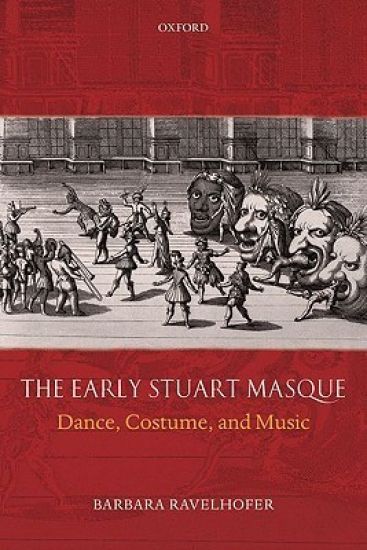
The Early Stuart Masque

The Early Stuart Masque

Ravelhofer Barbara

Oxford University Press
2009
nidottu
The Early Stuart Masque: Dance, Costume, and Music studies the complex impact of movements, costumes, words, scenes, music, and special effects in English illusionistic theatre of the Renaissance. Drawing on a massive amount of documentary evidence relating to English productions as well as spectacle in France, Italy, Germany, and the Ottoman Empire, the book elucidates professional ballet, theatre management, and dramatic performance at the early Stuart court. Individual studies take a fresh look at works by Ben Jonson, Samuel Daniel, Thomas Carew, John Milton, William Davenant, and others, showing how court poets collaborated with tailors, designers, technicians, choreographers, and aristocratic as well as professional performers to create a dazzling event. Based on extensive archival research on the households of Queen Anne and Queen Henrietta Maria, special chapters highlight the artistic and financial control of Stuart queens over their masques and pastorals. Many plates and figures from German, Austrian, French, and English archives illustrate accessibly-written introductions to costume conventions, early dance styles, male and female performers, the dramatic symbolism of colours, and stage design in performance. With splendid costumes and choreographies, masques once appealed to the five senses. A tribute to their colourful brilliance, this book seeks to recover a lost dimension of performance culture in early modern England.
On John Stuart Mill

On John Stuart Mill

Philip Kitcher

Columbia University Press
2023
sidottu
John Stuart Mill expressed many of the central tenets of liberalism with unsurpassed clarity and enduring influence. Yet Mill’s apparent victory in the marketplace of ideas has numbed us to the power of his arguments. To many readers today, his views can seem utterly familiar, even banal.Sharing insights from teaching Mill for many years, the eminent philosopher Philip Kitcher makes a cogent case for why we should read this nineteenth-century thinker now. He portrays Mill as a conflicted humanist who wrestled with problems that are equally urgent in our own time. Kitcher reflects on Mill’s ideas in the context of contemporary ethical, social, and political issues such as COVID mandates, gun control, income inequality, gay rights, and climate change. More broadly, he shows, Mill’s writings help us cultivate our own capacities for critical thought and ethical decision making.Inviting readers into a conversation with Mill, this book shows that he supplies tools for thinking that are as valuable today as they were in the nineteenth century.
On John Stuart Mill

On John Stuart Mill

Philip Kitcher

Columbia University Press
2023
pokkari
John Stuart Mill expressed many of the central tenets of liberalism with unsurpassed clarity and enduring influence. Yet Mill’s apparent victory in the marketplace of ideas has numbed us to the power of his arguments. To many readers today, his views can seem utterly familiar, even banal.Sharing insights from teaching Mill for many years, the eminent philosopher Philip Kitcher makes a cogent case for why we should read this nineteenth-century thinker now. He portrays Mill as a conflicted humanist who wrestled with problems that are equally urgent in our own time. Kitcher reflects on Mill’s ideas in the context of contemporary ethical, social, and political issues such as COVID mandates, gun control, income inequality, gay rights, and climate change. More broadly, he shows, Mill’s writings help us cultivate our own capacities for critical thought and ethical decision making.Inviting readers into a conversation with Mill, this book shows that he supplies tools for thinking that are as valuable today as they were in the nineteenth century.
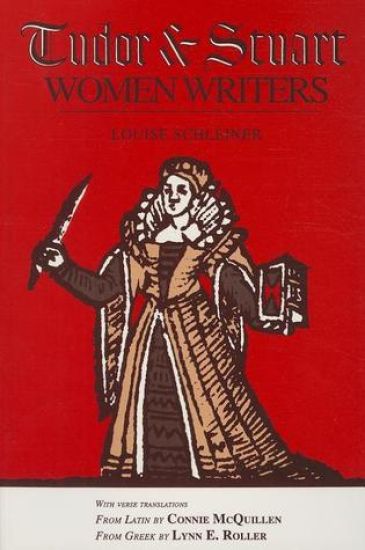
Tudor and Stuart Women Writers

Tudor and Stuart Women Writers

Louise Schleiner

Indiana University Press
1994
pokkari
" . . . a nuanced, carefully argued work that reveals how women writers of the Renaissance, whether upper-class aristocrats close to court, daughters of successful merchants, Protestants, or Catholics, are inevitably affected by the gender biases that infuse all levels of Renaissance society and letters." —Sixteenth Century Journal " . . . quite effective at developing a critical vocabulary for analyzing the formal traits of early modern women's writing." —Tulsa Studies in Women's Literature From the perspectives of feminism, Marxism, sociology, and cultural semiotics, Louise Schleiner examines both familiar and obscure Tudor and Stuart women writers in a comprehensive study of those women who managed to go beyond translations or diaries and find a more individual voice in their public texts.
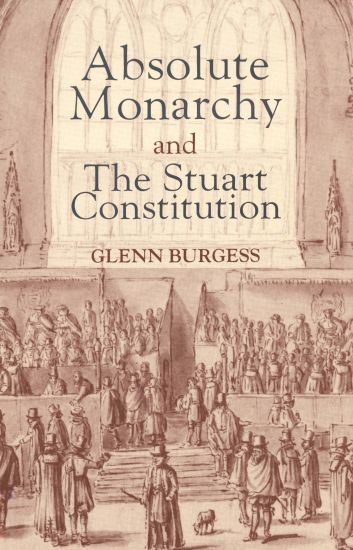
Absolute Monarchy and the Stuart Constitution

Absolute Monarchy and the Stuart Constitution

Glenn Burgess

Yale University Press
2015
pokkari
In this ambitious reinterpretation of the early Stuart period in England, Glenn Burgess contends that the common understanding of seventeenth-century English politics is oversimplified and inaccurate. The long-accepted standard view holds that gradual polarization between the Court and Parliament during the reigns of James I and Charles I reflected the split between absolutists--who upheld the divine right of monarchy to rule--and constitutionalists--who resisted tyranny by insisting the monarch was subject to law--and resulted inevitably in civil war. Yet, Burgess argues, the very terms that have been used to understand the period are misleading: there were almost no genuine absolutist thinkers in England before the Civil War, and the "constitutionalism" of common lawyers and parliamentarians was a very different notion from current understandings of that term. Burgess turns to the great body of common law that enshrined many of England's liberties and institutions. Examining the political opinions of such key figures as Sir Edward Coke and Sir Francis Bacon, he concludes that the laws of the land represented a civilization no monarchist would have attacked. Further, absolutism was a rare creed at the time and, while it was accepted that the king was next to God in authority, this detracted nothing from the insistence that he rule under the law. Rather than a polarization of ideas fueling political division, says Burgess, it was Charles I's inappropriate exploitation of agreed prerogatives that exposed tensions, forged divisions, and ruptured the "pacified politics" of which the early modern English were so proud. Burgess's new perspective sets the political thought of Hobbes, Locke, and others into contemporary context, revises the distorted view of pre-civil war England, and refocuses discussion on the real conflicts and human complexities of the period.
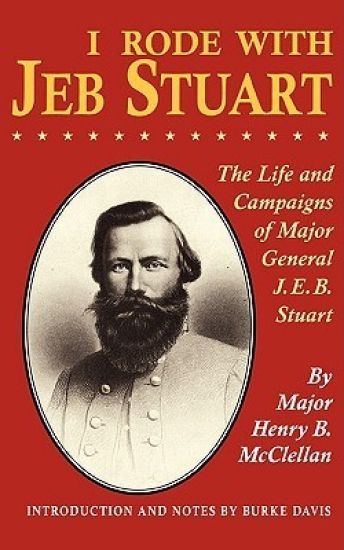
I Rode With Jeb Stuart

I Rode With Jeb Stuart

H. Mcclellan

Da Capo Press Inc
1994
pokkari
Major General J. E. B. Stuart (1833-1864) was one of the Confederacy's greatest horsemen, soldiers, and heroes. As early as First Manassas (Bull Run) he was contributing significantly to the Confederate victory he subsequently displayed his daring and brilliance in the battles of Second Manassas, Antietam, Fredericksburg, Chancellorsville, and Brandy Station,the most significant cavalry battle of the war, and Stuart's finest moment. General Lee depended on Stuart for knowledge of the enemy, for, as he said, Stuart never brought him a piece of false information. But Stuart was mortally wounded at Yellow Tavern in May 1864. Not since the death of Stonewall Jackson had the South sustained so great a personal loss his rollicking, infectious gaiety and hard fighting were sorely missed in the grim last days of Lee's army. By all accounts, I Rode with Jeb Stuart is the most reliable and persuasive portrait of Stuart offered by a contemporary, and it is indispensable for any thorough knowledge of the great Confederate cavalryman.
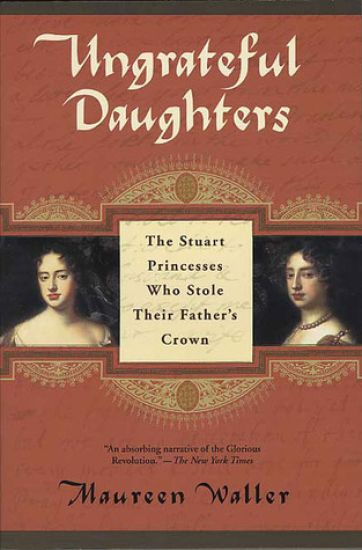
Ungrateful Daughters: The Stuart Princesses Who Stole Their Father's Crown
In 1688, the birth of a Prince of Wales ignited a family quarrel-and a revolution. James II's drive towards Catholicism had alienated the nation and his two staunchly Protestant daughters by his first marriage, Mary and Anne, the "ungrateful daughters" who eventually usurped their father's crown and stole their half-brother's birthright. Seven prominent men sent an invitation to William of Orange-James's nephew and son-in-law-to intervene in English affairs. But Mary and Anne also played a key role. Jealous and resentful of her hated stepmother, Anne had written a series of malicious letters to Mary in Holland, implying that the Queen's pregnancy was a hoax-a Catholic plot to deny Mary her rightful inheritance. Distraught from being betrayed by his own children, James fled the kingdom. And even as the crown descended on her head, Mary knew she had incurred a father's curse. The sisters quarreled to the day of Mary's death at age 32. Anne did nothing to earn her father's forgiveness, and she declared her brother an outlaw with a price on his head. Acclaimed historian Maureen Waller re-creates the late Stuart era in a compelling narrative that highlights the influence of the royal women on one of the most momentous events in English history. Prompted by religious bigotry and the emotions that beset every family relationship, this palace coup changed the face of the monarchy, and signaled the end of a dynasty.
Historical Dictionary of Stuart England, 1603-1689

Historical Dictionary of Stuart England, 1603-1689

Ronald H. Fritze; William B. Robison

Greenwood Press
1996
sidottu
A ready reference for general readers, undergraduate and graduate students, teachers, and scholars, this volume contains 320 entries by 80 experts, covering a broad range of topics, plus a lengthy chronology and extensive bibliography. The entries are based on current scholarship and are followed by pertinent references. Among the items included are biographies of kings and queens, ministers, opposition leaders, ecclesiastics, and literary figures; entries on the army, navy, courts, and other institutions; local government and officials; important court cases and documents, such as the Great Contract, Petition of Right, and Bill of Rights; and controversial examples of the Royal prerogative, such as the dispensing and suspending of powers.The volume also covers the Civil Wars, Glorious Revolution, and other rebellions; the Dutch, French, and Spanish Wars; and diplomatic events. Anglicanism, Puritanism, and other religious topics are included as well as political groups, such as the Cavaliers and Roundheads, and radicals like the Diggers and Fifth Monarchists. Social and economic topics include agriculture, mercantilism, poor laws, population, and taxation. The dictionary also covers cultural topics, conceptual topics such as divine right, and topics on women. Although the book focuses on England, it also includes entries on Ireland, Scotland, and Wales and topics relating to those areas.
The Music of Stuart Saunders Smith

The Music of Stuart Saunders Smith

John P. Welsh

Praeger Publishers Inc
1996
sidottu
In the music of Stuart Saunders Smith (b. 1948), jazz, the avant-garde, and sound-text poetry coalesce. Through the years he has concentrated on certain kinds of composition—open form, radio music, trans-media systems, and sound-text poetry. Although Smith considers himself a jazz composer and drummer, his work has been absorbed into a wider range of contemporary musical efforts, both in the United States and Europe.This study of Smith contains six critical analyses, an interview, and bibliographic information containing a list of compositions, a discography, Smith's publications, and research currently available on his music. As Milton Babbitt notes, All of his music is to be reckoned with... and, as such, this volume will be of interest to all students and scholars of contemporary composition.
Daily Life in Stuart England

Daily Life in Stuart England

Jeffrey L. Forgeng

Greenwood Press
2007
sidottu
England witnessed an overall rising standard of living in the seventeenth century. Still very much an agrarian society, approximately 80% of the population lived in rural settlements, and even citydwellers were in walking distance of farmland. However, as the the century came to an end a growing proportion of the population was living in urban areas. London in particular grew from some 200,000 people in 1600 to 575,000 by 1700 and went from being the 3rd largest city in Europe to the largest. Homes were larger than previously and the wealth of a family could be determined by how many fireplaces were in the home. Clothing was another important facet of Stuart culture and not only protected the wearer against the elements but was a statement of their position in society. Clothing and homes weren't the only marker of social status, even sports and games were often divided along class lines - many in the lower classes played football while the upper-classes were consumed with billiards. Forgeng brings life in Stuart England alive for students and general readers alike. Chapters devoted to the course of life and cycles of time; the living environment; clothing and accoutrements; food and drink; and entertainments detail the day-to-day lives of those living in Stuart England; while the role of women; religion; science and technology; the military; and trade and economy are also explored. Greenwood's Daily Life through History series looks at the everyday lives of common people. This book will illuminate the lives of those living in Stuart England and provide a basis for further research. Black and white photographs, maps and charts are interspersed throughout the text to assist readers. Reference features include a timeline of historic events, sources for further reading, glossary of terms, bibliography and index.