Kirjojen hintavertailu. Mukana 11 627 220 kirjaa ja 12 kauppaa.

Kirjahaku

Etsi kirjoja tekijän nimen, kirjan nimen tai ISBN:n perusteella.

1000 tulosta hakusanalla Terry Carson

British Rail 1974-1997

British Rail 1974-1997

Terry Gourvish

Oxford University Press
2002
sidottu
Britain's privatized railways inspire considerable debate about organization, financing, and development. This volume provides an account of the progress made by British Rail prior to privatization, and an insight into its difficult role in the government's privatization planning from 1989.
Reengineering Health Care

Reengineering Health Care

Terry McNulty; Ewan Ferlie

Oxford University Press
2004
nidottu
Organizations are being urged to experiment with new structures and processes. A 'process perspective' on organizing is emerging as a major challenge to 'functional' principles of organizing established during the last century. Business process reengineering is one exemplar of process thinking that has received great attention amongst organizational theorists and practitioners. This in-depth account of business process reengineering within a major NHS hospital is an important contribution to the very limited stock of empirical knowledge about new organizational forms, especially in the public sector. The book combines empirical data gathered through an intensive, comparative case study method with strategic choice and neo-institutional theories to analyse the changing context of public organizations, importation of models of organizing from private to public organizations, and dynamics of public sector transformation. The outcomes of the change programme add to our more general organizational knowledge about (a) the impact of corporate change programmes, particularly in professionalized and public sector settings, (b) impediments and enablers of lateral organizing structures and processes, and (c) contradictions within the New Public Management between functional and process principles for organizing.
British Rail 1974-1997

British Rail 1974-1997

Terry Gourvish

Oxford University Press
2004
nidottu
Britain's privatised railways continure to provoke debate about the organisation, financing, and development of the railway system. This important book, written by Britain's leading railway historian, provides an authoritative account of the progress made by British Rail prior to privatisation, and a unique insight into its difficult role in the government's privatisation planning from 1989. Based on free access to the British Railway Board's rich archives, the book provides a comprehensive analysis of the main themes: a process of continuous organisational change; the existence of a persistent government audit; perennial investment restraints; the directive to reduce operating costs and improve productivity; a concern with financial performance, technological change, service quality, and the management of industrial relations; and the Board's ambiguous position as the Conservative government pressed home its privatisation programme. The introduction of sector management from 1982 and the 'Organising for Quality' initiative of the early 1990s, the Serpell Report on railway finances of 1983, the sale of the subsidiary businesses, the large-scale investment in the Channel Tunnel, and the obsession with safety which followed the Clapham accident of 1988, are all examined in depth. In the conclusion, the author reviews the successes and failures of the public sector, rehearses the arguments for and against integration in the railway industry, and contrasts what many have termed 'the golden age' of the mid-late 1980s, when the British Rail-government relationship was arguably at its most effective, with what has happened since 1994.
Field Linguistics

Field Linguistics

Terry Crowley

Oxford University Press
2007
sidottu
Crowley's voice of experience brings us the best practical fieldwork guide to date. Sensible, frank, and comprehensive, this book prepares beginning field workers for the rigours ahead and will save years of costly trial and error. N. J. Enfield This book is a comprehensive, practical guide to field linguistics. It deals in particular with the problems arising from the documentation of endangered languages. Deploying a mixture of methodology and practical advice and drawing on his own immense experience, Terry Crowley shows how to record, analyse, and describe a language in the field. He covers the challenges and problems the researcher is likely to encounter, offers guidance on issues ranging from ethics to everyday diplomacy, and provides full discussions of corpus elicitation, how to keep track of data, salvage fieldwork, dealing with unexpected circumstances, and many other central topics. "We all learn by our mistakes," he writes, "and I have plenty of my own to share with you."
Hegel's Naturalism

Hegel's Naturalism

Terry Pinkard

Oxford University Press Inc
2013
nidottu
Terry Pinkard draws on Hegel's central works as well as his lectures on aesthetics, the history of philosophy, and the philosophy of history in this deeply informed and original exploration of Hegel's naturalism. As Pinkard explains, Hegel's version of naturalism was in fact drawn from Aristotelian naturalism: Hegel fused Aristotle's conception of nature with his insistence that the origin and development of philosophy has empirical physics as its presupposition. As a result, Hegel found that, although modern nature must be understood as a whole to be non-purposive, there is nonetheless a place for Aristotelian purposiveness within such nature. Such a naturalism provides the framework for explaining how we are both natural organisms and also practically minded (self-determining, rationally responsive, reason-giving) beings. In arguing for this point, Hegel shows that the kind of self-division which is characteristic of human agency also provides human agents with an updated version of an Aristotelian final end of life. Pinkard treats this conception of the final end of "being at one with oneself" in two parts. The first part focuses on Hegel's account of agency in naturalist terms and how it is that agency requires such a self-division, while the second part explores how Hegel thinks a historical narration is essential for understanding what this kind of self-division has come to require of itself. In making his case, Hegel argues that both the antinomies of philosophical thought and the essential fragmentation of modern life are all not to be understood as overcome in a higher order unity in the "State." On the contrary, Hegel demonstrates that modern institutions do not resolve such tensions any more than a comprehensive philosophical account can resolve them theoretically. The job of modern practices and institutions (and at a reflective level the task of modern philosophy) is to help us understand and live with precisely the unresolvability of these oppositions. Therefore, Pinkard explains, Hegel is not the totality theorist he has been taken to be, nor is he an "identity thinker," à la Adorno. He is an anti-totality thinker.
The Meaning of Life

The Meaning of Life

Terry Eagleton

Oxford University Press
2008
nidottu
'Philosophers have an infuriating habit of analysing questions rather than answering them', writes Terry Eagleton, who, in these pages, asks the most important question any of us ever ask, and attempts to answer it. So what is the meaning of life? In this witty, spirited, and stimulating inquiry, Eagleton shows how centuries of thinkers - from Shakespeare and Schopenhauer to Marx, Sartre and Beckett - have tackled the question. Refusing to settle for the bland and boring, Eagleton reveals with a mixture of humour and intellectual rigour how the question has become particularly problematic in modern times. Instead of addressing it head-on, we take refuge from the feelings of 'meaninglessness' in our lives by filling them with a multitude of different things: from football and sex, to New Age religions and fundamentalism. 'Many of the readers of this book are likely to be as sceptical of the phrase "the meaning of life" as they are of Santa Claus', he writes. But Eagleton contends that in a world where we need to find common meanings, it is important that we set about answering the question of all questions; and, in conclusion, he suggests his own answer. ABOUT THE SERIES: The Very Short Introductions series from Oxford University Press contains hundreds of titles in almost every subject area. These pocket-sized books are the perfect way to get ahead in a new subject quickly. Our expert authors combine facts, analysis, perspective, new ideas, and enthusiasm to make interesting and challenging topics highly readable.
Hegel's Naturalism

Hegel's Naturalism

Terry Pinkard

Oxford University Press Inc
2012
sidottu
Terry Pinkard draws on Hegel's central works as well as his lectures on aesthetics, the history of philosophy, and the philosophy of history in this deeply informed and original exploration of Hegel's naturalism. As Pinkard explains, Hegel's version of naturalism was in fact drawn from Aristotelian naturalism: Hegel fused Aristotle's conception of nature with his insistence that the origin and development of philosophy has empirical physics as its presupposition. As a result, Hegel found that, although modern nature must be understood as a whole to be non-purposive, there is nonetheless a place for Aristotelian purposiveness within such nature. Such a naturalism provides the framework for explaining how we are both natural organisms and also practically minded (self-determining, rationally responsive, reason-giving) beings. In arguing for this point, Hegel shows that the kind of self-division which is characteristic of human agency also provides human agents with an updated version of an Aristotelian final end of life. Pinkard treats this conception of the final end of "being at one with oneself" in two parts. The first part focuses on Hegel's account of agency in naturalist terms and how it is that agency requires such a self-division, while the second part explores how Hegel thinks a historical narration is essential for understanding what this kind of self-division has come to require of itself. In making his case, Hegel argues that both the antinomies of philosophical thought and the essential fragmentation of modern life are all not to be understood as overcome in a higher order unity in the "State." On the contrary, Hegel demonstrates that modern institutions do not resolve such tensions any more than a comprehensive philosophical account can resolve them theoretically. The job of modern practices and institutions (and at a reflective level the task of modern philosophy) is to help us understand and live with precisely the unresolvability of these oppositions. Therefore, Pinkard explains, Hegel is not the totality theorist he has been taken to be, nor is he an "identity thinker," à la Adorno. He is an anti-totality thinker.
Bush's Wars

Bush's Wars

Terry Anderson

Oxford University Press Inc
2013
nidottu
From journalistic accounts like Fiasco and Imperial Life in the Emerald City to insider memoirs like Jawbreaker and Three Cups of Tea , the books about America's wars in Iraq and Afghanistan could fill a library. But each explores a narrow slice of a whole: two wars launched by a single president as part of a single foreign policy. Now noted historian Terry H. Anderson examines them together, in a single comprehensive overview. Shortly after the terrorist attacks of September 11, 2001, President George W. Bush told advisor Karl Rove, "I am here for a reason, and this is how we're going to be judged." Anderson provides this judgment in this sweeping, authoritative account of Bush's War on Terror and his twin interventions. He begins with historical surveys of Iraq and Afghanistan known respectively as "the improbable country" and "the graveyard of empires," and he examines U.S. policies toward those and other nations in the Middle East from the 1970s to 2000. Then Anderson focuses on the Bush Administration, carrying us through such events as the terrorist's attacks of 9/11, the invasion of Afghanistan and the siege of Tora Bora, the "Axis of Evil" speech, the invasion of Iraq and capture of Baghdad, and the eruption of insurgency in Iraq. He ranges from RPGs slamming into Abrams tanks to cabinet meetings, vividly portraying both soldiers in the field and such policymakers as Dick Cheney and Condoleezza Rice. Anderson describes the counter-insurgency strategy embodied by the "surge" in Iraq, and the simultaneous revival of the Taliban. He concludes with an assessment of the prosecution of the wars in the first years of Barack Obama's presidency, as well as an overview of conflict's continuation in the later years of the Obama administration. Carefully researched and briskly narrated, Bush's Wars provides the single-volume, balanced history that we have been waiting for.
The Cocaine Kids

The Cocaine Kids

Terry Williams

Westview Press Inc
1990
pokkari
Since 1982, sociologist Terry Williams has spent days, weeks, and months hanging out" with a teenage cocaine ring in cocaine bars, after-hours clubs, on street corners, in crack houses and in their homes. The picture he creates in The Cocaine Kids is the story behind the headlines. The lives of these young dealers in the fast lane of the underground economy emerge in depth and colour on the pages of this book.
The Organization of Interests

The Organization of Interests

Terry M. Moe

University of Chicago Press
1988
nidottu
"Criticisms of Mancur Olson's theory of group membership and organizational behavior and discussions of the limits of his formulations are not new, but Terry Moe has set them forth in thoroughgoing fashion, has elaborated and extended them, and has made positive new contributions. The result is a book that is valuable and constructive, one that may well revive interest in the systematic study of political groups."—David B. Truman, American Political Science Review "The Organization of Interests is a valuable addition to the literature. It reminds us that the interior life of groups has political significance and gives us a conceptual framework for exploring that life. It balances nicely between the pluralists—who tend to interpret interest group behaviour entirely in political terms—and Olson—who has no satisfactory explanation for behaviour that is not attributable to economic self-interest. In the concept of the entrepreneur Moe gives us a useful analytical device which deserves operationalization. The book is well worth study."—A. Paul Pross, Canadian Journal of Political Science
The Chicago Guide to College Science Teaching

The Chicago Guide to College Science Teaching

Terry McGlynn

University of Chicago Press
2021
sidottu
Higher education is a strange beast. Teaching is a critical skill for scientists in academia, yet one that is barely touched upon in their professional training—despite being a substantial part of their career. This book is a practical guide for anyone teaching STEM-related academic disciplines at the college level, from graduate students teaching lab sections and newly appointed faculty to well-seasoned professors in want of fresh ideas. Terry McGlynn’s straightforward, no-nonsense approach avoids off-putting pedagogical jargon and enables instructors to become true ambassadors for science. For years, McGlynn has been addressing the need for practical and accessible advice for college science teachers through his popular blog Small Pond Science. Now he has gathered this advice as an easy read—one that can be ingested and put to use on short deadline. Readers will learn about topics ranging from creating a syllabus and developing grading rubrics to mastering online teaching and ensuring safety during lab and fieldwork. The book also offers advice on cultivating productive relationships with students, teaching assistants, and colleagues.
The Chicago Guide to College Science Teaching

The Chicago Guide to College Science Teaching

Terry McGlynn

University of Chicago Press
2020
nidottu
Higher education is a strange beast. Teaching is a critical skill for scientists in academia, yet one that is barely touched upon in their professional training—despite being a substantial part of their career. This book is a practical guide for anyone teaching STEM-related academic disciplines at the college level, from graduate students teaching lab sections and newly appointed faculty to well-seasoned professors in want of fresh ideas. Terry McGlynn’s straightforward, no-nonsense approach avoids off-putting pedagogical jargon and enables instructors to become true ambassadors for science. For years, McGlynn has been addressing the need for practical and accessible advice for college science teachers through his popular blog Small Pond Science. Now he has gathered this advice as an easy read—one that can be ingested and put to use on short deadline. Readers will learn about topics ranging from creating a syllabus and developing grading rubrics to mastering online teaching and ensuring safety during lab and fieldwork. The book also offers advice on cultivating productive relationships with students, teaching assistants, and colleagues.
Making the Modern

Making the Modern

Terry Smith

University of Chicago Press
1994
nidottu
In this ambitious book, Terry Smith chronicles the modernist revolution in American art and design between the world wars—from its origins in the new industrial age of mass production, automation, and corporate culture to its powerful and transforming effects on the way Americans came to see themselves and their world. From Ford Motor's first assembly line in 1913 to the New York World's Fair of 1939, Smith traces the evolution of visual imagery in the first half of America's century of progress.
What Is Contemporary Art?

What Is Contemporary Art?

Terry Smith

University of Chicago Press
2009
nidottu
Who gets to say what counts as contemporary art? Artists, critics, curators, gallerists, auctioneers, collectors, or the public? Revealing how all of these groups have shaped today's multifaceted definition, Terry Smith brilliantly shows that a historical approach offers the best answer to the question: What Is Contemporary Art? Smith argues that the most recognizable kind is characterized by a return to mainstream modernism in the work of such artists as Richard Serra and Gerhard Richter, as well as the retro-sensationalism of figures like Damien Hirst and Takashi Murakami. At the same time, Smith reveals, post-colonial artists are engaged in a different kind of practice: one that builds on local concerns and tackles questions of identity, history, and globalization. A younger generation embodies yet a third approach to contemporaneity by investigating time, place, mediation, and ethics through small-scale, closely connective art making. Inviting readers into these diverse yet overlapping art worlds, Smith offers a behind-the-scenes introduction to the institutions, the personalities, the biennials, and of course the works that together are defining the contemporary. The resulting map of where art is now illuminates not only where it has been but also where it is going.
The Architecture of Aftermath

The Architecture of Aftermath

Terry Smith

University of Chicago Press
2006
sidottu
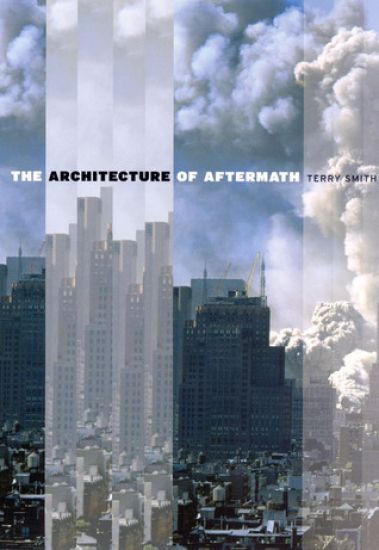
The September 11 terrorist attacks targeted, in Osama bin Laden's words, "America's icons of military and economic power." In "The Architecture of Aftermath", Terry Smith argues that it was no accident that these targets were buildings: architecture has long served as a symbol of proud, defiant power - and never more so than in the late twentieth century. But after September 11, Smith asserts, late modern architecture suddenly seemed an indulgence. With close readings of key buildings - including Jorn Utzon's Sydney Opera House, Minoru Yamasaki's World Trade Center, Frank Gehry's Guggenheim Museum Bilbao, and Richard Meier's Getty Center - Smith traces the growth of the spectacular architecture of modernity and then charts its aftermath in the conditions of contemporaneity. Indeed, Smith focuses on the very culture of aftermath itself, exploring how global politics, clashing cultures, and symbolic warfare have changed the way we experience destination architecture. Like other artists everywhere, architects are responding to the idea of aftermath by questioning the viability of their forms and the validity of their purposes. With his richly illustrated "The Architecture of Aftermath", Smith has done so as well.
The Architecture of Aftermath

The Architecture of Aftermath

Terry Smith

University of Chicago Press
2006
nidottu
The September 11 terrorist attacks targeted, in Osama bin Laden's words, "America's icons of military and economic power." In "The Architecture of Aftermath", Terry Smith argues that it was no accident that these targets were buildings: architecture has long served as a symbol of proud, defiant power - and never more so than in the late twentieth century. But after September 11, Smith asserts, late modern architecture suddenly seemed an indulgence. With close readings of key buildings - including Jorn Utzon's Sydney Opera House, Minoru Yamasaki's World Trade Center, Frank Gehry's Guggenheim Museum Bilbao, and Richard Meier's Getty Center - Smith traces the growth of the spectacular architecture of modernity and then charts its aftermath in the conditions of contemporaneity. Indeed, Smith focuses on the very culture of aftermath itself, exploring how global politics, clashing cultures, and symbolic warfare have changed the way we experience destination architecture. Like other artists everywhere, architects are responding to the idea of aftermath by questioning the viability of their forms and the validity of their purposes. With his richly illustrated "The Architecture of Aftermath", Smith has done so as well.
Practice, Power, and Forms of Life

Practice, Power, and Forms of Life

Terry Pinkard

University of Chicago Press
2022
sidottu
Philosopher Terry Pinkard revisits Sartre’s later work, illuminating a pivotal stance in Sartre’s understanding of freedom and communal action. Jean-Paul Sartre’s Critique of Dialectical Reason, released to great fanfare in 1960, has since then receded in philosophical visibility. As Sartre’s reputation is now making a comeback, it is time for a reappraisal of his later work. In Practice, Power, and Forms of Life, philosopher Terry Pinkard interprets Sartre’s late work as a fundamental reworking of his earlier ideas, especially in terms of his understanding of the possibility of communal action as genuinely free, which the French philosopher had previously argued was impossible. Pinkard reveals how Sartre was drawn back to Hegel, a move that was itself incited by Sartre’s newfound interest in Marxism. Pinkard argues that Sartre constructed a novel position on freedom that has yet to be adequately taken up and analyzed within philosophy and political theory. Through Sartre, Pinkard advances an argument that contributes to the history of philosophy as well as key debates on action and freedom.
Professional Heckler

Professional Heckler

Terry Mosher

McGill-Queen's University Press
2020
nidottu
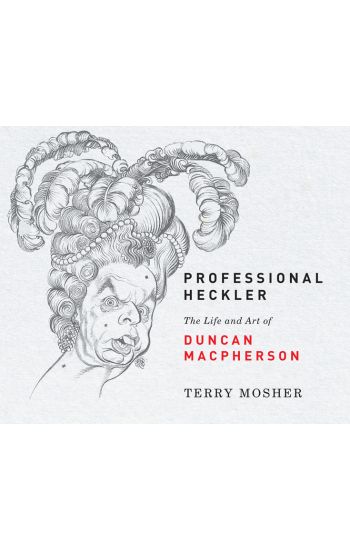
Duncan Macpherson (1924-1993) was one of the greatest of Canadian cartoonists. He began his career as an illustrator for the Montreal Standard and Weekend Magazine, then joined the ranks of Maclean's and finally the Toronto Star. He won six National Newspaper Awards and a Molson Prize, among other honours. A formidable and groundbreaking artist, he was also an alcoholic who struggled with many personal demons. Professional Heckler is the first biography of Macpherson. Written by Terry Mosher, well known under the pen name Aislin for his decades of cartoons in the Montreal Gazette, the book is lavishly illustrated with hundreds of examples of Macpherson's drawings, paintings, and cartoons, as well as archival photographs. Both an admirer of Macpherson's work and a longtime student of the art, craft, and business of cartooning, Mosher brings a professional expertise and encyclopedic knowledge of the history of cartooning that allow him to comment on facets of Macpherson's work from a practical standpoint. With humour and affection, he provides remarkable insights into the artist's character, style, influences, personal foibles, and way of working. A delight to read, Professional Heckler is a pioneering work on an influential and controversial cartoonist that makes an essential contribution to the history of visual arts in Canada.
Professional Heckler

Professional Heckler

Terry Mosher

McGill-Queen's University Press
2020
sidottu
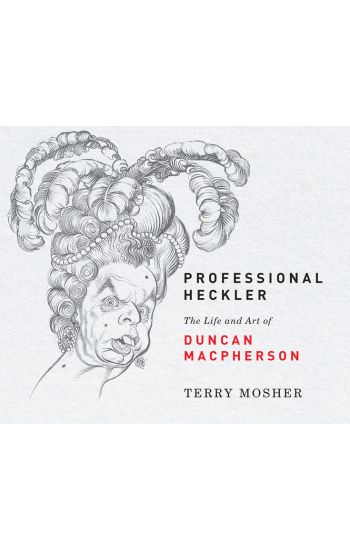
Duncan Macpherson (1924-1993) was one of the greatest of Canadian cartoonists. He began his career as an illustrator for the Montreal Standard and Weekend Magazine, then joined the ranks of Maclean's and finally the Toronto Star. He won six National Newspaper Awards and a Molson Prize, among other honours. A formidable and groundbreaking artist, he was also an alcoholic who struggled with many personal demons. Professional Heckler is the first biography of Macpherson. Written by Terry Mosher, well known under the pen name Aislin for his decades of cartoons in the Montreal Gazette, the book is lavishly illustrated with hundreds of examples of Macpherson's drawings, paintings, and cartoons, as well as archival photographs. Both an admirer of Macpherson's work and a longtime student of the art, craft, and business of cartooning, Mosher brings a professional expertise and encyclopedic knowledge of the history of cartooning that allow him to comment on facets of Macpherson's work from a practical standpoint. With humour and affection, he provides remarkable insights into the artist's character, style, influences, personal foibles, and way of working. A delight to read, Professional Heckler is a pioneering work on an influential and controversial cartoonist that makes an essential contribution to the history of visual arts in Canada.