As doen as transmitidas por mosquitos, como a mal ria, a febre amarela, a dengue, o v rus do Nilo Ocidental e o v rus Zika, s o de enorme import ncia m dica e veterin ria. O controlo das doen as arbovirais, em especial a dengue e o v rus Zika, carece infelizmente de tratamentos fi veis e eficazes da infec o, pelo que o controlo dos vectores continua a ter uma import ncia fundamental. Por outro lado, a utiliza o excessiva de insecticidas sint ticos conduziu a v rios problemas de sa de p blica e ecol gicos, incluindo a polui o ambiental, os efeitos em organismos n o visados, bem como o desenvolvimento de resist ncia em vectores visados. Os insecticidas de produtos naturais podem aumentar a efic cia dos programas de controlo de vectores. Este livro foi concebido para investigadores que estudam o controlo de mosquitos atrav s de extractos de plantas medicinais. O livro cont m sete cap tulos. O cap tulo 1 apresenta uma introdu o geral. No cap tulo 2, s o apresentadas revis es da literatura. O cap tulo 3 apresenta a biologia do mosquito vector do v rus Zika. O cap tulo 4 abrange os materiais e os m todos. As observa es s o apresentadas no cap tulo 5. A discuss o feita no cap tulo 6. O resumo apresentado no cap tulo 7. Por ltimo, s o apresentadas as refer ncias bibliogr ficas.
The objectives of the current book was to investigate the factors affecting the population distribution patterns, abundance, dispersal at two sites, as well as the phylogenetics and population genetics at six populations of An. arabiensis in Sudan. This book has established that An. arabiensis is the most important vector of malaria in Sudan. Anopheles populations are naturally subject to environmental factors in which they inhabit. These factors play a major role in controlling their population dynamics, population genetic structure and their effectiveness as vectors. The climatic changes in Sudan would predictably cause fluctuations in the An. arabiensis populations. This would ultimately affect the population dynamics and population genetics of these vectors. In the ecological study in the two villages, high density was observed in the Abu Algoni village permanent breeding sites in the whole area. In Algerif West the density was low presumably due to effective control programme of malaria vector conducted in this area. Mosquito age composition plays an essential position in malaria transmission.
This book is devoted to studying algorithms for the solution of a class of quadratic matrix and vector equations. These equations appear, in different forms, in several practical applications, especially in applied probability and control theory. The equations are first presented using a novel unifying approach; then, specific numerical methods are presented for the cases most relevant for applications, and new algorithms and theoretical results developed by the author are presented. The book focuses on “matrix multiplication-rich” iterations such as cyclic reduction and the structured doubling algorithm (SDA) and contains a variety of new research results which, as of today, are only available in articles or preprints.
The last thirty years were a period of continuous and intense growth in the subject of dynamical systems. New concepts and techniques and at the same time new areas of applications of the theory were found. The 31st session of the Seminaire de Mathematiques Superieures (SMS) held at the Universite de Montreal in July 1992 was on dynamical systems having as its center theme "Bifurcations and periodic orbits of vector fields". This session of the SMS was a NATO Advanced Study Institute (ASI). This ASI had the purpose of acquainting the participants with some of the most recent developments and of stimulating new research around the chosen center theme. These developments include the major tools of the new resummation techniques with applications, in particular to the proof of the non-accumulation of limit-cycles for real-analytic plane vector fields. One of the aims of the ASI was to bring together methods from real and complex dy namical systems. There is a growing awareness that an interplay between real and complex methods is both useful and necessary for the solution of some of the problems. Complex techniques become powerful tools which yield valuable information when applied to the study of the dynamics of real vector fields. The recent developments show that no rigid frontiers between disciplines exist and that interesting new developments occur when ideas and techniques from diverse disciplines are married. One of the aims of the ASI was to show these multiple interactions at work.
The family Trichodoridae was established by Thorne in 1935 but it remained of limited taxonomie interest until 1951 when Christie and Perry associated Trichodorus christie (now Paratrichodorus minor) with a "stubby root disease" that affected certain crops in Florida, USA and interest further increased from 1960 when P. pachydermus was implicated as a vector of the economically important tobacco raule virus. Such discoveries gave an impetus to studies on many aspects of the biology of trichodorid nematodes with a consequent proliferation of new species described from different parts of the world. The number of species increased from twelve in 1957 to a present day total exceeding eighty. This rapid expansion in the number of species was accompanied by several reappraisals of the taxonomy and systematies of the family, the most notable changes being the creation of the genus Paratrichodorus by Siddiqi in 1974 and the recognition of the monodelphic genera Monotrichodorus and Allotrichodorus respectively by Andrassy in 1976 and Rodriguez-M, Sher and Siddiqi in 1978. Reliable and unambiguous identification of taxa is dependent on the known reliability of a range of characters, whieh remains of paramount importance in taxonomy even when biochemical and molecular methodology is available. In this book each of the species, including synonyms and species inquirenda, that comprise the family Trichodoridae is re-described from meticulous mieroscopie examination of type specimens, material from official nematode collections and populations in the field.
This book provides recent contributions of current strategies to control insect pests written by experts in their respective fields. Topics include semiochemicals based insect management techniques, assessment of lethal dose/concentrations, strategies for efficient biological control practices, bioinsecticidal formulations and mechanisms of action involving RNAi technology, light-trap collection of insects, the use of sex pheromonal components and attractants for pest insect capture, measures to increase plant resistance in forest plantations, the use of various baculoviruses as biopesticides, and effect of a pathogenic bacterium against an endangered butterfly species. There are several other chapters that focus on insect vectors, including biting midges as livestock vectors in Tunisia, mosquitoes as vectors in Brazil, human disease vectors in Tanzania, pathogenic livestock and human vectors in Africa, insect vectors of Chagas disease, and transgenic and paratransgenic biotechnologies against dipteran pests and vectors. This book targets general biologists, entomologists, ecologists, zoologists, virologists, and epidemiologists, including both teachers and students.
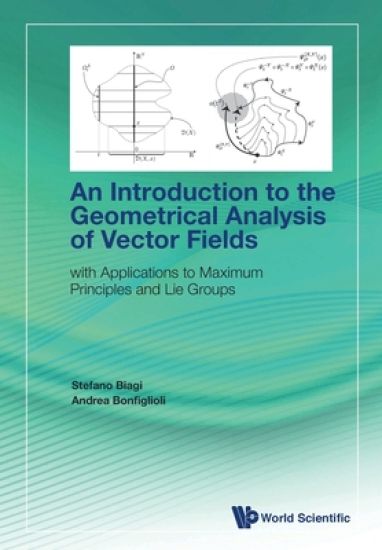
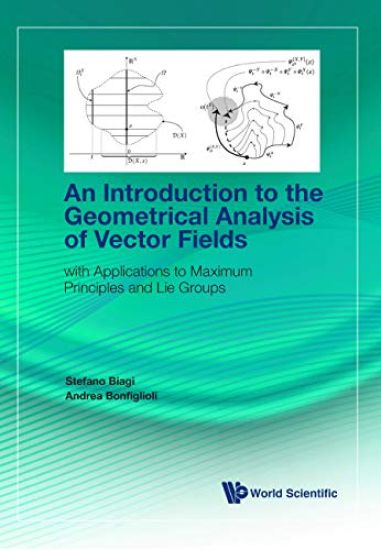
This book provides the reader with a gentle path through the multifaceted theory of vector fields, starting from the definitions and the basic properties of vector fields and flows, and ending with some of their countless applications, in the framework of what is nowadays called Geometrical Analysis. Once the background material is established, the applications mainly deal with the following meaningful settings:
This monograph provides an updated development of fixed point theory under a unified framework of the 'best approximation approach' in p-vector spaces, a core component of nonlinear analysis in mathematics, where p?(0,1] (the same for p below unless specified). This book exposes some important contents of the new fixed point theory, with highlights in four parts.Specifically, the book focuses on the development of general new fixed point theory for both single-valued and set-valued mappings under the framework of p-vector and locally convex spaces for p?(0,1], including topological vector spaces and locally convex spaces as special cases. It provides affirmative answers to the Schauder conjecture under the general setting of p-vector spaces and locally p-convex spaces. The book establishes best approximation results for upper semicontinuous and 1-set contractive set-valued mappings, which are used as tools to establish new fixed point theorems for non-self set-valued mappings with either inward or outward set conditions under various situations. These results improve or unify corresponding results in the existing literature for nonlinear analysis and lay the foundation for the development of fixed point theorems in topological vector spaces since Schauder's conjecture was raised in 1930. In addition, this book demonstrates the power of the fixed point theorem by showing the equivalence among the Ekeland variational principle, Takahashi minimization theorem, Oettli-Théra theorem, Caristi-Kirk type fixed point theorem, and related principles in nonlinear functional analysis.Overall, this book provides an accessible way to establish the new theory in the development of fixed point theorems and results. It is designed to be understandable for senior undergraduate students majoring in mathematics, physical sciences, social sciences, and related fields. We expect that this monograph will serve as a staple textbook for undergraduate and postgraduate students, a reference book for researchers in the field of fixed point theory in nonlinear functional analysis, and an accessible resource for general readers in mathematics and related disciplines.
This book comprehensively covers the latest development in developing and deploying the genetically modified vectors, particularly Anopheles and Aedes mosquitoes responsible for transmitting malaria parasites and dengue viruses, the most deadly and/or debilitating among all the vector-borne diseases. It is considered timely and commensurate to bring about a book dealing with the various ecological, biological and social as well as regulatory aspects for the deployment of genetically modified vectors in special context with the biosafety of humans, his associates, and the environment. Written by an array of specialists and experts in various subjects of genetically modified organisms, this book centrally addresses the (i) basic principles of the genetic manipulation of vectors and they are potential impact on human and the environment, (ii) ecological, biological, ethical, legal and social implications of the use of genetically modified vectors, (iii) identification of potential hazards; assessment and management of risks for human and environment; risk/benefit analysis, (iv) principles and practices for the assessment and management of biosecurity and biosafety in laboratories (and in the field), (v) guiding principles for creation and management of institutional or national biosafety review boards and ethics review committees, and (vi) development and application of a biosafety regulatory framework and its related legal principles at national levels for securing the development and use of vector control methods based on genetic modification strategies. This publication will be useful to researchers, scientists, and professionals engaged in academic and research institutions, government or non-government, as well as students in universities and medical colleges.
This book comprehensively covers the latest development in developing and deploying the genetically modified vectors, particularly Anopheles and Aedes mosquitoes responsible for transmitting malaria parasites and dengue viruses, the most deadly and/or debilitating among all the vector-borne diseases. It is considered timely and commensurate to bring about a book dealing with the various ecological, biological and social as well as regulatory aspects for the deployment of genetically modified vectors in special context with the biosafety of humans, his associates, and the environment. Written by an array of specialists and experts in various subjects of genetically modified organisms, this book centrally addresses the (i) basic principles of the genetic manipulation of vectors and they are potential impact on human and the environment, (ii) ecological, biological, ethical, legal and social implications of the use of genetically modified vectors, (iii) identification of potential hazards; assessment and management of risks for human and environment; risk/benefit analysis, (iv) principles and practices for the assessment and management of biosecurity and biosafety in laboratories (and in the field), (v) guiding principles for creation and management of institutional or national biosafety review boards and ethics review committees, and (vi) development and application of a biosafety regulatory framework and its related legal principles at national levels for securing the development and use of vector control methods based on genetic modification strategies. This publication will be useful to researchers, scientists, and professionals engaged in academic and research institutions, government or non-government, as well as students in universities and medical colleges.
This book provides the reader with a gentle path through the multifaceted theory of vector fields, starting from the definitions and the basic properties of vector fields and flows, and ending with some of their countless applications, in the framework of what is nowadays called Geometrical Analysis. Once the background material is established, the applications mainly deal with the following meaningful settings:
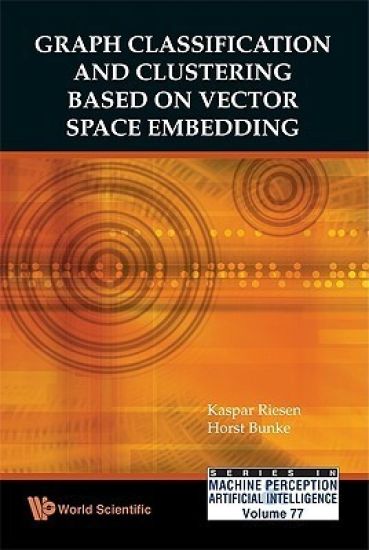
This book is concerned with a fundamentally novel approach to graph-based pattern recognition based on vector space embedding of graphs. It aims at condensing the high representational power of graphs into a computationally efficient and mathematically convenient feature vector.This volume utilizes the dissimilarity space representation originally proposed by Duin and Pekalska to embed graphs in real vector spaces. Such an embedding gives one access to all algorithms developed in the past for feature vectors, which has been the predominant representation formalism in pattern recognition and related areas for a long time.