Kirjojen hintavertailu. Mukana 11 717 486 kirjaa ja 12 kauppaa.

Kirjahaku

Etsi kirjoja tekijän nimen, kirjan nimen tai ISBN:n perusteella.

1000 tulosta hakusanalla Wauter Mannaert

Walter Benjamin and the Antinomies of Tradition
Few modern thinkers have been as convinced of the necessity of recovering the past in order to redeem the present as Walter Benjamin (1892-1940). Benjamin at once mourned and celebrated what he took to be an inevitable liquidation of traditional culture, and his determination to think both of these attitudes through to their conclusions lends his work its peculiar honesty, along with its paradoxical, antinomial coherence. In a landmark interpretation of the whole of Benjamin's career, John McCole demonstrates a way of understanding Benjamin that both contextualizes and addresses the complexities and ambiguities of his texts.Working with Pierre Bourdieu's concept of the "intellectual field," McCole traces Benjamin's deep ambivalence about cultural tradition through the longterm project-an immanent critique of German idealist and romantic aesthetics-which unites his writings. McCole builds a sustained reading of Benjamin's intellectual development which sheds new light on the formative role of early influences—particularly his participation in the pre-World War I German youth movement and the orthodox discourse of German intellectual culture—and shows how Benjamin later extended the strategies he learned within these contexts during key encounters with Weimar modernism, surrealism, and the fiction of Proust.The fullest account of Benjamin available in English, this lucid and penetrating book will be welcomed by intellectual historians, literary theorists and critics, historians of German literature, and Continental philosophers.

Walter Benjamin and the Demands of History
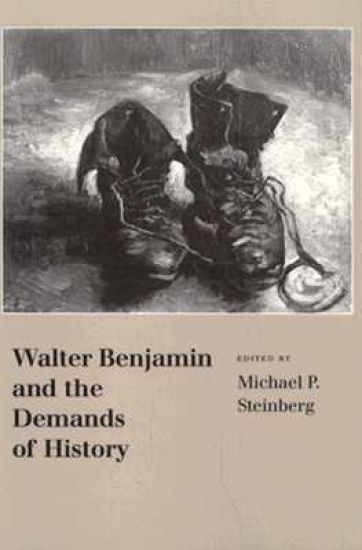
This book is the first to consider the presence of history and the question of historical practice in Walter Benjamin's work. Benjamin, the critic and philosopher of history, was also the practitioner, the authors contend, and it is in the practice of historical writing that the materialist aspect of his thought is most evident.Some of the essays analyze Benjamin's writings in cultural history and the philosophy of history. Others connect his historical and theoretical practices to issues in contemporary feminism and post-colonial studies, and to cultural contexts including the United States, Japan, and Hong Kong. In different ways, the authors all find in Benjamin's specific notion of historical materialism a dialectic between textual and cultural analysis which can reinvigorate the relation between literary and historical studies.
Walter Benjamin and the Demands of History
This book is the first to consider the presence of history and the question of historical practice in Walter Benjamin's work. Benjamin, the critic and philosopher of history, was also the practitioner, the authors contend, and it is in the practice of historical writing that the materialist aspect of his thought is most evident. Some of the essays analyze Benjamin's writings in cultural history and the philosophy of history. Others connect his historical and theoretical practices to issues in contemporary feminism and post-colonial studies, and to cultural contexts including the United States, Japan, and Hong Kong. In different ways, the authors all find in Benjamin's specific notion of historical materialism a dialectic between textual and cultural analysis which can reinvigorate the relation between literary and historical studies.
Walter Benjamin and the Antinomies of Tradition

Walter Benjamin and the Antinomies of Tradition

John McCole

Cornell University Press
1993
pokkari
Few modern thinkers have been as convinced of the necessity of recovering the past in order to redeem the present as Walter Benjamin (1892-1940). Benjamin at once mourned and celebrated what he took to be an inevitable liquidation of traditional culture, and his determination to think both of these attitudes through to their conclusions lends his work its peculiar honesty, along with its paradoxical, antinomial coherence. In a landmark interpretation of the whole of Benjamin's career, John McCole demonstrates a way of understanding Benjamin that both contextualizes and addresses the complexities and ambiguities of his texts. Working with Pierre Bourdieu's concept of the "intellectual field," McCole traces Benjamin's deep ambivalence about cultural tradition through the longterm project-an immanent critique of German idealist and romantic aesthetics-which unites his writings. McCole builds a sustained reading of Benjamin's intellectual development which sheds new light on the formative role of early influences—particularly his participation in the pre-World War I German youth movement and the orthodox discourse of German intellectual culture—and shows how Benjamin later extended the strategies he learned within these contexts during key encounters with Weimar modernism, surrealism, and the fiction of Proust. The fullest account of Benjamin available in English, this lucid and penetrating book will be welcomed by intellectual historians, literary theorists and critics, historians of German literature, and Continental philosophers.
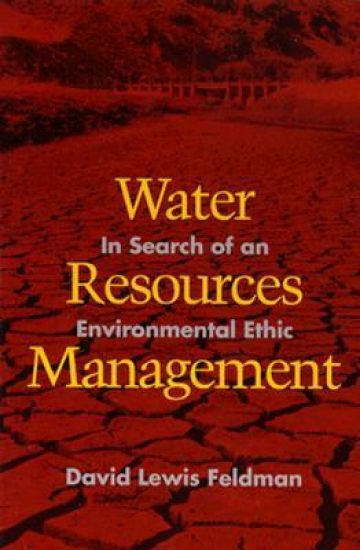
Water Resources Management

Water Resources Management

Dave Feldman

Johns Hopkins University Press
1995
pokkari
This text argues that water resources decision-makers have traditionally made policies that favour development and economic efficiency over "noneconomic" principles such as fairness, environmental protection and concern for future generations. The result has been short-term economic gains for some regions at the expense of long-term economic benefits and ecological stability for society in general. Combining policy analysis, political theory and relevant cases in environmental history, this book challenges governments, interest groups, party platforms and elected officials to implement public policies that are truly ethical and rational.
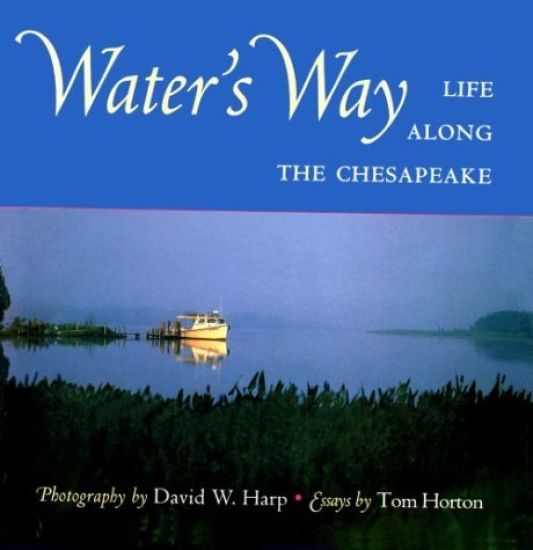
Water's Way

Water's Way

Tom Horton

Johns Hopkins University Press
2000
pokkari
Those who know and love the Chesapeake will find the bay they treasure on the pages of Water's Way: Life along the Chesapeake. The story of one of North America's most fascinating regions unfolds through the sensitive photographs and prose of two men who have studied the Chesapeake all their lives. Photographer David W. Harp and writer Tom Horton vividly portray how, as Horton writes, "the edges where land and water meet charm us all, from watermen to watercolorists and beachcombers to duck hunters." Water's Way will guide you to "those rare, hidden nooks of the bay country where nature still appears as glorious and untrammeled as it did a thousand years ago." It will also take you to less hidden, but equally intriguing sites within the Chesapeake's reach as Harp and Horton depict the worlds of both nature and humans. An intimate knowledge of and an unwavering reverence for the bay pervade Water's Way. Harp and Horton are as attuned to the romance that still clings to the Chesapeake as they are to the realities that inspire and threaten it. In a time when the region faces tremendous changes and challenges, Water's Way is neither strident nor sentimental. Rather, it is suffused with the fundamental respect for the bay which Harp and Horton see as key to its survival.
Water Technology in the Middle Ages

Water Technology in the Middle Ages

Roberta J. Magnusson

Johns Hopkins University Press
2002
sidottu
Focusing attention on gravity-fed water-flow systems in medieval cities and monasteries, Water Technology in the Middle Ages: Cities, Monasteries, and Waterworks after the Roman Empire challenges the view that hydraulic engineering died with the Romans and remained moribund until the Renaissance. Roberta Magnusson explores the systems' technologies-how they worked, what uses the water served-and also the social rifts that created struggles over access to this basic necessity. Mindful of theoretical questions about what hastens technological change and how society and technology mutually influence one another, the author supplies a thoughtful and instructive study. Archeological, historical, and literary evidence vividly depicts those who designed, constructed, and used medieval water systems and demonstrates a shift from a public-administrative to a private-innovative framework-one that argues for the importance of local initiatives. "The following chapters attempt to chart a course between the Scylla and Charybdis of technological and social determinism. While writing them, I have tried to strike a balance between the technical and human aspects of medieval hydraulic systems, and to remember that beneath the welter of documents and diffusion patterns, configurations and components, ordinances and expenditures, lie the perceptions, the choices, and often the plain hard work of individual men and women." -from the Preface
Water Policy for Sustainable Development

Water Policy for Sustainable Development

Dave Feldman

Johns Hopkins University Press
2007
sidottu
The shortage of fresh water is likely to be one of the most pressing issues of the twenty-first century. A UNESCO report predicts that as many as 7 billion people will face shortages of drinking water by 2050. Here, David Lewis Feldman examines river-basin management cases around the world to show how fresh water can be managed to sustain economic development while protecting the environment. He argues that policy makers can employ adaptive management to avoid making decisions that could harm the environment, to recognize and correct mistakes, and to monitor environmental and socioeconomic changes caused by previous policies. To demonstrate how adaptive management can work, Feldman applies it to the Delaware, Susquehanna, Apalachicola-Chattahoochee-Flint, Sacramento-San Joaquin, and Columbia river basins. He assesses the impacts of runoff pollution and climate change, the environmental-justice aspects of water management, and the prospects for sustainable fresh water management. Case studies of the Murray-Darling basin in Australia, the Rhine and Danube in Europe, the Zambezi in Africa, and the Rio de la Plata in South America reveal the impediments to, and opportunities for, adaptive management on a global scale. Feldman's comprehensive investigation and practical analysis bring new insight into the global and political challenges of preserving and managing one of the planet's most important resources.
Walter Scott

Walter Scott

Jane Millgate

University of Toronto Press
1987
pokkari
Between 1814 and 1819 Walter Scott published a remarkable sequence of eight historical and regional novels, beginning with Waverley and culminating in The Bride of Lammermoor and A Legend of Montrose. In the process he made the Author of Waverley into the most successful and famous novelist in the world; by chooseing to remain anonymous, however, Scott deliberately separated this new achievement from the fame he had already gained as editor and poet. This study of the first and major phase of Scott's career as a novelist reconsiders his act of secession from his own literary past and examines the interconnections between Scott the antiquarian and editor, Scott the romantic poet, and Scott the novelist.
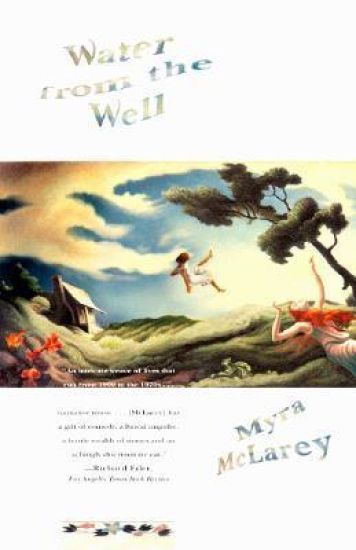
Water from the Well

Water from the Well

Myra McLarey

Grove Press / Atlantic Monthly Press
2000
pokkari
Acclaimed by The Boston Book Review as "incantatory ... poetic and magical," Water from the Well is a novel forged in the soul of community. Set in rural Arkansas, it opens in 1919 with a cow-pasture ball game between the whites of Sugars Springs and the coloreds of neighboring Bethel, a game that shakes the town's delicate racial balance. One year later, a cyclone visits destruction on black and white, female and male, villain and victim. Rich with image and sparkling with humor and compassion, Water from the Well is a story of ex-slaves, displaced Yankees, rapists, healers, small-town sheriffs led into temptation, and the rich weave of a century of community history. "Boldly idiosyncratic and folksy ... characters and their stories emerge with the intimacy of personal memory." -- Richard Bausch, The New York Times Book Review; "Entertaining, touching, celebratory, and absolutely pitch-perfect." -- Sandra Scofield, The Philadelphia Inquirer
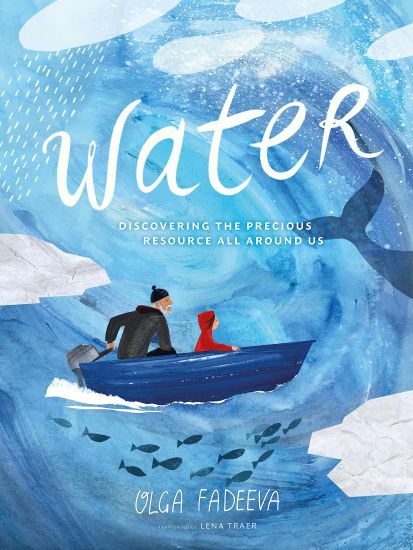
Water

Water

Olga Fadeeva

WILLIAM B EERDMANS PUBLISHING CO
2024
sidottu
A curiosity-sparking book about water in rainstorms, the Great Lakes, the drip from our taps, and other places in our world. Water is everywhere, and we rely on it every single day. But do you ever wonder about water? How much water is on our planet? What happens when there is too much water or too little water? Why does it rain? What are lakes, rivers, seas, and oceans? Why are the seas and oceans blue and salty? What lives underwater? What about water in human history--how did people get water in ancient times? How do we get water today? What do humans build to travel on the water, and how have we harnessed waterpower? How do we protect this amazing resource for the future? Gorgeous and informative, Water invites children to tour through science and history with two characters they may recognize from Wind: Discovering Air in Motion. Colorful acrylic art and energetic text help readers learn about the natural resource we have depended on since the beginning of life itself.
Walter Benjamin and the Aesthetics of Power

Walter Benjamin and the Aesthetics of Power

Lutz Koepnick

University of Nebraska Press
1999
sidottu
Walter Benjamin and the Aesthetics of Power explores Walter Benjamin's seminal writings on the relationship between mass culture and fascism. The book offers a nuanced reading of Benjamin's widely influential critique of aesthetic politics, while it contributes to current debates about the cultural projects of Nazi Germany, the changing role of popular culture in the twentieth century, and the way in which Nazi aesthetics have persisted into the present. Lutz Koepnick first explores the development of the aestheticization thesis in Benjamin's work from the early 1920s to his death in 1940. Pushing Benjamin's fragmentary remarks to a logical conclusion, Koepnick sheds light on the ways in which the Nazis employed industrial mass culture to redress the political as a self-referential space of authenticity and self-assertion. Koepnick then examines to what extent Benjamin's analysis of fascism holds up to recent historical analyses of the National Socialist period and whether Benjamin's aestheticization thesis can help conceptualize cultural politics today. Although Koepnick insists on crucial differences between the stage-managing of political action in modern and postmodern societies, he argues throughout that it is in Benjamin's emphatic insistence on experience that we may find the relevance of his reflections today. Walter Benjamin and the Aesthetics of Power is both an important contribution to Benjamin studies and a revealing addition to our understanding of the Third Reich and of contemporary culture's uneasy relationship to Nazi culture.
Water and Abandon

Water and Abandon

Robert Vivian

Bison Books
2012
pokkari
It’s been a year since the body of seventeen-year-old Kelsey Little was found in the river outside Dark Vespers, Nebraska. Although the town may have reached an uneasy equilibrium, those who loved her most have certainly not: Javier Martinez, her troubled ex-boyfriend and the father of the child no one knew she was carrying; Sam and Hank, her parents, whose marriage is coming apart under the pressure of grief and not-knowing; and Ike Parrish, a reclusive eccentric whose clairvoyant “river spells” compel him to come forward with information about Kelsey’s disappearance and death.A prismatic look at the impact of loss on individual lives, Water and Abandon tells the moving and paradoxical story of those brought together by the very thing that tears them apart. Haunted by Kelsey’s death, each struggles with his or her own demons of blame and guilt, despair and fury-until one, in a confusion of pain, grief, and unrequited love, decides to do something dire. As deeply felt as it is finely crafted, the novel confirms Robert Vivian’s place among the most compelling fiction writers of our day.
Walter Johnson

Walter Johnson

Henry W. Thomas; Shirley Povich

Bison Books
1998
pokkari
"This lavishly illustrated narrative of Walter Johnson's life is the definitive work on the subject and is likely to remain so." - Lawrence S. Ritter, 'Oldtyme Baseball News'. "Henry Thomas's biography of Walter Johnson is carefully researched, thoroughly documented, and, best of all, a pleasure to read." - 'Spitball'. "Does justice to Johnson's extraordinary on-field accomplishments, and it also emphasizes his decency, humility, and self-effacing humor." - 'Booklist'. "Belongs in the very top ranks of sports biographies." - 'Washington Times'. "One of the most comprehensive biographies ever written about an athlete. Incredibly detailed, filled with fascinating stories about arguably the greatest pitcher of all time." - Tim Kurkjian, senior writer for 'Sports Illustrated'. "Delights the soul." - 'Sports Collectors Digest'. Henry W. Thomas, the grandson of Walter Johnson, lives in Arlington, Virginia. He is currently editing, for audio release, the interviews taped by Lawrence Ritter for his classic "The Glory of Their Times". Shirley Povich died in 1998 at the age of 92 after seventy-five years as an award-winning sportswriter for the 'Washington Post'.
Walter Harper, Alaska Native Son

Walter Harper, Alaska Native Son

Mary F. Ehrlander

Bison Books
2017
sidottu
2018 Alaskana Award from the Alaska Library Association 2018 Alaska Historical Society James H. Drucker Alaska Historian of the Year AwardWalter Harper, Alaska Native Son illuminates the life of the remarkable Irish-Athabascan man who was the first person to summit Mount Denali, North America’s tallest mountain. Born in 1893, Walter Harper was the youngest child of Jenny Albert and the legendary gold prospector Arthur Harper. His parents separated shortly after his birth, and his mother raised Walter in the Athabascan tradition, speaking her Koyukon-Athabascan language. When Walter was seventeen years old, Episcopal archdeacon Hudson Stuck hired the skilled and charismatic youth as his riverboat pilot and winter trail guide. During the following years, as the two traveled among Interior Alaska’s Episcopal missions, they developed a father-son-like bond and summited Denali together in 1913. Walter’s strong Athabascan identity allowed him to remain grounded in his birth culture as his Western education expanded, and he became a leader and a bridge between Alaska Native peoples and Westerners in the Alaska territory. He planned to become a medical missionary in Interior Alaska, but his life was cut short at the age of twenty-five, in the Princess Sophia disaster of 1918 near Skagway, Alaska. Harper exemplified resilience during an era when rapid socioeconomic and cultural change was wreaking havoc in Alaska Native villages. Today he stands equally as an exemplar of Athabascan manhood and healthy acculturation to Western lifeways whose life will resonate with today’s readers.
Walter Benjamin

Walter Benjamin

Stanford University Press
1996
sidottu
This collection of nine essays focuses on those writings of Walter Benjamin (1892-1940) on literature and language that have a direct relevance to contemporary literary theory, notably his analyses of myth, violence, history, criticism, literature, and mass media. In an introductory essay, David S. Ferris discusses the problem of history, aura, and resistance in Benjamin's later work and in its reception. Samuel Weber, in a reading of Benjamin's most influential essay, "The Work of Art in the Age of Mechanical Reproduction," analyzes the status of the image and technology in Benjamin's own terms and in the shadow of Heidegger. Rodolphe Gasché devotes himself to an analysis of Benjamin's dissertation on the German Romantics, providing a valuable guide to a major text that has yet to appear in English translation.
Walter Benjamin

Walter Benjamin

Stanford University Press
1996
pokkari
This collection of nine essays focuses on those writings of Walter Benjamin (1892-1940) on literature and language that have a direct relevance to contemporary literary theory, notably his analyses of myth, violence, history, criticism, literature, and mass media. In an introductory essay, David S. Ferris discusses the problem of history, aura, and resistance in Benjamin’s later work and in its reception. Samuel Weber, in a reading of Benjamin’s most influential essay, “The Work of Art in the Age of Mechanical Reproduction,” analyzes the status of the image and technology in Benjamin’s own terms and in the shadow of Heidegger. Rodolphe Gasché devotes himself to an analysis of Benjamin’s dissertation on the German Romantics, providing a valuable guide to a major text that has yet to appear in English translation.
Walter Benjamin

Walter Benjamin

Sigrid Weigel

Stanford University Press
2013
sidottu
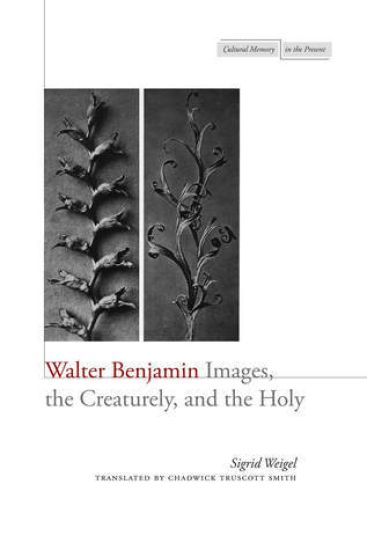
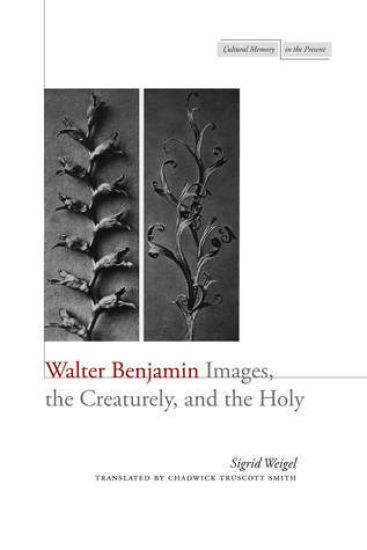
Arguing that the importance of painting and other visual art for Benjamin's epistemology has yet to be appreciated, Weigel undertakes the first systematic analysis of their significance to his thought. She does so by exploring Benjamin's dialectics of secularization, an approach that allows Benjamin to explore the simultaneous distance from and orientation towards revelation and to deal with the difference and tensions between religious and profane ideas. In the process, Weigel identifies the double reference of 'life' to both nature and to a 'supernatural' sphere as a guiding concept of Benjamin's writings. Sensitive to the notorious difficulty of translating his language, she underscores just how much is lost in translation, particularly with regard to religious connotations. The book thus positions Benjamin with respect to the other European thinkers at the heart of current discussions of sovereignty and martyrdom, of holy and creaturely life. It corrects misreadings, including Agamben's staging of an affinity between Benjamin and Schmitt, and argues for the closeness of Benjamin's work to that of Aby Warburg, with whom Benjamin unsuccessfully attempted an intellectual exchange.
Walter Benjamin

Walter Benjamin

Sigrid Weigel

Stanford University Press
2013
pokkari
Arguing that the importance of painting and other visual art for Benjamin's epistemology has yet to be appreciated, Weigel undertakes the first systematic analysis of their significance to his thought. She does so by exploring Benjamin's dialectics of secularization, an approach that allows Benjamin to explore the simultaneous distance from and orientation towards revelation and to deal with the difference and tensions between religious and profane ideas. In the process, Weigel identifies the double reference of 'life' to both nature and to a 'supernatural' sphere as a guiding concept of Benjamin's writings. Sensitive to the notorious difficulty of translating his language, she underscores just how much is lost in translation, particularly with regard to religious connotations. The book thus positions Benjamin with respect to the other European thinkers at the heart of current discussions of sovereignty and martyrdom, of holy and creaturely life. It corrects misreadings, including Agamben's staging of an affinity between Benjamin and Schmitt, and argues for the closeness of Benjamin's work to that of Aby Warburg, with whom Benjamin unsuccessfully attempted an intellectual exchange.
Water in the Middle East

Water in the Middle East

HRH Prince El Hassan bin Talal of Jordan

University of Oklahoma Press
2006
sidottu
Scarcity of water is a problem in many areas around the world. In this sense the Middle East which suffers from frequent droughts and a shortage of potable water, is not unique. However, when political disagreements among states combine with issues of fair and equitable access to common water resources, the problems associated with water scarcity seem intractable. In this sense the Middle East, and particularly the Jordan River Valley, is indeed unique.This enlightening book brings together the insights of scholars from Israel, Palestine, Jordan, and the United States who employ a broad range of perspectives and disciplines-engineering, agronomy, biology, economics, history, geography, and political science-to examine the significance of water in Middle East conflicts. These contributors do not offer facile remedies. Rather they show that any solution must be achieved within a political and social framework of peace, enlightened economic policies, and technical measures that take due account of environmental conditions.This volume is the result of the conference ""Water in the Jordan Valley,"" sponsored by the Center for Peace Studies, a division of the International Programs Center at the University of Oklahoma.