Kirjojen hintavertailu. Mukana 12 390 323 kirjaa ja 12 kauppaa.

Kirjahaku

Etsi kirjoja tekijän nimen, kirjan nimen tai ISBN:n perusteella.

1000 tulosta hakusanalla Wendy Howles

Planning Wild Cities

Planning Wild Cities

Wendy Steele

TAYLOR FRANCIS LTD
2022
nidottu
This book critically engages with the contemporary challenges and opportunities of wild cities in a climate of change. A key focus of the book is exploring the nexus of possibilities for wild cities and the eco-ethical imagination needed to drive sustainable and resilient urban pathways. Many now have serious doubts about the prospects for humanity to live within cities that are socially just and responsive to planetary limits. Is it possible for planning to better serve, protect and nurture our human and non-human worlds? This book argues it is.Drawing on international literature and Australian case examples, this book explores issues around climate change, colonization, urban (in)security and the rights to the city for both humans and nature. It is within this context that this book focuses on the urgent need to better understand how contemporary cities have changed, and the relational role of planning within it. Planning Wild Cities will be of particular interest to students and scholars of planning, urban studies, and sustainable development, and for all those invested in re-shaping our ‘wild’ city futures.
Popular Culture and Legal Pluralism
Drawing upon theories of critical legal pluralism and psychological theories of narrative identity, this book argues for an understanding of popular culture as legal authority, unmediated by translation into state law. In narrating our identities, we draw upon collective cultural narratives, and our narrative/nomos obligational selves become the nexus for law and popular culture as mutually constitutive discourse.The author demonstrates the efficacy and desirability of applying a pluralist legal analysis to examine a much broader scope of subject matter than is possible through the restricted perspective of state law alone. The study considers whether presumptively illegal acts might actually be instances of a re-imagined, alternative legality, and the concomitant implications. As an illustrative example, works of critical dystopia and the beliefs and behaviours of eco/animal-terrorists can be understood as shared narrative and normative commitments that constitute law just as fully as does the state when it legislates and adjudicates.This book will be of great interest to academics and scholars of law and popular culture, as well as those involved in interdisciplinary work in legal pluralism.
Immigrant Women and Feminism in Italy
The influx of female migrants to Europe has posed challenges to established European feminist movements. In this book the author assesses the significance of female immigration to Italy and its impact on Italian feminism by analyzing the way in which immigrant and Italian women have constructed their relationships over the past 30 years. The book provides comprehensive overviews of the Italian women's movement and the history of immigration to Italy before examining the formation of immigrant women's groups, the treatment of immigrant women by Italian women's associations, and the forging of new relationships in multicultural women's organizations. Broader comparisons on European migration are made to contextualize immigration to Italy and Southern Europe more generally. By drawing from a variety of research materials such as structured interviews, participant observation and empirical data, the book contributes to an interdisciplinary approach to the study of gender, migration and contemporary Italian history. The book is of interest for scholars and postgraduates in the fields of women and gender studies, migration studies and contemporary European history.
Television in the Nursing Home

Television in the Nursing Home

Wendy J Hajjar

Routledge
2020
nidottu
Television in the Nursing Home: A Case Study of the Media Consumption Routines and Strategies of Nursing Home Residents is a three-stage ethnographic study of media use by the elderly in long-term care facilities. This research concludes that watching television is the most prevalent and pervasive activity for patients. Activity directors can now learn how television and media can offer diversion, enhancement of personality, awareness, and sociability to their patients and offers suggestions on roommate coordination, selection of appropriate media, and communication resources. Containing the latest knowledge involving communication and gerontology, Television in the Nursing Home will help you offer programs that will meet the demands of an expanding elderly population.Developed as a perspective for examining patterns of social interaction, Television in the Nursing Home gives suggestions on how you can use the media to create new activities for patients, maximizing the television as a resource for the elderly. You will gain valuable insight on:proof to dispel the myth that television in long-term patient care causes withdrawal and depression a breakthrough in the treatment of media and aging, enhancing media-based activities and the use and purchase of electronic equipment for care facilities studies on how and why television is the most accessible medium of communication information for the development of new media designed specifically for use by the elderly creation of media-centered activities that recognize the potential for therapeutic use of communication technologies in the nursing homeThe research presented in Television in the Nursing Home establishes the fact that television consumption, once thought to be problematic, should be seen as desirable and necessary. This important book also proves how television is a resource that provides comfort, self-expression, and sociality. This first-ever study will convince you that television and media use in long-term care is beneficial and essential to the wellness of your patients.
Loving Writing

Loving Writing

Wendy M.K. Shaw

Routledge
2021
nidottu
This writing textbook bridges factual, critical, and expressive modes of writing to help students develop a reflective sense of why and how to write for university, professional, and public audiences. Exploring the ways in which writing builds tools for argument both in and beyond the university, it enables students to break out of the dusty and formulaic patterns of writing that too often threaten to render academic studies irrelevant. In a playful, personal, essayistic style, it examines existing academic writing methods and develops new modes of narrative-based expression rooted in the humanities. Reflective analysis invites emerging writers to self-consciously craft convincing and impassioned writing practices using an expanded methodological toolbox. It aims to imbue academic writing with the expressive potential of artistic research by transforming existing methods of articulating analysis within a broader expressive system, developing skills more typical of creative writing, such as providing a setting, considering frame, engaging emotions, expansion, and concision. If we believe in the value of our thoughts, discoveries, and arguments, we must enable them to sing. Loving Writing can be used as a textbook for advanced or introductory college writing courses and provides innovative guidance to liberal arts students seeking to develop their writing abilities.
Loving Writing

Loving Writing

Wendy M.K. Shaw

Routledge
2021
sidottu
This writing textbook bridges factual, critical, and expressive modes of writing to help students develop a reflective sense of why and how to write for university, professional, and public audiences. Exploring the ways in which writing builds tools for argument both in and beyond the university, it enables students to break out of the dusty and formulaic patterns of writing that too often threaten to render academic studies irrelevant. In a playful, personal, essayistic style, it examines existing academic writing methods and develops new modes of narrative-based expression rooted in the humanities. Reflective analysis invites emerging writers to self-consciously craft convincing and impassioned writing practices using an expanded methodological toolbox. It aims to imbue academic writing with the expressive potential of artistic research by transforming existing methods of articulating analysis within a broader expressive system, developing skills more typical of creative writing, such as providing a setting, considering frame, engaging emotions, expansion, and concision. If we believe in the value of our thoughts, discoveries, and arguments, we must enable them to sing. Loving Writing can be used as a textbook for advanced or introductory college writing courses and provides innovative guidance to liberal arts students seeking to develop their writing abilities.
Safeguarding and Mental Health Support in Contemporary Childhood
Approaches regarding safeguarding and mental health in childhood have been in constant flux. Framed within a critical realist ontology, this book provides insight into causal factors (individual, material, institutional) and social structures that impact on the continued legacy of the ‘deserving/undeserving' paradigm.Drawing on historical data from children taken into care by the Waifs and Strays Society (1881–1918) and contemporary data from interviews with young care leavers and safeguarding practitioners/professionals, this book shows how at present and in the past, certain children and families miss(ed) out on support and interventions due to complex needs, financial cuts and ever-changing thresholds. It is the group of children referred to as ‘victims’, a term used for the most disadvantaged children who have spent time in care, have complex mental health needs and have had the most damaging pre-care family experiences, who are the focus of this book. This book shows that in an attempt to provide services where there are ever increasing thresholds for access and cuts to resources, a resurgence of the ‘deserving/undeserving’ paradigm reflects a contemporary justification regarding who is 'entitled' to help and who is not.This book will be of interest to all scholars and students of social work, social policy, childhood studies, sociology and education policy.
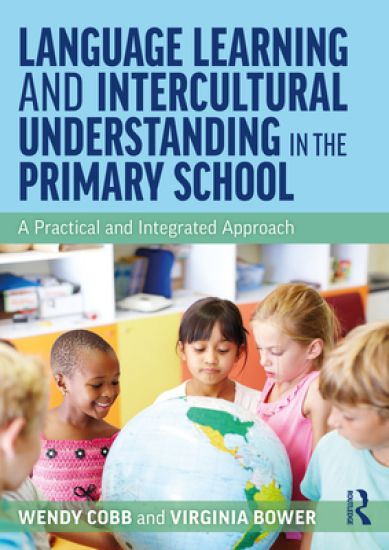
Language Learning and Intercultural Understanding in the Primary School
Language Learning and Intercultural Understanding in the Primary School shows how to deliver a progressive and holistic embedded language curriculum. It provides guidance on inclusive approaches for students with English as an additional language, including native speakers in the target language as well as language awareness activities that maximise links with learning in English.Practical and accessible, it contains classroom examples, plans, resources and pedagogical approaches all underpinned by theory, research and practice. Each chapter examines specific themes relating to language, culture, identity and wellbeing, providing rich discussions and a range of perspectives. Case studies ‘bring to life’ the examples provided, and reflection points offer the reader the opportunity to pause and consider an idea, resource, or challenging concept before moving on.Presenting a lived narrative of shared voices, the authors invite readers to learn about their own cultural and linguistic identities and how these relate to their practice. This is a must-read for teachers, language specialists and school leaders who wish for a clear rationale for the role of language, culture, identity and wellbeing within and beyond the curriculum.
Language Learning and Intercultural Understanding in the Primary School
Language Learning and Intercultural Understanding in the Primary School shows how to deliver a progressive and holistic embedded language curriculum. It provides guidance on inclusive approaches for students with English as an additional language, including native speakers in the target language as well as language awareness activities that maximise links with learning in English.Practical and accessible, it contains classroom examples, plans, resources and pedagogical approaches all underpinned by theory, research and practice. Each chapter examines specific themes relating to language, culture, identity and wellbeing, providing rich discussions and a range of perspectives. Case studies ‘bring to life’ the examples provided, and reflection points offer the reader the opportunity to pause and consider an idea, resource, or challenging concept before moving on.Presenting a lived narrative of shared voices, the authors invite readers to learn about their own cultural and linguistic identities and how these relate to their practice. This is a must-read for teachers, language specialists and school leaders who wish for a clear rationale for the role of language, culture, identity and wellbeing within and beyond the curriculum.
Medical Humanities, Sociology and the Suffering Self
Following criticisms of the traditionally polarized view of understanding suffering through either medicine or social justice, Lowe makes a compelling argument for how the medical humanities can help to go beyond the traditional biographical and epistemic breaks to see into the nature and properties of suffering and what is at stake. Lowe demonstrates through analysis of major healthcare workforce issues and incidence of burnout how key policies and practices influence healthcare education and experiences of both patients and health professionals. By including first person narratives from health professionals as a tool and resource, she illustrates how dominant ideas about the self enter practice as a refusal of suffering. Demonstrating the relationship between personal experience, theory and research, Lowe argues for a pedagogy of suffering that shows how the moral anguish implicit in suffering is an ethical response of the emergent self. This is an important read for all those interested in medical humanities, health professional education, person-centred care and the sociology of health and illness.
Strategies for Clinical Teaching in the Health Professions
High quality instruction in an authentic clinical environment is a must for all healthcare programs. Packed with strategies to help clinical instructors develop as educators and strengthen their teaching practice, this text is a key resource for those new to educating in a clinical setting.The first part of this practical book explores becoming a clinical instructor. It looks at the responsibilities of the role as well as the traits of effective clinical instructors. Introducing the concept of teacher identity, it offers suggestions for making the transition from healthcare practitioner to clinical educator. The book’s second part provides information on teaching in the healthcare environment. It introduces principles of curriculum design and planning, pedagogy and teaching strategies, performance assessment, and the delivery of constructive feedback. The final chapter in this part discusses helping students prepare for entry into the healthcare workforce. The book ends with a chapter on ways to support clinical instructors.Including reflective practice exercises, practical tips for dealing with challenging situations, and sample rubrics and templates, this useful book provides a foundation for the healthcare practitioner who is beginning a career in clinical education. It is also a valuable guide for more experienced instructors and those who manage clinical instructors.
Strategies for Clinical Teaching in the Health Professions
High quality instruction in an authentic clinical environment is a must for all healthcare programs. Packed with strategies to help clinical instructors develop as educators and strengthen their teaching practice, this text is a key resource for those new to educating in a clinical setting.The first part of this practical book explores becoming a clinical instructor. It looks at the responsibilities of the role as well as the traits of effective clinical instructors. Introducing the concept of teacher identity, it offers suggestions for making the transition from healthcare practitioner to clinical educator. The book’s second part provides information on teaching in the healthcare environment. It introduces principles of curriculum design and planning, pedagogy and teaching strategies, performance assessment, and the delivery of constructive feedback. The final chapter in this part discusses helping students prepare for entry into the healthcare workforce. The book ends with a chapter on ways to support clinical instructors.Including reflective practice exercises, practical tips for dealing with challenging situations, and sample rubrics and templates, this useful book provides a foundation for the healthcare practitioner who is beginning a career in clinical education. It is also a valuable guide for more experienced instructors and those who manage clinical instructors.
Essential Tort Law for SQE1

Essential Tort Law for SQE1

Wendy Laws

Routledge
2021
nidottu
Essential Tort Law for SQE1 explains the key principles of tort law in a clear, easy-to-follow style. Principles are introduced and illustrated with reference to practical examples. The book demonstrates the skill of client case analysis, taking a clear and structured approach to analysing the facts of a client’s case and then applying the relevant principles. It also includes a range of supportive features: Revision points: Each chapter concludes with a concise list of key revision points. Problem questions: To test understanding and analytical skills applied to practical scenarios. A companion website also provides suggested answers. Multiple choice questions: Each section of the book provides multiple choice questions following the SQE1 question format (with answers to enable you to test your knowledge). Further multiple choice questions and answers are also provided on the companion website. The first in a series of books aimed at those preparing for SQE1, this concise and accessible text provides a clear understanding of the tort element of SQE1 and enables you to test your assessment skills.
Essential Tort Law for SQE1

Essential Tort Law for SQE1

Wendy Laws

Routledge
2021
sidottu
Essential Tort Law for SQE1 explains the key principles of tort law in a clear, easy-to-follow style. Principles are introduced and illustrated with reference to practical examples. The book demonstrates the skill of client case analysis, taking a clear and structured approach to analysing the facts of a client’s case and then applying the relevant principles. It also includes a range of supportive features: Revision points: Each chapter concludes with a concise list of key revision points. Problem questions: To test understanding and analytical skills applied to practical scenarios. A companion website also provides suggested answers. Multiple choice questions: Each section of the book provides multiple choice questions following the SQE1 question format (with answers to enable you to test your knowledge). Further multiple choice questions and answers are also provided on the companion website. The first in a series of books aimed at those preparing for SQE1, this concise and accessible text provides a clear understanding of the tort element of SQE1 and enables you to test your assessment skills.
Making Social Policy in Australia

Making Social Policy in Australia

Wendy Weeks; John Wiseman

Routledge
2021
sidottu
Social policy affects everyone and is everyone's business. Even if you do not receive welfare payments, directly or indirectly you benefit from government servides and funding. Yet how are policies and programs actually developed? Can social policy help us create a more just society?This book offers an introduction to the theory and practice of social policy making in Australia. Using detailed case studies, it covers:* the ideas and values which inform the social policy process* how different groups can influence policy making* how social policy making takes place in social and political organisations* the political nature of policy makingMaking Social Policy in Australia is the most up to date introduction to Australian social policy currently available, and is essential reading for students and practitioners in human and community service work and government.Tony Dalton, Mary Draper and John Wiseman lecture in Social Work and Social Sciences at Rmit, Melbourne; Wendy Weeks lectures in Social Work and Social Policy at the University of Melbourne and is author (in collaboration) of Women Working Together: Lessons from feminist women's services. Each of the authors has been involved in policy debate and development for many years.
The Companion to 'The Mystery of Edwin Drood'
This book, first published in 1986, explores the allusions in Dickens’s work, such as current events and religious and intellectual issues, social customs, topography, costume, furniture and transportation. Together with an analysis of Dickens’s imaginative responses to his culture, and their place in the genesis and composition of the text, this book is a full-scale, thoroughgoing annotation that The Mystery of Edwin Drood requires.
The Companion to 'The Mystery of Edwin Drood'

The Companion to 'The Mystery of Edwin Drood'

Wendy S. Jacobson

TAYLOR FRANCIS LTD
2023
nidottu
This book, first published in 1986, explores the allusions in Dickens’s work, such as current events and religious and intellectual issues, social customs, topography, costume, furniture and transportation. Together with an analysis of Dickens’s imaginative responses to his culture, and their place in the genesis and composition of the text, this book is a full-scale, thoroughgoing annotation that The Mystery of Edwin Drood requires.
Applied Photovoice in Criminal Justice

Applied Photovoice in Criminal Justice

Wendy Fitzgibbon

TAYLOR FRANCIS LTD
2022
sidottu
Building on her leading research in creative methodology, in this book Wendy Fitzgibbon explores and illustrates how Photovoice, a participatory, active research tool, can enable new insights and engagement with both marginalised people and those working with them in the criminal justice system. Including research examples from criminal justice settings around Europe, the book explains how one could undertake such research and the ethical and practical challenges presented.Engaging, accessible and illustrated with original photographs, this book not only presents the theoretical and practical information necessary for researchers, students and practitioners to be able to utilise Photovoice – it demonstrates these with original empirical findings from an international range of projects, including work with the probation service, with female offenders and with an open prison. It is essential reading for those engaged with criminological research methods, and Visual Criminology.
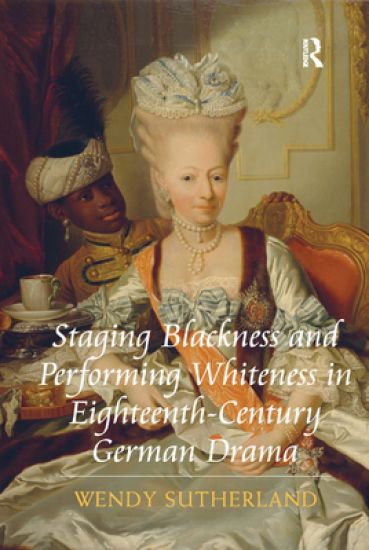
Staging Blackness and Performing Whiteness in Eighteenth-Century German Drama
Focusing on eighteenth-century cultural productions, Wendy Sutherland examines how representations of race in philosophy, anthropology, aesthetics, drama, and court painting influenced the construction of a white bourgeois German self. Sutherland positions her work within the framework of the transatlantic slave trade, showing that slavery, colonialism, and the triangular trade between Europe, West Africa, and the Caribbean function as the global stage on which German bourgeois dramas by Friedrich Wilhelm Ziegler, Ernst Lorenz Rathlef, and Theodor Körner (and a novella by Heinrich von Kleist on which Körner's play was based) were performed against a backdrop of philosophical and anthropological influences. Plays had an important role in educating the rising bourgeois class in morality, Sutherland argues, with fathers and daughters offered as exemplary moral figures in contrast to the depraved aristocracy. At the same time, black female protagonists in nontraditional dramas represent the boundaries of physical beauty and marriage eligibility while also complicating ideas of moral beauty embodied in the concept of the beautiful soul. Her book offers convincing evidence that the eighteenth-century German stage grappled with the representation of blackness during the Age of Goethe, even though the German states were neither colonial powers nor direct participants in the slave trade.
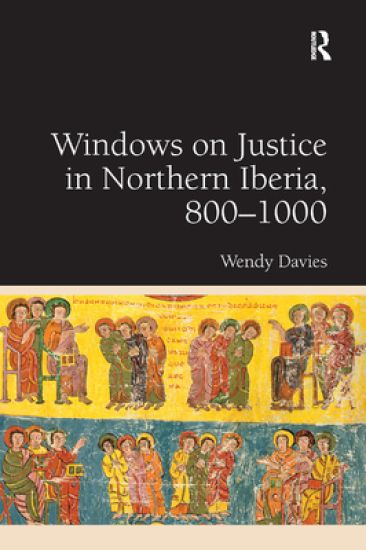
Windows on Justice in Northern Iberia, 800?1000
Although it has a rich historiography, and from the late ninth century is rich in textual evidence, northern Iberia has barely featured in the great debates of early medieval European history of recent generations. Lying beyond the Frankish world, in a peninsula more than half controlled by Muslims, Spanish and Portuguese experience has seemed irrelevant to the Carolingian Empire and the political fragmentation (or realignment) that followed it. But Spain and Portugal shared the late Roman heritage which influenced much of western Europe in the early middle ages and by the tenth century records and practice in the Christian north still shared features with parts farther east. What is interesting, in the wider European context, is that some of the so-called characteristics of the Carolingian world – the public court, collective judgment – are as characteristic of the Iberian world. The suggestion that they disappeared in the Frankish world, to be replaced by 'private' mechanisms, has played a major role in debates about the changing nature of power in the central middle ages: what happened in judicial courts has been central to the grand narratives of Duby and successive historians, for they are a powerful lens into the very real issues of politics and power. Looking at the practice of judicial courts in Europe west of Frankia allows us to think again about the nature of the public; identifying all the records of that practice allows us to adjust the balance between monastic and lay activity. What these show is that peasants, like other lay people, used the courts to seek redress and gain advantages. Records were not entirely framed nor practice entirely dominated by ecclesiastical interests.