

Kirjahaku
Etsi kirjoja tekijän nimen, kirjan nimen tai ISBN:n perusteella.
1000 tulosta hakusanalla Zero Edge
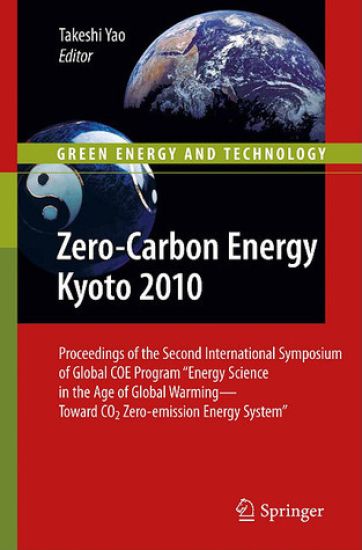
Zero-Carbon Energy Kyoto 2010
Springer Verlag, Japan
2011
sidottu
Since 2008, the Global Center of Excellence (COE) at Kyoto University, Japan, has been engaged in a program called “Energy Science in the Age of Global Warming—Toward a CO2 Zero-Emission Energy System.” Its aim is to establish an international education and research platform to foster educators, researchers, and policy makers who can develop technologies and propose policies for establishing a CO2 zero-emission society no longer dependent on fossil fuels. It is well known that the energy problem cannot simply be labeled a technological one, as it is also deeply involved with social and economic issues. The establishment of a “low-carbon energy science” as an interdisciplinary field integrating social sciences with natural sciences is necessary. The Global COE is setting out a zero-emission technology roadmap and is promoting socioeconomic studies of energy, studies of new technologies for renewable energies, and research for advanced nuclear energy. It has also established the Global COE Unit for Energy Science Education to support young researchers as they apply their skills and knowledge and a broad international perspective to respond to issues of energy and the environment in our societies. Comprising the proceedings of the Second International Symposium of the Global COE Program, this book follows on the earlier volume Zero-Carbon Energy Kyoto 2009, published in March 2010.
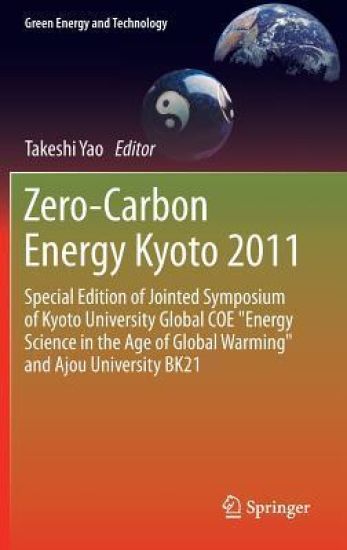
Zero-Carbon Energy Kyoto 2011
Springer Verlag, Japan
2012
sidottu
Since 2008, the Global Center of Excellence (COE) at Kyoto University, Japan, has been engaged in a program called “Energy Science in the Age of Global Warming—Toward a CO2 Zero-Emission Energy System.” Its aim is to establish an international education and research platform to foster educators, researchers, and policy makers who can develop technologies and propose policies for establishing a CO2 zero-emission society no longer dependent on fossil fuels. It is well known that the energy problem cannot simply be labeled a technological one, as it is also deeply involved with social and economic issues. The establishment of a “low-carbon energy science” as an interdisciplinary field integrating social sciences with natural sciences is necessary. The Global COE is setting out a zero-emission technology roadmap and is promoting socioeconomic studies of energy, studies of new technologies for renewable energies, and research for advanced nuclear energy. It has also established the Global COE Unit for Energy Science Education to support young researchers as they apply their skills and knowledge and a broad international perspective to respond to issues of energy and the environment in our societies. Comprising the proceedings of the Third International Symposium of the Global COE Program, this book follows on the earlier volumes Zero-Carbon Energy Kyoto 2009 and 2010, published in March 2010 and February 2011, respectively.
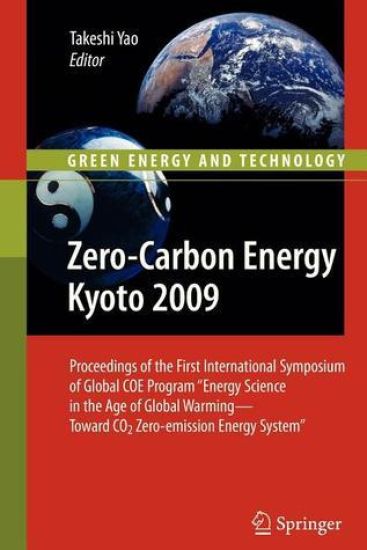
Zero-Carbon Energy Kyoto 2009
Springer Verlag, Japan
2012
nidottu
Emissions of CO2 have come to be regarded as the main factor in climate change in recent years, and how to control them has become a pressing issue. The problem cannot simply be labeled a technological one, however, because it is deeply involved with social and economic issues. Since 2008, the Global Center of Excellence (COE) program titled “Energy Science in the Age of Global Warming—Toward a CO2 Zero-Emission Energy System” has been held at Kyoto University, Japan. The program aims to establish an international education and research platform to foster educators, researchers, and policy makers who can develop technologies and propose policies toward a zero-emission society by the year 2100. Setting out a zero-emission technology roadmap, Global COE promotes socioeconomic studies of energy, the study of new technologies for renewable energies, and research in advanced nuclear energy. A compilation of the lectures and presentations from the first symposium of Global COE held at Kyoto University, this book is intended to provide the impetus for the establishment of low carbon energy science to bring about harmony between mankind and the environment.

Zero-Carbon Energy Kyoto 2010
Springer Verlag, Japan
2014
nidottu
Since 2008, the Global Center of Excellence (COE) at Kyoto University, Japan, has been engaged in a program called “Energy Science in the Age of Global Warming—Toward a CO2 Zero-Emission Energy System.” Its aim is to establish an international education and research platform to foster educators, researchers, and policy makers who can develop technologies and propose policies for establishing a CO2 zero-emission society no longer dependent on fossil fuels. It is well known that the energy problem cannot simply be labeled a technological one, as it is also deeply involved with social and economic issues. The establishment of a “low-carbon energy science” as an interdisciplinary field integrating social sciences with natural sciences is necessary. The Global COE is setting out a zero-emission technology roadmap and is promoting socioeconomic studies of energy, studies of new technologies for renewable energies, and research for advanced nuclear energy. It has also established the Global COE Unit for Energy Science Education to support young researchers as they apply their skills and knowledge and a broad international perspective to respond to issues of energy and the environment in our societies. Comprising the proceedings of the Second International Symposium of the Global COE Program, this book follows on the earlier volume Zero-Carbon Energy Kyoto 2009, published in March 2010.

Zero-Carbon Energy Kyoto 2012
Springer Verlag, Japan
2013
sidottu
The Global COE is setting out a zero-emission technology roadmap and is promoting socioeconomic studies of energy, studies of new technologies for renewable energies, and research for advanced nuclear energy. It has also established the Global COE Unit for Energy Science Education to support young researchers as they apply their skills and knowledge and a broad international perspective to respond to issues of energy and the environment in our societies. This book follows on the earlier volumes Zero-Carbon Energy Kyoto 2009, 2010, and 2011.
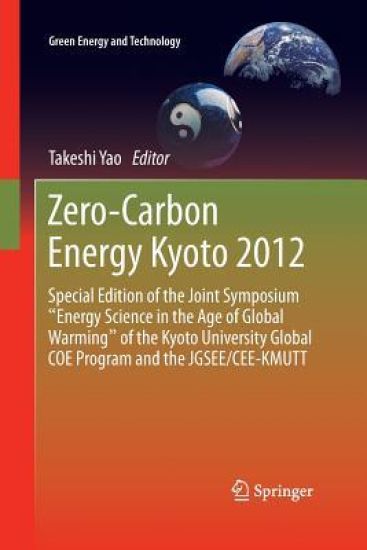
Zero-Carbon Energy Kyoto 2012
Springer Verlag, Japan
2015
nidottu
The Global COE is setting out a zero-emission technology roadmap and is promoting socioeconomic studies of energy, studies of new technologies for renewable energies, and research for advanced nuclear energy. It has also established the Global COE Unit for Energy Science Education to support young researchers as they apply their skills and knowledge and a broad international perspective to respond to issues of energy and the environment in our societies. This book follows on the earlier volumes Zero-Carbon Energy Kyoto 2009, 2010, and 2011.
Zero-Carbon Energy Kyoto 2011
Springer Verlag, Japan
2014
nidottu
Since 2008, the Global Center of Excellence (COE) at Kyoto University, Japan, has been engaged in a program called “Energy Science in the Age of Global Warming—Toward a CO2 Zero-Emission Energy System.” Its aim is to establish an international education and research platform to foster educators, researchers, and policy makers who can develop technologies and propose policies for establishing a CO2 zero-emission society no longer dependent on fossil fuels. It is well known that the energy problem cannot simply be labeled a technological one, as it is also deeply involved with social and economic issues. The establishment of a “low-carbon energy science” as an interdisciplinary field integrating social sciences with natural sciences is necessary. The Global COE is setting out a zero-emission technology roadmap and is promoting socioeconomic studies of energy, studies of new technologies for renewable energies, and research for advanced nuclear energy. It has also established the Global COE Unit for Energy Science Education to support young researchers as they apply their skills and knowledge and a broad international perspective to respond to issues of energy and the environment in our societies. Comprising the proceedings of the Third International Symposium of the Global COE Program, this book follows on the earlier volumes Zero-Carbon Energy Kyoto 2009 and 2010, published in March 2010 and February 2011, respectively.
Zero-Carbon Energy Kyoto 2009
Springer Verlag, Japan
2010
sidottu
Emissions of CO2 have come to be regarded as the main factor in climate change in recent years, and how to control them has become a pressing issue. The problem cannot simply be labeled a technological one, however, because it is deeply involved with social and economic issues. Since 2008, the Global Center of Excellence (COE) program titled “Energy Science in the Age of Global Warming—Toward a CO2 Zero-Emission Energy System” has been held at Kyoto University, Japan. The program aims to establish an international education and research platform to foster educators, researchers, and policy makers who can develop technologies and propose policies toward a zero-emission society by the year 2100. Setting out a zero-emission technology roadmap, Global COE promotes socioeconomic studies of energy, the study of new technologies for renewable energies, and research in advanced nuclear energy. A compilation of the lectures and presentations from the first symposium of Global COE held at Kyoto University, this book is intended to provide the impetus for the establishment of low carbon energy science to bring about harmony between mankind and the environment.
Khotite pomoch planete i snizit svoj ekologicheskij sled? Togda kontseptsija Zero Waste ("byt bez otkhodov") pomozhet vam prijti k etomu! Jana Potrekij @_mamyana_, ekobloger i avtor populjarnoj knigi "Zero Waste: osoznannoe potreblenie bez fanatizma" sostavila samyj nastojaschij gid-chellendzher po perekhodu k bolee osoznannoj i otvetstvennoj zhizni vo vsekh sferakh zhizni cheloveka: ot odezhdy i edy, do puteshestvij i gigieny! Zhivite ekologichno i radostno!

Zero book. Dvoe iz Animal DzhaZ - ot pervykh detskikh vospominanij do sozdanija Zero People
Bombora
2023
sidottu
Kak iz tochki, v kotoroj tolko stress i "nado", dobratsja do dljaschegosja momenta, v kotorom poluchaesh istinnoe udovolstvie ot togo, chto delaesh, oschuschaja sebja chjotko na svojom meste? Kak, stav tvjordo stojaschej na nogakh tvorcheskoj edinitsej, vernutsja k nulju po sobstvennomu zhelaniju, chtoby projti etot put zanovo? Nikto ne mozhet peremotat zhizn na neskolko desjatkov let nazad, a vot vernutsja v muzykalnoe detstvo - zadacha, kak okazalos, vpolne vypolnimaja. Dva Aleksandra iz Animal DzhaZ, pridumav sajd-proekt Zero People, nachali inache delat muzyku, nabivaja novye shishki, iskat svoju publiku, ljubov i uvazhenie. V etoj knige net ni vyvodov, ni itogov. Zato est vozmozhnost projti za kazhdym iz muzykantov ego put ot pervykh detskikh vospominanij do stseny. A posle - otpravitsja eschjo dalshe, chtoby uznat, kak pisalis albomy i pojavljalas na svet kazhdaja iz pesen Zero People. Vnutri vas zhdut: - podrobnoe znakomstvo s kazhdym iz uchastnikov proekta; - fotografii iz lichnykh arkhivov muzykantov; - raskrytie detalej i predposylok kazhdogo alboma i kompozitsij ("Lovets Tishiny", "Dzhedaj", "Prekrasnaja zhizn", "Krasota", "Konets ravnovesija", "The Best: Ochevidnoe", "The Best: Neverojatnoe"). V etoj knige net ni vyvodov, ni itogov. Zato est vozmozhnost projti za kazhdym iz muzykantov ljubimoj gruppy ves put: ot pervykh detskikh vospominanij do stseny i khitov, navsegda popadajuschikh v serdtse.
Ot avtora bestsellera Sunday Times No 1, stsenarista filma "Bogemskaja rapsodija", chetyrezhdy nominanta na "Oskara", dvazhdy laureata premii BAFTA. Golovokruzhitelnyj roman ob uzhe nastupivshem buduschem v dukhe fantasticheskikh trillerov Dzhona Marrsa o vselennoj "The One. Edinstvennyj". Vse esche verite, chto vasha chastnaja zhizn - eto vashe lichnoe delo? V epokhu Iskusstvennogo intellekta konfidentsialnost - polnaja fiktsija. Ne skrytsja nikomu... Vsego dva chasa na polnoe ischeznovenie... 10 chelovek byli tschatelno otobrany dlja beta-testa bespretsedentno effektivnoj sistemy tsifrovoj slezhki, sozdannoj IT-geniem Saem Baksterom. Eta sistema na osnove iskusstvennogo intellekta sposobna vysledit kogo ugodno i gde ugodno na Zemle. Otobrannye stali Nuljami - ischezli, chtoby v techenie 30 dnej ne popastsja izoschrennym algoritmam Bakstera. Kto ne popadetsja, poluchit 3 milliona dollarov. Odnako ne stoit na eto rasschityvat - ni u kogo iz Nulej net ni edinogo shansa. Tak dumaet Bakster. No tak ne dumaet Kejtlin Dej, Nul-10. Dlja nee stavka v nachavshejsja igre - vovse ne dengi, a nechto gorazdo bolee vazhnoe. Etu chudakovatuju bibliotekarshu, do sikh por zhivuschuju v ujutnom analogovom mirke, sobiralis pokazatelno izlovit v dva scheta. No vnezapno ona nachinaet delat takie khitroumnye khody, chto stavit v tupik i tsifrovoe vsevidjaschee oko, i obsluzhivajuschuju ego ogromnuju komandu ekspertov... "Pervyj za mnogie gody roman, ne tolko zastavljajuschij serdtse bitsja chasche, no i brosajuschij vyzov mozgu. Triller, kotoryj otlichno zaglatyvaetsja pod popkorn i pri etom ne prosto razvlekaet tebja, a delaet umnee. Provokatsionnyj, glubokij i - inache ne skazhesh - genialnyj". - A. Dzh Finn "Makkarten ubil napoval sovremennuju Ameriku. Ja bolshe nikogda ne budu vosprinimat svoj smartfon kak prezhde". - Grem Mur "Chistoe udovolstvie - chitat etu istoriju s ee chertovski khorosho produmannym anturazhem, skromnoj geroinej, zakruchennym sjuzhetom i likhoj kontsovkoj. No delo ne tolko v chistom udovolstvii, a i v pravde, kotoruju roman rasskazyvaet o nashem surovom vremeni". - Duglas Preston Osobennosti izdanija: "oblozhka v oblozhke" - zadnij klapan s khudozhestvennym oformleniem, kotoryj zakljuchaet stranitsy v svoego roda "korobochku".Perevodchik: Filonov Aleksandr Vasilevich
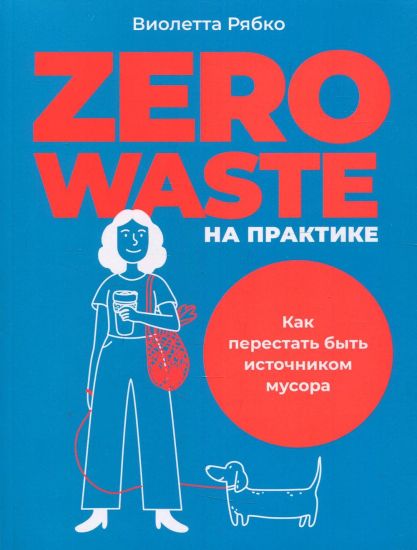
Kazhdyj god kazhdyj iz nas vybrasyvaet bolshe 400 kilogrammov musora. Nashi butylki, stakanchiki iz-pod jogurta i vatnye palochki ne propadajut v chernoj dyre, a ostajutsja na planete. Pakety lezhat na dne Marianskoj vpadiny, v zheludkakh kitov i na vershine Everesta. Musornye ostrova nashli uzhe dazhe v chernom more, serferov na Bali sbivajut s nog ne volny, a musor. No v nashikh silakh zaderzhat nastuplenie ekoapokalipsisa, nado lish sokratit kolichestvo sobstvennykh otkhodov. V svoej knige rukovoditelnitsa mediaotdela Greenpeace Violetta Rjabko rasskazyvaet, chem zamenit pakety-majki, byvaet li ekologichnym seks, chto sdelat s kosmetikoj i odezhdoj, kak organizovat den rozhdenija bez musora i pri etom ne sojti s uma i ne razrugatsja s rodstvennikami. Eta kniga - podrobnaja instruktsija po vnedreniju printsipa zero waste, a esche sbornik veselykh i ironichnykh rasskazov o tom, kakovo byt ekoaktivistom i prosto neravnodushnym chelovekom v nashej strane.
When we are in ignorance we lock ourselves away in a delusional bliss. We may think that our discourses, our sorrows, and hardships are compulsory and that there is no better way of living. However, there is a more exalted stature, the way of bliss and comfort. It is the saving grace of knowledge; the knowledge of the "Zero Point: The Highest Meditation". This book is presented to all who would like to have a better experience in life. He who seeks that which is higher than what the world has to offer will find joy in these pages. For he who would like to know how to please GOD, every page of this book shall bring resolve and peace. All those who would like to improve their spirituality, expand their mental capacity, control their emotions, and live a better life, this would be the perfect book. This book teaches of the discipline required not only to find happiness but to enjoy life to the fullest extent possible. Nothing shall hinder the one who finds and adheres to the discipline taught in this book. It will bring every reader of its pages a power which cannot be found anywhere else. The entire content of this work was written from experience and practice. You too must live it.
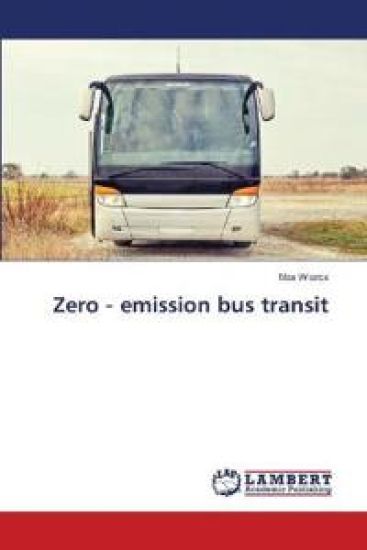
In order to limit global warming and strive for more liveable and sustainable cities, innovative zeroemission busses should be implemented in the Netherlands from 2025 onwards. Different alternative vehicle propulsion methods have been introduced during the last decades. However, for now, only electric vehicles can be classified as (on the pipe) zero-emission vehicles. An important limitation of a battery electric vehicle is the limited range due to capacity restrictions of current batteries. Therefore, batteries should be (re)charged before, during and after the daily operations. Different charging methods, including different charging systems and power, are available and some applied. However, there is no standardization of charging infrastructure yet. This study provides insights in the choice for a charging method, including corresponding trade-offs, in order to get insights in advantages and disadvantages of each method in different, specific situations. A comparison study of different applied charging methods for electric buses is obtained, which has, as far as known to the author, never been done before.

Zero-tillage technology (ZTT) refers to the growing of crop with the least possible soil disturbance, which involves controlling unwanted vegetation by other than mechanical means or by minimum use of tillage equipment. This is also known as minimum or reduced tillage, as shedding required some tillage operation. Thus zero tillage is a tillage system in which mechanical soil manipulation is reduced to traffic and seed-bed preparation only. (Baeumer and Brkermants, 1973). Indeed ZTT is presumably the oldest crop production system by human. In some parts of the tropics, ZTT is still a part of slash-and-burn-agriculture. After cleaning an area of forest by controlled burning, the seed is directly placed into the soil without benefit of tillage. However, research based zero tillage technology was first used successfully in 1950 pasture renovation in USA with mulch farming practices and the till plant system for row crop in order to provide year round protection of the soil from erosion and to minimize planting cost. Keeping in view, the importance of study, the investigation was undertaken in the Karnal and Fatehabad districts of Haryana state with the following specific objectives:
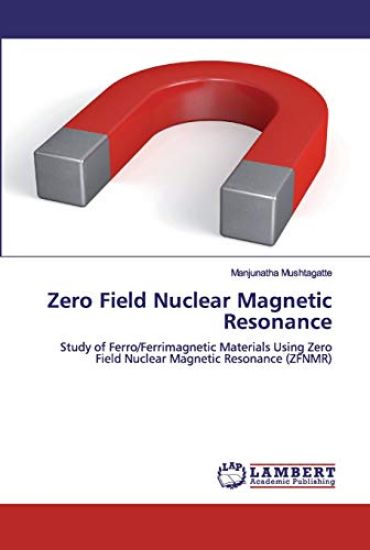
Zero Field Nuclear Magnetic Resonance
Manjunatha Mushtagatte
LAP Lambert Academic Publishing
2019
pokkari
NMR in ferromagnetic materials does not require an external magnetic field because of the presence of inbuilt magnetic field hence, it is termed as Internal Field NMR (IFNMR) or Zero Field Nuclear Magnetic Resonance (ZFNMR). NMR studies in magnetic materials provide a wide range of information including local structure, presence of foreign bodies in the system (non-magnetic material), metal to insulator transition, magnetic domain state of the materials, phase purity of the ferromagnetic cobalt system, cationic distribution, etc. This book provides detailed information about the fabrication of a low cost versatile pulsed IFNMR spectrometer and its application to determine the various magnetic properties of ferro/ferrimagnetic materials.
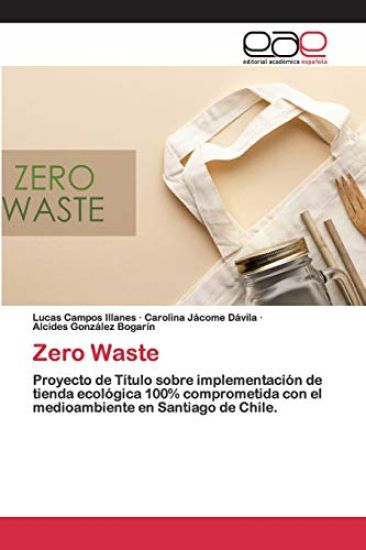
Zero Waste
Lucas Campos Illanes; Carolina Jácome Dávila; Alcides González Bogarín
Editorial Academica Espanola
2020
pokkari
ZEROWASTE nace ante la necesidad de ayudar a contestar un llamado urgente que nos est haciendo nuestro planeta, que es que lo cuidemos mejor. Cada 5 minutos se generan dos millones de toneladas de residuos, de estos, el 40% proceden del embalaje de los alimentos como bandejas de productos c rnicos, tetrabrik de leche, paquetes o envoltorios de galletas, cartones de huevo, botellas de pl stico de diferentes tama os, envoltorios de pl stico, pl stico y m s pl stico, que se tardan miles de a os en degradarse, acumulando toneladas de basura que literalmente van creando islas flotantes en los oc anos, matando animales marinos y afectando nuestro ecosistema que m s temprano que tarde nos afectar a nosotros, los seres humanos.
Zero Point Reference: Conscious Philosophy
Potrc Matjaz
Lap Lambert Academic Publishing
2017
nidottu