
Kirjahaku
Etsi kirjoja tekijän nimen, kirjan nimen tai ISBN:n perusteella.
1000 tulosta hakusanalla ART WIEDERHOLD
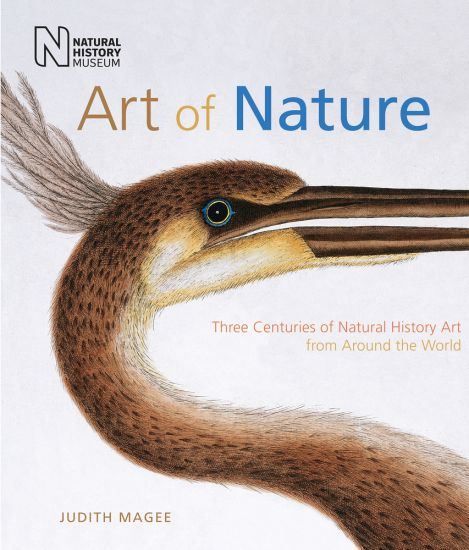
Art of Nature is an astonishing visual record of the exploration of parts of the natural world that had never previously been documented. It features many of the greatest natural history artists of the last 300 years--Merian, Bartram, Ehret, the Bauer brothers, Audubon, and Gould. Some were seeking fame as scientists or artists, others sought financial gain or at least the prospect of earning a living in what they loved doing. For some it also provided them with the opportunity to present their view of nature to a wider community. Whatever the reasons, few would have contradicted Humboldt's comment that he was "spurred on by an uncertain longing for what is distant and unknown, for whatever excited my fantasy: danger at sea, the desire for adventures, to be transported from a boring daily life to a marvellous world." Continent by continent, Judith Magee draws on the unrivaled collections of the Library of the Natural History Museum in London to illustrate the development of natural history art through the centuries and its crucial role in furthering people's appreciation of nature all around the world.
Art and Meaning
Continuum International Publishing Group Ltd.
2009
nidottu
Biblical authors were artists of language who created their meaning through their verbal artistry, their rhetoric. These twelve essays see meaning as ultimately inseparable from art and seek to understand the biblical literature with sensitivity to the writer's craft. Contents: David Clines, The Arguments of Job's Friends. George Coats, A Moses Legend in Numbers 12. Charles Davis, The Literary Structure of Luke 1-2. Cheryl Exum, A Literary Approach to Isaiah 28. David Gunn, Plot, Character and Theology in Exodus 1-14. Alan Hauser, Intimacy and Alienation in Genesis 2-3. Charles Isbell, Story Lines and Key Words in Exodus 1-2. Martin Kessler, Methodology for Rhetorical Criticism. John Kselman, A Rhetorical Study of Psalm 22. Kenneth Kuntz, Rhetorical Criticism and Isaiah 51.1-16. Ann Vater, Form and Rhetorical Criticism in Exodus 7-11. Edwin Webster, Pattern in the Fourth Gospel.
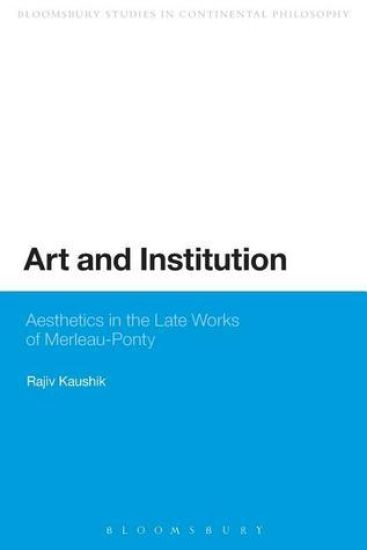
Art and Institution examines how for Merleau-Ponty the work of art opens up, without conceptualizing, the event of being. Rajiv Kaushik treats Merleau-Ponty's renderings of the artwork - specifically in his later writings during the period ranging from 1952-1961 - as a path into the being that precedes phenomenology. Replete with references to Merleau-Ponty's reflections on Matisse, Cézanne, Proust and others, and featuring Kaushik's own original reflections on various artworks, this book is guided by the notion that art does not iterate the findings of phenomenology so much as it allows phenomenology to finally discover what, as a matter of principle, it seeks: the very foundation of experience that is not itself available to thought. Kaushik is thus concerned with the ways in which the work of art restores the principle of institution, prior to the intentional structures of consciousness, so that phenomenology may settle questions concerning ontological difference, the origination of significance, and the relationship between interiority and exteriority.
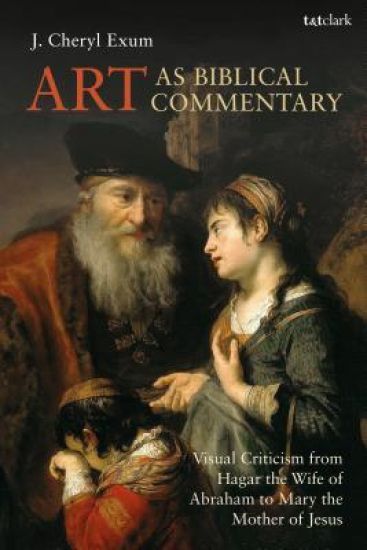
Art as Biblical Commentary is not just about biblical art but, more importantly, about biblical exegesis and the contributions visual criticism as an exegetical tool can make to biblical exegesis and commentary. Using a range of texts and numerous images, J. Cheryl Exum asks what works of art can teach us about the biblical text. ‘Visual criticism’ is her term for an approach that addresses this question by focusing on the narrativity of images—reading them as if, like texts, they have a story to tell—and asking what light an image’s ‘story’ can shed on the biblical narrator’s story. In Part I, Exum elaborates on her approach and offers a personal testimony to the value of visual criticism. Part 2 examines in detail the story of Hagar in Genesis 16 and 21. Part 3 contains chapters on erotic looking and voyeuristic gazing in the stories of Bathsheba, Susanna, Joseph and Potiphar’s wife and the Song of Songs; on the distribution of renown among Jael, Deborah and Barak; on the Bible’s notorious women, Eve and Delilah; and on the sacrificed female body in the stories of the Levite’s wife (Judges 19) and Mary the mother of Jesus.
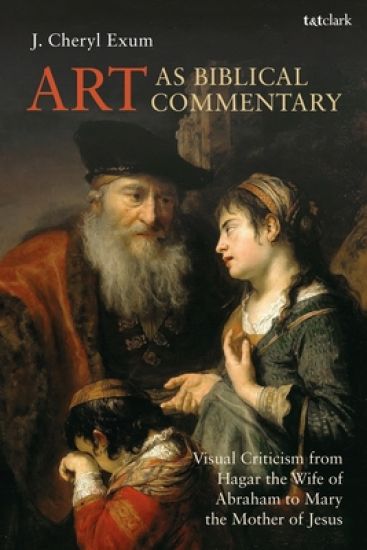
Art as Biblical Commentary is not just about biblical art but, more importantly, about biblical exegesis and the contributions visual criticism as an exegetical tool can make to biblical exegesis and commentary. Using a range of texts and numerous images, J. Cheryl Exum asks what works of art can teach us about the biblical text. ‘Visual criticism’ is her term for an approach that addresses this question by focusing on the narrativity of images—reading them as if, like texts, they have a story to tell—and asking what light an image’s ‘story’ can shed on the biblical narrator’s story. In Part I, Exum elaborates on her approach and offers a personal testimony to the value of visual criticism. Part 2 examines in detail the story of Hagar in Genesis 16 and 21. Part 3 contains chapters on erotic looking and voyeuristic gazing in the stories of Bathsheba, Susanna, Joseph and Potiphar’s wife and the Song of Songs; on the distribution of renown among Jael, Deborah and Barak; on the Bible’s notorious women, Eve and Delilah; and on the sacrificed female body in the stories of the Levite’s wife (Judges 19) and Mary the mother of Jesus.
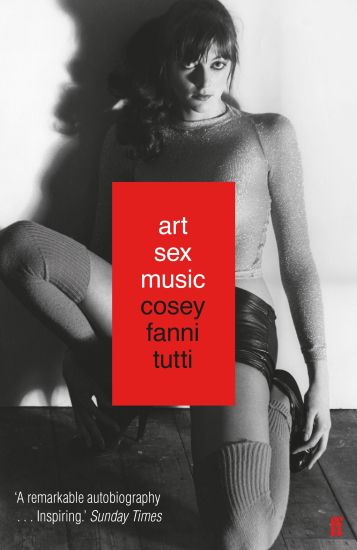
A SUNDAY TIMES, TELEGRAPH, ROUGH TRADE, PITCHFORK AND UNCUT MUSIC BOOK OF THE YEARSHORTLISTED FOR THE PENDERYN MUSIC BOOK PRIZEMusician and artist Cosey Fanni Tutti has continually challenged boundaries and conventions for four decades. As a founding member of the hugely influential avant-garde band Throbbing Gristle, as one half of electronic pioneers Chris and Cosey, and as an artist channelling her experience in pornographic modelling and striptease, her work on the margins has come to reshape the mainstream. Shocking, wise and life-affirming, Art Sex Music is the fascinating memoir of an inspirational woman.
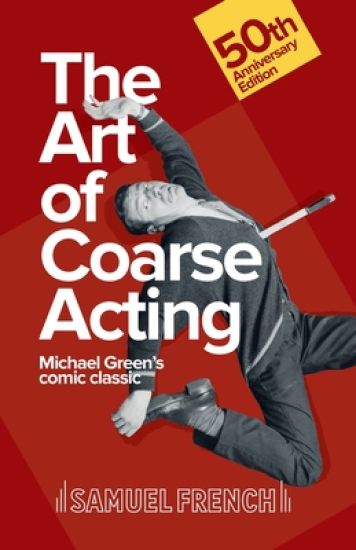
Art of Coarse Acting, or, How to Wreck an Amateur Dramatic Society, Th
Michael Green
Samuel French Ltd
2018
nidottu
A coarse actor is... - One who can remember their lines but not the order in which they come - One whose eyebrows are attached to their feet (so every facial expression involves the whole body as well) - One who limps on both legs simultaneously - One who knows everybody else's lines better than their ownFor 50 years, Michael Green's The Art of Coarse Acting has been essential reading for anyone with a passion for theatre. It's an outrageous spoof that punctures pretentiousness, pokes fun at incompetence, revels in disaster and lifts the lid on life backstage.As this special 50th anniversary edition proves, however much the theatre may change, Coarse Actors don't. Green's acerbic yet affectionate work remains one of the funniest books about acting ever written.
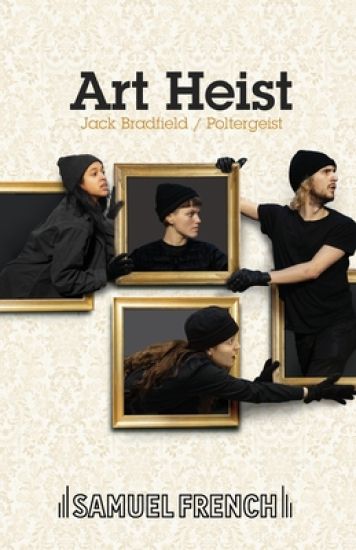
Three Thieves break into the same gallery on the same night. They're all intent on stealing the same Extremely Valuable Painting. They're bound to meet and it's bound to get messy.Poltergeist present an existential caper, an interactive sketch-show, an exploration of how the brain curates the world, a tragedy about cognitive malfunction - an Art heist play, but why label?From the team behind the multi-award-winning Lights Over Tesco Car Park. Produced by Poltergeist in association with The North Wall Arts Centre. New Diorama / Underbelly Untapped Award 2019Also includes... the Official Art Heist Game!
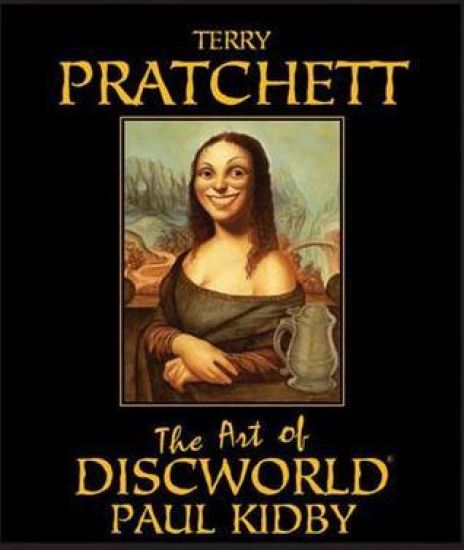
A sumptuous illustrated journey through Terry Pratchett's DISCWORLD; a companion volume to THE LAST HERO
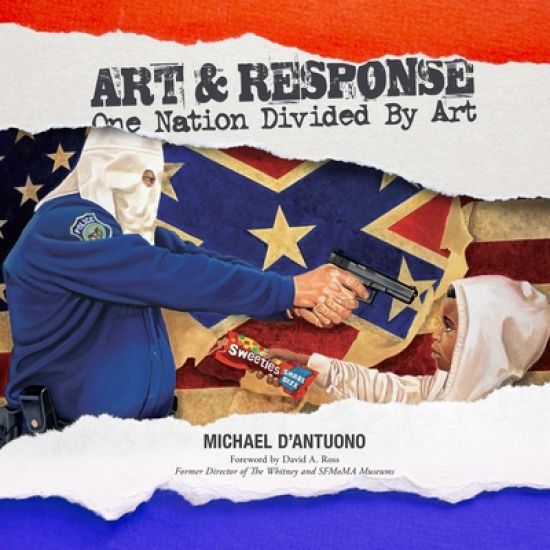
Through his highly provocative art, Michael D'Antuono, reveals a nation deeply divided. Not just an art book, "ART & RESPONSE: One Nation Divided By Art" serves as a barometer of our country's disparate attitudes and values.
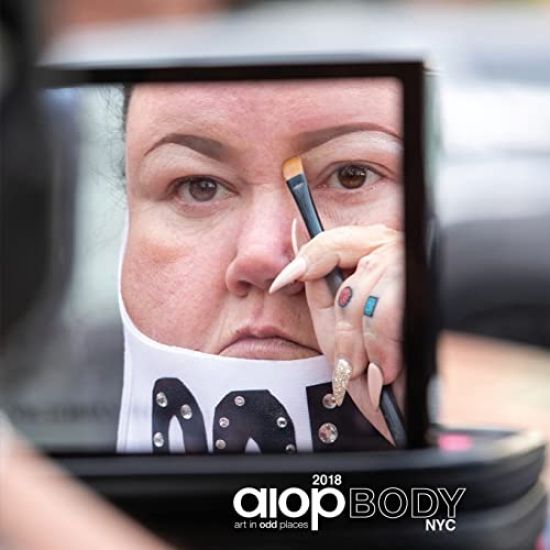
Art in Odd Places 2018
Art in Odd Places
2019
pokkari
The mission of Art in Odd Places (AiOP) is to engage and activate the everyday places in our lives. In creative, unexpected, and sometimes unusual ways we claim our shared rights to public spaces, while also making sure to question, subvert, and occasionally shake-up the socio-political status quo that regulates it.
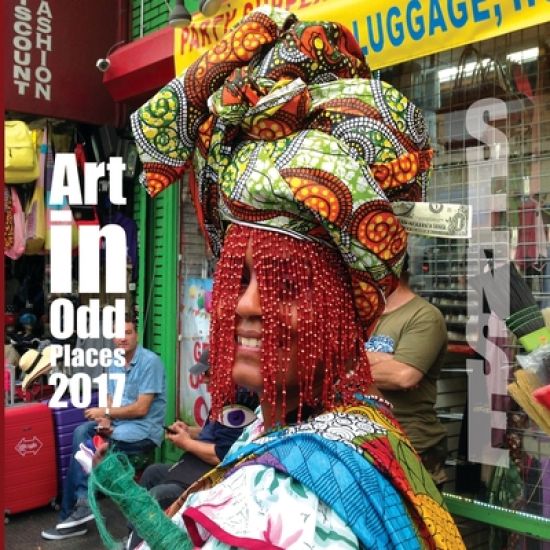
Art in Odd Places 2017
Art in Odd Places
2019
pokkari
This is the catalogue accompanying the 2017 Art in Odd Places: SENSE, in New York City.
Art Without Description: I: Ab Initio
Lulu Press
2019
nidottu
Art Without Description: In Puncto Reflexionis, is the second book of poetry in a series of three parts. It continues to address themes such as technological saturation, political dissatisfaction, and the search for an identity in a world where it is easy to become lost and feel as if you don't have a purpose. The title is a metaphor for losing identity."The book travels through several emotions, including fear, frustration, anger, vulnerability, light heartedness, as well as accomplishment, appreciation, respect and love while commenting on world events, identity crisis, isolation, and acceptance.Mr. Steinbeck grew up in Twin Lakes, Wisconsin was inspired by music and poetry at an early age, writing his first poem in 1991 This is his 12th collection of poems to be published. For more information go to www.ryanfsteinbeck.com, on Facebook: Author Ryan Fredric Steinbeck, or on Instagram: Steinbeckpoetry.