
Kirjahaku
Etsi kirjoja tekijän nimen, kirjan nimen tai ISBN:n perusteella.
1000 tulosta hakusanalla Alfred Ainger
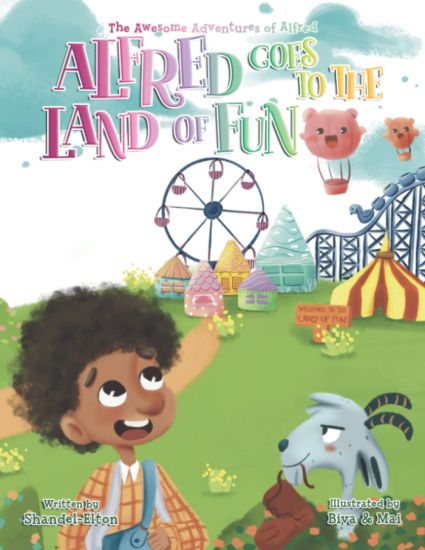
In the Land of Scrum lives the awkward Alfred who loves to have fun and go on amazing adventures. One day, Alfred decides to go on a journey to visit his childhood playmate and cousin, Jane who lives in the Land of Fun. Along the way he encounters a number of wonderfully weird places, and even some that seem strange and slightly scary. This colourful adventure is filled with lots of excitement and hilarious mishaps. See what pickles Alfred finds himself caught up in and discover what tummy tickling twist lies at the ends of Alfred's journey to visit his cousin.
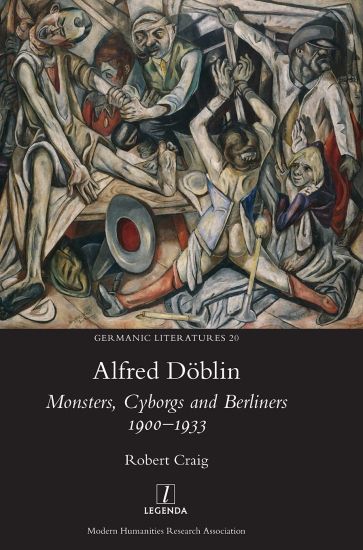
'If you're satisfied with yourself, beware of D blin.' It was with this temptation for brave souls that G nter Grass closed his tribute on the tenth anniversary of the great modernist's death. Alfred D blin is best known for his city masterpiece of 1929, Berlin Alexanderplatz. But the journey to the 'Alex' takes us along pathways both less familiar and every bit as intriguing. In the decades before his flight into exile in 1933, this medical doctor-cum-writer broke new ground both as an Expressionist storyteller and an author of experimental historical and science fiction. Not only that, but he made radical contributions to poetics, aesthetics and nature philosophy. The focus of this innovative study, one of the first of its kind in English, is a thorny and intractable relationship that perennially fascinated D blin: that of nature and the self. Robert Craig shows how his eclectic works before 1933 traced out an evolving dialectic between the human and the natural, and between the subject and its forms and modes of embodiment. The constellations that emerged remain as illuminating as they are unsettling and discomfiting.Robert Craig teaches German and English literary and cultural studies at the Otto-Friedrich-Universit t in Bamberg.
'If you're satisfied with yourself, beware of D blin.' It was with this temptation for brave souls that G nter Grass closed his tribute on the tenth anniversary of the great modernist's death. Alfred D blin is best known for his city masterpiece of 1929, Berlin Alexanderplatz. But the journey to the 'Alex' takes us along pathways both less familiar and every bit as intriguing. In the decades before his flight into exile in 1933, this medical doctor-cum-writer broke new ground both as an Expressionist storyteller and an author of experimental historical and science fiction. Not only that, but he made radical contributions to poetics, aesthetics and nature philosophy. The focus of this innovative study, one of the first of its kind in English, is a thorny and intractable relationship that perennially fascinated D blin: that of nature and the self. Robert Craig shows how his eclectic works before 1933 traced out an evolving dialectic between the human and the natural, and between the subject and its forms and modes of embodiment. The constellations that emerged remain as illuminating as they are unsettling and discomfiting.Robert Craig teaches German and English literary and cultural studies at the Otto-Friedrich-Universit t in Bamberg.
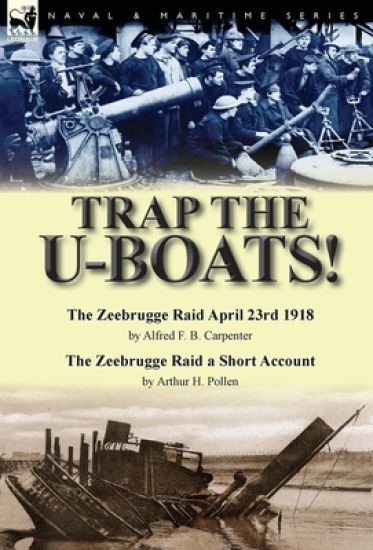
Trap the U-Boats!--The Zeebrugge Raid April 23rd 1918 by Alfred F. B. Carpenter & The Zeebrugge Raid a Short Account by Arthur H. Pollen
Alfred F B Carpenter; Arthur H Pollen
Leonaur Ltd
2015
sidottu
Trap the U-Boats!--The Zeebrugge Raid April 23rd 1918 by Alfred F. B. Carpenter & The Zeebrugge Raid a Short Account by Arthur H. Pollen
Alfred F B Carpenter; Arthur H Pollen
Leonaur Ltd
2015
pokkari
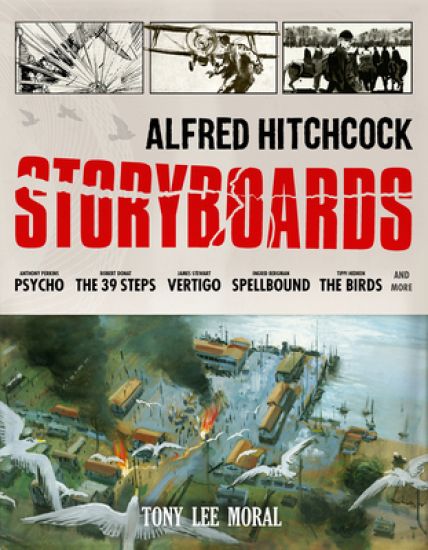
This stunning coffee table book focuses on the storyboards for nine of Alfred Hitchcock's classic movies - Vertigo, The Birds, Psycho, North by Northwest, The 39 Steps, Torn Curtain, Marnie, Shadow of a Doubt and Spellbound. It includes never before-published images and incisive text putting the material in context and examining the role the pieces played in some of the most unforgettable scenes in cinema. Hitchcock author and aficionado Tony Lee Moral takes you through the last 100 years of cinema, with the Master of Suspense as your guide.
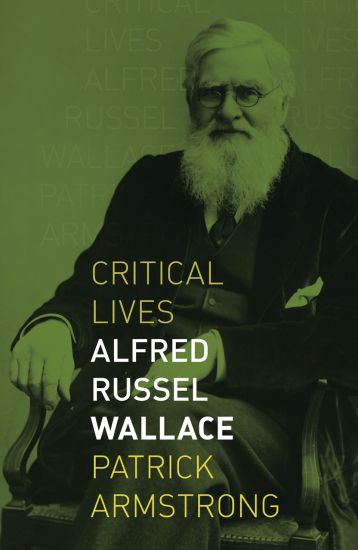
Alfred Russel Wallace
Reaktion Books
2019
nidottu
Sometimes referred to as the "Father of Biogeography," Alfred Russel Wallace has come to be known as the co-originator of the theory of evolution through natural selection, and he also wrote extensively on zoology, botany, anthropology, politics, astronomy, and psychology. Although notorious in his day for his unpopular and eccentric beliefs, he is still recognized as one of the leading figures in nineteenth-century British science. In this book, Patrick Armstrong illuminates the many facets of Wallace's long life, which extended from 1823 until the eve of World War I. He shows Wallace to be, in many ways, a more interesting character than his colleague and friend, evolutionary scientist Charles Darwin. Taking a psychological approach, this compact yet comprehensive biography gives insight into a man who was frequently plagued with misfortune; legal problems, inability to obtain full-time employment, and relationship troubles all vexed him. Armstrong unlocks the life of a restless traveler who, although raised with "a very ordinary" education, would go on to become one of the most influential, extraordinary scientists of his time.
Alfred, Lord Tennyson was one of the greatest and most beloved poets of the 19th century. This volume includes more than 40 of his most beloved poems, ranging from the iconic 'The Charge of the Light Brigade' to the heartfelt 'Ulysses' to the dream-like 'The Lady of Shalot'. Drawing upon Arthurian legends, contemporary events and personal experience, Tennyson's remarkable poetry embodied the Victorian era.ABOUT THE SERIES: Arcturus Great Poets Library brings together moving and inspiring verse from some of the greatest poets in history, presented with beautiful new cover designs with graphic motifs.
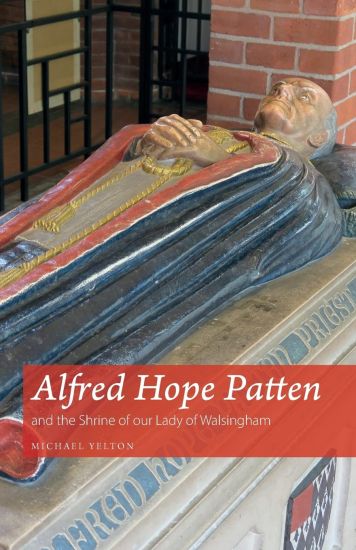
Alfred Hope Patten and the Shrine of our Lady of Walsingham
Michael Yelton
Sacristy Press
2022
pokkari
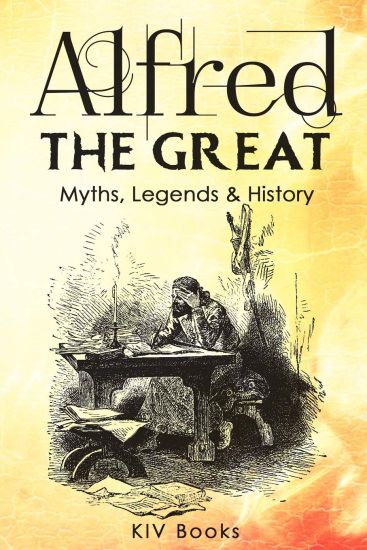
Alfred the Great was not likely to be king if the circumstances of his life did not happen. He was the youngest son of Aethelwulf, king of Wessex and he had four elder brothers who were in line to succeed in the throne.Yet, as if in an act of fate, his father and all his older brothers died during the invasion of the Vikings. You can say that greatness was in him and yet greatness was thrown into his lap as things turned from good to worse.One of the great hallmarks of his life was the defense of England against the Danes. Yet he was more scholar than warrior. In fact, one of the best things he was known for is the provision of education to the commoners in their native English language.In this book you will catch a glimpse into the life and struggles of Alfred the Great. The book covers his exploits, his weaknesses, and all the things that made him great.Like all historic figures from centuries past, his actual history has been blurred in a mixture of fact, fiction, myth, and legend. This book will try to reconstruct the high and low points of his life and retell the reasons why he is the only king in all of England to be called The Great.
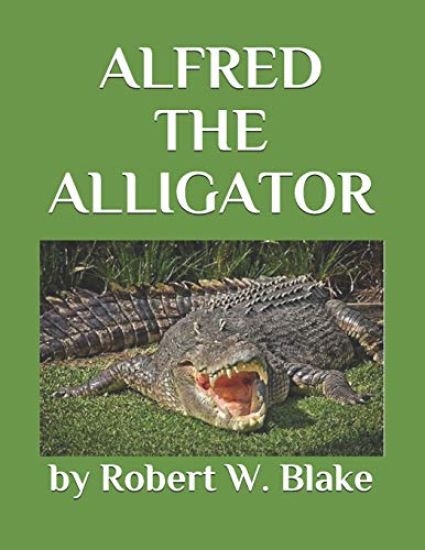
This is a children's book about an Alligator and a Crocodile and the only place in the world that they exist together, The Florida Everglades.
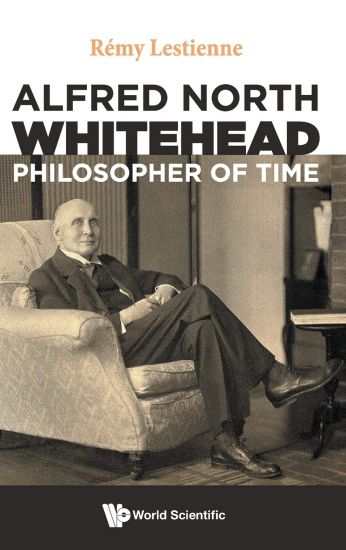
Alfred North Whitehead (1861-1947), a mathematician and logician by training, was the author of highly original works at the crossroads of science and philosophy which explore the nature of the world around us and its temporal flow.Convinced that everyday terms distort reality, Whitehead invented or borrowed terms more appropriate to his project. The word 'Process', which gives its title to his most famous work Process and Reality (1929), is central to his thinking. Process introduces his vision of nature as a succession of crystallizations, each of which proves the finite granularity of time: the instant does not exist. It also implies a confrontation with the theory of relativity and quantum physics. Whitehead's perspective allows for the occurrence of creative novelties, but necessitates that the world cooperates with a deity, the role of which is examined in this book's last chapter.In Alfred North Whitehead, Philosopher of Time, the author mixes biographical elements with intellectual advances, from logicism to philosophies of nature. A compelling introduction to Whitehead's demanding work, this book deciphers a metaphysical landscape often considered too abstract to be approachable, but points out the philosopher's imperfections with respect to the scientific advances of our time.
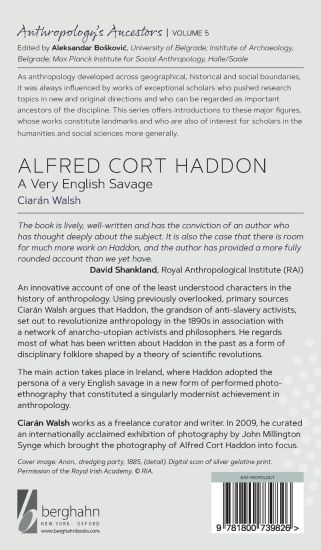
An innovative account of one of the least-understood characters in the history of anthropology. Using previously overlooked, primary sources Ciarán Walsh argues that Haddon, the grandson of anti-slavery activists, set out to revolutionize anthropology in the 1890s in association with a network of anarcho-utopian activists and philosophers. He regards most of what has been written about Haddon in the past as a form of disciplinary folklore shaped by a theory of scientific revolutions. The main action takes place in Ireland, where Haddon adopted the persona of a very English savage in a new form of performed photo-ethnography that constituted a singularly modernist achievement in anthropology. From the Introduction: Alfred Cort Haddon was written out of the story of anthropology for the same reasons that make him interesting today. He was passionately committed to the protection of simpler societies and their civilisations from colonists and their supporters in parliament and the armed forces.
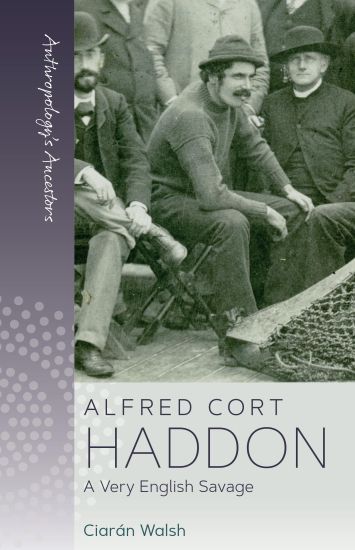
An innovative account of one of the least-understood characters in the history of anthropology. Using previously overlooked, primary sources Ciarán Walsh argues that Haddon, the grandson of anti-slavery activists, set out to revolutionize anthropology in the 1890s in association with a network of anarcho-utopian activists and philosophers. He regards most of what has been written about Haddon in the past as a form of disciplinary folklore shaped by a theory of scientific revolutions. The main action takes place in Ireland, where Haddon adopted the persona of a very English savage in a new form of performed photo-ethnography that constituted a singularly modernist achievement in anthropology. From the Introduction: Alfred Cort Haddon was written out of the story of anthropology for the same reasons that make him interesting today. He was passionately committed to the protection of simpler societies and their civilisations from colonists and their supporters in parliament and the armed forces.
"Marianne, Fantasio, Don't Trifle With Love, The Candlestick, A Diversion, A Door Must be Open or Shut, You Can't Think of Everything The seven plays in this collection share a light-hearted tone, though with occasional and unexpected moments of seriousness. In Marianne, a confirmed cynic intercedes with a married woman on behalf of his best friend. In the eponymous hero of the modern 'fairy tale' Fantasio, by turns imaginative, abrupt and perceptive, Musset provides us with a compelling self-portrait. Don't Trifle with Love shows the dangerous strategems of two childhood sweethearts, supposedly destined for marriage. In The Candlestick, an infatuated clerk is set up as a decoy by his employer's young wife and her lover. The one-act plays A Diversion, A Door Must be Open or Shut and You Can't Think of Everything deal, in witty, epigrammatic style, with various aspects of romance: a wife and her friend test her husband's fidelity, or lack of it; a man wants to propose to his bantering, blase hostess; and a couple in love, one absent-minded, the other forgetful, tries to concentrate long enough to get married."
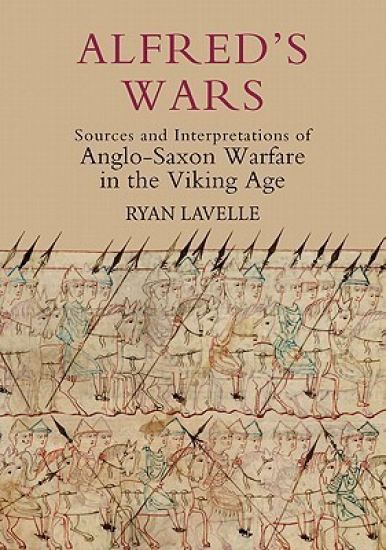
Alfred's Wars: Sources and Interpretations of Anglo-Saxon Warfare in the Viking Age
Ryan Lavelle
The Boydell Press
2010
sidottu
Collection of source material and crucial interpretations, offering a comprehensive guide to Anglo-Saxon warfare. WINNER: 2012 CHOICE Outstanding Academic Title Award The warfare of the late Anglo-Saxon period had momentous consequences for the development of the English state following Alfred the Great's reign. This book provides a comprehensive guide, with extracts in translation from the principal sources for our knowledge, accompanied by the most important interpretations by scholars through the ages, and new introductions by thepresent author. It looks at every aspect of the topic, from land and sea forces to logistics and campaigning, from fortifications and the battlefield to the final peacemaking. In so doing, it highlights the significance of warfareand its organisation for the late Anglo-Saxon state, and the multitude of ways in which it was recorded and remembered. Dr Ryan Lavelle is Senior Lecturer in Medieval History at the University of Winchester.