River of Authenticity will help you to navigate the former moves of the Holy Spirit that literally impacted the world. From their stages of infancy to the current flow of the Holy Spirit in the now. You will be informed of what were the virtues that gave birth to literal outpourings and spiritual awakenings and the things that challenged their momentum. Also, it addresses the urgent need of the restoration of the Spirit and to inspire you to have a greater desire for the presence of God.
This book represents three decades of Perlmutter's experiences and observations. The author studies the relationship between the military and politics in Middle East, focusing mainly on Egypt as a case study. He concludes by analysing the effect this internal relationship has on military performance.
This book is intended to serve as a textbook for a second course in the im plementation (Le. microarchitecture) of computer architectures. The subject matter covered is the collection of techniques that are used to achieve the highest performance in single-processor machines; these techniques center the exploitation of low-level parallelism (temporal and spatial) in the processing of machine instructions. The target audience consists students in the final year of an undergraduate program or in the first year of a postgraduate program in computer science, computer engineering, or electrical engineering; professional computer designers will also also find the book useful as an introduction to the topics covered. Typically, the author has used the material presented here as the basis of a full-semester undergraduate course or a half-semester post graduate course, with the other half of the latter devoted to multiple-processor machines. The background assumed of the reader is a good first course in computer architecture and implementation - to the level in, say, Computer Organization and Design, by D. Patterson and H. Hennessy - and familiarity with digital-logic design. The book consists of eight chapters: The first chapter is an introduction to all of the main ideas that the following chapters cover in detail: the topics covered are the main forms of pipelining used in high-performance uniprocessors, a taxonomy of the space of pipelined processors, and performance issues. It is also intended that this chapter should be readable as a brief "stand-alone" survey.
The Pentecostal movement has had an incredible impact on the shape of worldwide Christianity in the past century. Estimates are that Pentecostals and charismatics make up approximately one-fourth of Christians worldwide, and the numbers are only expected to grow. With these developments comes the need for thoughtful Christians of all persuasions to better understand Pentecostal theology. In fact, Amos Yong believes that Pentecostal theology can be a great gift to the church at large.Yong presents a thoroughly Pentecostal theology of salvation, the church, the nature of God, and creation. He also provides a fascinating survey of the state of worldwide Pentecostalism, examining how Pentecostal theology is influencing Christian churches in other countries.
The sixth edition of "American National Security" has been extensively rewritten to take into account the significant changes in national security policy in the past decade. Thorough revisions reflect a new strategic context and the challenges and opportunities faced by the United States in the early twenty-first century. Highlights include: an examination of the current international environment and new factors affecting U.S. national security policy making; a discussion of the Department of Homeland Security and changes in the intelligence community; a survey of intelligence and national security, with special focus on security needs post-9/11; a review of economic security, diplomacy, terrorism, conventional warfare, counterinsurgency, military intervention, and nuclear deterrence in the changed international setting; an update of security issues in East Asia, South and Southeast Asia, the Middle East, Sub-Saharan Africa, Russia and Central Asia, and Latin America and the Caribbean; and, new material on globalization, transnational actors, and human security.
Amos Tutuola's second novel recounting the fate of mortals who stray into the world of ghosts, now available in a standalone volumeFirst published in 1954, now acclaimed as a modern classic, and named one of TIME's "100 Best Fantasy Books of All Time," My Life in the Bush of Ghosts is the second novel by the Nigerian writer Amos Tutuola. A small boy finds himself lost in the heart of an impenetrable African forest, populated with fantastical beings and ghosts. As every hunter and traveler knows, it is almost impossible to leave the bush--yet the appearance of the television-handed ghostess may offer him a rare opportunity for escape. My Life in the Bush of Ghosts is a masterpiece of the surreal that blends Tutuola's native Yoruba culture with the encroaching influences of British and Christian colonialism in West Africa, a picaresque and darkly funny journey that is unique in literature.
Amos Tutuola's masterful first novel of a nightmarish quest into the land of the dead, now available in a standalone volume with an introduction by Wole SoyinkaWidely considered to be Amos Tutuola's masterpiece, Amos Tutuola's debut novel The Palm-Wine Drinkard was first published in 1952. Named one of TIME's "100 Best Fantasy Books of All Time" and introduced here by Wole Soyinka, the novel tells the phantasmagorical story of a wealthy alcoholic who drinks 225 kegs of palm wine a day. When the man's personal tapster dies and leaves him without any remaining supply of alcohol, the man desperately follows the tapster into the nightmarish Dead's Town. Drawing on Yoruba folklore and narrated with a unique voice that mixes West African oral traditions with the Colonial British English that Tutuola learned at school, The Palm-Wine Drinkard is a seminal work of African literature from one of Nigeria's most influential writers and an important part of the global literary canon.
The authors are sensitive to the current impatience with traditional historical content, yet they convey much historical fact without losing either the reader's attention or the shape of the long time period treated--Booklist. "A most readable book - it can be wholeheartedly recommended"--Joint Association of Classical Teachers. Surveying Greek history and civilization, this examines such topics as the Minoans and Mycenaeans, City-States, Wars with Persia, Imperial Athens, Alexander, and after Alexander, as well as Greek religion, games, democracy and law, work and trade, and education.
In the Days of Caesar is a constructive political theology formulated in sustained dialogue with the Pentecostal and charismatic renewal -- one of the most vibrant religious movements at the beginning of the twenty-first century. Amos Yong here argues that the many tongues, practices, and gifts of renewal Christianity offer up new resources for thinking about how Christian community can engage and transform the social, political, and economic structures of the world. Yong has three goals here. First he seeks to correct stereotypes of Pentecostalism, both political and theological. Secondly he aims to provoke Pentecostals to reflect theologically from out of the depths of their own Pentecostalism rather than merely to adopt some framework for theological or political self-understanding. Finally Yong shows that a distinctively Pentecostal form of theological reflection is not a parochial activity but has constructive potential to illuminate Christian belief and practice. This book's engagement with political theology from a Pentecostal perspective is the first of its kind.
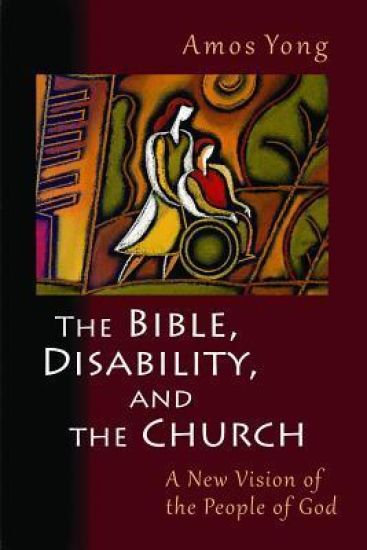
Inspiring and challenging study that rethinks the Bible's teaching on disability A theologian whose life experience includes growing up alongside a brother with Down syndrome, Amos Yong in this book rereads and reinterprets biblical texts about human disability, arguing that the way we read biblical texts, not the Bible itself, is what causes us to marginalize persons with disabilities. Revealing and examining the underlying stigma of disability that exists even in the church, Yong shows how the Bible offers good news to people of all abilities -- and he challenges churches to become more inclusive communities of faith.
Is a pentecostal-charismatic worldview defensible in light of contemporary science? In The Spirit of Creation Amos Yong demonstrates that pentecostal thought does indeed have merit in scientific contexts. What's more, he argues that pentecostal-charismatic views regarding the dynamic presence and activity of the Spirit of God and the pluralistic cosmology of many spirits have something important to add to the broad discussion now taking place at the crossroads of science and religion. Interacting with many scientific fields of study -- including psychology, sociology, evolutionary science, cosmology, and more -- Yong's Spirit of Creation demonstrates the significance of pentecostal ideas to the ongoing dialogue between theology and science.
In most parts of the world and especially where Christianity is flourishing, Pentecostal and charismatic movements predominate. What would it look like for the Western world--beset by the narrative of decline--to participate in this global Spirit-driven movement? According to Amos Yong, it all needs to start with the way we approach theological education. Renewing the Church by the Spirit makes the case for elevating pneumatology in Christian life, allowing the Spirit to reinvigorate church and mission. Yong shows how this approach would attend to both the rapidly deinstitutionalizing forms of twenty-first-century Christianity and the pressing need for authentic spiritual experiences that marks contemporary religious life. He begins with a broad assessment of our postmodern, post-Enlightenment, post-Christendom ecclesial context, before moving into a detailed outline of how a Spirit-filled approach to theological education--its curriculum, pedagogy, and scholarship--can meet the ecclesial and missional demands of this new age.
Euro-Americans see the Spanish conquest as the main event in the five-century history of Mesoamerica, but the people who lived there before contact never gave up their own cultures. Both before and after conquest, indigenous scribes recorded their communities' histories and belief systems, as well as the events of conquest and its effects and aftermath. Today, the descendants of those native historians in modern-day Mexico and Guatemala still remember their ancestors' stories. In Mesoamerican Memory, volume editors Amos Megged and Stephanie Wood have gathered the latest scholarship from contributors around the world to compare these various memories and explore how they were preserved and altered over time.Rather than dividing Mesoamerica's past into pre-contact, colonial, and modern periods, the essays in this volume emphasize continuity from the pre-conquest era to the present, underscoring the ongoing importance of indigenous texts in creating and preserving community identity, history, and memory. In addition to Nahua and Maya recollections, contributors examine the indigenous traditions of Mixtec, Zapotec, Tarascan, and Totonac peoples. Close analysis of pictorial and alphabetic manuscripts, and of social and religious rituals, yields insight into community history and memory, political relations, genealogy, ethnic identity, and portrayals of the Spanish invaders.Drawing on archaeology, art history, ethnology, ethnohistory, and linguistics, the essays consider the function of manuscripts and ritual in local, regional, and, now, national settings. Several scholars highlight direct connections between the collective memory of indigenous communities and the struggles of contemporary groups. Such modern documents as land titles, for example, gain legitimacy by referring to ancestral memory.Crossing disciplinary, methodological, and temporal boundaries, Mesoamerican Memory advances our understanding of collective memory in Mexico and Guatemala. Through diverse sources - pictorial and alphabetic, archaeological, archival, and ethnographic - readers gain a glimpse into indigenous remembrances that, without the research exhibited here, might have remained unknown to the outside world.
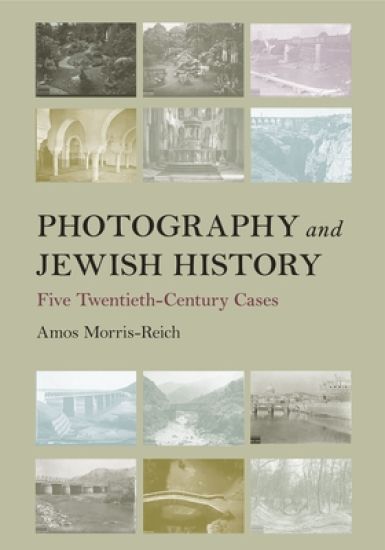
It is a sign of the accepted evidentiary status of photographs that historians regularly append them to their accounts, Amos Morris-Reich observes. Very often, however, these photographs are treated as mere illustrations, simple documentations of the events that transpired. Scholars of photography, on the other hand, tend to prioritize the photographs themselves, relegating the historical contexts to the background. For Morris-Reich, however, photography exists within reality; it partakes in and is very much a component of the history it records. Morris-Reich examines how photography affects categories of history and experience, how it is influenced by them, and the ways in which our understanding of the relationship between history and photography can be theorized and reoriented. Morris-Reich here turns to five twentieth-century cases in which photography and Jewish history intersect: Albert Kahn's utopian attempt to establish a photographic archive in Paris in order to advance world peace; the spectacular failed project of Helmar Lerski, the most prominent photographer in British Mandate Jewish Palestine; photography in the long career of Eugen Fischer, a Nazi professor of genetics; the street photography of Robert Frank; and the first attempt to introduce photography into the study of Russian Jewry prior to World War I, as seen from the post-Holocaust perspective of the early twenty-first century. Illustrated with nearly 100 images, Photography and Jewish History moves beyond a focus on Jewish photographers or the photographic representation of Jews or Jewish visibility to plumb the deeper and more significant registers of twentieth-century Jewish political history.
This book originates in two symposia held during 1985 at the annual meetings of the Society for Applied Anthropology and the Environmental Design Research Association.
Rapoport is concerned with the meanings which buildings, their contents, and their inhabitants convey, and the conclusions which can be drawn therefrom for procedures of architectural design to satisfy the people who will ultimately live in these buildings...A challenging book on a subject that has had insufficient attention in the past.?Man and Environment ""Fills a significant gap: it introduces the notion of environmental meaning so clearly that no reader will doubt the basic premise that the environment holds meaning as part of a cultural system of symbols, and influences our actions and our determinations of social order.""?Design Book Review ""This is the second edition of a book first published in 1982...Enthusiastic and inquiring as the reader is brought into the writer's thought processes.""?Progress in Human Geography (England) ""It has merits not to be found in any other book in this much-discussed and little understood subject, to wit: it is short, it is simple, and it is useful. It is even, in parts, entertaining...a book which will help architects to do their job better."" Architecture Australia




![Genealogical Notes of Barnstable Families. Volume I [Massachusetts]](/covers/9780806354729.jpg)
![Genealogical Notes of Barnstable Families. Volume II [Massachusetts]](/covers/9780806354736.jpg)