Kirjojen hintavertailu. Mukana 12 083 983 kirjaa ja 12 kauppaa.

Kirjahaku

Etsi kirjoja tekijän nimen, kirjan nimen tai ISBN:n perusteella.

1000 tulosta hakusanalla Andreas Oppermann

After the Great Divide

After the Great Divide

Andreas Huyssen

Indiana University Press
1987
pokkari
"One of the most comprehensive and intelligent postmodern critics of art and literature, Huyssen collects here a series of his essays on pomo..." -Village Voice Literary Supplement "...his work remains alert to the problematic relationship obtaining between marxisms and poststructuralisms." -American Literary History "...challenging and astute." -World Literature Today "Huyssen's level-headed account of this controversial constellation of critical voices brings welcome clarification to today's murky haze of cultural discussion and proves definitively that commentary from the tradition of the German Left has an indispensable role to play in contemporary criticism." -The German Quarterly "...we will certainly have, after reading this book, a deeper understanding of the forces that have led up to the present and of the possibilities still open to us." -Critical Texts "...a rich, multifaceted study." -The Year's Work in English Studies Huyssen argues that postmodernism cannot be regarded as a radical break with the past, as it is deeply indebted to that other trend within the culture of modernity-the historical avant-garde.
A New Understanding of Mental Disorders
A new computational and dimensional approach to understanding and classifying mental disorders: modeling key learning and decision-making mechanisms across different mental disorders.Even as researchers look for neurobiological correlates of mental disorders, many of these disorders are still classified solely according to the manifestation of clinical symptoms. Neurobiological findings rarely help diagnose a specific disease or predict its outcome. Although current diagnostic categories are questionable (sometimes labeling common states of human suffering as disorders), traditional neuroimaging approaches are not sophisticated enough to capture the neurobiological markers of mental disorder. In this book, Andreas Heinz proposes a computational and dimensional approach to understanding and classifying mental disorders: modeling key learning and decision-making mechanisms across different mental disorders. Such an approach focuses on the malleability and diversity of human behavior and its biological underpinnings.Heinz explains basic learning mechanisms and their effects on human behavior, focusing not on single disorders but on how such mechanisms work in a multitude of mental states. For example, he traces alterations in dopamine-reinforcement learning in psychotic, affective, and addictive disorders. He investigates to what extent these basic dimensions of mental disorders can account for such syndromes as craving and loss of control in addiction, positive and negative mood states in affective disorders, and the altered experience of self and world associated with psychotic states. Finally, Heinz explores the clinical and therapeutic implications of such accounts. He argues that a focus on learning mechanisms, with its emphasis on human creativity and resilience, should help reduce the stigma of mental disorder.
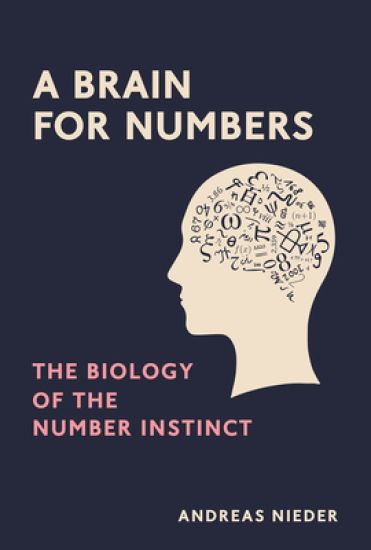
A Brain for Numbers

A Brain for Numbers

Andreas Nieder

MIT Press
2019
sidottu
How our intuitive understanding of numbers is deeply rooted in our biology, traceable through both evolution and development.Humans' understanding of numbers is intuitive. Infants are able to estimate and calculate even before they learn the words for numbers. How have we come to possess this talent for numbers? In A Brain for Numbers, Andreas Nieder explains how our brains process numbers. He reports that numerical competency is deeply rooted in our biological ancestry; it can be traced through both the evolution of our species and the development of our individual minds. It is not, as it has been traditionally explained, based on our ability to use language. We owe our symbolic mathematical skills to the nonsymbolic numerical abilities that we inherited from our ancestors. The principles of mathematics, Nieder tells us, are reflections of the innate dispositions wired into the brain.Nieder explores how the workings of the brain give rise to numerical competence, tracing flair for numbers to dedicated "number neurons" in the brain. Drawing on a range of methods including brain imaging techniques, behavioral experiments, and twin studies, he outlines a new, integrated understanding of the talent for numbers. Along the way, he compares the numerical capabilities of humans and animals, and discusses the benefits animals reap from such a capability. He shows how the neurobiological roots of the brain's nonverbal quantification capacity are the evolutionary foundation of more elaborate numerical skills. He discusses how number signs and symbols are represented in the brain; calculation capability and the "neuromythology" of mathematical genius; the "start-up tools" for counting and developmental of dyscalculia (a number disorder analogous to the reading disorder dyslexia); and how the brain processes the abstract concept of zero.
The Demand Revolution

The Demand Revolution

Andreas von der Gathen; Nicolai Broby Eckert

MIT PRESS LTD
2024
sidottu
How consumer desire for sustainability is powering the first demand-driven, transformative megatrend and how business leaders can make the most of this important moment. Sustainability is rocking the business world as profoundly as global trends of the past have, from electrification to digitalization. But unlike previous revolutions, this one is being driven by consumers, for whom environmentally sound practices matter as much as price, quality, and brand. In The Demand Revolution authors Andreas von der Gathen, Nicolai Broby Eckert, and Caroline Kastbjerg offer a strategic framework for winning these consumers and taking advantage of the vast commercial opportunity presented by sustainability as the first demand-driven, transformative megatrend. The first movers in the Demand Revolution will be able to create enduring competitive advantages and high entry barriers built around redesigned business model ecosystems and customer loyalty, the authors explain, but this will require a critical adjustment in thinking and approach. Companies, first of all, have to catch up with consumers, who see themselves on a demand curve far beyond what companies currently perceive. Business leaders must shift their focus from the cost of sustainability to its potential for generating growth and long term profits. This, in turn, means recognizing that the classic adoption curves for innovations and the strategic playbooks derived from those insights no longer apply. The authors of The Demand Revolution show business leaders how to look beyond easy fixes and incremental outcomes and instead pursue high-risk, high reward moves built on the source of exponential growth: the world s consumers.
Enlivenment

Enlivenment

Andreas Weber

MIT Press
2019
pokkari
A new understanding of the Anthropocene that is based on mutual transformation with nature rather than control over nature.We have been told that we are living in the Anthropocene, a geological era shaped by humans rather than by nature. In Enlivenment, German philosopher Andreas Weber presents an alternative understanding of our relationship with nature, arguing not that humans control nature but that humans and nature exist in a commons of mutual transformation. There is no nature–human dualism, he contends, because the fundamental dimension of existence is shared in what he calls "aliveness." All subjectivity is intersubjectivity. Self is self-through-other. Seeing all beings in a common household of matter, desire, and imagination, an economy of metabolic and economic transformation, is “enlivenment.” This perspective allows us to move beyond Enlightenment-style thinking that strips material reality of any subjectivity.To take this step, Weber argues, we need to supplant the concept of techné with the concept of poiesis as the element that brings forth reality. In a world not divided into things and ideas, culture and nature, reality arises from the creation of relationships and continuous fertile transformations; any thinking in terms of relationships comes about as a poetics. The self is always a function of the whole; the whole is equally a function of the individual. Only this integrated freedom allows humanity to reconcile with the natural world.This first English edition of Enlivenment has been expanded and updated from the German edition.
Public Sector Financial Management

Public Sector Financial Management

Andreas Bergmann

Pearson Education Limited
2008
pokkari
Taking an integrated approach, this book is in-line with recent developments in the public sector environment. It draws together accounting theory and practice for each of the main areas of accounting, providing contemporary examples from a range of public sector experiences.
National Identity in Eastern Germany

National Identity in Eastern Germany

Andreas Staab

Praeger Publishers Inc
1998
sidottu
On October 30, 1990, Germany was formally reunified through an extension of the legal, political, and economic structures of West Germany into the former German Democratic Republic. For East Germans this transformation has been a challenging process. Former values, orientations, and standards have been subject to severe scrutiny as reunification has affected virtually every area of life.Staab analyzes the development from the divided to the unified Germany and asks to what extent East Germans have adopted a national identity in line with that of the West Germans. He examines such identity markers as attitudes toward territory, economics, ethnicity, mass culture, and civic-political activity. Identifying a significant range of commonalities, he also finds striking features of mutually exclusive areas working to prevent a shared national identity. Scholars and other researchers dealing with German politics and contemporary history, political sociology, and nationalism will be interested in this book.
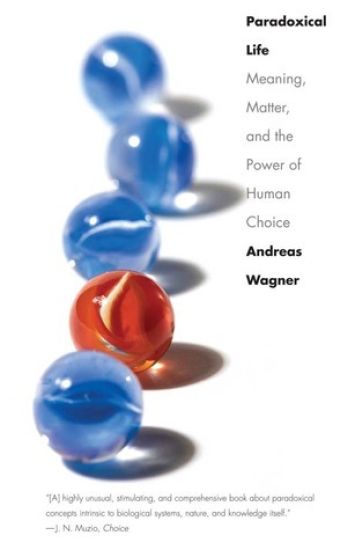
Paradoxical Life

Paradoxical Life

Andreas Wagner

Yale University Press
2011
pokkari
For readers of Hofstadter’s Gödel, Escher, Bach, a fascinating look at the hidden meaning in matter What can a fingernail tell us about the mysteries of creation? In one sense, a nail is merely a hunk of mute matter, yet in another, it’s an information superhighway quite literally at our fingertips. Every moment, streams of molecular signals direct our cells to move, flatten, swell, shrink, divide, or die. Andreas Wagner’s ambitious new book explores this hidden web of unimaginably complex interactions in every living being. In the process, he unveils a host of paradoxes underpinning our understanding of modern biology, contradictions he considers gatekeepers at the frontiers of knowledge.Though we tend to think of concepts in such mutually exclusive pairs as mind-matter, self-other, and nature-nurture, Wagner argues that these opposing ideas are not actually separate. Indeed, they are as inextricably connected as the two sides of a coin. Through a tour of modern biological marvels, Wagner illustrates how this paradoxical tension has a profound effect on the way we define the world around us. Paradoxical Life is thus not only a unique account of modern biology. It ultimately serves a radical—and optimistic—outlook for humans and the world we help create.
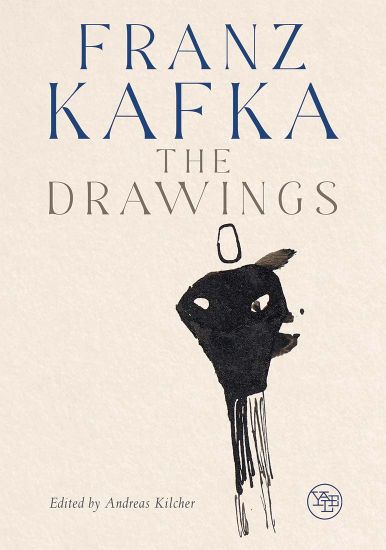
Franz Kafka

Franz Kafka

Andreas Kilcher; Pavel Schmidt

YALE UNIVERSITY PRESS
2022
sidottu
The first book to publish the entirety of Franz Kafka’s graphic output, including more than 100 newly discovered drawings “The figures he drew stand alone as stories in themselves.”—Lauren Christensen, New York Times Book Review “A sensational new book [that] reveals these hitherto hidden artworks for the first time. . . . This valuable volume allows us to see how, for Kafka, word and image walk arm in arm.”—Benjamin Balint, Jewish Review of Books The year 2019 brought a sensational discovery: hundreds of drawings by the writer Franz Kafka (1883–1924) were found in a private collection that for decades had been kept under lock and key. Until now, only a few of Kafka’s drawings were widely known. Although Kafka is renowned for his written work, his drawings are evidence of what his literary executor Max Brod termed his “double talent.” Irresistible and full of fascinating figures, shifting from the realistic to the fantastic, the grotesque, the uncanny, and the carnivalesque, they illuminate a previously unknown side of the quintessential modernist author. Kafka’s drawings span his full career, but he drew most intensively in his university years, between 1901 and 1907. An entire booklet of drawings from this period is among the many new discoveries, along with dozens of loose sheets. Published for the first time in English, these newly available materials are collected with his known works in a complete catalogue raisonné of more than 240 illustrations, reproduced in full color. Essays by Andreas Kilcher and Judith Butler provide essential background for this lavish volume, interpreting the drawings in their own right while also reconciling their place in Kafka’s larger oeuvre.
A Theology of John's Gospel and Letters

A Theology of John's Gospel and Letters

Andreas J. Kostenberger

Zondervan
2009
sidottu
A Theology of John’s Gospel and Letters introduces the first volume in the BTNT series. Building on many years of research and study in Johannine literature, Andreas Köstenberger not only furnishes an exhaustive theology of John’s Gospel and letters, but also provides a detailed study of major themes and relates them to the Synoptic Gospels and other New Testament books. Readers will gain an in-depth and holistic grasp of Johannine theology in the larger context of the Bible.D. A. Carson (Trinity Evangelical Divinity School) says about Köstenberger’s volume that “for the comprehensiveness of its coverage in the field of Johannine theology (Gospel and Letters), there is nothing to compare to this work.”I. Howard Marshall (University of Aberdeen) writes, “This book is a ‘first’ in many ways: the first volume that sets the pattern for the quality and style of the new Biblical Theology of the New Testament series published by Zondervan; the first major volume to be devoted specifically to the theology of John’s Gospel and Letters at a high academic level; and the first volume to do so on the basis that here we have an interpretation of John’s theology composed by an eyewitness of the life and passion of Jesus.”The Biblical Theology of the New Testament SeriesThe Biblical Theology of the New Testament (BTNT) series provides upper college and seminary-level textbooks for students of New Testament theology, interpretation, and exegesis. Pastors and discerning theology readers alike will also benefit from this series. Written at the highest level of academic excellence by recognized experts in the field, the BTNT series not only offers a comprehensive exploration of the theology of every book of the New Testament, including introductory issues and major themes, but also shows how each book relates to the broad picture of New Testament theology.
Women of Exile

Women of Exile

Andreas Lixl Purcell

Praeger Publishers Inc
1988
sidottu
Lixl-Purcell . . . has chosen twenty-six from the hundreds of unpublished memoirs he researched. They are arranged in three sections--Persecution and Displacement, Exile and War, and Exile in Hindsight. Much of the power of their stories lies in their matter-of-fact and straightforward telling of their fears, narrow escapes, sorrows, and triumphs. There are narratives describing women's social, cultural and political networks before and after immigration, the isoilated struggles of individuals, their work as legal or illegal aliens abroad, and their involvement with underground resistance movements. American Library Book ReviewWomen's exile autobiographies, written usually for an audience of relatives and fellow travellers, are rarely made available to the public. This is particularly true for Jewish women who fled Germany after Hitler's rise to power in 1933. In this unusual volume, the memoirs, diaries, and letters of twenty-six of these extraordinary women are published together for the first time. Their recollections paint a provocative profile of exile life and cover a broad spectrum of emigre history on every continent. While each memoir voices an intensely personal explanation, their combined effect is to launch a radical reinterpretation of women's roles, fates, and destinies.
Corrosion and Corrosion Protection of Wind Power Structures in Marine Environments
Corrosion and Corrosion Protection of Wind Power Structures in Marine Environments: Volume 1: Introduction and Corrosive Loads offers the first comprehensive review on corrosion and corrosion protection of offshore wind power structures. The book provides extensive discussion on corrosion phenomena and types in different marine corrosion zones, including the modeling of corrosion processes and interactions between corrosion and structural stability. The book addresses important design issues, namely materials selection relative to performance in marine environments, corrosion allowance, and constructive design. Active and passive corrosion protection measures are emphasized, with special sections on cathodic corrosion protection and the use of protective coatings. Seawater related issues associated with cathodic protection, such as calcareous deposit formation, hydrogen formation and fouling, are discussed. With respect to protective coatings, the book considers for the first time complete loading scenarios, including corrosive loads, mechanical loads, and special loads, and covers a wide range of coating materials. Problems associated with fouling and bacterial-induced corrosion are extensively reviewed. The book closes with a chapter on recent developments in maintenance strategies, inspection techniques, and repair technologies. The book is of special interest to materials scientists, materials developers, corrosion engineers, maintenance engineers, civil engineers, steel work designers, mechanical engineers, marine engineers. Offshore wind power is an emerging renewable technology and a key factor for a cleaner environment. Offshore wind power structures are situated in a demanding and challenging marine environment. The structures are loaded in a complex way, including mechanical loads and corrosive loads. Corrosion is one of the major limiting factors to the reliability and performance of the technology. Maintenance and repair of corrosion protection systems are particularly laborious and costly.
Corrosion and Corrosion Protection of Wind Power Structures in Marine Environments
Corrosion and Corrosion Protection of Wind Power Structures in Marine Environments: Volume 2: Corrosion Protection Measures offers the first comprehensive review on corrosion and corrosion protection of offshore wind power structures. The book extensively discusses corrosion phenomena and corrosion types in different marine corrosion zones, including the modeling of corrosion processes and interactions between corrosion and structural stability. The book addresses important design issues, namely materials selection relevant to their performance in marine environments, corrosion allowance, and constructive design. Active and passive corrosion protection measures are emphasized, with special sections on cathodic corrosion protection and the use of protective coatings. Seawater related issues associated with cathodic protection, such as calcareous deposit formation, hydrogen formation, and fouling, are discussed. With respect to protective coatings, the book considers, for the first time, complete loading scenarios, including corrosive loads, mechanical loads, and special loads, and covers a wide range of coating materials. Problems associated with fouling and bacterial-induced corrosion are extensively reviewed. The book closes with a chapter on recent developments in maintenance strategies, inspection techniques, and repair technologies. The book will be of special interest to materials scientists, materials developers, corrosion engineers, maintenance engineers, civil engineers, steel work designers, mechanical engineers, marine engineers, chemists, and coating specialists. Offshore wind power is an emerging renewable technology and a key factor for a cleaner environment. Offshore wind power structures are situated in a demanding and challenging marine environment. The structures are loaded in a complex way, including mechanical loads and corrosive loads. Corrosion is one of the major limiting factors to the reliability and performance of the technology. Maintenance and repair of corrosion protection systems are particularly laborious and costly.