Kirjojen hintavertailu. Mukana 12 016 292 kirjaa ja 12 kauppaa.

Kirjahaku

Etsi kirjoja tekijän nimen, kirjan nimen tai ISBN:n perusteella.

1000 tulosta hakusanalla Annette Keiser

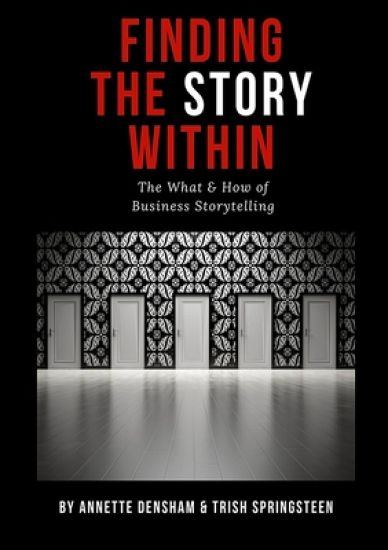
Finding The Story Within

Finding The Story Within

Annette Densham; Trish Springsteen

Mjl Publications
2019
pokkari
Stories help us to see how a product or service can fit into our lives. Stories are a way to get past the pure facts and figures, and show how a product can benefit us, how it can solve our problems and how it can make a difference to us. Stories can motivate us and inspire us in a way that facts and figures can't. Stories allow us to connect with people's hearts. Annette and Trish will help you to go from invisible to shining brightly. If you have a message, a passion or a story locked inside; if you are waiting for someone to find you but you are not sure how to get that story out or what tools to use; let Annette and Trish show you the way. Includes expert tips from journalists Elizabeth Campbell and Tracy Walsh, podcaster Ronsley S Vaz, social media princess Julie Mason and networking strategist Robyn Henderson.

I'm Not Afraid of You

I'm Not Afraid of You

Annette Murcott

Annette Murcott
2020
pokkari
In 2003, 32-year-old Annette Murcott was wrongfully charged with the wilful murder of her partner, Bevan, in Port Hedland in Western Australia. She was sent to Bandyup Prison in Perth for three long years before the charge was overturned.A lifelong battler, Annette presents a stomach-churning account of extreme abuse, love, murder, family loyalty and police corruption.She had endured a violent relationship and a horrendous miscarriage of justice, but what Annette didn't know was that the worst was yet to come.This is a heart-rending story of a mother's strength and fortitude, fuelled by the desperate love for her son and the unshakeable belief in her own innocence.I'm Not Afraid of You is the true story of Annette's harrowing journey and the terrible years she spent in prison before her charge was finally overturned.
The Epic City

The Epic City

Annette L. Giesecke

Harvard University, Center for Hellenic Studies
2007
nidottu
As Greek and Trojan forces battled in the shadow of Troy's wall, Hephaistos created a wondrous, ornately decorated shield for Achilles. At the Shield's center lay two walled cities, one at war and one at peace, surrounded by fields and pasturelands. Viewed as Homer's blueprint for an ideal, or utopian, social order, the Shield reveals that restraining and taming Nature would be fundamental to the Hellenic urban quest. It is this ideal that Classical Athens, with her utilitarian view of Nature, exemplified. In a city lacking pleasure gardens, it was particularly worthy of note when Epicurus created his garden oasis within the dense urban fabric. The disastrous results of extreme anthropocentrism would promote an essentially nostalgic desire to break down artificial barriers between humanity and Nature. This new ideal, vividly expressed through the domestication of Nature in villas and gardens and also through primitivist and Epicurean tendencies in Latin literature, informed the urban endeavors of Rome.
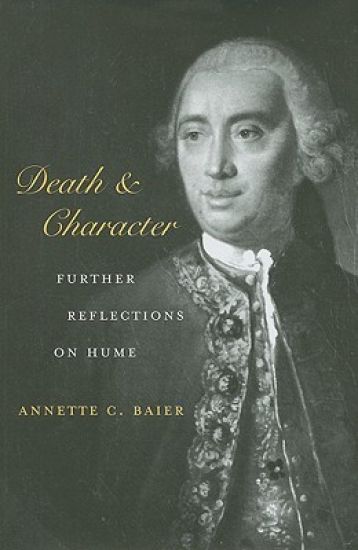
Death and Character

Death and Character

Annette C. Baier

Harvard University Press
2008
sidottu
Reviewing Annette Baier’s 1995 work Moral Prejudices in the London Review of Books, Richard Rorty predicted that her work would be read hundreds of years hence; Baier’s subsequent work has borne out such expectations, and this new book further extends her reach. Here she goes beyond her earlier work on David Hume to reflect on a topic that links his philosophy to questions of immediate relevance—in particular, questions about what character is and how it shapes our lives. Ranging widely in Hume’s works, Baier considers his views on character, desirable character traits, his treatment of historical characters, and his own character as shown not just by his cheerful death—and what he chose to read shortly before it—but also by changes in his writings, especially his repudiation of the celebrated A Treatise on Human Nature. She offers new insight into the Treatise and its relation to the works in which Hume “cast anew” the material in its three books. Her reading radically revises the received interpretation of Hume’s epistemology and, in particular, philosophy of mind.
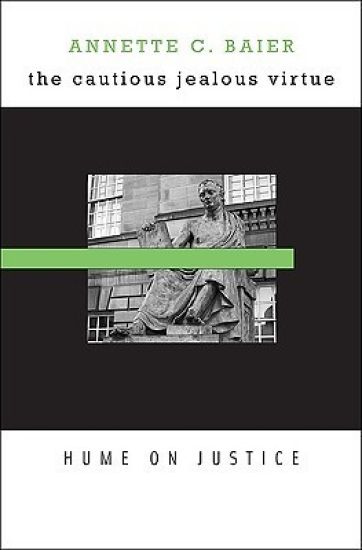
The Cautious Jealous Virtue

The Cautious Jealous Virtue

Annette C. Baier

Harvard University Press
2010
sidottu
Like David Hume, whose work on justice she engages here, Annette C. Baier is a consummate essayist: her spirited, witty prose captures nuances and telling examples in order to elucidate important philosophical ideas. Baier is also one of Hume’s most sensitive and insightful readers. In The Cautious Jealous Virtue, she deepens our understanding of Hume by examining what he meant by “justice.” In Baier’s account, Hume always understood justice to be closely linked to self-interest (hence his description of it in An Enquiry Concerning the Principles of Morals as “the cautious jealous virtue”), but his understanding of the virtue expanded over time, as evidenced by later works, including his History of England. Along with justice, Baier investigates the role of the natural virtue of equity (which Hume always understood to constrain justice) in Hume’s thought, arguing that Hume’s view of equity can serve to balance his account of the artificial virtue of justice. The Cautious Jealous Virtue is an illuminating meditation that will interest not only Hume scholars but also those interested in the issues of justice and in ethics more generally.
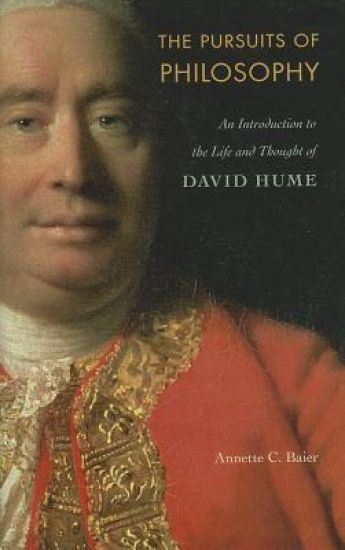
The Pursuits of Philosophy

The Pursuits of Philosophy

Annette C. Baier

Harvard University Press
2011
sidottu
Marking the tercentenary of David Hume's birth, Annette Baier has created an engaging guide to the philosophy of one of the greatest thinkers of Enlightenment Britain. Drawing deeply on a lifetime of scholarship and incisive commentary, she deftly weaves Hume’s autobiography together with his writings and correspondence, finding in these personal experiences new ways to illuminate his ideas about religion, human nature, and the social order.Excerpts from Hume’s autobiography at the beginning of each chapter open a window onto the eighteenth-century context in which Hume’s philosophy developed. Famous in Christian Britain as a polymath and a nonbeliever, Hume recounts how his early encounters with clerical authority laid the foundation for his lifelong skepticism toward religion. In Scotland, where he grew up, he had been forced to study lists of sins in order to spot his own childish flaws, he reports. Later, as a young man, he witnessed the clergy’s punishment of a pregnant unmarried servant, and this led him to question the violent consequences of the Church’s emphasis on the doctrine of original sin. Baier’s clear interpretation of Hume’s Treatise of Human Nature explains the link between Hume’s growing disillusionment and his belief that ethics should be based on investigations of human nature, not on religious dogma.Four months before he died, Hume concluded his autobiography with a eulogy he wrote for his own funeral. It makes no mention of his flaws, critics, or disappointments. Baier’s more realistic account rivets our attention on connections between the way Hume lived and the way he thought—insights unavailable to Hume himself, perhaps, despite his lifelong introspection.
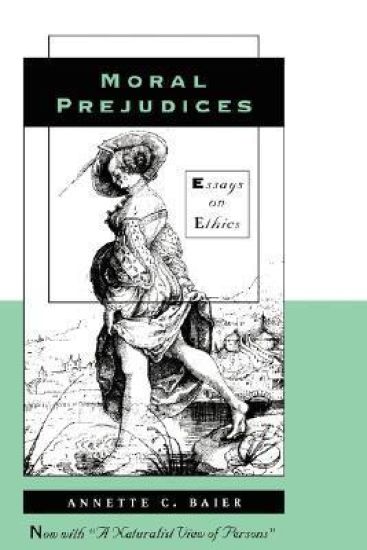
Moral Prejudices

Moral Prejudices

Annette C. Baier

Harvard University Press
1995
nidottu
Annette Baier delivers an appeal for our fundamental moral notions to be governed not by rules and codes but by trust: a moral prejudice. Along the way, she gives us the best feminist philosophy there is. Baier’s topics range from violence to love, from cruelty to justice, and are linked by a preoccupation with vulnerability and inequality of vulnerability, with trust and distrust of equals, with cooperation and isolation. Throughout, she is concerned with the theme of women’s roles. In this provocative exploration of the implications of trusting to trust rather than proscription, Baier interweaves anecdote and autobiography with readings of Hume and Kant to produce an entertaining, challenging, and highly readable book.
A Progress of Sentiments

A Progress of Sentiments

Annette C. Baier

Harvard University Press
1991
nidottu
Annette Baier’s aim is to make sense of David Hume’s Treatise as a whole. Hume’s family motto, which appears on his bookplate, was “True to the End.” Baier argues that it is not until the end of the Treatise that we get his full story about “truth and falsehood, reason and folly.” By the end, we can see the cause to which Hume has been true throughout the work. Baier finds Hume’s Treatise on Human Nature to be a carefully crafted literary and philosophical work which itself displays a philosophical progress of sentiments. His starting place is an overly abstract intellectualism that deliberately thrusts passions and social concerns into the background. In the three interrelated books of the Treatise, his “self-understander” proceeds through partial successes and dramatic failures to emerge with new-found optimism, expecting that the “exact knowledge” the morally self-conscious anatomist of human nature can acquire will itself improve and correct our vision of morality. Baier describes how, by turning philosophy toward human nature instead of toward God and the universe, Hume initiated a new philosophy, a broader discipline of reflection that can embrace Charles Darwin and Michel Foucault as well as William James and Sigmund Freud. Hume belongs both to our present and to our past.
Bob Ross' New Joy of Painting

Bob Ross' New Joy of Painting

Annette Kowalski

William Morrow
1997
nidottu
Since 1983, Bob Ross has been television's favorite artist. His Joy of Painting show captures higher ratings than any other art program in history, year after year. Bob's quick painting style and easy, encouraging manner reach millions of viewers around the world each day.His third book -- New Joy of Painting -- is now available in paperback, containing another sixty of his favorite landscape paintings. Each is presented in full color, along with written instructions and detailed black-and-white how-to photographs. Now you really can complete your very own beautiful masterpiece -- you can do it."Remember, there is no failure, only learning," says author Annette Kowalski. "As I've heard Bob Ross say a thousand times, I hope you never create a painting that you're totally satisfied with, for it's this dissatisfaction that will create the motivation necessary for you to start your next painting, armed with the knowledge you acquired from the previous one."
Freaks: Alive, on the Inside!

Freaks: Alive, on the Inside!

Annette Curtis Klause

Margaret K. McElderry Books
2007
nidottu
If this is a dream, why does she seem so real? Though Abel Dandy was born to circus performers and grew up in a troupe of odd and inexplicable people, he has never felt limited by his normalcy--until now. Realizing he'll never be more amazing than the talented oddities around him, Abel can only dream of living a life richer than his own. But in his dreams a mysterious woman beckons him, calling him passionately by a name he doesn't know and speaking in a language he's never heard, but fully understands. Compelled by these visions and yearning to be more than ordinary, Abel embarks on a journey more frightening and wondrous than he ever imagined....
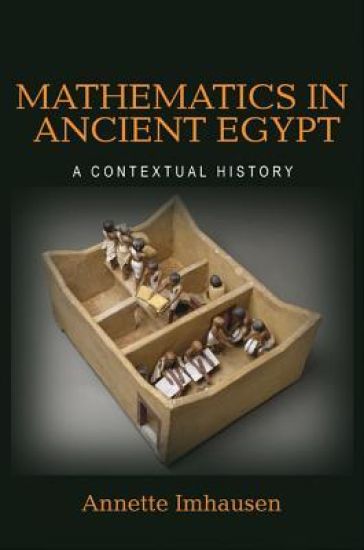
Mathematics in Ancient Egypt

Mathematics in Ancient Egypt

Annette Imhausen

PRINCETON UNIVERSITY PRESS
2016
sidottu
Mathematics in Ancient Egypt traces the development of Egyptian mathematics, from the end of the fourth millennium BC--and the earliest hints of writing and number notation--to the end of the pharaonic period in Greco-Roman times. Drawing from mathematical texts, architectural drawings, administrative documents, and other sources, Annette Imhausen surveys three thousand years of Egyptian history to present an integrated picture of theoretical mathematics in relation to the daily practices of Egyptian life and social structures. Imhausen shows that from the earliest beginnings, pharaonic civilization used numerical techniques to efficiently control and use their material resources and labor. Even during the Old Kingdom, a variety of metrological systems had already been devised. By the Middle Kingdom, procedures had been established to teach mathematical techniques to scribes in order to make them proficient administrators for their king. Imhausen looks at counterparts to the notation of zero, suggests an explanation for the evolution of unit fractions, and analyzes concepts of arithmetic techniques. She draws connections and comparisons to Mesopotamian mathematics, examines which individuals in Egyptian society held mathematical knowledge, and considers which scribes were trained in mathematical ideas and why. Of interest to historians of mathematics, mathematicians, Egyptologists, and all those curious about Egyptian culture, Mathematics in Ancient Egypt sheds new light on a civilization's unique mathematical evolution.
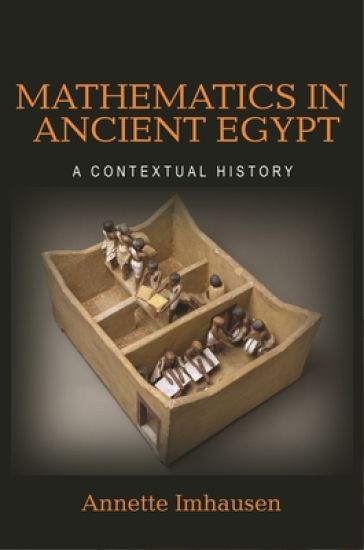
Mathematics in Ancient Egypt

Mathematics in Ancient Egypt

Annette Imhausen

Princeton University Press
2020
pokkari
A survey of ancient Egyptian mathematics across three thousand yearsMathematics in Ancient Egypt traces the development of Egyptian mathematics, from the end of the fourth millennium BC—and the earliest hints of writing and number notation—to the end of the pharaonic period in Greco-Roman times. Drawing from mathematical texts, architectural drawings, administrative documents, and other sources, Annette Imhausen surveys three thousand years of Egyptian history to present an integrated picture of theoretical mathematics in relation to the daily practices of Egyptian life and social structures.Imhausen shows that from the earliest beginnings, pharaonic civilization used numerical techniques to efficiently control and use their material resources and labor. Even during the Old Kingdom, a variety of metrological systems had already been devised. By the Middle Kingdom, procedures had been established to teach mathematical techniques to scribes in order to make them proficient administrators for their king. Imhausen looks at counterparts to the notation of zero, suggests an explanation for the evolution of unit fractions, and analyzes concepts of arithmetic techniques. She draws connections and comparisons to Mesopotamian mathematics, examines which individuals in Egyptian society held mathematical knowledge, and considers which scribes were trained in mathematical ideas and why.Of interest to historians of mathematics, mathematicians, Egyptologists, and all those curious about Egyptian culture, Mathematics in Ancient Egypt sheds new light on a civilization's unique mathematical evolution.
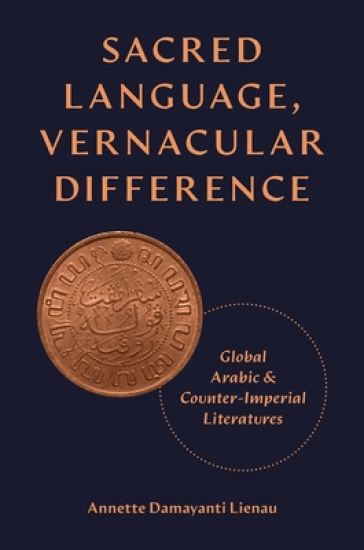
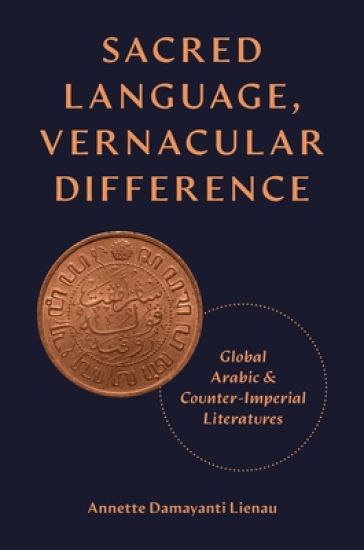
Sacred Language, Vernacular Difference

Sacred Language, Vernacular Difference

Annette Damayanti Lienau

PRINCETON UNIVERSITY PRESS
2024
sidottu
How Arabic influenced the evolution of vernacular literatures and anticolonial thought in Egypt, Indonesia, and SenegalSacred Language, Vernacular Difference offers a new understanding of Arabic’s global position as the basis for comparing cultural and literary histories in countries separated by vast distances. By tracing controversies over the use of Arabic in three countries with distinct colonial legacies, Egypt, Indonesia, and Senegal, the book presents a new approach to the study of postcolonial literatures, anticolonial nationalisms, and the global circulation of pluralist ideas.Annette Damayanti Lienau presents the largely untold story of how Arabic, often understood in Africa and Asia as a language of Islamic ritual and precolonial commerce, assumed a transregional role as an anticolonial literary medium in the nineteenth and twentieth centuries. By examining how major writers and intellectuals across several generations grappled with the cultural asymmetries imposed by imperial Europe, Lienau shows that Arabic—as a cosmopolitan, interethnic, and interreligious language—complicated debates over questions of indigeneity, religious pluralism, counter-imperial nationalisms, and emerging nation-states.Unearthing parallels from West Africa to Southeast Asia, Sacred Language, Vernacular Difference argues that debates comparing the status of Arabic to other languages challenged not only Eurocentric but Arabocentric forms of ethnolinguistic and racial prejudice in both local and global terms.
Sacred Language, Vernacular Difference

Sacred Language, Vernacular Difference

Annette Damayanti Lienau

PRINCETON UNIVERSITY PRESS
2024
pokkari
How Arabic influenced the evolution of vernacular literatures and anticolonial thought in Egypt, Indonesia, and SenegalSacred Language, Vernacular Difference offers a new understanding of Arabic’s global position as the basis for comparing cultural and literary histories in countries separated by vast distances. By tracing controversies over the use of Arabic in three countries with distinct colonial legacies, Egypt, Indonesia, and Senegal, the book presents a new approach to the study of postcolonial literatures, anticolonial nationalisms, and the global circulation of pluralist ideas.Annette Damayanti Lienau presents the largely untold story of how Arabic, often understood in Africa and Asia as a language of Islamic ritual and precolonial commerce, assumed a transregional role as an anticolonial literary medium in the nineteenth and twentieth centuries. By examining how major writers and intellectuals across several generations grappled with the cultural asymmetries imposed by imperial Europe, Lienau shows that Arabic—as a cosmopolitan, interethnic, and interreligious language—complicated debates over questions of indigeneity, religious pluralism, counter-imperial nationalisms, and emerging nation-states.Unearthing parallels from West Africa to Southeast Asia, Sacred Language, Vernacular Difference argues that debates comparing the status of Arabic to other languages challenged not only Eurocentric but Arabocentric forms of ethnolinguistic and racial prejudice in both local and global terms.