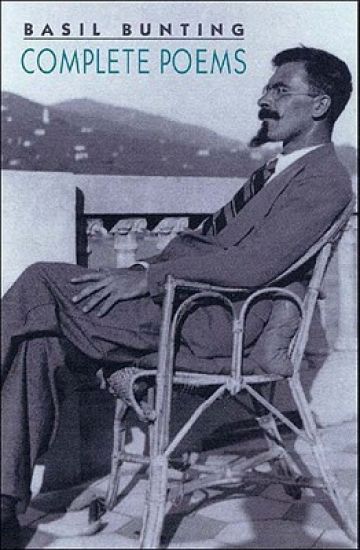
A master of song poems which celebrate--and incarnate--the music of nature and history, love and mythology, religion and language, Basil Bunting (1900-1985) was a major figure in Modernist poetry, recognized by Pound and Zukofsky as early as the 1930s, and crowned, with the 1966 publication of his masterpiece Briggflatts, Britain's greatest poet. The poet himself called his great epic poem old wives' chatter, cottage wisdom, but for many writers Briggflatts is one of the dozen great poems of the 20th century: as Cyril Connolly put it, the finest long poem to have been published in England since T. S. Eliot's Four Quartets. As well as Briggflatts (long out of print in the US, and now only available in this edition), this new Complete Poems includes Bunting's other great sonatas, most notably Villon (1925) and The Spoils (1951), along with his two books of Odes, his vividly realized Overdrafts (as he called his free translations of Horace, Rudaki, and others), and his brilliantly condensed Japanese adaptation, Chomei at Toyama (1932). It also includes his posthumous Uncollected Poems. This centenary edition has an introduction by Richard Caddel, Director of the Basil Bunting Poetry Center at Durham University.
His zealous and intrepid defense of the orthodox faith and his contribution to handling the external affairs of the Eastern Church were by no means the whole service to which St. Basil the Great devoted his considerable talents. His life both exemplified and shaped the ascetical movement of his time. After renouncing a brilliant career as rhetorician, he traveled widely, studying the various forms of asceticism practiced in Eastern Christendom. On his return, he retired in the year 358 to a place near Neocaesarea to put into practice the best of what he had seen, and there disciples soon joined him. When his friend Gregory of Nazianzus visited him there in 358, he began to write his Rules and other works that have had great importance in promoting and regulating the common life of monasticism. This life, regulated and freed from excess, as an expression of the law of charity was to be the monk's path to union with God. Basil's concept of the monastic ideal, socially directed and moderate without being lax, became the fundamental concept of Greek and Slavonic monasticism, and it influenced St. Benedict in legislating for Western monasticism.The ascetical writings of St. Basil contained in this volume, addressed to both monks and laymen, are of prime importance for understanding the role their author played in the Church of the fourth century and, through his influence, still plays today.
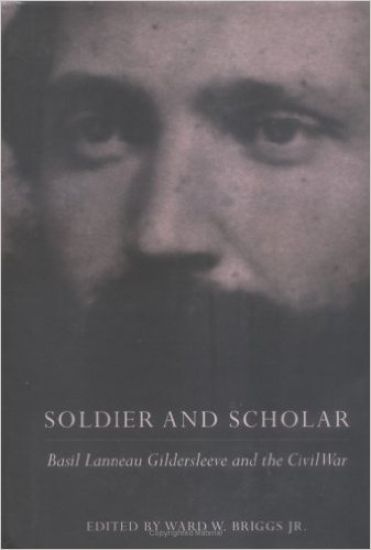
This is an account of the classical scholar, Basil Lanneau Gildersleeve, who was a soldier and who taught at the University of Virginia during the winter. This book is a collection of his writings: autobiographical essays; 63 editorials; and reflections upon the causes and effects of the Civil War.
The ancient Romans quite literally surrounded themselves with the dead: masks of the dead were in the atria of their houses, funerals paraded through their main marketplace, and tombs lined the roads leading into and out of the city. In Roman literature as well, the dead occupy a prominent place, indicating a close and complex relationship between literature and society. The evocation of the dead in the Latin authors of the first century BCE both responds and contributes to changing socio-political conditions during the transition from the Republic to the Empire. To understand the literary life of the Roman dead, The Ghosts of the Past develops a new perspective on Latin literature's interaction with Roman culture. Drawing on the insights of sociology, anthropology, and performance theory, Basil Dufallo argues that authors of the late Republic and early Principate engage strategically with Roman behaviors centered on the dead and their world in order to address urgent political and social concerns. Republican literature exploits this context for the ends of political competition among the clan-based Roman elite, while early imperial literature seeks to restage the republican practices for a reformed Augustan society. Calling into question boundaries of genre and literary form, Dufallo's study will revise current understandings of Latin literature as a cultural and performance practice. Works as diverse as Cicero's speeches, Propertian elegy, Horace's epodes and satires, and Vergil's Aeneid appear in a new light as performed texts interacting with other kinds of cultural performance from which they might otherwise seem isolated.
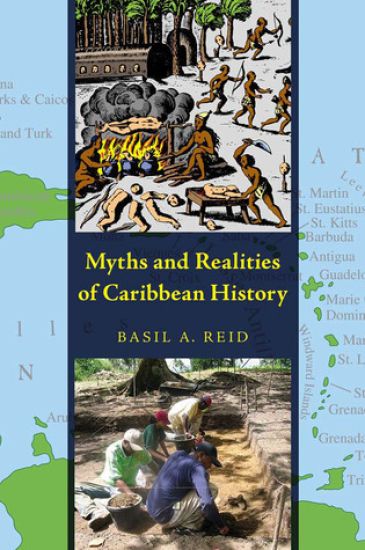
This book seeks to debunk eleven popular and prevalent myths about Caribbean history. Using archaeological evidence, it corrects many previous misconceptions promulgated by history books and oral tradition as they specifically relate to the pre-Colonial and European-contact periods. It informs popular audiences, as well as scholars, about the current state of archaeological/historical research in the Caribbean Basin and asserts the value of that research in fostering a better understanding of the region's past.Contrary to popular belief, the history of the Caribbean did not begin with the arrival of Europeans in 1492. It actually started 7,000 years ago with the infusion of Archaic groups from South America and the successive migrations of other peoples from Central America for about 2,000 years thereafter. In addition to discussing this rich cultural diversity of the Antillean past, ""Myths and Realities of Caribbean History"" debates the misuse of terms such as 'Arawak' and 'Ciboneys', and the validity of Carib cannibalism allegations.
Examines the objectives set by the World Bank for its operations in Turkey in the period 1993-2004 and the extent to which those objectives were achieved.
The African Genius presents the ideas, social systems, religions, moral values, arts, and metaphysics of a range of African peoples. Basil Davidson points toward the Africa that might emerge from an ancient civilization that was overlaid and battered by colonialism, then torn apart by the upheaval of colonialism's dismantlement. Davidson disputes the notion that Africa gained under colonialism by entering the modern world. He sees, instead, an ancient order replaced by modern dysfunction. Davidson's depiction of the sophisticated "native genius" that has carried Africans through centuries of change is vital to an understanding of modern Africa as well.
This book, the fifth in the series developing BernsteinOs code theory, presents a lucid account of the most recent developments of this code theory and, importantly, shows the close relation between this development and the empirical research to which the theory has given rise. Pedagogy, Symbolic Control and Identity addresses the central issue of BernsteinOs research project: are there any general principles underlying the transformation of knowledge into pedagogic communication? In BernsteinOs view, we have studied only pedagogic messages and their institutional and ideological base. We have not studied the nature of the relay which makes messages possible. The discussion of this research forms part II of this book, where Bernstein makes explicit the methodology of the research and, in particular, the crucial significance of languages of description. This new edition of Bernstein's classic book is updated with three new chapters: on discourse, on official knowledge and identities, and a wide ranging interview with Joseph Solomon. The new edition, published as Volume Five in his Class, Codes, and Control Series, builds on the continuing tradition of Bernstein's highly influential work on class, education, language, and society.
This book, the fifth in the series developing Bernstein’s code theory, presents a lucid account of the most recent developments of this code theory and, importantly, shows the close relation between this development and the empirical research to which the theory has given rise. Pedagogy, Symbolic Control and Identity addresses the central issue of Bernstein’s research project: are there any general principles underlying the transformation of knowledge into pedagogic communication? In Bernstein’s view, we have studied only pedagogic messages and their institutional and ideological base. We have not studied the nature of the relay which makes messages possible. The discussion of this research forms part II of this book, where Bernstein makes explicit the methodology of the research and, in particular, the crucial significance of languages of description. This new edition of Bernstein's classic book is updated with three new chapters: on discourse, on official knowledge and identities, and a wide ranging interview with Joseph Solomon. The new edition, published as Volume Five in his Class, Codes, and Control Series, builds on the continuing tradition of Bernstein's highly influential work on class, education, language, and society.
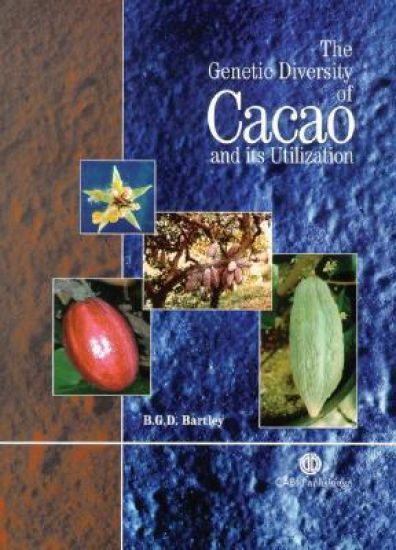
The cacao (Theobroma cacao) plant is an important Neo-Tropical species whose natural habitat is the Amazon basin. Over the last 30 years there has been a considerable geographical expansion in the availability of cacao genetic resources. As a result the plant has a rich genetic diversity that exists at two levels: that of the primitive populations in the area of original distribution of the species, and that of the derived cultivated populations. This book provides a comprehensive review of our current knowledge of the diversity of the species. It starts by examining the diversity and inheritance of the characteristics of primitive populations in the Amazonian and Caribbean regions. It then looks at the evolution of diversity within cultivated populations first in South America and around the Caribbean, and then beyond the Americas. The book describes the inter-relationships between populations based on morphological and molecular markers. It also examines the conservation of genetic resources and how these genetic resources can be utilized to produce new cultivars.
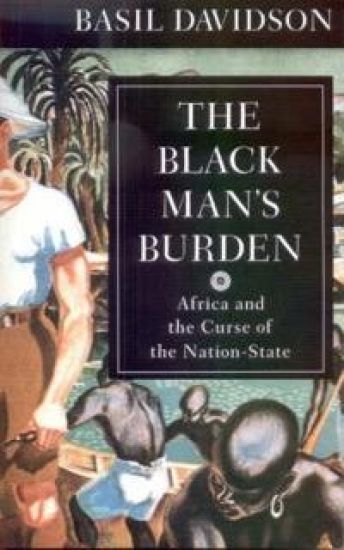
Basil Davidson is the most effective popularizer of African history and archaeology outside Africa and certainly the best trusted in Africa itself. - Roland Oliver in THE NEW YORK REVIEW OF BOOKS Basil Davidson on the nation-state in Africa and its huge disappointments, its relationship to the colonial years and the parallels with events in Eastern Europe. North America: Times/Random House
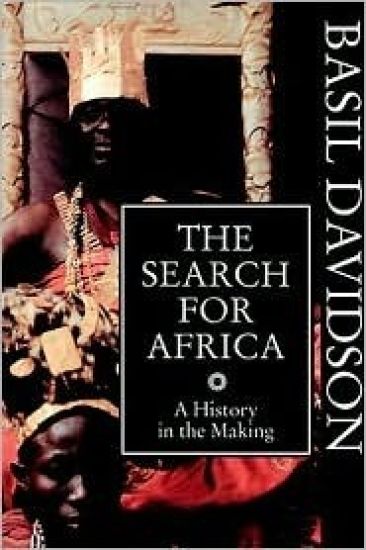
The collection gathers together the questions and answers that have come out of the author's lifelong fascination with Africa. These essays and articles, written between 1953 and 1993, explore the development of an African historiography and, in that context, the author's own development. People who have been involved all their lives with Africa willbe reminded of how many times Basil Davidson has given them new insights. People who approach the study of Africa for the first time will find this collection opens out their perceptions. North America: Times/Random House
Africa and Africans south of the Sahara in the 1500 years or so before the colonial period began. The aim of this book is to present what is now known and what seems reasonable to believe about some leading aspects and achievements of African life and civilization during the pre-colonial period, and thus to contribute to an understanding of Africa today. North America: Times/Random House
Examines the slave trade in three areas of Africa: the old Congo kingdoms, the city states of the East Coast, and parts of the Guinea coast. Basil Davidson states that by examining three important areas of Africa in the history of slavery 'against a general background of their time and circumstance' he was taking 'a fresh look at the oversea slave trade, the steady year-by-year export of African labour to the West Indies and the Americas that marked the greatest and most fateful migration - forced migration - in the history of man.' North America: Times/Random House
A general social and cultural history of Africa. Basil Davidson gives insights into the depth and sophistication of African cultural and social history in a way that is intelligible and accessible to the lay-reader. North America: Ohio U Press
In this lively and instructive memoir of his experience with the anti-Nazi underground in Italy and Yugoslavia during World War II, Basil Davidson throws needed light on a much-neglected part of European history. Sent to the area as a representative of the British Special Operations Executive (SOE), he is able to recount at first hand the intense determination of the revolutionary partisans, who hoped that their sacrifices would lead to a new society, and the equally determined policy of the Allies to suppress them.