Kirjojen hintavertailu. Mukana 11 244 527 kirjaa ja 12 kauppaa.

Kirjahaku

Etsi kirjoja tekijän nimen, kirjan nimen tai ISBN:n perusteella.

1000 tulosta hakusanalla Blake Butler

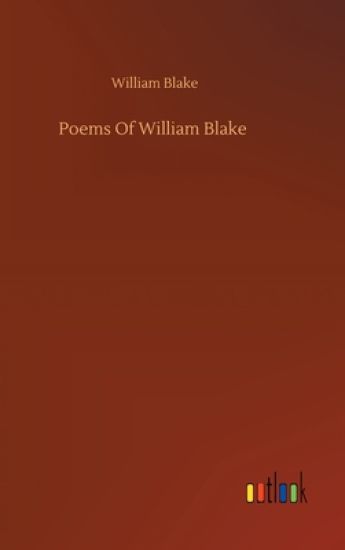
William Blake

William Blake

Arthur Symons

Megali Verlag
2023
sidottu
Reproduction of the original. The publishing house Megali specialises in reproducing historical works in large print to make reading easier for people with impaired vision.
William Blake's Idiosyncratic Beliefs and His Poetry
The English poet and painter William Blake appears to be mysterious, mainly because his works are not easy to comprehend. His poems and books are full of religious and philosophical questions and metaphors, some of his works are even accompanied by paintings which make his legacy even more complex.Blake lived in revolutionary times. The era can be characterised as a time of big upheavals and major changes in society. Reasons for this are the French and the American Revolution which had an influence on writers of the early Romantic period. Furthermore the first signs of industrialisation in the late 18th century showed the need for political reforms. A connection between the events in France and the apocalyptic prophecies in the bible was drawn - a belief in a universal peace, similar to the promise of paradise following this apocalypse in the bible. When this hope was not satisfied, thinkers did not abandon it, but started a quiet, moralistic revolution.In Blake's work, both the social criticism and the religious aspect can clearly be found. This paper wants to find out about William Blake's (religious) beliefs which are often seen as idiosyncratic. It tries to explain the most significant influences on Blake and his writing by illustrating his relationship with the Church of his time, the ideas of the Deist movement and the influence of the mystic Emanuel Swedenborg. Afterwards it will describe the influences of religion on the well-known volumes of poetry "Songs of Innocence" and "Songs of Experience" by commenting on exemplary poems of both volumes.
William Blake's "London" - An interpretation

William Blake's "London" - An interpretation

Samir Mazarweh

Grin Publishing
2010
pokkari
Seminar paper from the year 2010 in the subject English Language and Literature Studies - Literature, grade: 1,7, University of Heidelberg (Anglistik), course: Proseminar 1 London, language: English, abstract: This paper tries to provide an insight into the analysis of 18th century author William Blake s poem London . Comments from Blake experts like the following from Edward Thompson make this task appear easy. He said: " London is among the most lucid and instantly available of the Songs of Experience." On the one hand I agree to this statement. The poem itself is easy to understand, not much background information about the author s life, his visions, and his complete works is required to grasp the message. However, an analysis has to provide more than just make the message of a poem understandable. It should inter alia deal with the circumstances the author lived in, the work of which the poem is part of, and last but not least, the stylistic devices and linguistic images used in this piece of art. In the case of London , this has been done by professionals many times, a fact leading us to another important point that makes the task appear easier than it actually is: The mass of biographies, comments, analyses, and criticisms that have been written about Blake and his works. The advantage is obvious: Every line of London has been discussed and commented on, and all that must be done is find adequate information. At the same time this amount of literature presents many different approaches to analyse the poem; too many to introduce them in a seminar paper. Hence, this assignment tries to show a few aspects only: After introducing the author and the Songs of Innocence and of Experience briefly, it follows a short summary of the poem and an overview of the stylistic devices. The sixth chapter is the analysis itself, focusing on the social criticism of the poem and dealing with the "very complex relations between reading, and hearing, and seeing."